
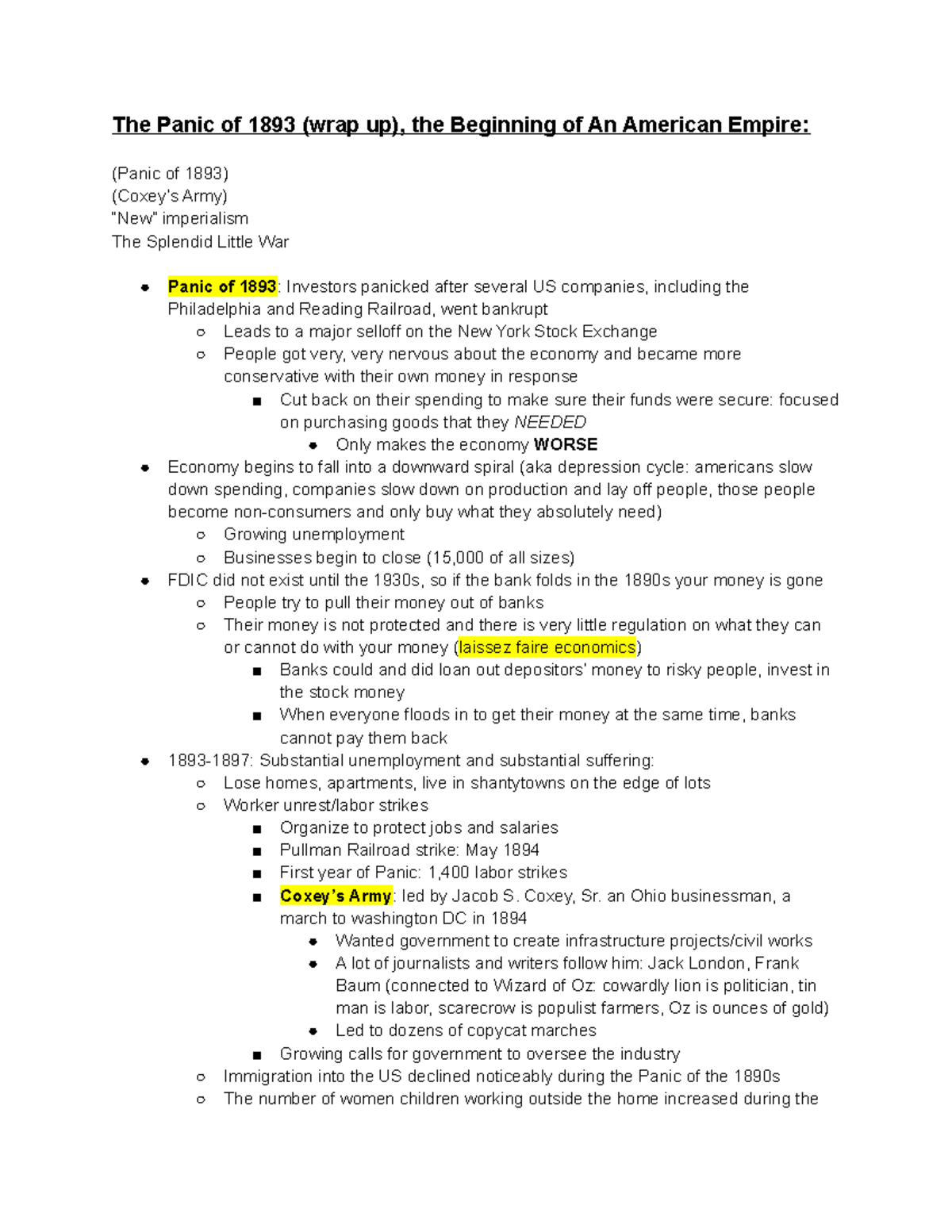
The Panic of 1893 was a catastrophic economic depression triggered by railroad overexpansion and a critical drain on U.S. gold reserves. Lasting until 1897, it fundamentally reshaped American finance by ending the debate over bimetallism, centralizing banking power in New York, and highlighting the structural vulnerabilities that eventually led to the creation of the Federal Reserve.
The late 19th century was an era of unprecedented industrial growth and speculative excess, often referred to as the Gilded Age. However, beneath the veneer of prosperity, the American financial system was fracturing. As of 2026, economic historians continue to analyze the 1893 crisis as the most severe depression in United States history prior to the Great Depression of 1929. It was not merely a market correction but a systemic collapse that challenged the nation’s core monetary philosophies and political alignments.
The Catalysts of Economic Instability
The roots of the 1893 panic were multi-faceted, involving a combination of domestic policy errors and international economic shifts. To understand the collapse, one must examine the state of the railroad industry and the volatile debate over the national currency.
Railroad Overexpansion and the Bubble Bursts
During the 1880s, railroads were the primary drivers of the American economy. They represented the height of technological progress and were the target of massive domestic and foreign investment. However, this growth was fueled by excessive borrowing and aggressive expansion into territories that could not yet support the infrastructure. Many lines were built parallel to existing ones, leading to ruinous price wars and unsustainable debt-to-equity ratios.
In February 1893, the Philadelphia and Reading Railroad, which had overextended itself significantly, declared bankruptcy. This event sent shockwaves through the financial markets, as the railroad was a major employer and a staple of investment portfolios. When the National Cordage Company failed shortly thereafter in May 1893, the stock market entered a freefall. These failures revealed that many of the nation’s largest enterprises were "paper tigers," built on credit rather than actual cash flow.
The Sherman Silver Purchase Act and the Gold Drain
While corporate failures provided the spark, the Sherman Silver Purchase Act of 1890 provided the fuel. This legislation required the U.S. Treasury to purchase 4.5 million ounces of silver every month, paying for it with Treasury notes that were redeemable in either gold or silver.
Investors, wary of the declining value of silver relative to gold, began a massive "run" on the Treasury. They traded their silver-backed notes for gold, which they then exported or hoarded. By early 1893, the federal gold reserve dipped below the psychologically critical $100 million mark. This caused a loss of confidence in the U.S. government's ability to maintain the gold standard, leading to further panic and the withdrawal of foreign capital, particularly from British investors who were already reeling from the Baring crisis in London.
The Depth of the Depression (1893–1897)
The ensuing depression was characterized by widespread bank failures, soaring unemployment, and social unrest. Unlike modern economic downturns where the government might intervene with stimulus, the 19th-century approach was largely hands-off, which many argue prolonged the suffering.
Systemic Banking Collapse
As the stock market crashed, depositors rushed to withdraw their savings from banks. Because the United States lacked a central bank or deposit insurance, a local bank failure could trigger a regional or national contagion. In 1893 alone, over 500 banks—mostly in the West and South—closed their doors. This froze credit for farmers and small business owners, effectively halting economic activity in vast swaths of the country.
The Human Cost and Labor Unrest
At the peak of the crisis, unemployment rates reached an estimated 17% to 19%, though some urban areas reported figures as high as 25%. Without a federal safety net, millions of Americans faced homelessness and starvation.
This desperation led to significant social movements:
- Coxey’s Army: In 1894, Jacob Coxey led a "living petition" of unemployed men on a march from Ohio to Washington, D.C., demanding that the government create jobs through a public works program funded by fiat currency. The movement was suppressed, but it signaled a shift in public expectations toward government responsibility.
- The Pullman Strike: Also in 1894, workers at the Pullman Palace Car Company began a strike that evolved into a national boycott of trains pulling Pullman cars. The federal government eventually intervened with troops, citing interference with the delivery of the U.S. Mail. This highlighted the deep divisions between labor, capital, and the state.
The Intervention of J.P. Morgan and the Gold Loan of 1895
By 1895, the U.S. Treasury was on the verge of defaulting on its gold obligations. President Grover Cleveland, a "Gold Democrat," was desperate to maintain the gold standard but faced a hostile Congress that refused to authorize the sale of gold bonds.
In a move that remains a cornerstone of American financial history, Cleveland turned to a private syndicate led by the investment banker J.P. Morgan and the Rothschild family. Morgan offered to provide the Treasury with 3.5 million ounces of gold in exchange for 30-year federal bonds. Crucially, Morgan used his international influence to prevent gold from flowing back out of the country.
While this saved the U.S. from defaulting, it was politically explosive. Populists and "Silverites" viewed the deal as a corrupt bargain between the White House and Wall Street. It reinforced the perception that the nation's financial destiny was controlled by a handful of wealthy elite, a sentiment that fueled the 1896 presidential campaign of William Jennings Bryan.
Historical Comparison of Major U.S. Panics
The Panic of 1893 is often compared to other major contractions to illustrate the evolving nature of the American economy and the eventual development of regulatory safeguards.
| Feature | Panic of 1873 | Panic of 1893 | Panic of 1907 | Great Depression (1929) |
|---|---|---|---|---|
| Primary Trigger | Post-war inflation; Railroad failure (Jay Cooke & Co) | Railroad overexpansion; Gold reserve depletion | Knickerbocker Trust collapse; Copper speculation | Stock market crash; Bank failures; Trade wars |
| Duration | 6 Years | 4 Years | 1.5 Years | 10+ Years |
| Monetary Debate | Greenbacks vs. Gold | Silver vs. Gold | Inelastic currency | Deflation; Gold Standard rigidity |
| Key Outcome | Coinage Act of 1873 ("Crime of '73") | Gold Standard Act of 1900 | Federal Reserve Act (1913) | New Deal; Glass-Steagall Act; FDIC |
| Unemployment Peak | ~14% | ~19% | ~8% | ~25% |
Political Realignment and the 1896 Election
The economic misery of the 1890s broke the traditional political mold. The Democratic Party became divided between the pro-gold Cleveland wing and the pro-silver agrarian wing. In 1896, the Democrats nominated William Jennings Bryan, who delivered his famous "Cross of Gold" speech, arguing that the gold standard was "crucifying" the working man.
The Republicans, led by William McKinley, campaigned on a platform of "sound money" (the gold standard) and high protective tariffs to support American industry. McKinley’s victory in 1896 marked the end of the populist challenge to the gold standard and signaled a shift toward a more urban, industrial-focused national policy. This era, known as the "System of 1896," dominated American politics for decades, prioritizing industrial stability over agrarian inflation.
Why 1893 Was a Turning Point for Finance
The Panic of 1893 was more than just a period of high unemployment; it was the catalyst for the modernization of American finance.
- Centralization of Power: The inability of thousands of small banks to survive the crisis led to a period of consolidation. Large New York banks became the de facto lenders of last resort, leading to the "Money Trust" that would later be scrutinized by the Pujo Committee.
- The End of Bimetallism: The eventual passage of the Gold Standard Act of 1900 officially placed the U.S. on a monometallic gold standard, ending decades of "silver agitation" and providing a more stable (though less flexible) foundation for international trade.
- Intellectual Shift Toward Central Banking: While it took the Panic of 1907 to finally pass the Federal Reserve Act, the 1893 crisis proved that a modern industrial nation could not function with an "inelastic" currency that disappeared precisely when it was most needed during a panic.
- Professionalization of Investment: The collapse of over-leveraged railroads forced investors to demand better accounting standards and more transparency. This led to the rise of independent auditing and the development of modern credit analysis.
For more information on the legislative response to these panics, the National Archives provides digitized records of the Sherman Silver Purchase Act and the subsequent Gold Standard Act. Additionally, the Federal Reserve History project offers deep insights into how these 19th-century crises informed the creation of the modern central bank.
Frequently Asked Questions
What was the single biggest cause of the Panic of 1893?
While several factors coincided, the most immediate cause was the failure of the Philadelphia and Reading Railroad and the National Cordage Company, which triggered a stock market crash and exposed the extreme leverage within the American industrial sector. This was exacerbated by the depletion of the federal gold reserve.
How did the Panic of 1893 end?
The depression began to lift in 1897 due to several external factors: the discovery of gold in the Klondike (which increased the money supply naturally), a series of poor harvests in Europe that increased the demand for American grain, and the political stability brought by the 1896 election of William McKinley.
What is the difference between the Panic of 1873 and 1893?
The 1873 panic was largely about the transition from a post-Civil War economy and the failure of Jay Cooke & Co. The 1893 panic was much more focused on the currency crisis (gold vs. silver) and the systemic overexpansion of the national railroad network. The 1893 event also saw much higher levels of organized labor unrest.
Why was J.P. Morgan's involvement so controversial?
J.P. Morgan’s 1895 bailout of the U.S. Treasury was controversial because it demonstrated that a private citizen held more financial power than the federal government. While it prevented a default, critics argued that Morgan profited handsomely from the nation's distress and that the government should not be beholden to private bankers.
Did the Panic of 1893 lead to any new laws?
The most significant legislative outcome was the Gold Standard Act of 1900, which codified gold as the sole basis for the U.S. dollar. It also indirectly led to the Federal Reserve Act of 1913, as the crisis proved that the lack of a central coordinator for the banking system was a national security risk.
Recommendation for Further Action
For those interested in the evolution of American finance, studying the Panic of 1893 is essential for understanding the risks of "inelastic" currencies and corporate over-leverage. If you are a student of finance or an investor, reviewing the Pujo Committee reports or the Aldrich-Vreeland Act provides excellent context on how the U.S. eventually moved from the chaotic "Free Banking" and "National Banking" eras toward the regulated framework of the 20th century. Analyzing these historical cycles can provide valuable perspective on modern market volatility and the role of central bank intervention.
Image Gallery
Select an image to open it in a new tab.
Ingrid Bjornson
Global Cyber Policy and Regulation Analyst
