
The definitive actor behind the role of Norman Bates in Alfred Hitchcock’s 1960 masterpiece Psycho was Anthony Perkins. His portrayal of the stuttering, fragile motel proprietor remains one of the most celebrated performances in cinema history. Perkins played the character in four feature films, defining the "boy-next-door" slasher archetype for generations of viewers.
The Definitive Norman Bates: Anthony Perkins
While several actors have stepped into the role of Norman Bates across various adaptations and re-imaginings, Anthony Perkins is the name synonymous with the character. Before being cast by Alfred Hitchcock, Perkins was known as a rising star and a "teen heartthrob" of the late 1950s, having earned an Academy Award nomination for his role in Friendly Persuasion (1956).
Hitchcock’s decision to cast Perkins was a masterstroke of subversion. In Robert Bloch’s original 1959 novel, Norman Bates was depicted as a middle-aged, overweight, and distinctly unappealing man. Hitchcock and screenwriter Joseph Stefano realized that for the film’s "big reveal" to work—and for the audience to sympathize with Norman throughout the first two acts—he needed to be vulnerable, handsome, and seemingly harmless. Perkins brought a nervous, avian energy to the role, using subtle ticks, a slight stutter, and a gangly physical presence to create a character that felt both relatable and deeply unsettling.
The 1960 Performance and Its Technical Brilliance
Perkins’ performance in the original Psycho is a study in repressed trauma and duality. He famously improvised certain character traits, such as Norman’s habit of eating candy corn, which added a layer of infantile regression to the character. The technical precision of his acting is most evident in the final "Mother" monologue, where Perkins remains perfectly still while a voiceover conveys the internal takeover by his mother’s persona.
The lighting in the film, particularly the use of chiaroscuro (strong contrasts between light and dark), often bisected Perkins’ face, visually representing his fractured psyche. This performance didn't just define a character; it helped birth the modern slasher genre, moving the "monster" from the realm of supernatural creatures (like Dracula or the Wolfman) into the house next door.
Reprising the Role: The Psycho Sequels
Unlike many actors who distance themselves from a defining role to avoid typecasting, Anthony Perkins eventually embraced Norman Bates. After a 22-year hiatus, he returned to the character in the 1980s, expanding the lore of the Bates family across three additional films.
Psycho II (1983)
Directed by Richard Franklin, Psycho II is widely considered one of the most successful horror sequels ever made. Perkins returned as a "rehabilitated" Norman Bates who is released from a mental institution and attempts to live a normal life back at the Bates Motel. Perkins’ performance here is poignant, focusing on the tragedy of a man haunted by a past he cannot escape. It added layers of empathy to the character that the original film only hinted at.
Psycho III (1986)
Perkins took on the dual role of star and director for Psycho III. This installment leaned harder into the "slasher" tropes of the 1980s but retained the psychological depth of Norman’s character. Perkins used his intimate knowledge of Norman to explore the character's religious guilt and sexual repression in more explicit detail than Hitchcock was allowed to in 1960.
Psycho IV: The Beginning (1990)
In his final performance as the character, Perkins appeared in this made-for-cable prequel/sequel hybrid. While Perkins played the adult Norman calling into a radio show to recount his youth, the role of "Young Norman" was played by Henry Thomas (of E.T. the Extra-Terrestrial fame). This film provided the definitive "origin story" for Norman's obsession with his mother, Norma Bates.
Other Actors Who Have Played Norman Bates
While Anthony Perkins is the primary answer to who the Norman Bates actor was, the franchise has seen other notable interpretations, particularly in remakes and television adaptations.
Vince Vaughn (1998 Remake)
In Gus Van Sant’s controversial, shot-for-shot remake of the 1960 original, Vince Vaughn took on the mantle of Norman Bates. Vaughn’s interpretation was markedly different from Perkins’; while Perkins played Norman as shy and sympathetic, Vaughn portrayed him as overtly creepy and twitchy from the outset. Many critics felt this lacked the subtlety required to make the character's "Mother" persona a surprise, but it remains a significant entry in the character’s history.
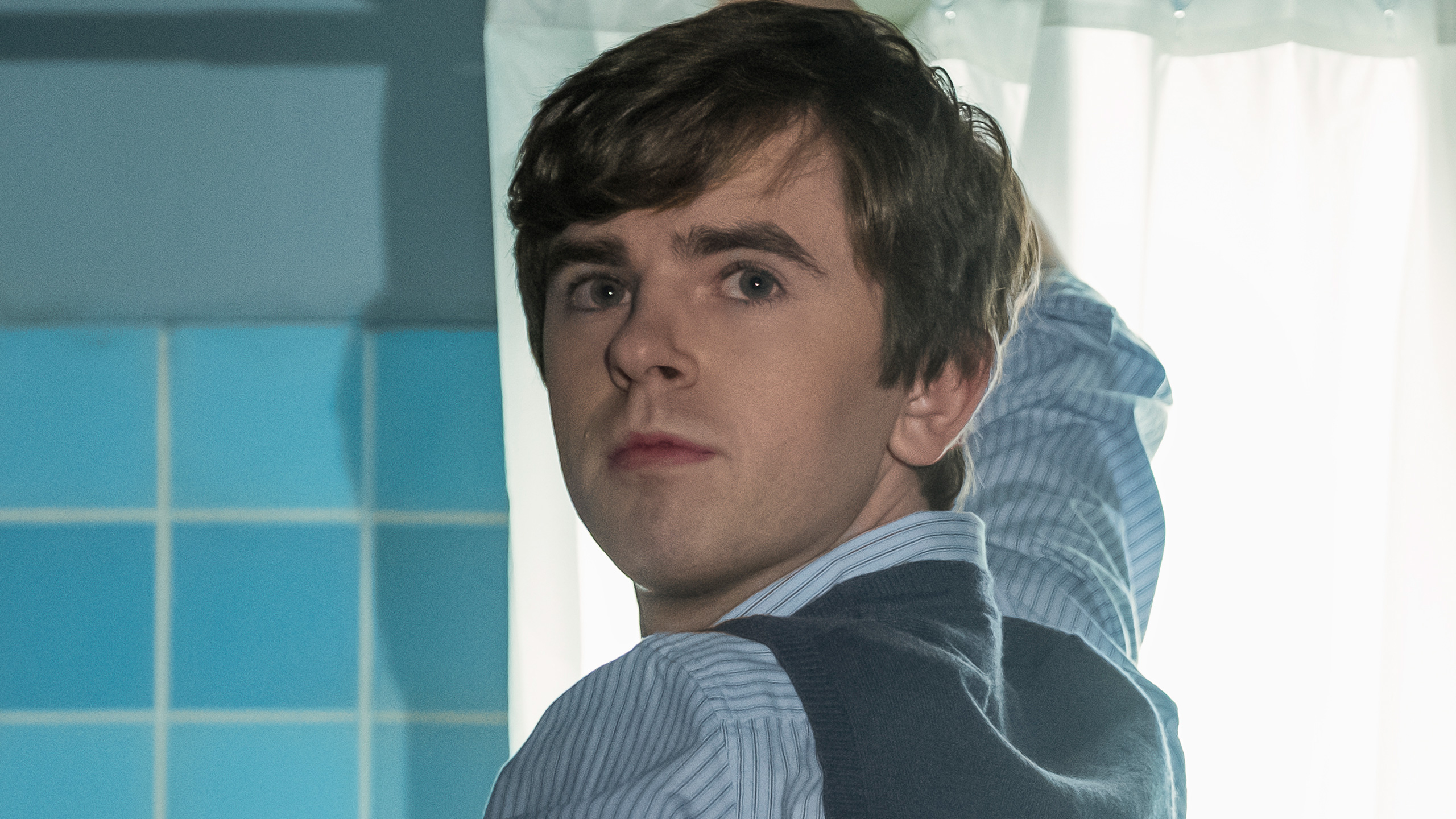
Freddie Highmore (Bates Motel, 2013–2017)
In the modern television era, Freddie Highmore delivered a performance that many consider second only to Perkins. In the prequel series Bates Motel, Highmore portrayed Norman’s descent into madness over five seasons. Set in a contemporary timeline, Highmore’s Norman is a brilliant but deeply disturbed teenager. Highmore meticulously studied Perkins’ mannerisms—including his gait and vocal patterns—to create a bridge between the new series and the original film.
Comparison of Norman Bates Portrayals
| Actor | Project | Year(s) | Medium | Primary Character Focus |
|---|---|---|---|---|
| Anthony Perkins | Psycho (I-IV) | 1960–1990 | Film | Sympathetic, stuttering, boy-next-door |
| Henry Thomas | Psycho IV | 1990 | Film (Prequel) | Youthful trauma and burgeoning madness |
| Vince Vaughn | Psycho | 1998 | Film (Remake) | Overtly eccentric and aggressive |
| Freddie Highmore | Bates Motel | 2013–2017 | TV Series | Gradual psychological erosion and codependency |
Why Anthony Perkins Became the "Eternal" Norman
The casting of Anthony Perkins changed the trajectory of his career forever. While he continued to work in prestigious films—such as Orson Welles’ The Trial (1962)—the shadow of the Bates Motel was inescapable.
Perkins’ ability to convey "the banality of evil" was what made the performance stick. He didn't look like a killer. He looked like a son who took care of his mother. This subversion of expectation is a cornerstone of psychological thrillers. Even as of 2026, when film students analyze the "slasher" archetype, Perkins is the primary case study for how a villain can be both a predator and a victim of his own mind.
His physical performance was also revolutionary. Perkins was quite tall (6'1"), yet he often made himself look small and hunched, as if trying to hide within his own frame. This physical manifestation of internal shame became a hallmark of the character that both Henry Thomas and Freddie Highmore would later emulate to maintain continuity for the audience.
The Technical Execution of the Character
To understand why Perkins’ Norman Bates is so effective, one must look at the specific acting choices made during the 1960 production:
- The Stutter: Perkins introduced a "dry" stutter—not a repetitive sound, but a hitch in the breath. It suggested a man constantly filtering his thoughts to hide a secret.
- The Gaze: In the final scene, Perkins looks directly into the camera. This broke the "fourth wall" in a way that made the audience feel like they were being watched by the "Mother" persona, creating a lasting sense of unease.
- The Bird Motif: Perkins’ movements were often described as "bird-like." This was a deliberate choice to align Norman with his hobby of taxidermy (stuffing birds), suggesting that Norman himself was a "stuffed" or hollow shell being inhabited by his mother.
FAQ: Common Questions About the Norman Bates Actors
Was Anthony Perkins the only actor to play Norman Bates in the original sequels?
Yes, Anthony Perkins played the adult Norman Bates in all four original films (Psycho, Psycho II, Psycho III, and Psycho IV). However, in Psycho IV, the teenage version of Norman was played by Henry Thomas. Other actors occasionally played the "Mother" figure in shadow or costume, but Perkins remained the face of Norman.
Did Anthony Perkins win an Oscar for his role as Norman Bates?
Surprisingly, Anthony Perkins was not even nominated for an Academy Award for his performance in the original 1960 Psycho. While the film received four nominations (including Best Director for Hitchcock and Best Supporting Actress for Janet Leigh), Perkins’ genre-defining performance was overlooked by the Academy at the time, though it has since been recognized as one of the greatest snubs in film history.
Who played Norman Bates' mother in the movie?
In the 1960 film, "Mother" is not a physical person but a persona. The voice of Norma Bates was provided by three different actresses: Virginia Gregg, Jeanette Nolan, and Paul Jasmin. They were recorded and their voices were blended to create a unique, shrill tone. In the Bates Motel TV series, the mother, Norma Bates, is a lead character played by Vera Farmiga.
Why did Gus Van Sant cast Vince Vaughn in the remake?
Gus Van Sant wanted to cast an actor who felt contemporary to 1998 but possessed a different kind of intensity. Vaughn, who was mostly known for comedic or fast-talking roles at the time (like in Swingers), was chosen to provide a more imposing, physically intimidating version of Norman. The goal was to see if the character remained scary if he wasn't "small and shy," though results were mixed among fans.
Is Freddie Highmore’s version of Norman Bates related to the movies?
Bates Motel is a "contemporary prequel." It serves as an origin story for the character, but it exists in its own continuity. It reimagines Norman’s life in a modern setting with smartphones and current technology, but it borrows heavily from the characterization established by Anthony Perkins in 1960.
Recommendations for Further Exploration
If you are interested in the evolution of the Norman Bates character, the following viewing order provides the most comprehensive understanding of the actor's craft:
- Start with the 1960 original: Observe Perkins' use of body language and his "boy-next-door" vulnerability.
- Watch Psycho II: Note how Perkins evolves the character into a tragic figure seeking redemption.
- View Bates Motel (Season 4 and 5): Watch Freddie Highmore’s transition as he begins to mirror Anthony Perkins' specific vocal and physical mannerisms more closely as the character loses his grip on reality.
- Read "Alfred Hitchcock and the Making of Psycho" by Stephen Rebello: This book provides deep insight into why Perkins was cast and how his performance was shaped on set.
Anthony Perkins’ performance as Norman Bates remains a masterclass in psychological acting. Whether it is the slight twitch of a smile or the awkward tilt of the head, he created a cinematic vocabulary for the "madman" that persists more than six decades later.
Image Gallery
Select an image to open it in a new tab.


Mateo Castillo
Decentralized Finance and E-Payments Strategist
