
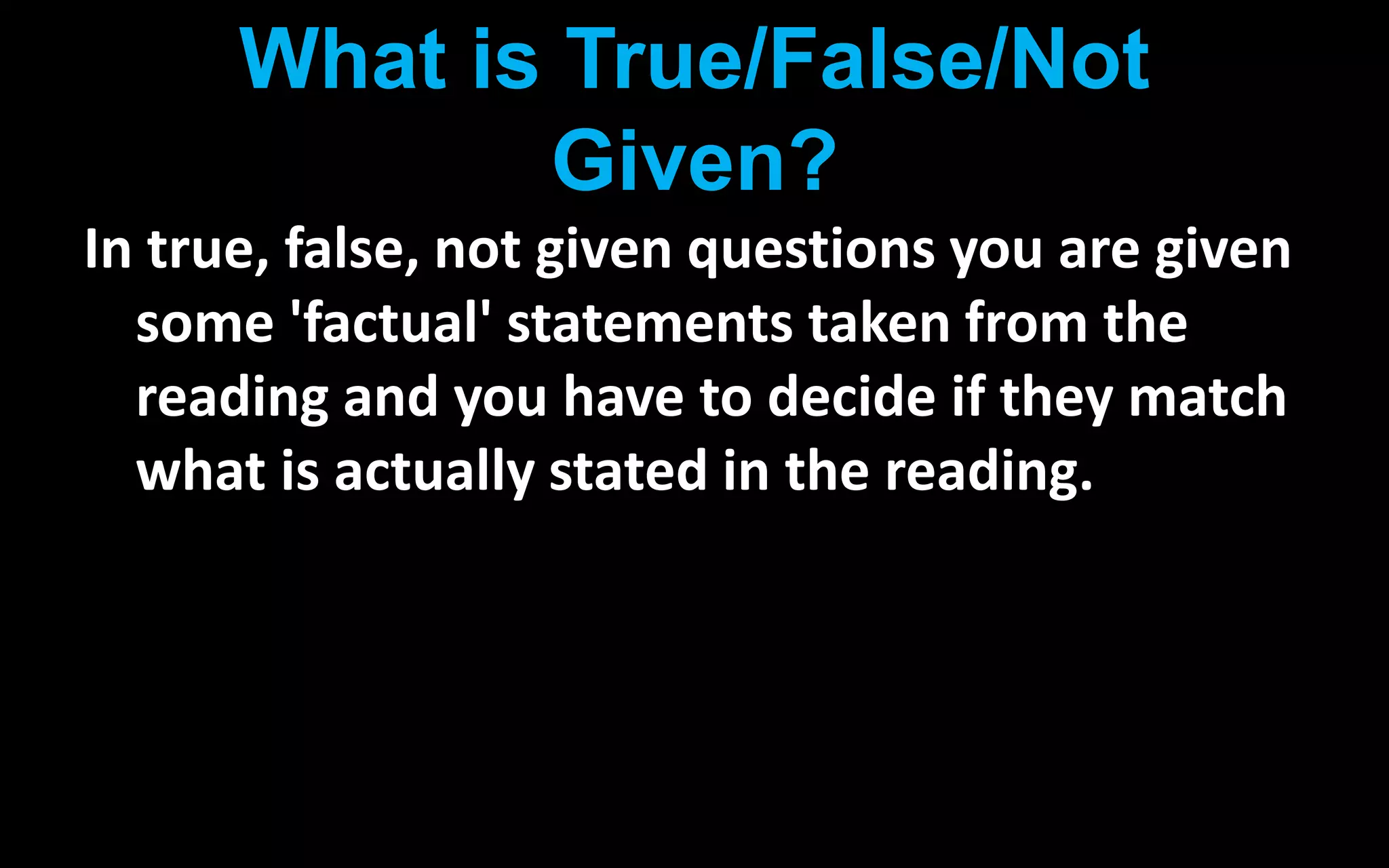
A NOT statement is not always false. In formal logic and computer science, the NOT operator (also known as negation) simply reverses the truth value of the statement it modifies. If the original statement is true, the NOT statement is false; if the original statement is false, the NOT statement becomes true.
To understand why a NOT statement is not inherently false, one must look at the foundational principles of Boolean algebra and classical logic. At its core, the NOT operator is a unary operator, meaning it operates on a single input or "operand." Its sole function is to "flip" or invert the state of that input. Therefore, the outcome of a NOT statement is entirely dependent on the initial state of the proposition being negated.
The Fundamental Logic of Negation
In the study of logic, negation is one of the most basic yet powerful tools for constructing complex arguments and algorithms. When we ask whether a NOT statement is always false, we are essentially asking about the behavior of a logical inverter.
Consider a simple proposition, $P$. In classical bivalent logic, $P$ can only be either True (T) or False (F). The negation of $P$ is denoted by symbols such as $\neg P$, $\sim P$, or !P. The rules governing this operation are absolute:
- If $P$ is True, then $\neg P$ is False.
- If $P$ is False, then $\neg P$ is True.
As demonstrated, the assertion that a NOT statement is always false is a misunderstanding of how logical operators function. If you negate a falsehood, you arrive at a truth. For example, the statement "It is not raining" is true if, in reality, there is no rain falling. Here, the "not" creates a true statement out of a false condition (the presence of rain).
The Truth Table: Visualizing Logical Inversion
One of the most effective ways to visualize how a NOT statement functions is through a truth table. Truth tables are mathematical tables used in logic—specifically in connection with Boolean algebra and boolean functions—to compute the functional values of logical expressions on each of their functional arguments.
| Input Statement ($P$) | Negated Statement ($\neg P$) | Resulting Truth Value |
|---|---|---|
| True | NOT True | False |
| False | NOT False | True |
| 1 (High Voltage) | NOT 1 | 0 (Low Voltage) |
| 0 (Low Voltage) | NOT 0 | 1 (High Voltage) |
As the table illustrates, the output of the NOT operation is a mirror image of the input. In the context of 2026 computing standards, where binary logic remains the bedrock of architecture, this inversion is what allows for complex decision-making processes in software and hardware alike.
Why the Misconception Exists
The confusion regarding whether a NOT statement is always false often stems from linguistic nuances rather than mathematical ones. In everyday conversation, we frequently use "not" to correct a false assumption or to deny a claim. Because "negation" sounds like a "negative" or "downward" action, people colloquially associate it with the value "False."
However, in technical and formal contexts, "negative" does not mean "bad" or "false." It simply refers to the opposite direction or state. In mathematics, a negative number (e.g., -5) is a perfectly valid value; it isn't "false," it's just positioned on the opposite side of zero. Similarly, a logical negation is a valid state that can represent a true condition just as easily as a false one.
Logical NOT in Programming and Software Development
In modern programming languages—ranging from Python and JavaScript to C++ and Rust—the NOT operator is indispensable. It is typically represented by the exclamation mark (!) or the keyword not. Developers use it to control the flow of an application, specifically within conditional statements.
Conditional Logic and Flow Control
Imagine a software system checking for user authentication in 2026. The logic might look like this:
if not user_is_logged_in: redirect_to_login_page()
In this scenario, if the variable user_is_logged_in is false (the user is not logged in), the not operator converts that into true. Because the condition evaluates to true, the program executes the redirection. If the NOT statement were "always false," this logic would never trigger, and unauthorized users could stay on protected pages indefinitely.
Truthiness and Falsiness
In languages like JavaScript or Python, the NOT operator also interacts with "truthy" and "falsy" values. These are values that are not strictly booleans (True/False) but are treated as such in a boolean context.
- Falsy values include things like
0,""(empty string),null,undefined, andNaN. - Negating a falsy value (e.g.,
!0) results in True. - Negating a truthy value (e.g.,
!"Hello") results in False.
This further proves that the output of a NOT statement is dynamic. By negating an empty data set, a developer can confirm the presence of an "empty" state as a "True" condition, allowing the program to handle errors or provide default displays.
Hardware Implementation: The NOT Gate
Beyond software, the concept of a NOT statement is physically manifested in hardware as a NOT Gate (or inverter). This is a fundamental building block of digital electronics.
A NOT gate has one input and one output. In terms of voltage, if the input is high (representing binary 1 or True), the output is low (binary 0 or False). Conversely, if the input is low, the output is high. Without this ability to flip signals, we would not have the ability to create NAND or NOR gates, which are the "universal gates" used to build all other logic gates.
The existence of the NOT gate is proof of the functional necessity of the "True" output from a "False" input. In the processors powering 2026 devices, billions of these inversions occur every second. If negation always resulted in a zero (False), the binary system would collapse, as there would be no way to return to a "1" state once a bit was flipped.
Double Negation: The Law of Involution
In Boolean algebra, the Law of Involution states that the double negation of a statement is equivalent to the original statement. Mathematically, this is written as: $$\neg(\neg P) = P$$
This principle is vital for simplifying complex logical expressions. If a NOT statement were always false, then $\neg(\neg P)$ would also have to be false, which would break the mathematical symmetry of logic. Instead, if $P$ is true, $\neg P$ is false, and $\neg(\neg P)$ returns to true.
This is frequently used in data validation. For instance, a developer might want to ensure a value is converted strictly into a boolean. Using a "double bang" (e.g., !!value) is a common shorthand. The first NOT converts the value to the opposite boolean, and the second NOT flips it back to the "correct" boolean representation of the original truthiness.
Common Logical Fallacies Involving Negation
Understanding that a NOT statement isn't always false helps avoid several common logical fallacies.
- Denying the Antecedent: This fallacy occurs when someone assumes that if the "if" part of a statement is negated, the "then" part must also be negated. (e.g., "If it rains, the grass is wet. It is not raining, therefore the grass is not wet.") This is false because the grass could be wet from a sprinkler.
- Confusion of Contraries: People often mistake a negation for its polar opposite rather than its logical complement. The negation of "The car is red" is not "The car is blue"; it is simply "The car is NOT red." The car could be any other color, or it could be colorless.
By recognizing that a NOT statement produces a specific truth value based on its input, we can build more accurate models of reality and more robust computer programs.
Applications in Data Security and Access Control
In the realm of cybersecurity, the NOT operator is a critical component of "deny-by-default" architectures. Security protocols often check for the absence of specific threats or the non-existence of unauthorized permissions.
- Blacklisting: Checking if a user is
NOTon a blocked list. If they are not on the list (False), the NOT statement becomes True, granting them access. - Integrity Checks: Verifying that a file has
NOTbeen modified. If the "modified" flag is False, the "NOT modified" check is True, and the system proceeds safely.
In these cases, the "True" result of the NOT statement is the desired outcome for a functioning, secure system.
Comparison of Logical Operators
To see where the NOT statement fits in the broader spectrum of logic, it is helpful to compare it to other primary operators like AND, OR, and XOR.
| Operator | Type | Rule |
|---|---|---|
| NOT | Unary | Inverts the input (T $\rightarrow$ F, F $\rightarrow$ T). |
| AND | Binary | True only if both inputs are true. |
| OR | Binary | True if at least one input is true. |
| XOR | Binary | True if inputs are different (one T, one F). |
| NAND | Binary | True if at least one input is False (NOT AND). |
As seen here, NOT is unique because it doesn't compare two things; it simply changes the state of one. This makes it the most fundamental tool for creating logical "switches."
Expert Guidance: Best Practices for Using Negation
While a NOT statement is a powerful tool, it can lead to "cognitive load" if overused or misused in writing and coding. Technical writers and senior developers generally follow these guidelines to ensure clarity:
- Avoid Double Negatives in Speech: While $\neg(\neg P) = P$ is mathematically sound, saying "I don't not want to go" is confusing for humans. It is always better to use the positive form.
- Prefer Positive Variable Names: In programming, it is better to name a variable
is_activerather thanis_not_inactive. Usingif not is_activeis much easier to read thanif not is_not_inactive. - Use Parentheses for Clarity: When combining NOT with other operators (like AND or OR), always use parentheses to define the scope of the negation.
!(A && B)is very different from!A && B.
FAQs
Does NOT False always mean True?
Yes, in classical bivalent logic, which is the standard for almost all mathematical and computational systems, the negation of False is always True. There is no middle ground in this system (this is known as the Law of the Excluded Middle).
What happens if you negate a "NULL" value?
In most programming languages, null is considered a "falsy" value. Therefore, !null (NOT null) will evaluate to True. This is often used to check if a variable has been assigned any value at all.
Is there a logic where NOT isn't a simple flip?
Yes, in "Fuzzy Logic" or "Multi-valued Logic," statements can have degrees of truth (e.g., 0.7 true). In these systems, NOT $P$ is often calculated as $1 - P$. So, the NOT of 0.7 would be 0.3. Even here, the result isn't "always false"; it's just a different point on the spectrum.
Why do some people say "Not" makes a statement negative?
This is a linguistic confusion. In grammar, a "negative statement" is one that contains a word such as "not," "no," or "never." However, in logic, "negative" refers to the operation, not the resulting truth value. A "negative statement" in logic can absolutely be true.
Can a NOT statement be "undefined"?
In standard Boolean logic, no. However, if the input itself is undefined or results in an error, the negation cannot be processed. In modern 2026 programming environments, attempting to negate an uninitialized variable will usually throw a "Reference Error" rather than returning False.
Final Recommendation
When working with logic, whether you are a student, a programmer, or a philosopher, always remember that the NOT operator is a transformer, not a destination. It does not lead to a "False" result by default; it leads to the opposite of wherever you started. To master logic, stop viewing "NOT" as a way to make things false, and start viewing it as a way to explore the "complement" of a set or the "alternative" to a condition. This shift in perspective is essential for accurate data analysis and effective problem-solving.
Image Gallery
Select an image to open it in a new tab.

Celine Dubois
Contemporary Living and Global Arts Columnist
