New York Life Insurance vs IUL Insurance Explained: A Comprehensive Comparison

When exploring permanent life insurance options for long-term wealth accumulation and family protection, buyers frequently compare traditional whole life policies from legacy mutual companies like New York Life against Index Universal Life (IUL) insurance. New York Life insurance typically refers to its guarantees-focused whole life products, which rely on fixed dividends and guaranteed cash value growth backed by a massive, centuries-old mutual insurer. Conversely, IUL insurance is a form of universal life insurance that ties its cash value crediting strategy to the performance of external stock market indexes, such as the S&P 500, while offering a contractual downside floor—usually zero percent—to protect against market crashes. Choosing between these structures requires a deep understanding of how each policy handles risk, cost stability, leverage, and long-term performance.
Understanding the Core Frameworks
To evaluate New York Life insurance versus IUL insurance effectively, you must first understand the fundamental structural differences between traditional whole life and index universal life products. Both fall under the permanent life insurance umbrella, meaning they provide lifelong coverage and build a cash value component that policyholders can access while living. However, the mechanisms driving that cash value growth diverge sharply.
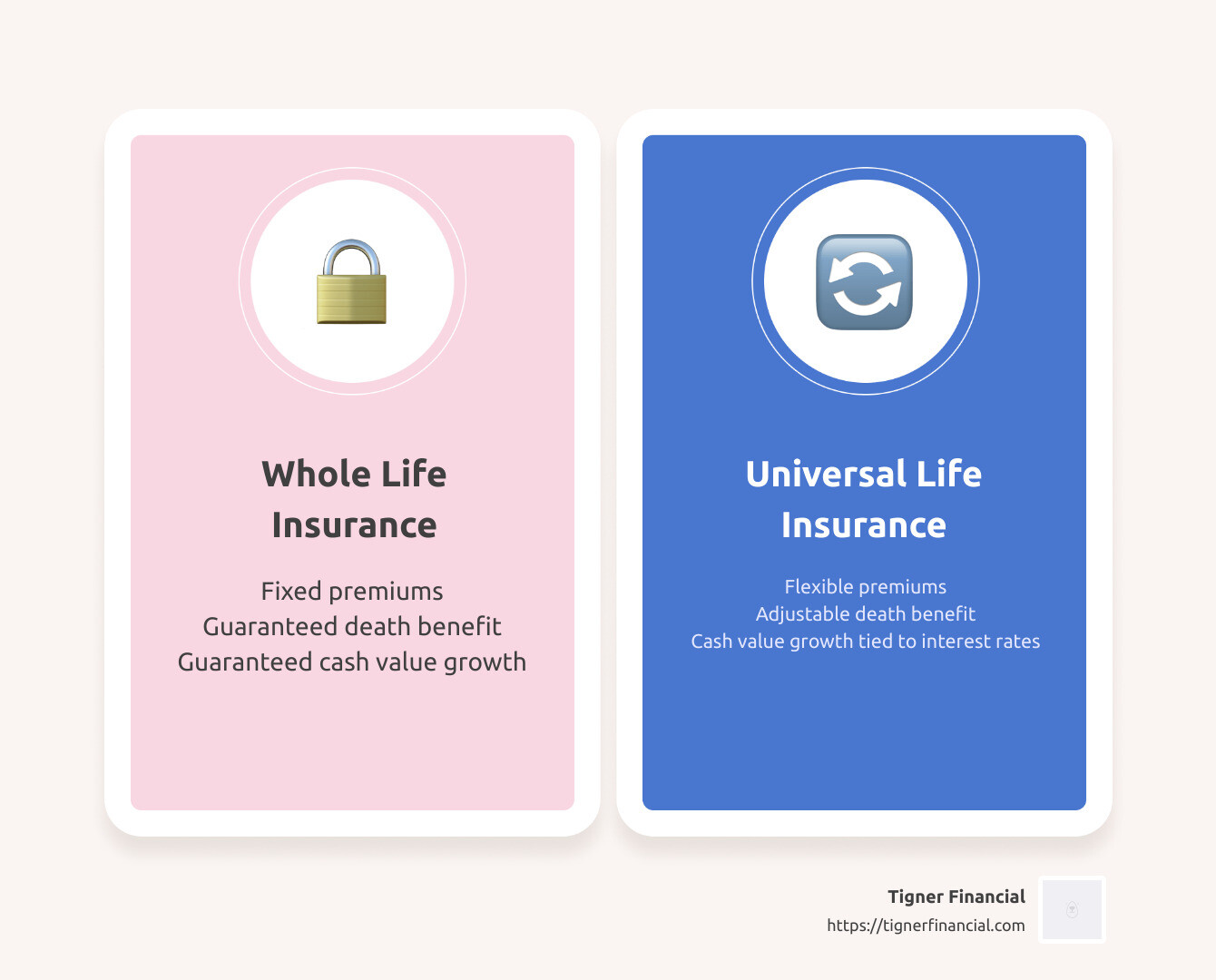
New York Life primarily builds its permanent insurance portfolio around whole life insurance. A whole life policy is a conservative, highly structured financial instrument. Premiums remain level and fixed for the entire life of the insured. A portion of each premium covers the cost of insurance and administrative expenses, while the remainder is deposited into the insurer's general fund. This general fund is managed conservatively by professional investment teams, heavily weighted toward high-grade corporate and government bonds.
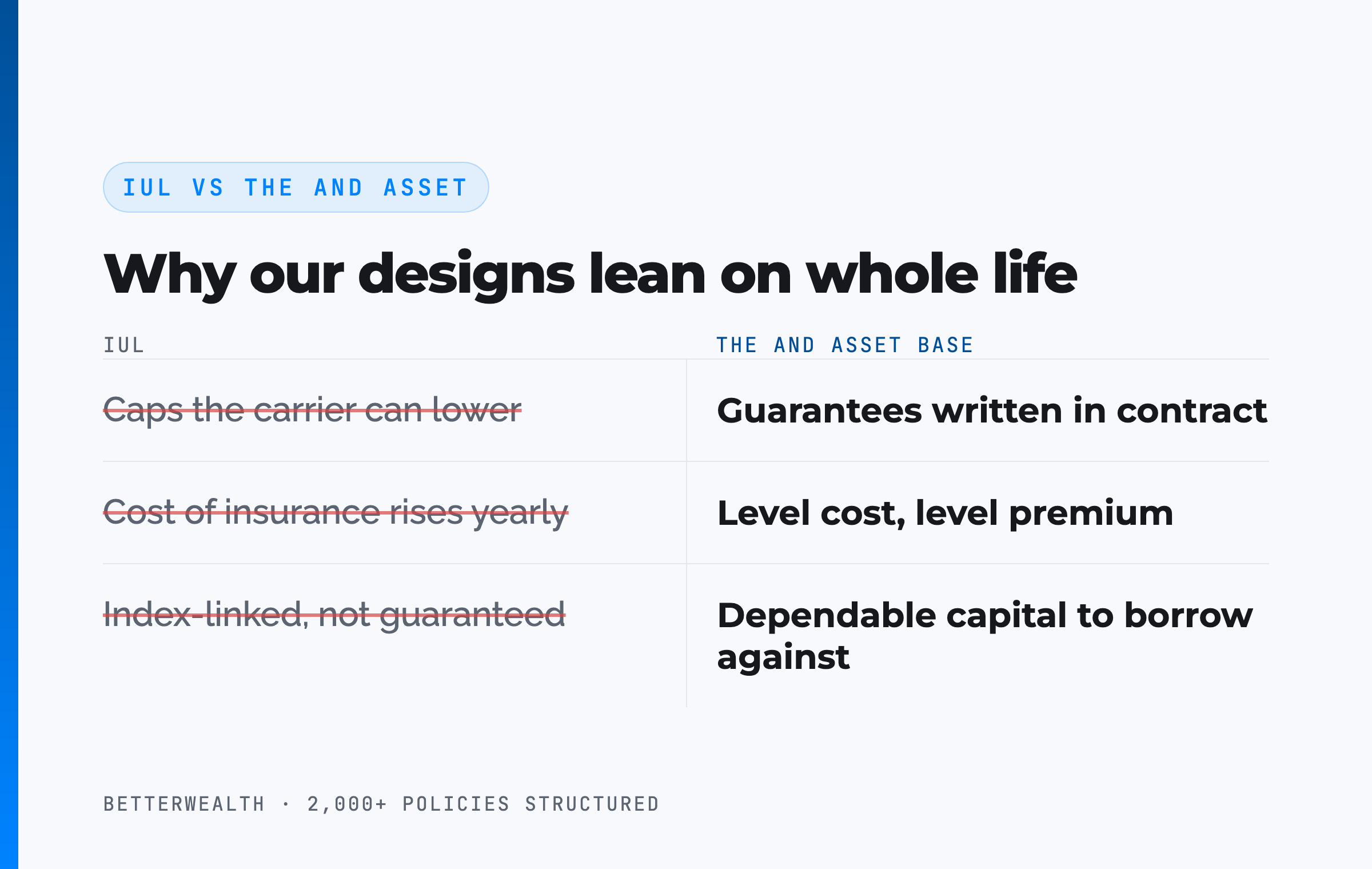
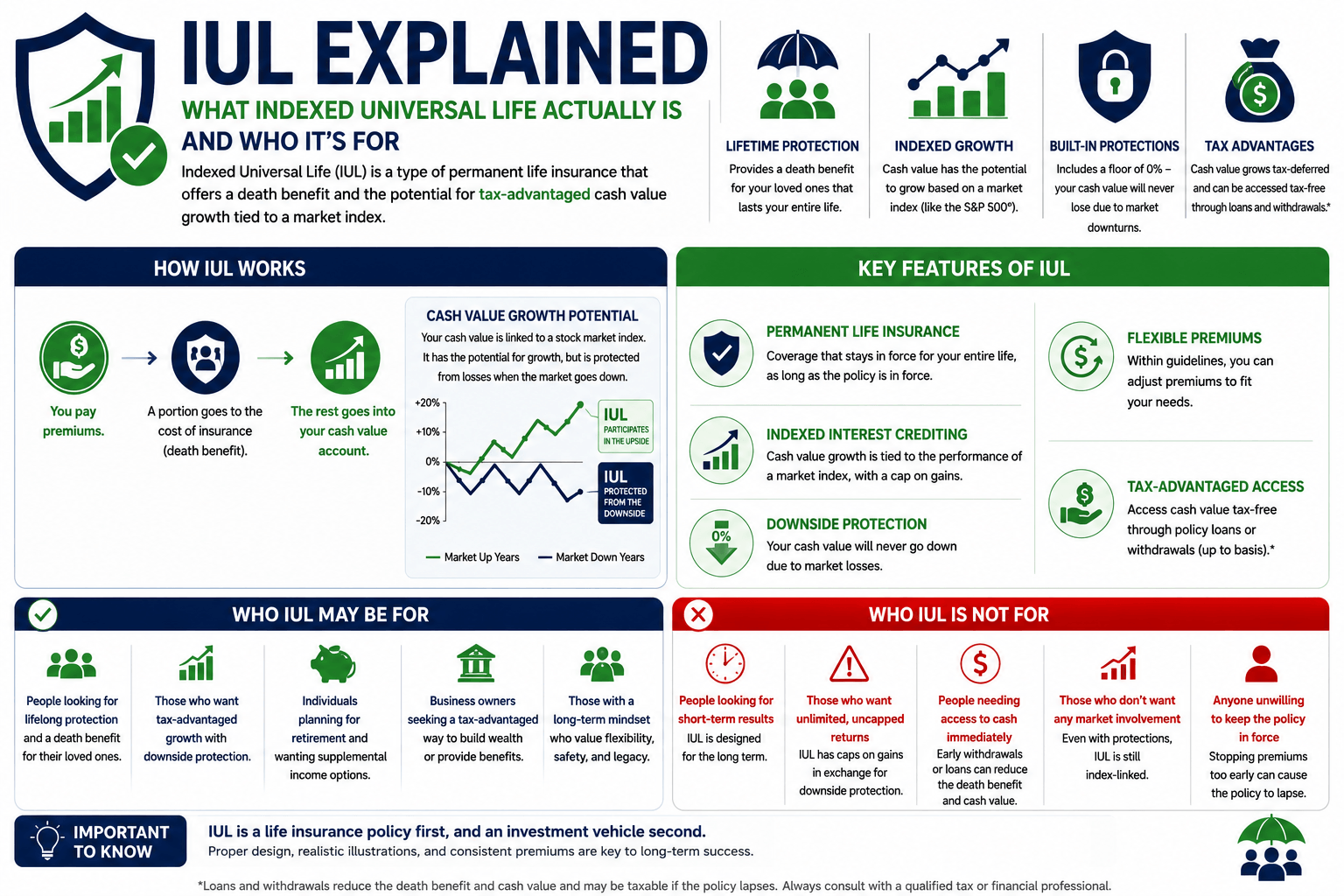
IUL insurance, on the other hand, is a subset of universal life insurance. It introduces flexibility and market linkage. With an IUL policy, the cash value is not invested directly in the stock market; instead, interest is credited based on the upward movement of a chosen market index. To manage volatility, insurance carriers apply caps, participation rates, and floors. A floor ensures that if the market drops, your cash value does not lose principal due to negative returns, typically locking in a zero percent return for that period. In exchange, the carrier limits your maximum gains through a cap rate or participation rate.
Financial Stability and Mutual vs. Stock Structure
One of the most consequential distinctions between New York Life and typical IUL providers lies in the corporate structure of the issuing companies.
New York Life Insurance Company is a mutual company. In a mutual company, there are no outside shareholders. The policyholders themselves are the owners of the company. This alignment means that surplus earnings are distributed back to eligible participating policyholders in the form of annual dividends. While dividends are never guaranteed, New York Life has a long historical track record of paying dividends every year since 1854. This structure fosters a strong emphasis on long-term surplus preservation and conservative risk management.
Conversely, many companies that issue IUL policies are stock-owned life insurance corporations. Stock companies must answer to external shareholders and prioritize profitability for investors. While many of these stock carriers are financially robust and hold high financial strength ratings from agencies like A.M. Best, Moody's, and Standard & Poor's, the underlying corporate motivation differs from that of a mutual insurer.
Cash Value Growth Mechanisms and Volatility
The core debate in any New York Life insurance vs IUL insurance comparison centers on cash value growth and risk tolerance.
New York Life Whole Life Cash Value
- Guaranteed Growth: Whole life policies feature a guaranteed minimum rate of interest credited to the cash value, ensuring steady, predictable compounding regardless of economic conditions.
- Dividend Additions: Dividends declared by the company can be used to purchase paid-up additions, which increase both the death benefit and the cash value further.
- Simplicity: The growth formula is transparent and requires no active management or selection of crediting strategies.
IUL Insurance Cash Value
- Index-Linked Interest: Interest is credited based on point-to-point index calculations or annual resets. When the market goes up, you capture gains up to a predetermined cap.
- Downside Protection: The zero percent floor protects principal from negative index performance. However, policy fees and internal costs of insurance continue to deduct from the cash value even in zero-return years.
- Complexity: Policyholders or their financial professionals must navigate various crediting strategies, such as monthly averages, point-to-point caps, and participation rates, which can change over time at the insurer's discretion.
Cost Structure, Fees, and Premium Flexibility
Financial commitments and fee transparency vary significantly between these two types of permanent coverage.
New York Life whole life policies demand rigid financial discipline. Premium amounts are fixed, and payments must be made on schedule to keep the contract in force. Failing to pay can lead to policy lapse or forced restructuring. However, this rigidity ensures that the policy aggressively funds its cash value and meets its long-term guarantees. The internal fees are baked into the premium structure, and while acquisition and administrative costs are high in the early years, they stabilize over time.
IUL insurance offers much higher flexibility, which can be both an advantage and a hazard. Policyholders can often adjust their premium payments within broad contractual limits, raising or lowering payments depending on their current cash flow. If cash value is high enough, premiums can even be skipped temporarily.
However, this flexibility introduces significant risk. If an IUL policyholder underfunds the policy—paying too little while the cost of insurance rises as they age—the internal fees can rapidly deplete the cash value. This can cause the policy to lapse later in life unless substantial rescue premiums are injected. Furthermore, IUL policies feature complex fee structures, including per-thousand face amount charges, administrative fees, monthly flat fees, and potential surrender charges that can last for 15 years or longer.
Feature Comparison: New York Life vs. IUL Insurance
| Feature | New York Life Insurance (Whole Life) | IUL Insurance (Indexed Universal Life) |
|---|---|---|
| Primary Structure | Traditional permanent life with fixed premiums and guaranteed cash value. | Universal life with cash value tied to external market index performance. |
| Corporate Model | Mutual company (owned by participating policyholders; potential dividends). | Typically stock-owned corporations (profit-driven for external shareholders). |
| Growth Potential | Conservative, steady, backed by guaranteed rates and historical dividends. | Variable, linked to index upside up to a cap, protected by a zero percent floor. |
| Risk Profile | Low market risk; performance relies on insurer's general fund and dividend scale. | Moderate market risk; exposed to rising internal costs and changing caps/participation rates. |
| Premium Flexibility | Rigid; fixed scheduled payments required to maintain guarantees. | High; premiums can often be adjusted or skipped if cash value is sufficient. |
| Fee Transparency | Fees are generally embedded within the fixed premium and guaranteed structure. | Complex internal costs, including cost of insurance, rider fees, and administrative charges. |
| Primary Use Case | Estate preservation, conservative wealth accumulation, and guaranteed lifetime protection. | Supplemental retirement income accumulation with potential upside and downside protection. |
Accessing Cash Value: Policy Loans and Withdrawals
Both New York Life whole life policies and IUL contracts allow policyholders to access their accumulated cash value while alive through policy loans and withdrawals. This liquidity is one of the primary reasons individuals purchase permanent life insurance over term life insurance.
When you take a policy loan, you do not actually withdraw your cash value; instead, the insurance company lends you money using your cash value as collateral.
- Whole Life Loans: Mutual companies like New York Life often feature "direct recognition" or "non-direct recognition" loan provisions. In a participating whole life policy, borrowed cash value often continues to earn dividends (though sometimes at a modified rate), creating a stable environment for arbitrage or borrowing against assets.
- IUL Loans: IUL policies frequently offer fixed or indexed loan options. With an indexed loan, the borrowed cash value remains in the index account, continuing to earn interest based on the index while the carrier charges a loan interest rate. While this can result in positive arbitrage during strong market years, a series of zero-return years combined with fixed loan interest can severely drain the policy's remaining cash value.
Common Mistakes and Misconceptions
Navigating permanent life insurance requires separating realistic financial planning from aggressive sales pitches. Several frequent pitfalls trap unwary buyers.
- Treating IULs Like Direct Investments: An IUL is an insurance policy, not a direct stock market investment. You do not own shares of the underlying index, you do not receive stock dividends, and high management and insurance fees reduce net returns.
- Assuming IUL Caps Are Permanent: Insurance carriers have the contractual right to lower maximum cap rates or raise participation fees. Relying on historical 30-year backtested IUL illustrations that assume high, static caps can lead to severe underperformance.
- Underfunding Universal Life Policies: Treating an IUL like a flexible savings account where you stop paying premiums early can cause the policy to lapse when the insured reaches older ages and the cost of insurance spikes.
- Viewing Whole Life Solely as a Low-Return Bond Alternative: While conservative, whole life insurance is designed first and foremost as a lifelong death benefit protection vehicle. Evaluating it purely on internal rate of return (IRR) ignores the tax-free death benefit and asset protection benefits.
Suitability: Which Option Fits Your Financial Profile?
Determining whether New York Life insurance or an IUL policy aligns with your goals depends on your risk tolerance, financial discipline, and timeline.
Choose New York Life Insurance If:
- You prioritize absolute certainty, contractual guarantees, and predictable financial planning.
- You value the mutual company structure where policyholders share in the financial health of the firm through dividends.
- You prefer a disciplined, forced-savings premium structure that prevents you from altering or neglecting your funding schedule.
- Your primary objective is estate planning, legacy creation, or ultra-conservative wealth preservation.
Choose IUL Insurance If:
- You have a higher risk tolerance and desire exposure to market-linked upside without the risk of direct market losses.
- You require the flexibility to adjust premium payments dynamically as your business or personal income fluctuates.
- You are working with an experienced, fiduciary-minded financial professional who can model realistic, conservative index return assumptions rather than overly optimistic historical backtests.
- Your primary goal is supplementing retirement income with tax-advantaged cash value distributions, and you are prepared to actively monitor the policy's performance over decades.
Frequently Asked Questions
Is New York Life insurance considered an investment?
No. New York Life insurance is a legal contract providing permanent life insurance protection coupled with a cash value accumulation component. While the cash value grows and can generate dividends, it is classified as an insurance asset, not an investment security like a mutual fund or stock.
Can I lose money in an Index Universal Life policy?
You cannot lose your principal cash value directly due to negative stock market downturns because of the zero percent floor. However, your cash value can still decrease over time due to the ongoing deduction of monthly insurance costs, administrative fees, and rider charges, particularly if index returns are zero for extended periods.
Are dividends from New York Life guaranteed?
No. Dividends are declared annually by the Board of Directors of New York Life and are never guaranteed. However, New York Life has a continuous history of paying dividends to eligible policyholders every year since 1854.
How are policy loans taxed in both types of insurance?
Generally, policy loans taken from properly structured permanent life insurance policies are treated as debt and are income-tax-free, provided the policy remains in force until the insured passes away. If the policy lapses or is surrendered with outstanding loans exceeding the basis, the gain may become subject to ordinary income tax.
Which policy is better for retirement income?
Neither is universally "better"; it depends on execution. An IUL offers the potential for higher tax-free income streams if market performance is favorable and caps remain high, but carries the risk of underfunding. A New York Life whole life policy offers reliable, predictable, but typically lower long-term cash accumulation backed by guaranteed dividends.
Conclusion and Next Actions
Evaluating New York Life insurance versus IUL insurance ultimately boils down to choosing between contractual certainty and market-linked flexibility. If your priority is a conservative, guaranteed foundation backed by a mutual company with a historic dividend track record, traditional whole life from New York Life stands out. If you seek growth tied to market indexes with a downside floor and require premium flexibility, a carefully managed IUL policy may fit your strategy. Before committing, request formal, in-force ledger illustrations from licensed professionals, review internal fee disclosures in detail, and ensure the chosen product aligns with your long-term estate and retirement roadmap.
Image Gallery
Select an image to open it in a new tab.


Declan O'Connor
Higher Education and Campus Culture Reporter
