Julia Meade in Mission: Impossible 3: The Character That Humanized Ethan Hunt

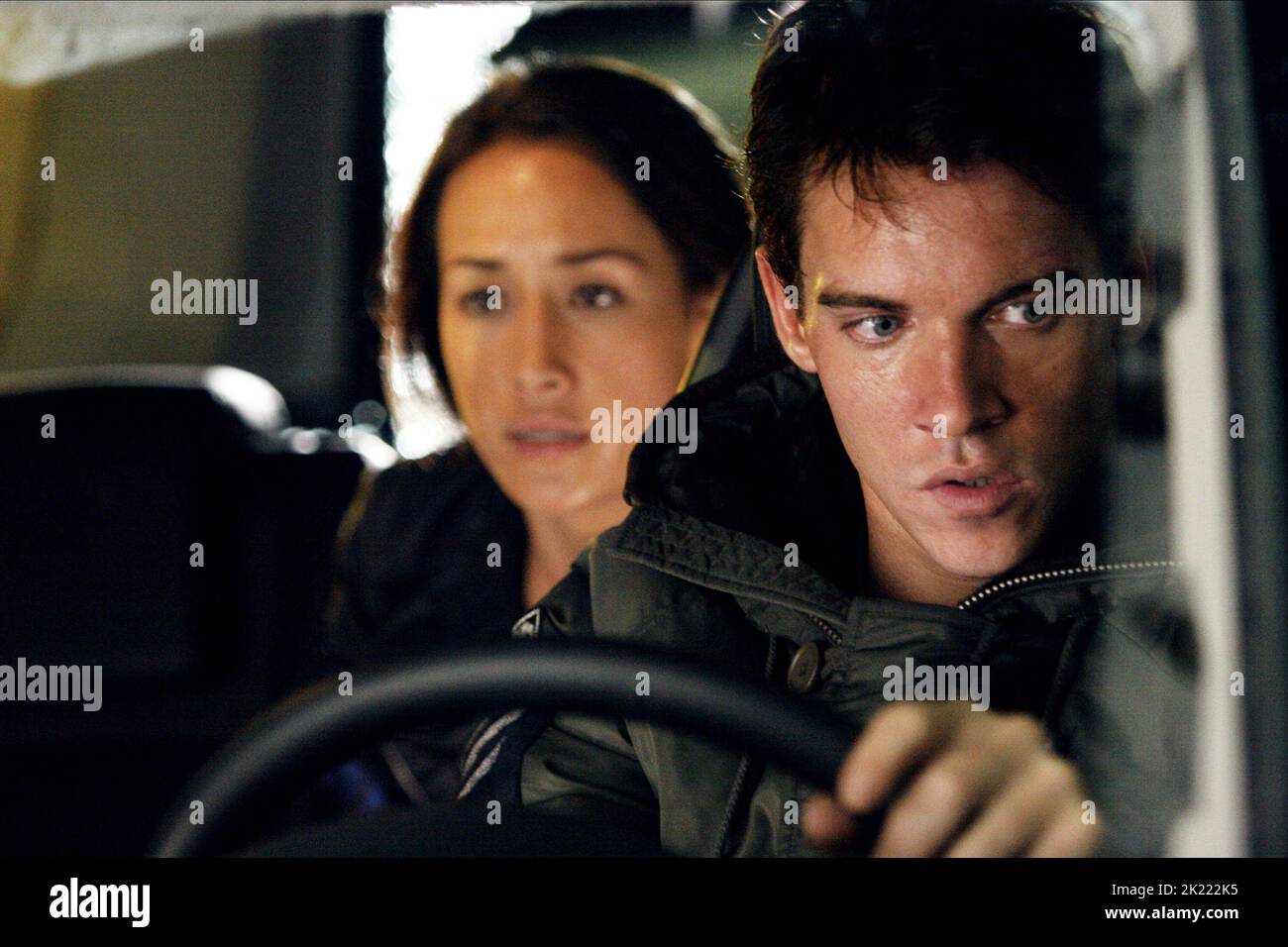
Julia Meade, portrayed by Michelle Monaghan, is the emotional core of Mission: Impossible III (2006). As the fiancée (and later wife) of Ethan Hunt, she represents his attempt to build a life outside the Impossible Missions Force (IMF). Her kidnapping by the villainous Owen Davian serves as the film’s primary conflict, forcing Ethan to bridge the gap between his secretive professional life and his vulnerable personal world.
The introduction of Julia Meade marked a significant turning point for the Mission: Impossible franchise. Before the third installment, Tom Cruise’s Ethan Hunt was largely portrayed as a lone-wolf superspy, similar to a high-octane James Bond. By the time of Mission: Impossible III, directed by J.J. Abrams, the narrative shifted to explore the collateral damage of a spy’s life. Julia was not just a "damsel in distress"; she was the personification of the stakes Ethan faced, providing a grounded reality that the series had previously lacked.
The Introduction of Julia Meade: Shifting the Franchise Dynamic
When audiences first meet Julia in Mission: Impossible III, she is a dedicated nurse who believes Ethan works for the Department of Transportation. This setup is crucial because it establishes a baseline of "normalcy." Unlike the previous films, which focused on international conspiracies and technical gadgets, the opening of the third film focuses on an engagement party. This domestic setting makes the subsequent intrusion of violence far more jarring.
J.J. Abrams utilized his experience from television series like Alias to bring a more intimate, character-driven focus to the film. By giving Ethan a partner who was completely removed from the world of espionage, the film created a unique tension. Julia represents the "Ordinary World" in the hero's journey, making Ethan’s eventual return to the IMF to rescue his former student, Lindsey Farris, feel like a genuine sacrifice of his happiness.
Michelle Monaghan’s Performance and Casting
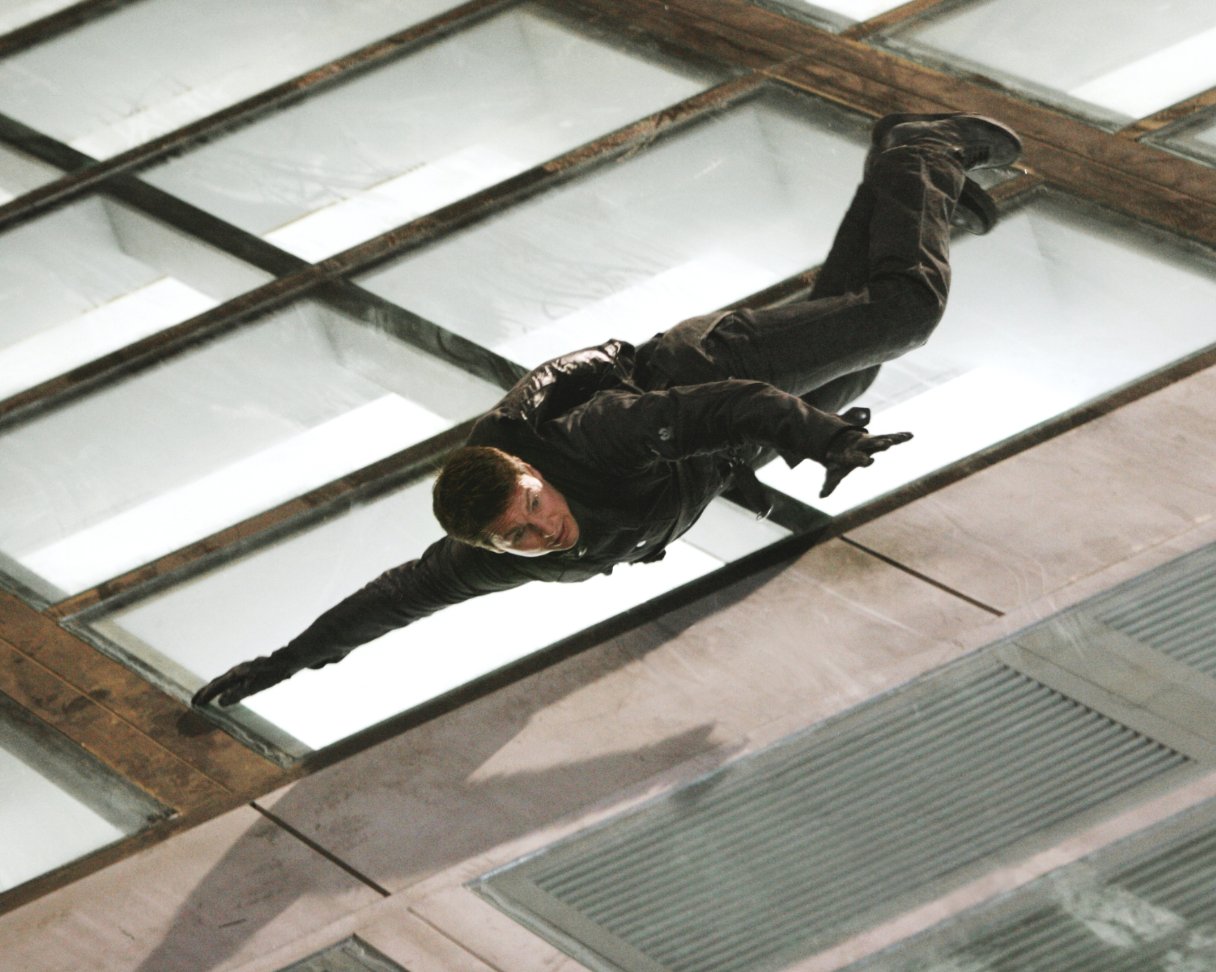
Michelle Monaghan was cast as Julia Meade because of her ability to project both vulnerability and a quiet, resilient strength. In the context of 2006 action cinema, it was common for female leads to be relegated to background roles. However, Monaghan’s Julia had to carry the weight of the film's emotional stakes. Her chemistry with Tom Cruise was essential for the audience to believe that Ethan Hunt—a man who jumps off skyscrapers—would be willing to surrender everything for her.
Monaghan’s performance is particularly noteworthy during the film’s high-stress sequences. She portrays Julia's confusion and terror with a grounded realism that contrasts with the stylized action around her. As the plot progresses, especially during the finale in Shanghai, Monaghan transitions from a victim of circumstances to an active participant in her own survival, a trait that would define her character's legacy in the later films, Mission: Impossible – Ghost Protocol and Mission: Impossible – Fallout.

Plot Role: The Stake of the "Rabbit’s Foot"
The central conflict of Mission: Impossible III revolves around an item known as the "Rabbit’s Foot." While the item itself is a "MacGuffin"—an object that serves as a plot device but whose exact nature is never fully explained—its value is defined by Julia’s life. Owen Davian, played with chilling intensity by Philip Seymour Hoffman, uses Julia as leverage to force Ethan to steal the Rabbit’s Foot from a secure facility in Shanghai.
The Kidnapping and the Warehouse Scene
The most famous and intense sequence involving Julia is the warehouse confrontation. In a brilliant display of non-linear storytelling, the film actually opens with this scene before flashing back. Davian holds a gun to Julia’s head and counts to ten, demanding the real Rabbit’s Foot.
This scene is a masterclass in tension, as it strips Ethan Hunt of his gadgets and leaves him pleading for the life of the woman he loves. It is later revealed through the series' signature "mask technology" that the woman Ethan saw executed was actually Davian’s head of security, disguised as Julia. This revelation provides the narrative "out" that allows Julia to survive, but the emotional trauma inflicted on Ethan remains a driving force for the remainder of the story.
Julia as an Active Participant in the Finale
The final act of Mission: Impossible III breaks the trope of the helpless captive. After Ethan rescues Julia from Davian’s henchmen, he is incapacitated by a micro-explosive implanted in his head. In these final moments, the roles are reversed. Ethan must talk Julia through the process of using a firearm to defend them and then using an improvised defibrillator to jump-start his heart.
This sequence is vital for the character's development. Julia is forced to accept the reality of Ethan’s world in a matter of seconds. Her ability to stay calm under pressure and save Ethan's life proves that she is his equal in terms of fortitude, even if she lacks his specialized training. This shared trauma eventually leads to the IMF granting her a new identity for her protection, a plot point that would resonate throughout the rest of the franchise.
Character Development and Background
Julia Meade is depicted as a highly intelligent professional. Her career as a nurse is not incidental; it highlights her nurturing nature and her ability to handle medical emergencies, which becomes a literal life-saving skill in the film’s climax.
- Profession: Registered Nurse.
- Relationship Status: Engaged/Married to Ethan Hunt.
- Knowledge of IMF: Initially zero, eventually fully aware of the danger.
- Key Skills: Medical triage, composure under fire, basic firearms proficiency (learned under duress).
Her background as a nurse also provides a narrative contrast to Ethan’s "life-taking" profession. While Ethan spends his days neutralizing threats, Julia spends hers saving lives in a hospital. This dichotomy is what makes their relationship so poignant; she represents the version of humanity that Ethan is fighting to protect.
Impact on Ethan Hunt’s Arc
Before Julia, Ethan Hunt had very few personal ties. The first Mission: Impossible (1996) saw his entire team betrayed and killed, and the second film featured a more fleeting romantic interest. Julia Meade changed the trajectory of the character by giving him a permanent "weakness" that the IMF’s enemies could exploit.
Her presence in Mission: Impossible III forced Ethan to grapple with the impossibility of having a "normal" life. The film ends on a bittersweet note: though they are together, the shadow of the IMF looms large. This realization led to the creative decision in subsequent films to move Julia into the background to keep her safe, which added a layer of tragedy to Ethan's character that persists even into the most recent entries of the series as of 2026.
Future Appearances: Beyond Mission: Impossible 3
While Julia's most significant screen time is in the third film, her character's shadow remains long. Her story did not end in 2006; rather, it evolved into a long-form arc about the sacrifices required of those who serve in the shadows.
The Ghost Protocol Cameo
In Mission: Impossible – Ghost Protocol (2011), the audience is led to believe that Julia was killed in a hit ordered by the IMF’s enemies. This "death" is the reason Ethan is in a Russian prison at the start of the film. However, the ending reveals that her death was faked to ensure her safety. The final shot of the film shows Ethan watching her from a distance at a pier in Seattle, a silent acknowledgment that they can never truly be together if she is to stay alive.
Closure in Mission: Impossible – Fallout
Julia returns for a pivotal role in Mission: Impossible – Fallout (2018). In this film, she is married to a doctor and working in a medical camp in Kashmir. This appearance provides the necessary closure for both the characters and the audience. It confirms that Julia has found peace and a way to continue her life’s work of helping others, and it allows Ethan to let go of the guilt he felt for "ruining" her life.
The interaction between Julia and Ethan’s new teammate, Ilsa Faust, also serves to "pass the torch," acknowledging that while Julia was the love of Ethan's life, his world now belongs to those who can fight alongside him.
Comparison: Julia Meade vs. Other Mission: Impossible Leads
Julia Meade occupies a unique space in the franchise. To understand her impact, it is helpful to compare her role to other significant female characters in the series.
| Character | First Appearance | Relation to Ethan | Primary Role/Archetype |
|---|---|---|---|
| Claire Phelps | M:I (1996) | Teammate/Interest | The Femme Fatale / Traitor |
| Nyah Nordoff-Hall | M:I 2 (2000) | Romantic Interest | The Professional Thief |
| Julia Meade | M:I 3 (2006) | Wife | The Emotional Anchor / "Civilian" |
| Jane Carter | Ghost Protocol (2011) | Teammate | The Enforcer / Field Agent |
| Ilsa Faust | Rogue Nation (2015) | Ally / Equal | The Mirror / Professional Counterpart |
Unlike the others, Julia was never meant to be a spy. Her strength comes from her civilian resilience, making her the most relatable character in a world of superhuman stunts.
Behind the Scenes: Direction and Writing
The decision to center the third film on Julia was a deliberate choice by the writing team, which included Alex Kurtzman and Roberto Orci. They wanted to raise the stakes by making the threat personal. In previous films, the threat was often a virus or a stolen list of agents—abstract concepts that didn't necessarily hit the protagonist on a visceral level.
By putting a face and a name to the stakes, Mission: Impossible III became a more intense, emotional experience. This approach influenced how the sequels were written, ensuring that even when the threat is global (like a nuclear strike or an AI entity), there is always a personal element driving Ethan Hunt’s actions.
Frequently Asked Questions
Does Julia die in Mission: Impossible 3?
No, Julia Meade does not die in Mission: Impossible 3. Although a woman wearing a mask of her face is executed by Owen Davian, it is later revealed to be a decoy. Julia survives the film and is successfully rescued by Ethan Hunt in the final act.
Why did Ethan and Julia break up?
Ethan and Julia did not "break up" in the traditional sense. After the events of Mission: Impossible 3, it became clear that Ethan's enemies would never stop hunting her to get to him. To protect her, the IMF helped fake her death and provided her with a new identity. They lived separately for her safety, though they remained married in spirit until they officially moved on, as seen in Mission: Impossible – Fallout.
What was the Rabbit’s Foot in the movie?
The "Rabbit's Foot" is never explicitly defined in the film. It is a biological hazard or weapon of some kind, but its specific function is irrelevant to the plot. Its purpose is to serve as the MacGuffin—the object that everyone wants, which drives the characters into conflict. Its real value in the story is that it is the price of Julia’s life.
Who played Julia in Mission: Impossible 3?
Julia Meade was played by American actress Michelle Monaghan. She reprised the role in Mission: Impossible – Ghost Protocol (uncredited cameo) and Mission: Impossible – Fallout.
Is Julia mentioned in the later movies like Dead Reckoning?
While she does not appear in Dead Reckoning or the films released through 2026, her influence is felt in Ethan's protective nature over his team. The lessons Ethan learned from his relationship with Julia—specifically regarding the danger of personal attachments in the spy world—continue to inform his decisions and his reluctance to let others get too close to the line of fire.
Practical Recommendation for Viewers
To fully appreciate the character of Julia Meade, it is recommended to watch the "Trilogy of Julia," which consists of Mission: Impossible III, the ending of Ghost Protocol, and Mission: Impossible – Fallout. Watching these three films in succession provides a complete narrative arc for the character, evolving from a confused fiancée to a survivor who has found her own path. For those interested in the technical aspects of filmmaking, pay close attention to the opening scene of the third film; it sets the tone for the entire modern era of the franchise by emphasizing that behind every impossible mission is a human cost.
Image Gallery
Select an image to open it in a new tab.

Simon Caldwell
Enterprise Technology and Systems Editor
