
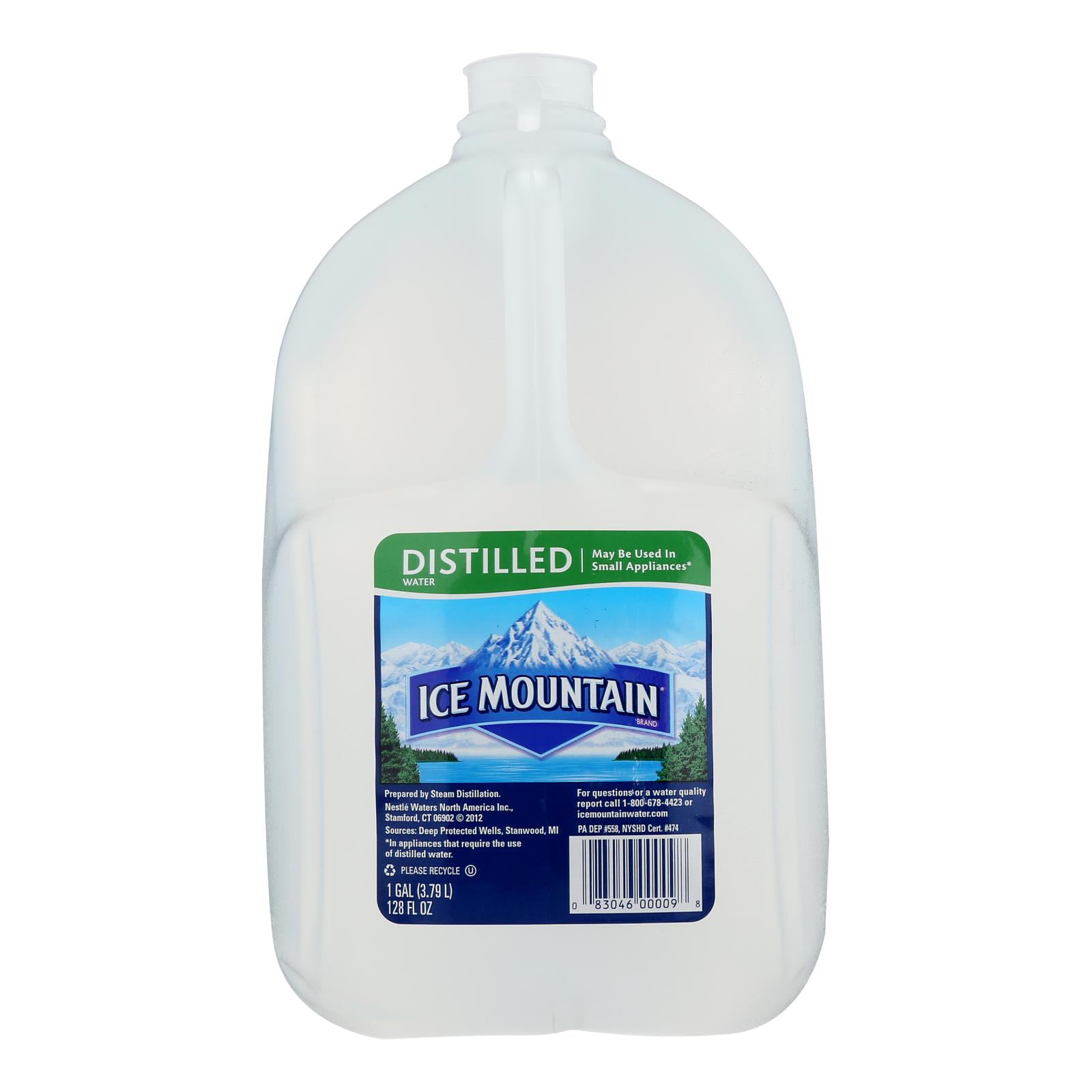
Ice Mountain distilled water provides a high level of mineral removal and purity, making it a reliable option for specific household, medical, and culinary needs. Whether it is worth the cost depends on whether you require water free of dissolved solids for specialized appliances, medical devices, or sensitive chemical uses, rather than for general daily hydration.
When consumers evaluate bottled water brands, they often encounter spring water, purified water, and distilled water. While spring water retains naturally occurring minerals that affect taste, and purified water undergoes filtration to remove impurities while sometimes keeping balanced mineral profiles, distilled water goes through an intensive phase-change process. Ice Mountain, a well-known regional brand owned by BlueTriton Brands (and historically associated with Nestlé Waters North America) distributed primarily in the Midwestern United States, offers distilled water in various container sizes, ranging from gallon jugs to multi-gallon dispensers. Understanding whether paying for this specific brand of distilled water is financially and practically worthwhile requires looking closely at how it is produced, its chemical profile, its performance in specific applications, and how it compares to alternative options.
Understanding Distilled Water and the Ice Mountain Brand
To determine the value of Ice Mountain distilled water, one must first understand what distillation is and how Ice Mountain fits into the broader bottled water market. Distillation is one of the oldest and most effective methods of water purification. The process involves boiling water into steam, leaving behind virtually all impurities, minerals, heavy metals, bacteria, viruses, and chemical contaminants. The steam is then captured and condensed back into liquid water in a separate container.
The resulting product is essentially pure $H_2O$ with a total dissolved solids (TDS) reading of near zero. Unlike spring water, which collects mineral content from underground sources and aquifers, or tap water, which is treated and regulated by municipal authorities under standards set by the Environmental Protection Agency (EPA), distilled water strips away all mineral content. This gives it a flat or neutral taste because minerals like calcium, magnesium, and sodium—which give water its distinct mouthfeel and flavor profile—have been removed.
Ice Mountain is primarily recognized as a regional spring water brand sourced from natural springs in Michigan and other Midwestern locations. However, to meet consumer demand for various water types, the brand also produces and distributes distilled water. It is important to note that while Ice Mountain spring water derives its value from its specific geographic sources, Ice Mountain distilled water undergoes industrial distillation, meaning its source water origin matters less than the rigorous distillation process itself.
The Production and Quality Control Standards
The value proposition of any bottled water brand begins with its adherence to safety and quality regulations. In the United States, bottled water is regulated by the Food and Drug Administration (FDA) as a packaged food commodity, while tap water falls under the jurisdiction of the EPA. The FDA requires bottled water processors to adhere to Current Good Manufacturing Practices (CGMPs) and establish strict sanitation, processing, and bottling controls.
Ice Mountain distilled water is subjected to distillation processes that typically involve steam vaporization followed by condensation. This ensures that biological contaminants, volatile organic compounds (VOCs) with higher boiling points, and inorganic minerals are left behind in the boiling chamber. For consumers, buying a commercial brand like Ice Mountain offers a guarantee of consistency, safety, and convenience that home filtration methods or makeshift distillation setups cannot always match.
However, because the distillation process strips away all minerals, the water can become slightly acidic over time as it absorbs carbon dioxide from the air, forming weak carbonic acid. This is a normal chemical characteristic of all true distilled water and is not unique to Ice Mountain.
Practical Applications: When Is Distilled Water Truly Necessary?
Many consumers debate whether purchasing distilled water is worth the expense because drinking it for everyday hydration offers no distinct health advantages over standard filtered or tap water, and some health organizations note that it lacks beneficial dietary minerals. However, distilled water shines in specific scenarios where minerals cause operational failures, scaling, or chemical interference.
Small Household Appliances
The most common household use for distilled water is in appliances that heat water and generate steam.
- Garment Steamers and Irons: Tap water contains calcium and magnesium. When heated, these minerals precipitate out of the solution and form a hard, chalky white scale (limescale) inside the heating elements and steam vents. Over time, this buildup clogs appliances, reduces steam output, and causes brown spitting. Using Ice Mountain distilled water entirely eliminates mineral scaling, significantly extending the lifespan of irons and garment steamers.
- Humidifiers: Cool-mist and warm-mist humidifiers evaporate water into the air. When tap water is used, any minerals present in the water are dispersed into the room as a fine white dust that settles on furniture and electronics. Furthermore, mineral scale builds up on the internal transducers or heating elements of the humidifier. Using distilled water prevents both the white dust phenomenon and internal scaling.
- Neti Pots and Sinus Rinses: Medical authorities, including the Centers for Disease Control and Prevention (CDC), strongly advise against using untreated tap water for nasal irrigation due to the rare risk of dangerous pathogens like Naegleria fowleri. While boiled and cooled water or sterile saline is acceptable, commercially bottled distilled water is widely recommended as a safe, convenient option for nasal rinsing devices.
Specialized Equipment and Hobbies
Beyond household chores, technical applications demand zero-mineral water:
- Automotive Cooling Systems: Older automotive lead-acid batteries and some specialized cooling loops require mineral-free water to prevent electrolyte contamination and galvanic corrosion. While modern coolant mixes typically use deionized or distilled water mixed with antifreeze, using pure distilled water prevents mineral deposits from clogging radiator channels.
- Aquariums and Hydroponics: While pure distilled water is generally too harsh for direct use in fish tanks or hydroponic systems without re-mineralization (due to the lack of buffering capacity and essential nutrients), aquarists often use it to top off evaporated water in marine tanks to prevent the gradual buildup of heavy minerals and salinity spikes.
- Scientific and Electronic Maintenance: Cleaning delicate electronic components, filling humidors for cigars, or conducting certain hobbyist chemical experiments often requires pure water to prevent mineral spotting or unwanted reactions.
Financial Cost Analysis: Ice Mountain Distilled Water vs. Alternatives
When assessing whether Ice Mountain distilled water is worth it, cost is a primary consideration. Distilled water is generally sold in one-gallon jugs at grocery stores, big-box retailers, and pharmacies.
| Water Type | Average Cost per Gallon | Mineral Content | Primary Use Case | Convenience Factor |
|---|---|---|---|---|
| Municipal Tap Water | < $0.01 | Variable (regulated) | Drinking, cooking, cleaning | Maximum (direct from tap) |
| Filtered Tap Water (Pitcher) | $0.02 - $0.05 | Reduced minerals | Everyday drinking | High (requires filter changes) |
| Ice Mountain Spring Water | $0.80 - $1.50 | Natural spring minerals | Drinking, hydration | Moderate (heavy to transport) |
| Ice Mountain Distilled Water | $1.00 - $1.80 | None (Zero TDS) | Appliances, medical, specialized tasks | Moderate (heavy to transport) |
| In-Home Countertop Distiller | $0.05 - $0.15 (electricity) | None (Zero TDS) | High-volume users | Low (upfront cost, cleaning required) |
As shown in the comparison, buying commercial bottled distilled water like Ice Mountain is significantly more expensive per gallon than tap water or filtered water. If a household uses several gallons of distilled water a week for humidifiers or CPAP machines, the annual cost can accumulate rapidly.
For high-volume users, investing in a countertop water distiller or a Reverse Osmosis (RO) system with a deionization stage may eventually become more cost-effective. However, for low-volume users—such as someone who only uses a gallon every few weeks for an iron or a garment steamer—buying individual jugs of Ice Mountain distilled water avoids the upfront capital investment, maintenance, and electricity costs associated with running a home distillation appliance.
Pros and Cons of Choosing Ice Mountain Distilled Water
To make an informed purchasing decision, consumers should weigh the distinct advantages and disadvantages of selecting this brand and product category.
Advantages
- Guaranteed Purity: The industrial distillation process removes virtually 100% of dissolved solids, heavy metals, chlorine, and biological contaminants.
- Appliance Protection: Completely prevents limescale buildup, extending the operating life of steam irons, humidifiers, and vaporizers.
- Widely Available: Ice Mountain is a prominent brand distributed extensively throughout its operating regions, making it easy to find in local supermarkets and grocery chains.
- Consistency: Unlike tap water, which can vary in mineral taste and municipal treatment chemical levels depending on the season, bottled distilled water offers uniform purity.
Disadvantages
- Lack of Essential Minerals: Distilled water is flat-tasting and lacks calcium and magnesium. While diet provides the vast majority of human mineral intake, drinking exclusively distilled water offers no nutritional mineral contribution.
- Environmental Impact: Single-use plastic gallon jugs contribute to plastic waste, even when recycled, and transporting heavy water jugs carries a higher carbon footprint than using tap water.
- Storage and Handling: Gallon jugs are bulky, heavy to carry, and take up significant pantry or storage space.
- Higher Ongoing Cost: Relative to tap or filtered water, purchasing commercial bottled distilled water represents a recurring household expense.
Common Misconceptions Regarding Distilled Water
Several myths surround distilled water, which can skew a consumer's perception of its value.
The most common myth is that drinking distilled water leaches minerals from the human body. Nutritional science and public health bodies clarify that while distilled water is aggressive in absorbing substances due to its lack of dissolved ions, it does not actively pull vital minerals out of human bones or tissues upon ingestion. The human digestive tract and kidneys tightly regulate mineral balance, and dietary intake supplies the vast majority of necessary minerals. However, because it lacks taste and does not contribute to mineral intake, most people prefer spring or purified drinking water for everyday hydration.
Another misconception is that all bottled waters are essentially the same. Consumers frequently confuse distilled water with purified or spring water. Drinking spring water that has been distilled defeats the purpose of paying for a pristine natural spring source, as the unique mineral profile is completely boiled away. Conversely, buying Ice Mountain distilled water means paying for the purification process rather than the geographic spring source.
Evaluating Value: Is It Right For You?
Deciding if Ice Mountain distilled water is worth your money comes down to a simple audit of your actual needs.
If your primary goal is to find the healthiest water for daily drinking, Ice Mountain distilled water is generally not worth the premium price or the flat taste. Standard tap water, filtered tap water, or Ice Mountain spring water serve that purpose better and at a lower financial or sensory cost.
However, if you own expensive steam-based household appliances, run humidifiers continuously through dry winter months, use specialized medical or respiratory equipment, or require mineral-free water for hobbies, Ice Mountain distilled water offers substantial value. It protects your equipment investments from premature failure caused by hard water scaling, ensures safety for delicate tasks, and provides reliable, ready-to-use purity without the need to maintain complex filtration hardware at home.
Frequently Asked Questions
Can I drink Ice Mountain distilled water every day?
Yes, you can safely drink Ice Mountain distilled water every day. It is non-toxic and free of harmful contaminants. However, because it lacks minerals, it has a flat taste, and it does not contribute to your daily dietary intake of calcium and magnesium. Most people prefer mineralized water or spring water for routine hydration.
Why does Ice Mountain distilled water taste different from regular bottled water?
Regular bottled water, such as spring water, contains naturally occurring minerals like calcium, magnesium, and potassium that give water its distinct taste and crisp mouthfeel. Distilled water has undergone a vaporization and condensation cycle that removes all dissolved solids and minerals, resulting in a neutral, flat taste.
Is Ice Mountain distilled water the same as purified water?
No. While both are purified, "purified water" can be sourced from municipal tap water and processed via methods like reverse osmosis, deionization, or filtration, which may leave behind trace minerals. "Distilled water" specifically undergoes boiling and condensation, creating water with virtually zero total dissolved solids (TDS).
Can I use Ice Mountain distilled water in my CPAP machine?
Yes, most CPAP (Continuous Positive Airway Pressure) manufacturers recommend using distilled water in their humidification chambers. Using distilled water prevents mineral scaling and bacterial buildup on the heating plate, ensuring clean operation and extending the lifespan of the machine's water chamber.
Does Ice Mountain distilled water expire?
Commercially bottled distilled water does not technically expire or spoil if stored properly in a cool, dark place away from direct sunlight and chemicals. However, over long periods, plastic containers can leach trace compounds into the water or the water can absorb carbon dioxide, slightly lowering its pH. For best quality, it is recommended to consume it within a reasonable timeframe.
Final Recommendation: Purchase Ice Mountain distilled water specifically for appliance maintenance, humidifiers, and technical tasks where mineral buildup is a concern, but rely on standard filtered or spring water for daily drinking needs to balance cost and taste.
Image Gallery
Select an image to open it in a new tab.

Akira Tanaka
International Academic Trends Correspondent
