Navigating the Common Attributes of Home and Auto Insurance Policies

Home and auto insurance share foundational risk-management mechanisms, including risk pooling, premiums, deductibles, coverage limits, policy exclusions, and underwriting criteria. Both insurance types protect policyholders from catastrophic financial loss by transferring individual risk to an insurer in exchange for regular payments, governed by legally binding contracts.
When individuals secure insurance coverage to protect their physical assets and financial well-being, they frequently encounter two primary forms of protection: homeowners insurance and auto insurance. While these products cover different domains of daily life—housing structures versus motor vehicles—they operate on identical economic and legal principles. Understanding the shared attributes of home and auto insurance helps consumers navigate policy structures, evaluate risk management strategies, and make informed decisions when shopping for coverage or filing a claim.
The Economic Foundation: Risk Pooling and Premium Mechanics
At the core of both home and auto insurance is the principle of risk pooling. Insurance companies collect payments, known as premiums, from a large group of policyholders who face similar potential hazards. When an individual within that pool suffers a covered loss, the insurer uses funds from the collective pool to pay for the damages or liability claims. This system distributes the financial burden of unexpected events across a broad base, preventing individual households from facing ruinous expenses.
The calculation of these premiums relies heavily on actuarial science and underwriting. Insurers analyze historical data, demographic trends, and individual risk factors to determine the probability of a claim and the expected cost of payout. For auto insurance, factors such as driving history, vehicle make and model, and annual mileage dictate the price. For homeowners insurance, geographic location, construction materials, roof age, and local crime rates influence the cost. Despite the different variables, the underlying economic function remains identical: higher risk results in a higher premium, while lower risk yields more favorable rates.
Contractual Structures: Indemnity, Insurable Interest, and Good Faith
Both home and auto insurance policies function as legally binding indemnity contracts. The principle of indemnity dictates that the insurance policy is designed to restore the policyholder to the financial position they occupied before the loss occurred—no better and no worse. An insurer will not intentionally allow a policyholder to profit from a loss; instead, payouts are strictly tied to the actual cash value or replacement cost of the damaged property or the legal liabilities incurred.
Furthermore, both policy types require the purchaser to possess an "insurable interest" in the subject matter. This means the policyholder must stand to suffer a direct financial loss if the property or vehicle is damaged, stolen, or destroyed. A person cannot purchase insurance for a home or car they do not own or have a legal financial stake in.
Additionally, these contracts operate under the legal doctrine of uberrimae fidei, or the utmost good faith. Both the insurer and the insured are obligated to disclose all material facts honestly during the application process. Concealing information, such as a history of reckless driving on an auto application or a prior structural fire on a home application, can lead to claim denials or policy rescission.

Deductibles, Limits, and Out-of-Pocket Costs
Every standard home and auto insurance policy incorporates structural cost-sharing mechanisms designed to manage moral hazard and administrative overhead. The two most critical parameters shared by both insurance types are deductibles and coverage limits.
Deductibles
A deductible represents the amount of money the policyholder must pay out of pocket before the insurance company begins covering the remaining costs of a claim. Both home and auto policies utilize this mechanism to deter minor, frequent claims and share minor risks with the consumer.
- Fixed Dollar Deductibles: Commonly found in standard auto policies (e.g., $500 or $1,000 per collision) and standard home policies (e.g., $1,000 for standard perils).
- Percentage Deductibles: Frequently applied to homeowners insurance for specific catastrophic risks, such as windstorms, hurricanes, or earthquakes, where the deductible is calculated as a percentage of the dwelling's insured value rather than a flat fee.
Coverage Limits
Coverage limits establish the absolute maximum financial responsibility the insurance company will assume for a covered loss. If a home is insured for $350,000 and suffers a total loss exceeding that amount, the insurer pays up to the $350,000 limit (plus any applicable extended replacement cost endorsements). Similarly, auto liability policies feature split limits or combined single limits that cap the insurer's payout for bodily injury and property damage per accident. Exceeding these limits leaves the policyholder personally liable for the remaining balance.
Comparing Core Attributes of Home and Auto Insurance
To clearly understand how these shared features manifest across different policy types, the table below compares the primary structural attributes of home and auto insurance.
| Attribute | Homeowners Insurance | Auto Insurance |
|---|---|---|
| Primary Object Protected | Physical dwelling, other structures, personal property, and personal liability. | Motor vehicles, driver liability, passengers, and third-party property. |
| Mandatory Status | Required by mortgage lenders; legally optional by state law (though standard practice). | Legally mandated minimum liability coverage required by most state and provincial laws. |
| Deductible Structure | Flat dollar amounts or percentage-based deductibles for specific natural perils. | Flat dollar amounts for comprehensive and collision coverages. |
| Core Liability Protection | Protects against lawsuits arising from injuries or property damage on the insured premises. | Protects against lawsuits arising from negligent operation of a motor vehicle. |
| Key Underwriting Factors | Location, construction type, roof age, claims history, and fire protection class. | Driver age, driving record, vehicle use, credit history, and garaging location. |
Perils, Coverages, and Policy Exclusions
Insurance policies do not cover every conceivable disaster. Both home and auto insurance operate on defined definitions of covered perils—the specific events that cause damage or loss.
- Named-Perils vs. Open-Perils: A basic homeowners policy is often a named-perils policy, covering only losses explicitly listed in the contract (e.g., fire, windstorm, theft). Comprehensive auto policies and high-tier homeowners policies often use an open-perils (or all-risk) approach, covering all causes of loss except those explicitly excluded.
- Standard Exclusions: Both industries maintain strict exclusions for predictable, preventable, or catastrophic systemic events. Standard exclusions across both policy types typically include intentional acts, wear and tear, mechanical breakdown, war, and nuclear hazard. Furthermore, specific geographic exclusions (such as flood damage in standard home policies or commercial use in standard personal auto policies) require separate endorsements or specialized insurance products.
Claims Management and Settlement Processes
When an adverse event occurs, both home and auto insurance follow a standardized claims lifecycle. The shared procedural steps ensure accountability and verify the validity of the financial payout.
- Incident Reporting: The policyholder notifies the insurer as soon as possible following an accident, theft, storm damage, or liability event.
- Investigation and Adjusting: The insurer assigns an insurance adjuster or third-party expert to inspect the damage, review police or incident reports, and evaluate the scope of loss against the policy terms.
- Proof of Loss: The policyholder submits formal documentation, estimates, and proof of ownership for damaged or stolen items.
- Settlement Calculation: The insurer determines the payout based on policy limits, deductibles, and valuation methods (Actual Cash Value versus Replacement Cost Value).
- Subrogation: If another party is at fault for the loss, the insurance company may pursue that party or their insurer to recover the payout funds, potentially refunding the policyholder's deductible.
Regulatory Environment and Consumer Protections
Insurance is heavily regulated at the state or provincial level rather than by federal oversight. Both home and auto insurance operate within strict legal frameworks established by state departments of insurance or equivalent regulatory bodies. These agencies approve rate filings, ensure insurer solvency, enforce fair claims settlement practices, and protect consumers against discriminatory underwriting practices.
Policyholders also benefit from standard cancellation and non-renewal rules. Insurers must provide advance written notice before canceling a policy mid-term (typically for non-payment of premium or material misrepresentation) or choosing not to renew a policy at the end of its term. This regulatory oversight ensures that consumers maintain adequate time to secure replacement coverage without experiencing sudden lapses in legal protection.
Frequently Asked Questions
Do home and auto insurance policies use the same type of deductibles?
While both use deductibles to share risk, their structures can differ. Auto insurance almost exclusively uses flat dollar deductibles for comprehensive and collision coverage. Homeowners insurance frequently uses flat dollar deductibles for general claims, but often applies percentage-based deductibles for specific high-risk weather events, such as hurricanes or windstorms.
Can I bundle home and auto insurance to share attributes or lower costs?
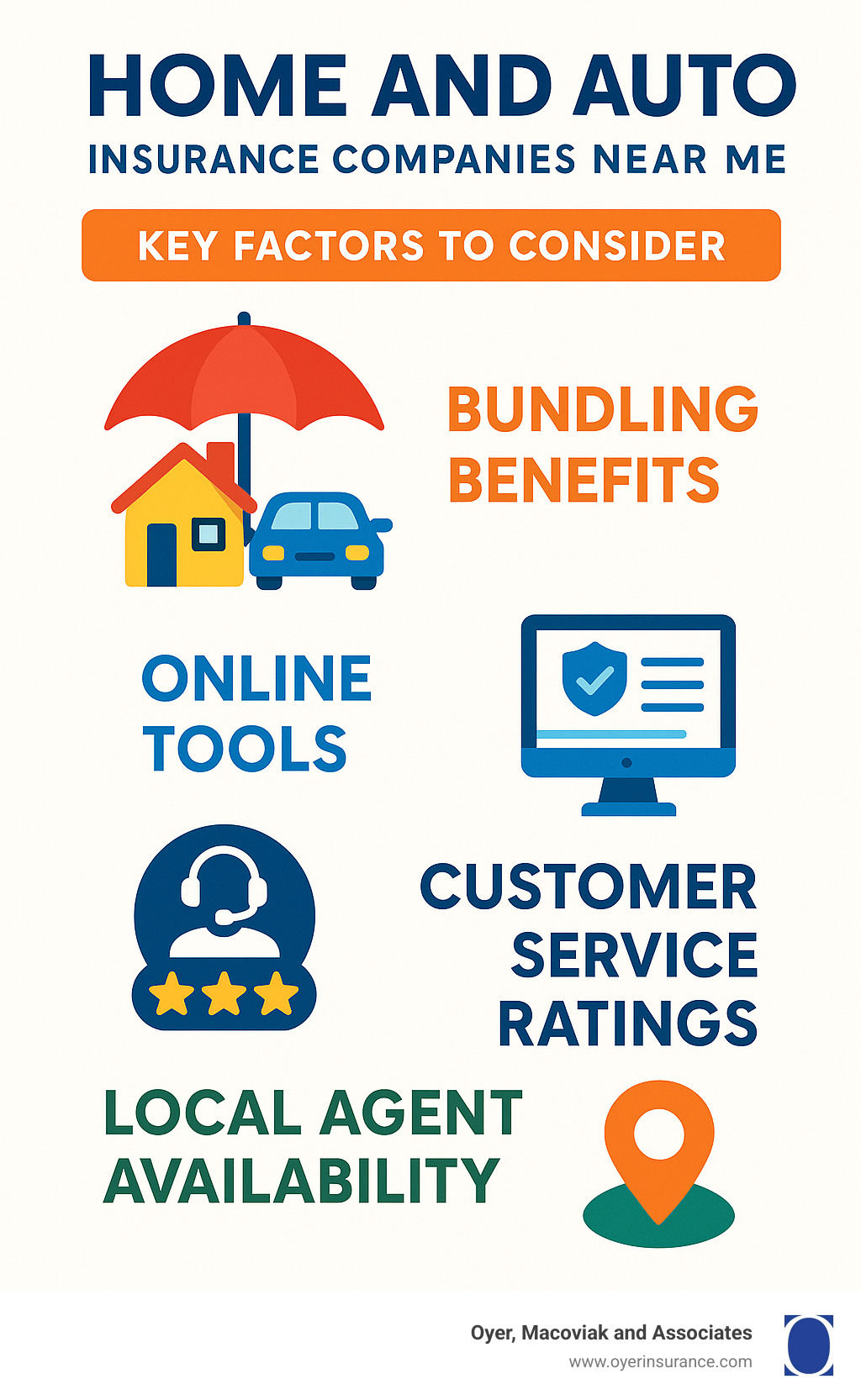
Yes. Many insurance carriers offer multi-policy discounts when a consumer purchases both home and auto insurance from the same company. While the policies remain separate legal contracts with their own terms, bundling simplifies billing, streamlines customer service, and often reduces the total premium paid across both products.
What happens if a claim exceeds my policy limits on either home or auto insurance?
If a claim payout exceeds your policy's maximum coverage limit, the insurance company is only legally obligated to pay up to that limit. Any remaining financial burden, whether for property repairs or a court-awarded liability judgment, becomes the personal responsibility of the policyholder. This underscores the importance of selecting adequate liability limits rather than merely buying the legal minimum.
Are flood damage and mechanical failure covered under standard home and auto policies?
No. Standard homeowners insurance and standard personal auto insurance both exclude flood damage and mechanical breakdown. Homeowners require a separate flood insurance policy (such as through the National Flood Insurance Program), while drivers must rely on vehicle warranties or maintain mechanical breakdown insurance for non-accident mechanical failures.
Why do insurance companies review credit scores for both home and auto policies?
In many jurisdictions, statistical studies have shown a correlation between an individual's insurance-based credit score and the likelihood of filing a claim. Consequently, many insurers use credit history as an underwriting factor to help assess risk and determine premium rates, subject to state-specific legal restrictions.
Practical Next Steps for Policyholders
Evaluating your home and auto insurance policies requires a proactive approach to risk management. Start by reviewing your current declarations pages to verify that your deductibles align with your emergency savings and that your coverage limits accurately reflect current replacement costs and liability exposure. If you have made significant home renovations or purchased high-value assets, contact your insurer or agent to update your policy endorsements. Finally, regularly shop and compare quotes across licensed carriers to ensure you are receiving competitive rates while maintaining comprehensive protection for your assets.
Image Gallery
Select an image to open it in a new tab.


Zara El-Hashem
Sociocultural Dynamics and Academics Writer
