
Setting your water heater to 120 degrees Fahrenheit (49 degrees Celsius) provides the optimal balance between preventing harmful bacterial growth, avoiding severe scalding risks, and maintaining household energy efficiency. This standard recommendation from safety and energy organizations ensures hot water is readily available while keeping operating costs manageable and reducing the risk of accidental burns.
Understanding Water Heater Temperature Fundamentals
Navigating the mechanics of residential hot water systems begins with understanding how temperature settings impact daily life, utility bills, and long-term hardware maintenance. Many homeowners treat their water heater dial as a mysterious control, often leaving it at the manufacturer's default setting—which is frequently higher than necessary—or turning it up excessively to combat perceived performance issues.
Operating a residential water heater involves balancing three primary priorities: energy efficiency, utility safety, and water system sanitation. When a tank heats water, it continuously consumes fuel or electricity to maintain that thermal baseline. Higher temperature selections demand greater energy input, which directly increases monthly utility expenditures. Conversely, setting the thermostat too low creates conditions that compromise health and safety.
Understanding the direct relationship between thermostat dials, actual tank temperatures, and distribution lines requires looking at how water moves through a home. The temperature set on the tank represents the heat level of the water stored inside the vessel. By the time that water travels through pipes to a kitchen sink or a showerhead, radiant heat loss occurs along the way, meaning the delivery temperature is slightly lower than the storage temperature.
The Standard Recommendation: Why 120°F is the Industry Baseline
Major public health and energy organizations, including the United States Department of Energy (DOE) and the Environmental Protection Agency (EPA), widely recommend setting residential water heaters to 120°F (49°C). This specific benchmark balances multiple competing demands, making it the most sensible choice for the vast majority of households.
Energy Conservation and Cost Reduction
Every degree a water heater is raised above necessary thresholds increases standby heat loss. Standby loss is the thermal energy that escapes through the walls of the storage tank into the surrounding space (such as a basement or utility closet). Research from the Department of Energy indicates that lowering a water heater’s temperature from 140°F to 120°F can reduce standby energy losses by up to 10 percent. Over a year, this reduction translates to meaningful savings on electricity or natural gas bills.
Scald Prevention and Household Safety
Safety is a primary driver behind the 120°F standard. Water temperature directly dictates the risk of severe thermal burns, particularly for vulnerable populations such as young children and older adults.
To put the risks into perspective, skin can sustain third-degree burns within seconds of exposure at various high temperatures:
- 150°F (66°C): Causes full-thickness burns in less than two seconds.
- 140°F (60°C): Causes severe burns in approximately five seconds.
- 130°F (54°C): Causes severe burns in roughly 30 seconds.
- 120°F (49°C): Significantly slows the burning process, giving an individual time to react and pull away before severe injury occurs.
By keeping the storage tank at 120°F, households drastically lower the likelihood of accidental scalding at household faucets and showers.
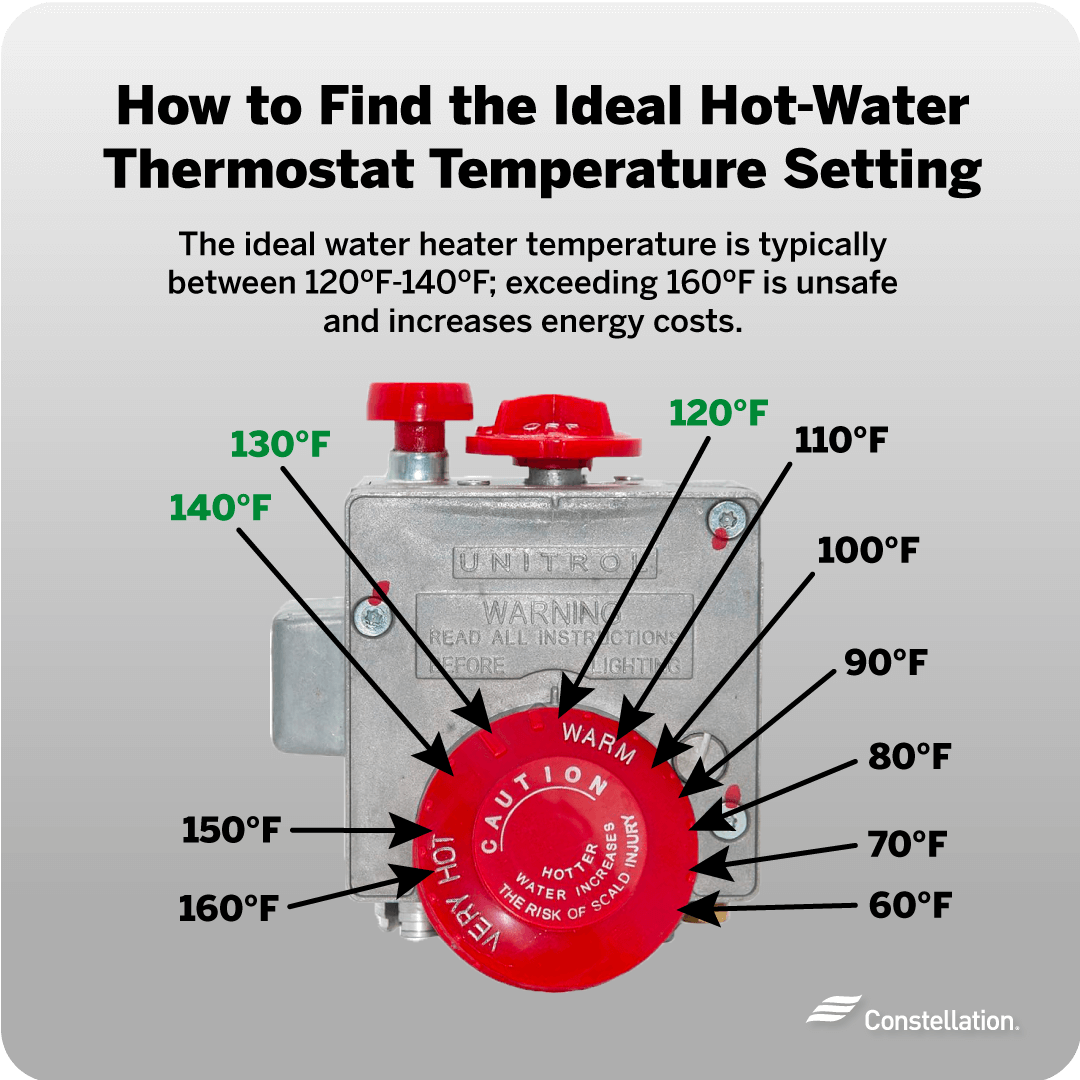
When to Consider Higher Settings: The 140°F Exception and Legionella Risk
While 120°F is the ideal standard for most homes, specific circumstances require raising the temperature to 140°F (60°C). Understanding when and why to increase this setting is vital for preventing serious health hazards.
The Threat of Legionella Bacteria
Legionella bacteria are naturally occurring microorganisms that thrive in warm aquatic environments. When inhaled via mist or vapor—such as from a showerhead or hot tub—these bacteria can cause Legionnaires' disease, a severe form of pneumonia, as well as Pontiac fever, a milder respiratory illness.
Water heaters can act as breeding grounds for Legionella if storage temperatures remain within the ideal growth range, which spans from 68°F to 122°F (20°C to 50°C). Heating water to 140°F effectively inhibits the growth of these bacteria and sanitizes the tank.
Scenarios Requiring a 140°F Setting
A higher temperature setting is recommended or necessary under the following conditions:
- Compromised Immune Systems: If members of the household have chronic lung diseases, weakened immune systems, or are undergoing medical treatments that lower resistance to infection, maintaining a 140°F tank temperature minimizes exposure risks.
- Long Vacancies: Homes that sit vacant for extended periods allow water to stagnate in the tank, increasing bacterial proliferation risks. Bringing the tank up to 140°F before use helps flush out contaminants.
- Dishwashers Without Built-in Boosters: Older or commercial-grade dishwashers that lack internal heating elements rely on incoming water heated to 140°F to properly sanitize dishes and dissolve grease.
- Long Pipe Runs: In large sprawling homes where hot water travels significant distances to reach fixtures, thermal loss along the pipes can result in tepid water at the tap, making a higher baseline temperature necessary (though anti-scald mixing valves must be installed at fixtures in this scenario).
Water Heater Temperature Comparison Guide
| Setting | Primary Benefit | Main Drawback | Best Suited For |
|---|---|---|---|
| 120°F (49°C) | Maximizes energy savings and prevents severe scalding risks. | Potential environment for bacterial growth if water stagnates. | Standard households, families with children or elderly residents. |
| 140°F (60°C) | Inhibits Legionella bacteria growth and sanitizes the storage vessel. | Higher energy consumption and increased risk of severe tap scalding. | Homes with immunocompromised individuals or older dishwashers. |
How to Check and Adjust Your Water Heater Temperature
Inspecting and modifying your water heater temperature is a straightforward maintenance task that requires no specialized plumbing tools. Whether you operate a conventional gas tank or an electric storage model, the process follows a predictable sequence.
Step-by-Step Adjustment Process
- Locate the Thermostat: On electric water heaters, the thermostat is typically located behind an access panel secured with screws, often situated near the heating elements. On gas water heaters, the temperature dial is located on the outer body of the gas control valve near the bottom of the tank.
- Turn Off Power or Gas (Safety Precaution): For electric heaters, switch off the corresponding circuit breaker at your main electrical panel before removing any access panels. For gas heaters, ensure the control valve is not adjusted while the burner is actively firing, though turning off the gas is rarely necessary just to adjust the dial.
- Measure the Output: Run the hot water tap closest to the water heater (such as a bathroom or laundry sink) for approximately one to two minutes until the water reaches its maximum heat. Place a digital cooking or plumbing thermometer into the stream to measure the exact temperature.
- Make Incremental Adjustments: If the thermometer reading deviates from 120°F, adjust the dial on the water heater in small increments. Wait 24 hours for the water inside the tank to fully acclimate to the new setting, then test the tap water again.
Common Misconceptions and Mistakes
Homeowners often fall into traps regarding residential water heating, leading to wasted energy, shortened equipment lifespans, or physical injury.
- Mistaking the Dial Numbers for Exact Temperatures: Many older gas control valves feature labels like "Low," "Medium," "Hot," or arbitrary letters and numbers rather than precise Fahrenheit or Celsius increments. Never assume the "Medium" setting equals 120°F; always verify with a physical thermometer at the tap.
- Believing Higher Settings Deliver Faster Hot Water: Adjusting the thermostat to 150°F does not make hot water travel through pipes any faster. It merely stores water at a higher thermal state, which is then diluted with more cold water at the mixing valve of the faucet to achieve a usable temperature.
- Ignoring Tank Sediment Buildup: Sediment—consisting of minerals like calcium and magnesium—settles at the bottom of storage tanks over time. This layer acts as a thermal barrier between the burner or lower heating element and the water, forcing the system to work harder regardless of the thermostat setting. Regular flushing is required to maintain accurate heating performance.
Frequently Asked Questions
Will setting my water heater to 120°F cause my water to run out faster?
Setting your water heater to 120°F means you mix less cold water with the hot water at your taps compared to a 140°F setting. Because you use a smaller volume of hot water from the tank for each shower or sink load, a 120°F setting can actually extend the usable duration of your hot water supply during heavy usage periods.
How often should I test my water heater temperature?
You should test your water heater temperature at least twice a year. Seasonal changes in groundwater temperature—which enters your home colder in winter and warmer in summer—can impact overall system performance, making periodic checks good practice for efficiency and safety.
Do tankless water heaters require the same temperature settings?
Tankless water heaters heat water on demand rather than storing it in a large vessel. While they can be set to 120°F just like storage tanks, many homeowners set tankless units slightly higher (around 125°F to 130°F) to account for the lack of a storage reservoir, ensuring consistent delivery across long pipe runs without risking bacterial growth, since standing water is not kept in a tank.
What should I do if my water heater cannot reach 120°F?
If your water heater fails to reach the target temperature, check the circuit breaker for electric models or verify the pilot light and gas supply valve for gas models. If power and gas supplies are functioning normally, a failing thermostat, a broken heating element, or excessive mineral sediment accumulation inside the tank may require professional servicing.
To secure the best balance of safety, health, and energy conservation, verify your water heater's current output with a digital thermometer and adjust the thermostat to hold a steady 120°F unless specific health considerations dictate otherwise. Inspect the system annually, flush sediment from the tank, and consult a licensed plumber if you encounter persistent temperature fluctuations.
Image Gallery
Select an image to open it in a new tab.
Mateo Castillo
Decentralized Finance and E-Payments Strategist
