Where is Arthur Guinness Buried? The Final Resting Place of a Brewing Icon

Arthur Guinness is buried in Oughterard Cemetery in County Kildare, Ireland. His grave is located within the ruins of an ancient church atop Oughterard Hill, near the village of Ardclough. This historic site serves as the ancestral burial ground for the Guinness family and his mother’s family, the Reads.
The name Arthur Guinness is synonymous with Irish identity, global commerce, and the dark, creamy stout that bears his signature. While his professional legacy is centered at St. James’s Gate in Dublin, his final resting place lies in the quiet, elevated countryside of Kildare. For historians, genealogists, and tourists alike, visiting his grave offers a profound look at the humble origins of one of the world’s most successful industrial dynasties.
The Significance of Oughterard Cemetery
Oughterard Cemetery is not merely a graveyard; it is a site of immense archaeological and ecclesiastical importance. Situated on a ridge overlooking the Liffey Valley, the site dates back to the early Christian period. It is believed to have been the location of a nunnery founded by Saint Briga in the 6th century, and later, a monastery.
The most striking feature of the site, visible long before one reaches the cemetery gates, is the Oughterard Round Tower. Built in the 8th or 9th century, this partial stone structure served as a bell tower and a place of refuge during Viking raids. The presence of such a tower indicates that Oughterard was a significant religious center in medieval Ireland.
Arthur Guinness was buried here in January 1803, not because of his status as a wealthy brewer, but because of his deep familial roots in the area. His mother, Elizabeth Read, hailed from the nearby townland of Oughterard. The Read family had been prominent local landowners and farmers for generations, and it was traditional for families to be interred in their ancestral parish grounds, regardless of where their professional lives took them.
Locating the Grave Within the Ruins
Finding the exact spot of Arthur Guinness’s grave requires a short walk through the atmospheric ruins. The cemetery is situated on a steep incline, providing panoramic views of the surrounding Kildare plains.
- The Church Ruins: The grave is situated within the roofless walls of the medieval church, which stands adjacent to the round tower.
- The Guinness Plot: Unlike the grand, ornate mausoleums of the Victorian era, Arthur’s grave is marked by a relatively modest, flat ledger stone (a horizontal gravestone).
- The Inscription: The stone marks the burial place of "Arthur Guinness of the City of Dublin, Esq." and includes details of several family members. The weathered stone reflects the passing of over two centuries, yet the name remains legible to those who look closely.
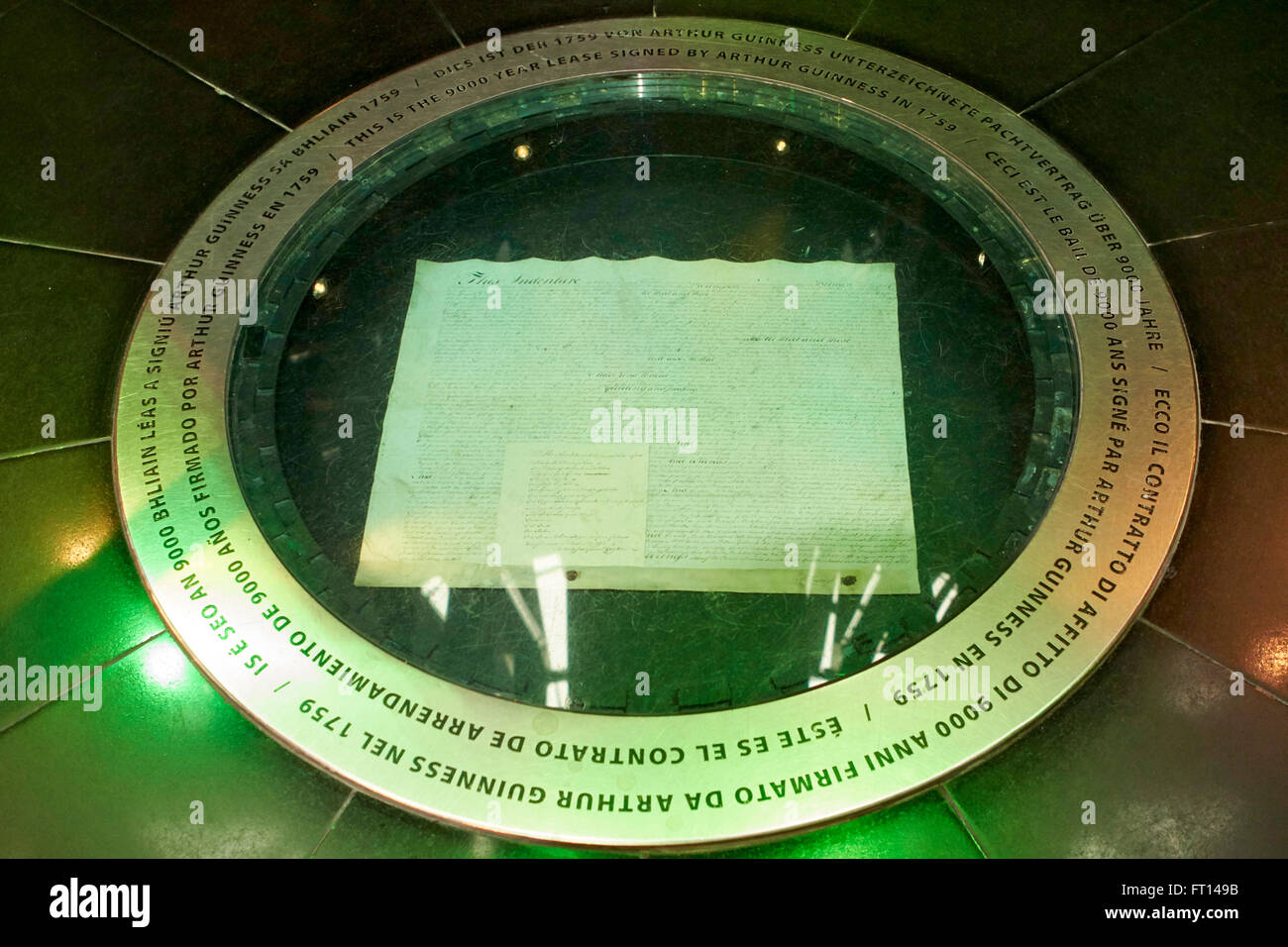
The simplicity of the grave often surprises visitors. By the time of his death in 1803, Arthur Guinness was a man of considerable means, having secured a 9,000-year lease on the St. James’s Gate Brewery and established a thriving export business. However, the 18th-century burial customs for the Anglo-Irish merchant class often favored dignified simplicity over the ostentation that would become common in the mid-19th century.
The Arthur’s Way Heritage Trail
In recent years, the burial site has become a primary focal point of Arthur’s Way, a 16-kilometer heritage trail that follows the life and times of the brewer. This trail is an essential experience for those wishing to understand the geography of the Guinness legacy.
The trail begins in Leixlip, where Arthur first started brewing with a £100 inheritance from Archbishop Arthur Price. It then winds through Celbridge, where he spent much of his childhood and where his father worked as a land steward for the Conolly family of Castletown House. The trail culminates at Oughterard Hill.
Walking this path in 2026 allows visitors to see the landscapes that influenced Arthur’s early life. The proximity of the Grand Canal, which was instrumental in transporting the raw materials for brewing, highlights the intersection of Guinness's personal history and Ireland’s industrial development.
Historical Context: Arthur Guinness (1725–1803)
To understand why his burial site is a place of pilgrimage, one must look at the impact Arthur Guinness had on Irish society. Born in 1725, he grew up in an era of significant social and political transition. His father, Richard Guinness, was a "white wine" brewer and agent for the clergy, which provided Arthur with the foundational knowledge of the fermentation process.
When Arthur moved to Dublin in 1759, the brewing industry was fragmented and dominated by English imports. By signing the famous long-term lease and focusing on a newer style of beer known as "porter" (the precursor to modern stout), he effectively revolutionized the Irish economy. He was also a prominent figure in the public life of Dublin, serving as a Governor of the Meath Hospital and a member of the Dublin Society.
The Guinness Family Dynasty
The burial at Oughterard was the beginning of a long tradition of Guinness family involvement in Kildare and Dublin. While Arthur’s descendants eventually moved into even more prominent circles—becoming the Earls of Iveagh and the Barons Ardilaun—the connection to the Kildare soil remained.
Later generations of the family are buried in various locations, including:
- Mount Jerome Cemetery: Many of the 19th-century Guinnesses are interred here in Dublin.
- St. Patrick’s Cathedral: While not a burial site for the body of Arthur himself, the cathedral contains numerous memorials to the family, who funded the extensive restoration of the building in the 1860s.
- Farmleigh Estate: Private family burials have occurred on the grounds of their ancestral estates.
Planning Your Visit in 2026
If you are planning to visit Oughterard Cemetery in 2026, there are several practical considerations to keep in mind. The site is managed as a national monument and remains a sacred space for the local community.
Travel and Access
Oughterard is approximately 30 kilometers (18 miles) west of Dublin city center. The most efficient way to reach the site is by car, taking the N7 or M4 motorways toward Kildare. Parking is available near the base of the hill in Ardclough, followed by a walk up a narrow, paved road.
| Feature | Detail |
|---|---|
| Location | Oughterard Hill, Ardclough, Co. Kildare |
| GPS Coordinates | 53.2925° N, 6.5592° W |
| Admission Fee | Free |
| Opening Hours | Accessible during daylight hours |
| Difficulty | Moderate (Steep uphill walk) |
| Facilities | Limited (No restrooms or shops on-site) |
Conservation and Etiquette
The cemetery is an active archaeological site. Visitors are encouraged to stay on the designated paths and refrain from touching or leaning on the ancient stone walls of the church or the round tower. As it is still a functioning graveyard for some local families, silence and respect are expected.
The local community group, Ardclough Village Centre, often provides maps and historical information for those walking the Arthur’s Way trail. They are a valuable resource for understanding the specific lineage of the Read family and their connection to the Guinnesses.
Frequently Asked Questions
Why wasn't Arthur Guinness buried in Dublin?
Despite spending his most successful years in Dublin, Arthur Guinness adhered to the tradition of being buried with his ancestors. His mother’s family, the Reads, had a long-established plot in Oughterard. In the 18th century, family ties to the land often outweighed the convenience of city burial.
Is the Guinness family still involved in the maintenance of the grave?
The site is under the protection of the Irish state as a National Monument. However, the Guinness family and the brewery have historically contributed to the preservation of the Oughterard area and the promotion of the heritage trail. The brewery maintains a strong link to its founder’s history through the Guinness Archive.
Can you see the round tower from the grave?
Yes, the round tower is only a few meters away from the church ruins where Arthur is buried. It is one of the best-preserved (though shortened) examples of a round tower in the region.
Is the site part of the Guinness Storehouse tour?
The physical grave is not part of the standard tour at St. James’s Gate in Dublin, as it is located in a different county. However, the Storehouse features extensive exhibits on Arthur’s life and his Kildare origins, often directing interested visitors to Oughterard for a more in-depth historical experience.
Are there other famous people buried at Oughterard?
While Arthur Guinness is the most globally recognized figure, the cemetery contains many members of the Read and Guinness families, as well as local clergy and landowners from the Ardclough and Lyons Estate areas. The site is a rich tapestry of Kildare’s social history.
The Enduring Legacy of the Kildare Brewer
The journey to Oughterard Hill is a journey back to the start of a global phenomenon. Standing at the grave of Arthur Guinness, one is struck by the contrast between the global reach of the Guinness brand—available in over 150 countries—and the quiet, rural stillness of his final resting place.
The site serves as a reminder that even the most massive industrial empires begin with individuals rooted in specific places and traditions. By visiting Oughterard, you are not just seeing a grave; you are witnessing the intersection of ancient Irish history and the birth of modern global commerce.
Next Action: To complement a visit to the grave, it is highly recommended to walk a portion of Arthur’s Way. Start at the village of Ardclough, visit the grave, and then head toward the Lyons Estate to see the landscape that Arthur’s family once managed. This provides a full spatial context to the history of the man behind the pint.
Image Gallery
Select an image to open it in a new tab.
Akira Tanaka
International Academic Trends Correspondent
