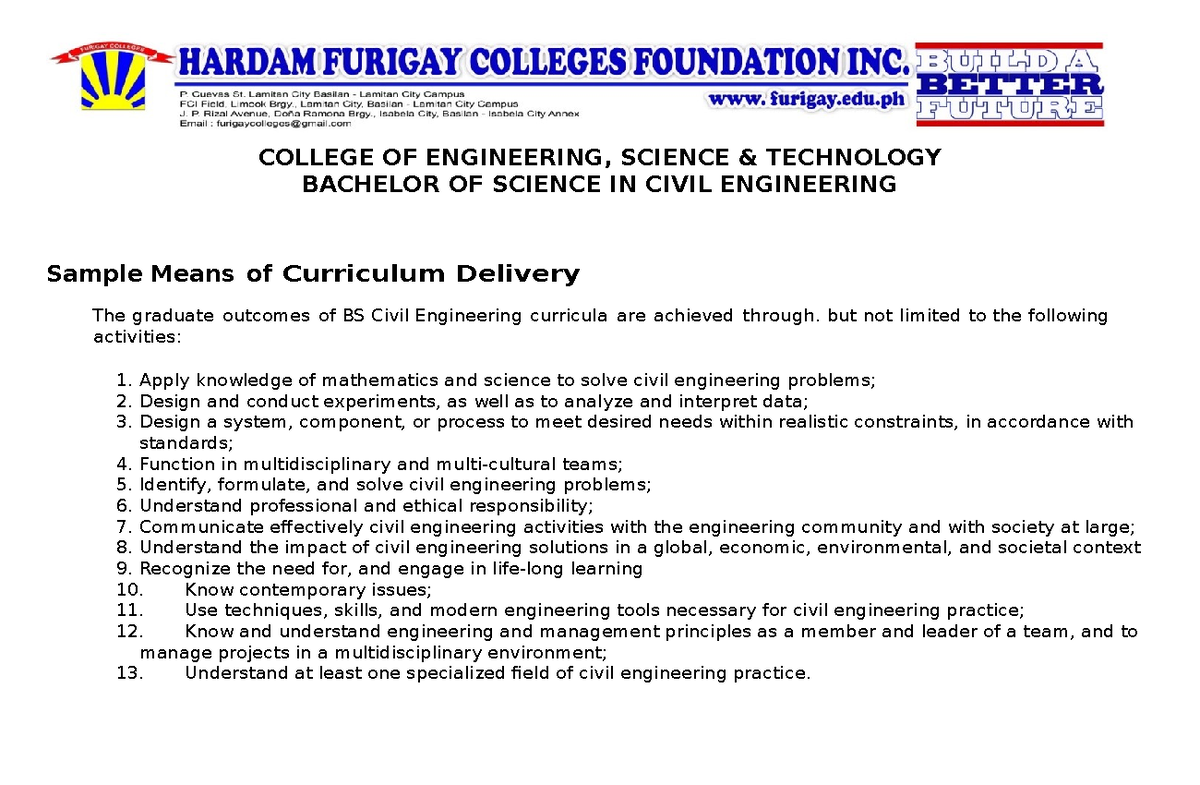
A Bachelor of Science (BS) in Engineering is a four-to-five-year professional undergraduate degree that combines advanced mathematics, physical sciences, and technical design principles. It signifies that a graduate has mastered the foundational analytical tools required to solve complex physical problems, adhere to rigorous safety standards, and pursue formal professional licensure.
Obtaining a Bachelor of Science in Engineering is often described as one of the most demanding undergraduate paths available. In 2026, the degree continues to serve as the gold standard for entry into the technical workforce, but its definition has expanded to include not just traditional mechanics and electronics, but also the integration of artificial intelligence, sustainable systems, and ethical data management. To understand what an engineering BS really means, one must look past the diploma and into the specific competencies, accreditation standards, and professional pathways it unlocks.
The Academic Foundation: Beyond Just Math and Science
At its core, an engineering BS is a degree in applied logic. While many degrees require a handful of general education courses, the engineering curriculum is heavily front-loaded with "hard" sciences. This is not merely to provide background knowledge; it is to build a mental framework for how the physical world operates.
The Role of Advanced Mathematics
For an engineering student, mathematics is the primary language of communication. Most programs require a sequence that includes Calculus I, II, and III, Differential Equations, and Linear Algebra. These are not elective hurdles; they are the tools used to model fluid flow, electrical circuits, and structural stresses. By the time a student reaches their junior year, the math becomes "invisible," integrated into core engineering courses like Thermodynamics or Electromagnetics.
The Physical Sciences
A standard BS in Engineering requires a deep dive into Physics—specifically classical mechanics, electromagnetism, and often quantum physics for electrical or materials engineers. Chemistry is equally vital, particularly for chemical, civil, and environmental engineering, where understanding molecular interaction is the key to material strength and environmental remediation.
The Importance of ABET Accreditation
One of the most critical aspects of what an engineering BS means is its accreditation status. In the United States and many international jurisdictions, the Accreditation Board for Engineering and Technology (ABET) is the governing body that ensures a program meets the quality standards of the profession.
When a degree is ABET-accredited, it means the curriculum has been vetted for:
- Curriculum Depth: Ensuring students receive adequate instruction in design, math, and basic sciences.
- Faculty Qualifications: Verifying that instructors have the professional and academic background to teach complex topics.
- Facilities: Ensuring labs and equipment are sufficient for modern technical education.
- Continuous Improvement: Requiring departments to show how they use student outcomes to improve the program year over year.
For the student, graduating from an ABET-accredited program is often a non-negotiable prerequisite for sitting for the Fundamentals of Engineering (FE) exam, which is the first step toward becoming a licensed Professional Engineer (PE). Without this accreditation, the "BS in Engineering" may be viewed by employers as a general science degree rather than a professional credential.
Distinguishing the BS from the BSET
A common point of confusion for prospective students is the difference between a Bachelor of Science in Engineering (BS) and a Bachelor of Science in Engineering Technology (BSET). While they share similar names, their professional implications differ significantly.
| Feature | Bachelor of Science (BS) in Engineering | Bachelor of Science in Engineering Technology (BSET) |
|---|---|---|
| Primary Focus | Theory, complex analysis, and conceptual design. | Application, implementation, and operations. |
| Math Requirement | High (Calculus-based, Differential Equations). | Moderate (Algebra/Trig-based, Applied Calculus). |
| Career Path | Research, development, and high-level design. | Production, maintenance, and technical sales. |
| Licensure Path | Standard path to Professional Engineer (PE). | Restricted or additional requirements for PE. |
| Typical Role | Design Engineer, Systems Architect. | Field Engineer, Manufacturing Technologist. |
The BS in Engineering is "calculus-based," meaning it focuses on the underlying physics and mathematical proofs. The BSET is "algebra-based," focusing more on how to use existing tools and systems to solve immediate production problems. Employers in 2026 value both, but the BS generally offers a higher ceiling for leadership in research and development (R&D).
The Engineering Mindset: Problem Solving and Ethics
Beyond the technical skills, an engineering BS signifies the development of a specific psychological approach to problems. This is often called "The Engineering Design Process." It involves defining a problem, researching requirements, developing prototypes, and—most importantly—iterative testing.
Dealing with Failure
Engineering programs are designed to be difficult. The high rigor of "weed-out" courses like Statics or Organic Chemistry is intended to build resilience. An engineering graduate has proven they can handle a high cognitive load, manage time under extreme pressure, and navigate projects where the "right" answer doesn't exist, only the "most optimal" one.
Professional Ethics and Public Safety
A significant portion of what an engineering BS means is a commitment to public safety. Engineers are often the last line of defense against structural collapses, chemical leaks, or cybersecurity breaches. Most accredited programs include mandatory ethics courses that study historical disasters, such as the Hyatt Regency walkway collapse or the Challenger shuttle explosion, to instill a sense of "professional responsibility" that transcends the employer-employee relationship.
Specializations and Their Market Meaning
An engineering BS is rarely "general." It is almost always granted in a specific discipline. In 2026, the market value of these specializations varies based on industrial trends.
- Mechanical Engineering: The broadest discipline, focusing on anything that moves. A BS here means expertise in heat transfer, mechanics, and machine design.
- Electrical Engineering: Focuses on power systems, electronics, and telecommunications. In 2026, this heavily involves semiconductor design and renewable energy integration.
- Civil Engineering: The foundation of the built environment. This degree means the graduate understands structural integrity, fluid mechanics (for water systems), and geotechnical constraints.
- Computer Engineering: A hybrid of electrical engineering and computer science. This means mastery of both hardware (circuits) and software (low-level programming).
- Chemical Engineering: Focuses on the large-scale production of chemicals, fuels, and pharmaceuticals. It is heavily rooted in thermodynamics and transport phenomena.
The Pathway to Professional Licensure (PE)
For many, the BS is just the first milestone. To legally sign off on public engineering projects—such as bridges, power grids, or municipal water systems—one must become a Professional Engineer (PE).
The standard path is:
- Graduate from an ABET-accredited BS program.
- Pass the Fundamentals of Engineering (FE) Exam: Usually taken in the final year of college or shortly after graduation.
- Gain Four Years of Experience: Working under the supervision of a licensed PE.
- Pass the Principles and Practice of Engineering (PE) Exam: A rigorous 8-hour exam focused on a specific sub-discipline.
Having an engineering BS means you are "licensable." Without it, the legal ability to practice engineering independently is severely limited in most states. Information on the specific requirements for these exams can be found at the National Council of Examiners for Engineering and Surveying (NCEES).
Financial Investment and Return on Investment (ROI)
An engineering BS is expensive, both in terms of tuition and "opportunity cost" due to the intense study hours required. However, the ROI remains among the highest of any undergraduate degree.
According to the U.S. Bureau of Labor Statistics, engineering roles consistently offer starting salaries well above the national average for all occupations. In 2026, entry-level engineers in high-demand fields like aerospace or computer engineering often see starting packages exceeding $85,000 to $100,000, depending on the region.
The degree also offers "career flexibility." Because it proves high analytical capability, many engineering graduates find successful careers in patent law, management consulting, and finance—fields that value the ability to break down complex systems into manageable parts.
Modern Trends: The BS in 2026
The definition of an engineering BS has shifted slightly in the mid-2020s.
- Sustainability: Almost all engineering disciplines now include a "green" component. A civil engineering BS in 2026 means knowing carbon-neutral concrete; an electrical engineering BS means knowing grid-scale battery storage.
- AI Integration: Engineers are no longer just using calculators; they are using AI-assisted design (Generative Design). A modern BS signifies the ability to verify and validate AI-generated models, ensuring they adhere to the laws of physics.
- Interdisciplinary Skills: The boundaries between "mechanical" and "electrical" are blurring into "Mechatronics." A modern engineering BS often requires a broader understanding of multiple fields.
Frequently Asked Questions
Is an engineering BS harder than a BA in Science?
Generally, yes. While a Bachelor of Arts (BA) in a science subject might focus on theoretical knowledge and offer more elective freedom, the Bachelor of Science (BS) in Engineering is a "professional" degree. It requires more credit hours, mandatory labs, and a senior capstone design project that mimics real-world engineering challenges.
Can I get an engineering job with a degree in Physics instead?
It is possible, but difficult. A Physics degree provides the "why" but often lacks the "how" of design, codes, and standards. Most employers prefer the BS in Engineering because it guarantees the candidate has been trained in specific design methodologies and is eligible for professional licensure.
What is a "Capstone Project"?
A Capstone is a year-long project required in the final year of an engineering BS. Students work in teams to solve a real-world problem, often sponsored by an industrial partner. It is the "thesis" of the engineering world, requiring a full design-build-test cycle and a professional presentation.
Does the prestige of the university matter for an Engineering BS?
While top-tier schools offer better networking and research facilities, the most important factor is ABET accreditation. A degree from a state school with ABET accreditation is legally and professionally superior to a degree from a "prestigious" school that lacks it.
Is it worth getting a Master’s after the BS?
In some fields, like Structural or Biomedical Engineering, a Master’s is becoming the entry-level standard. However, for most disciplines, the BS is sufficient to start a high-paying career. Many engineers work for a few years and then have their employers fund their Master’s degree.
Next Steps for Prospective Students
If you are considering pursuing an engineering BS, your first step should be to evaluate your mathematical foundation. Success in engineering is highly correlated with comfort in algebra and trigonometry before entering college.
- Verify Accreditation: Check the ABET program search to ensure your target schools are accredited.
- Shadow a Professional: Reach out to local engineering firms to see what daily life actually looks like.
- Focus on Physics: Take the highest level of physics available to you in high school or community college to test your aptitude for the subject matter.
An engineering BS is not just a degree; it is a rigorous certification of your ability to solve the world's most pressing technical problems. It requires a significant sacrifice of time and effort, but the resulting career stability and intellectual satisfaction remain unparalleled in the professional world of 2026.
Image Gallery
Select an image to open it in a new tab.
Mateo Castillo
Decentralized Finance and E-Payments Strategist
