
Nuclear power is often promoted as a clean, low-carbon alternative to fossil fuels, yet critical drawbacks make it a deeply controversial energy source. The primary reasons nuclear power is viewed negatively include the immense financial costs, prolonged construction delays, catastrophic safety risks, the unresolved problem of long-term radioactive waste storage, water consumption issues, and the geopolitical risks of nuclear proliferation.
Understanding the full scope of why nuclear power is bad requires examining both historical precedents and current economic realities. While nuclear reactors emit minimal greenhouse gases during operation, the technology involves severe systemic vulnerabilities that span engineering, economics, environmental science, and public safety.
Astronomical Capital Costs and Construction Delays
One of the most persistent arguments against nuclear power is the staggering financial burden associated with building and maintaining nuclear reactors. Nuclear power plants (NPPs) require massive upfront capital investments, often running into tens of billions of dollars per facility.
Unlike solar and wind farms, which can be deployed incrementally and scaled up gradually, a nuclear plant is an all-or-nothing megaproject. This financial commitment creates unique economic challenges:
- High Interest During Construction (IDC): Because construction timelines routinely span a decade or longer, debt accumulates rapidly before the plant generates a single kilowatt-hour of electricity.
- Regulatory Compliance and Safety Overhauls: Strict regulatory requirements imposed by bodies such as the U.S. Nuclear Regulatory Commission (NRC) necessitate continuous design modifications, which drive up costs mid-project.
- Cost Overruns and Budget Blowouts: Historical data shows that nuclear projects rarely finish on time or within budget. Projects like the Vogtle Electric Generating Plant expansion in Georgia experienced multi-year delays and billions in cost overruns, shifting the financial risk onto ratepayers and taxpayers.
These economic realities make nuclear energy increasingly uncompetitive against rapidly falling costs for renewable energy paired with battery storage. Private investors often shy away from nuclear projects without heavy government subsidies, loan guarantees, or tax credits.
The Unresolved Crisis of Radioactive Waste Management
The issue of what to do with high-level radioactive waste remains one of the most significant technical and ethical failures of the nuclear industry. Spent nuclear fuel remains lethally radioactive for hundreds of thousands of years, requiring isolation from the biosphere on a geological time scale.
Despite decades of research, no country has successfully operated a permanent, deep geological repository for commercial high-level nuclear waste on a long-term commercial scale, with the exception of Finland's Onkalo project, which is nearing operational phases as of the mid-2020s.
| Waste Type | Hazard Duration | Primary Management Method |
|---|---|---|
| Low-Level Waste (LLW) | Decades to a few hundred years | Near-surface disposal facilities |
| Intermediate-Level | Hundreds of years | Engineered trenches and vaults |
| High-Level Waste (HLW) | Hundreds of thousands of years | Pools, dry cask storage, deep burial |
Most spent fuel globally remains stored in temporary pools of water or dry casks at reactor sites. These on-site storage facilities are vulnerable to natural disasters, degradation over time, and potential security breaches. The failure to secure a permanent disposal site leaves future generations with the burden of guarding toxic materials for millennia.

Catastrophic Safety Risks and Accident Consequences
While routine operations of nuclear plants release minimal radiation, the potential severity of a catastrophic accident is virtually unmatched by any other industrial activity. Major historical disasters—such as Chernobyl in 1986 and Fukushima Daiichi in 2011—demonstrate that human error, natural disasters, or unexpected technical failures can override multiple layers of redundancy.
When a core meltdown occurs, the consequences are devastating and enduring:
- Mass Displacement: Entire regions can become uninhabitable, forcing hundreds of thousands of people to permanently evacuate their homes and livelihoods.
- Environmental Contamination: Vast tracts of agricultural land, forests, and water systems become contaminated with long-lived isotopes like Cesium-137 and Strontium-90.
- Economic Toll: The total economic cost of cleanup, compensation, and lost productivity from accidents like Fukushima runs into hundreds of billions of dollars, a financial burden that insurance markets refuse to fully cover, leaving governments to foot the bill.
Even with modern safety enhancements, the sheer concentration of radioactive energy in a single location presents an inherent risk that cannot be entirely eliminated through engineering.
Water Consumption, Thermal Pollution, and Environmental Impacts
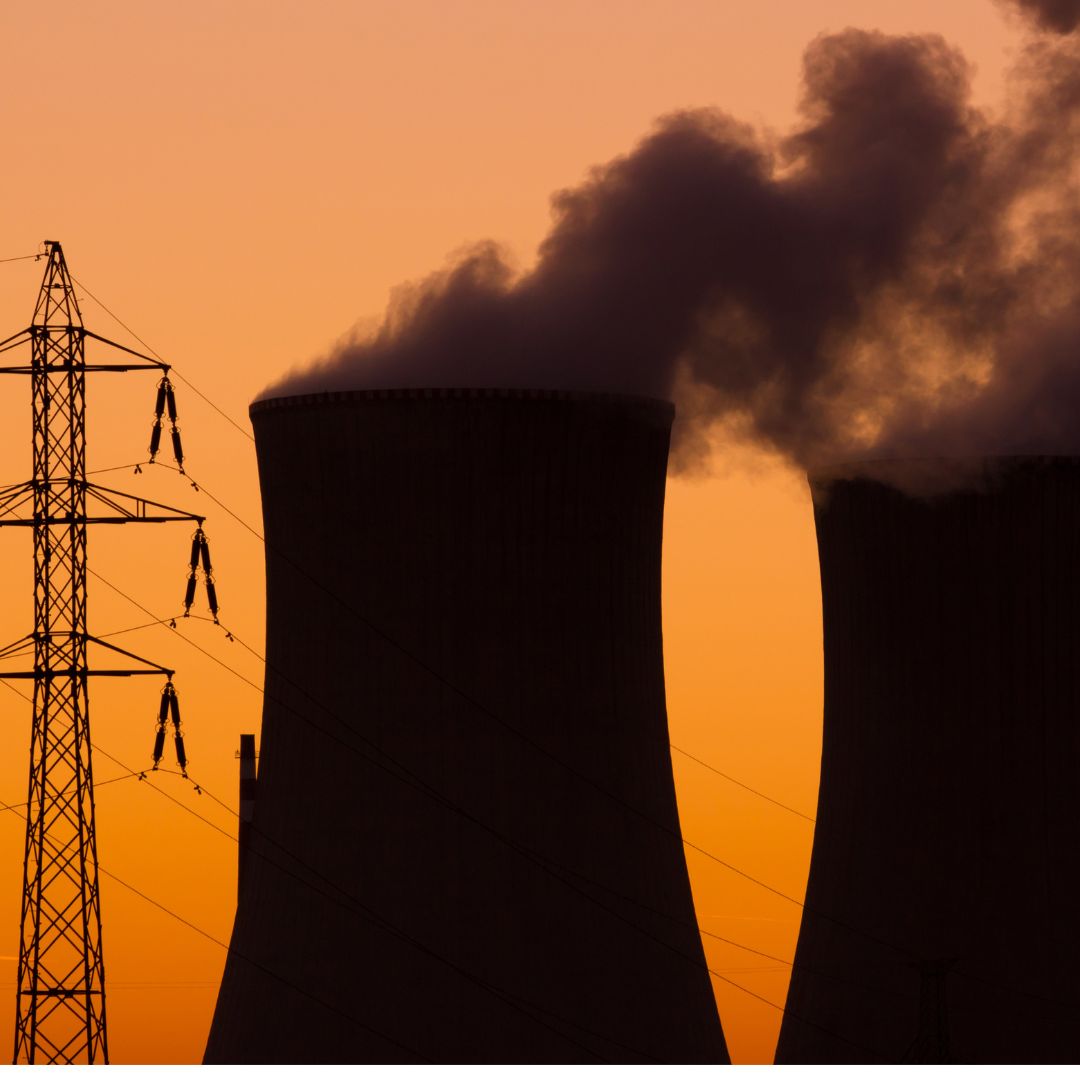
Nuclear power plants are thermal engines that require enormous volumes of water for cooling. This aspect of plant operation creates significant environmental strain:
- Water Withdrawal and Consumption: NPPs withdraw billions of gallons of water daily from rivers, lakes, or oceans. Much of this water is lost through evaporation in cooling towers, depleting local water supplies, particularly during periods of drought.
- Thermal Pollution: The water returned to natural bodies is significantly warmer than when it was withdrawn. This thermal discharge alters aquatic ecosystems, reduces dissolved oxygen levels, and can cause fish kills or disrupt local spawning cycles.
- Uranium Mining and Milling: The nuclear fuel cycle begins with mining and milling uranium ore, processes that generate radioactive tailings, scar landscapes, and can contaminate local groundwater resources with heavy metals and acids if not managed properly.
Proliferation Risks and National Security Vulnerabilities
The technology and materials required to generate commercial nuclear power share a dual-use nature with nuclear weapons development. Expanding civilian nuclear infrastructure globally increases proliferation risks:
- Enrichment and Reprocessing: Facilities capable of enriching uranium for power reactor fuel can often be modified to produce weapons-grade highly enriched uranium. Similarly, reprocessing spent fuel to extract plutonium creates proliferation pathways.
- Geopolitical Vulnerabilities: Exporting nuclear technology to unstable regions or nations with weak governance can lead to the spread of sensitive materials to non-state actors or rogue states.
- Targeted Warfare and Terrorism: Operating nuclear facilities present attractive targets for military conflict, cyberattacks, or terrorist infiltration. As demonstrated by the military occupation of the Zaporizhzhia Nuclear Power Plant, active warfare near nuclear sites risks triggering widespread radiological disasters.
Frequently Asked Questions
Is nuclear power considered a green energy source?
While nuclear power does not emit direct carbon dioxide or greenhouse gases during electricity generation, it is not universally classified as "green" due to the lifecycle carbon emissions from uranium mining, massive concrete construction, and the unresolved hazard of radioactive waste. Furthermore, its severe environmental impacts on water ecosystems keep many environmentalists opposed to its expansion.
Why do nuclear power plants take so long to build?
Nuclear construction projects face extensive regulatory scrutiny, complex engineering requirements, and specialized supply chain bottlenecks. Securing permits, performing environmental impact assessments, and constructing reinforced containment structures designed to withstand earthquakes and plane crashes routinely extend timelines well beyond a decade.
Can small modular reactors (SMRs) solve the problems of traditional nuclear power?
Small modular reactors are proposed as a safer, factory-built, and potentially cheaper alternative to large NPPs. However, SMR technology remains largely unproven at commercial scale, faces many of the same radioactive waste management challenges, and has yet to demonstrate whether it can achieve the economies of scale needed to compete with renewables.
Who pays for nuclear accidents if they occur?
In many countries, government legislation limits the liability of private nuclear operators in the event of a catastrophic accident through mechanisms like the Price-Anderson Act in the United States. Consequently, taxpayers ultimately bear the financial burden of disaster relief, long-term health care, and environmental remediation when costs exceed private insurance caps.
Practical Guidance and Next Steps
Evaluating the viability of future energy grids requires weighing the speed, cost, and safety of competing technologies. For policymakers, investors, and communities assessing energy infrastructure proposals, prioritizing energy efficiency, grid modernization, utility-scale solar, wind, and advanced battery storage offers a faster, cheaper, and lower-risk pathway to decarbonization than committing scarce capital to new nuclear megaprojects.
Image Gallery
Select an image to open it in a new tab.
Ingrid Bjornson
Global Cyber Policy and Regulation Analyst
