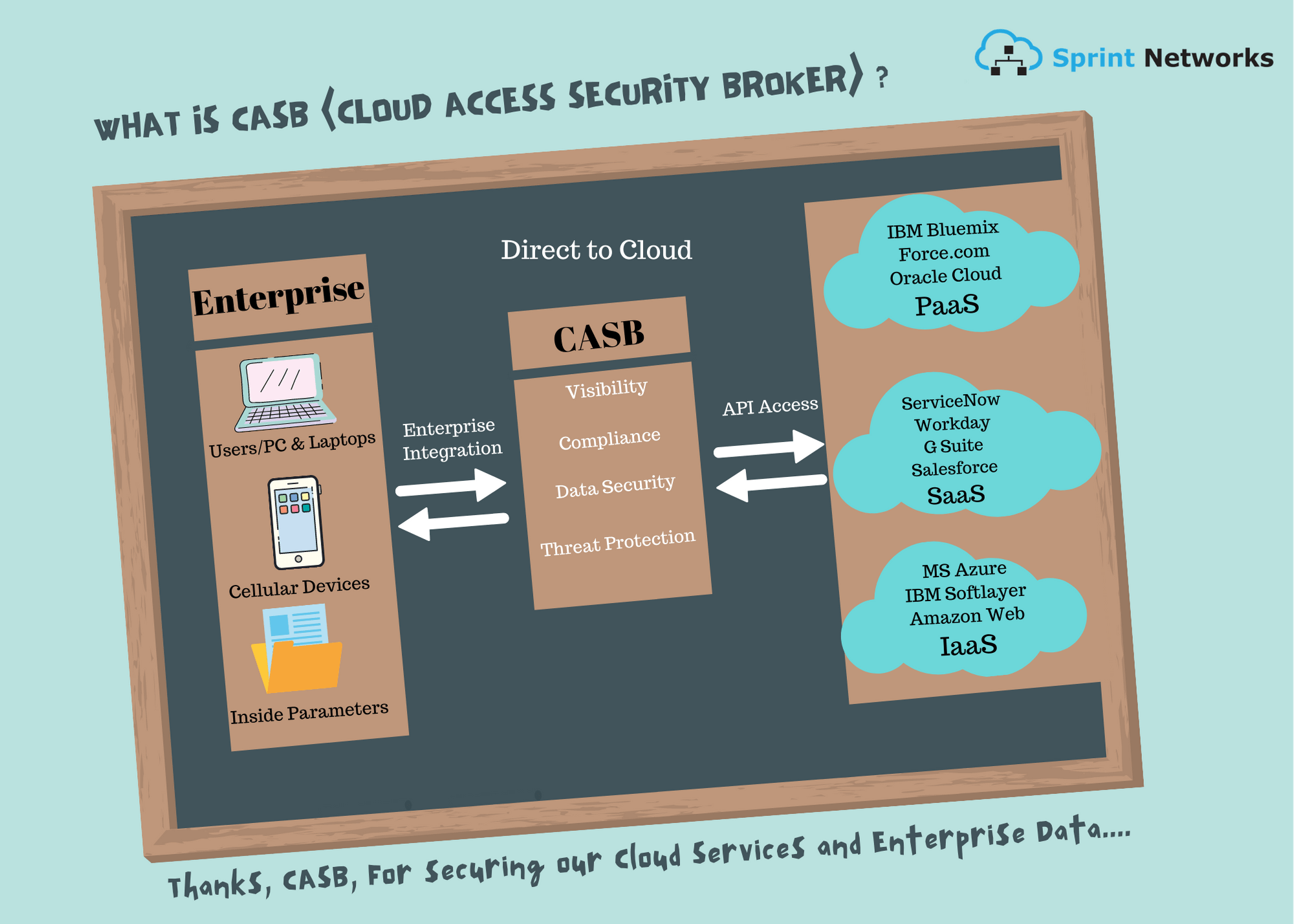
A Cloud Access Security Broker (CASB) relies on four fundamental pillars—visibility, data security, threat protection, and compliance—to secure corporate data, monitor user behavior, and enforce security policies across unauthorized and authorized cloud services used throughout an organization.
Introduction to Cloud Access Security Brokers
As organizations rapidly migrate their operations, data, and applications to multi-cloud and hybrid environments, traditional perimeter-based security architectures have grown obsolete. Corporate data no longer resides exclusively behind a physical firewall; instead, it flows freely between on-premises data centers, Software-as-a-Service (SaaS) applications like Microsoft 365 or Salesforce, Infrastructure-as-a-Service (IaaS) platforms like AWS and Azure, and countless unmanaged consumer cloud services utilized by employees. This decentralization creates significant security blind spots, often referred to as shadow IT.
To bridge this security gap, organizations deploy a Cloud Access Security Broker (CASB). A CASB acts as a gatekeeper sitting between organization users and cloud service providers, enforcing enterprise security policies, inspecting traffic, and combining multiple security checks. To evaluate, deploy, and maximize the value of a CASB solution, security architects and enterprise leaders must understand its foundational framework: the four pillars of a cloud access security broker.
The Evolution and Necessity of CASB Architecture
The term Cloud Access Security Broker was coined by Gartner to describe security policy enforcement points placed between cloud service consumers and cloud service providers. Initially, CASBs focused primarily on discovery and visibility, helping IT departments identify how many unsanctioned applications employees were using. Over time, as cloud adoption matured and cyber threats evolved, the functional scope of CASBs expanded dramatically.
Today, modern CASB solutions are rarely deployed in isolation. They are frequently integrated into broader security frameworks, such as Secure Access Service Edge (SASE) architectures and Security Service Edge (SSE) platforms, which combine CASB, Secure Web Gateways (SWG), and Zero Trust Network Access (ZTNA). Despite this architectural consolidation, the operational capabilities of a CASB remain anchored to four distinct pillars. Each pillar addresses a specific category of risk associated with cloud computing, ensuring that organizations can embrace digital transformation without compromising security, privacy, or regulatory posture.
Pillar One: Visibility
The first and most fundamental pillar of a CASB is visibility. Security teams cannot protect what they cannot see. In a modern enterprise, employees frequently sign up for cloud services using corporate email addresses without the knowledge or approval of the IT or security departments. This phenomenon, known as shadow IT, exposes organizations to data leakage, compliance violations, and unvetted security vulnerabilities.
Discovering Shadow IT and Assessing Risk
A robust CASB solution provides comprehensive discovery capabilities by analyzing firewall logs, web proxies, and secure web gateway traffic. By ingesting these logs, the CASB maps every cloud application accessed from the corporate network or via endpoint agents. Furthermore, it scores each discovered application based on dozens of risk criteria, including:
- Data center certifications (e.g., SOC 2, ISO 27001)
- Encryption standards in transit and at rest
- Data ownership and privacy policies
- Historical vulnerability disclosures and vendor reputation
This risk scoring enables security administrators to distinguish between enterprise-grade, secure cloud applications and high-risk consumer utilities.
Monitoring User Behavior and Device Context
Beyond application discovery, the visibility pillar encompasses real-time monitoring of user activity. The CASB tracks who is accessing which cloud resource, from what geographical location, at what time, and using which device. For example, if an employee logs into a corporate SaaS application from an unusual foreign country or via an unmanaged, jailbroken mobile device, the CASB flags the anomaly. This granular visibility forms the bedrock of a Zero Trust security model, allowing organizations to maintain situational awareness across all cloud tenants.
Pillar Two: Data Security
Once visibility is established, the next critical requirement is protecting the data itself. Cloud environments facilitate unprecedented levels of collaboration and data sharing, which simultaneously increases the risk of accidental exposure or malicious exfiltration. The data security pillar of a CASB encompasses a suite of controls designed to discover, classify, and secure sensitive information wherever it travels or resides in the cloud.
Data Loss Prevention (DLP) and Content Inspection
Data Loss Prevention is a core mechanism within this pillar. A CASB scans files stored in cloud repositories (such as OneDrive, Google Drive, or AWS S3 buckets) as well as data in transit. It utilizes advanced content inspection techniques—including regular expressions, keyword matching, and machine learning classifiers—to identify sensitive data types such as:
- Personally Identifiable Information (PII) like Social Security numbers and bank accounts
- Protected Health Information (PHI) governed by regulations such as HIPAA
- Intellectual property, source code, and financial records
When the CASB detects sensitive data shared inappropriately—such as an S3 bucket configured for public access containing customer records—it can automatically remediate the issue by revoking public sharing links, encrypting the file, or quarantining the document.
Information Protection and Access Controls
Data security in the cloud also relies on active enforcement policies. CASBs integrate with enterprise key management services and information protection platforms to apply granular restrictions. For instance, an organization can configure a policy that allows a user to view a document within a browser, but blocks them from downloading, printing, or copying the text to their local machine. By enforcing these restrictions at the application layer, the CASB neutralizes risks associated with unmanaged endpoints.
Pillar Three: Threat Protection
While data security protects information at rest and in transit, the third pillar—threat protection—shields cloud environments from malicious actors, compromised accounts, and advanced malware. Cloud services are prime targets for cybercriminals deploying credential stuffing, phishing attacks, and malicious insider techniques.
Detecting Compromised Accounts and Anomalous Activity
Threat protection relies heavily on User and Entity Behavior Analytics (UEBA). By establishing a baseline of normal user behavior over time, the CASB can identify deviations that indicate an account has been compromised. Common indicators of compromise include:
- Impossible travel: A user logging in from New York and, ten minutes later, logging in from a location in Eastern Europe.
- Mass download activities: An account suddenly downloading gigabytes of sensitive files outside of normal working hours.
- Suspicious administrative actions: Unauthorized creation of global admin accounts or modification of security settings.
When these anomalies are detected, the CASB can trigger automated incident response workflows, such as stepping up authentication requirements via Multi-Factor Authentication (MFA), forcing a password reset, or instantly terminating the active user session.
Malware Scanning and Sandboxing
In addition to behavioral analysis, CASBs inspect files uploaded to cloud environments for known malware and zero-day threats. Utilizing signature-based scanning, threat intelligence feeds, and advanced sandboxing techniques, the CASB executes suspicious files in an isolated virtual environment to observe their behavior before allowing them to be shared across the organization. This prevents cloud storage repositories from inadvertently becoming distribution hubs for ransomware and other malicious payloads.
Pillar Four: Compliance
The final pillar of a CASB framework is compliance. Organizations across all industries face an increasingly complex matrix of regulatory requirements governing data privacy, sovereignty, and security. Failing to meet these standards can result in severe financial penalties, legal liabilities, and reputational damage.
Enforcing Regulatory Frameworks in the Cloud
A comprehensive CASB helps organizations achieve and maintain compliance with major regulatory standards, including:
- GDPR (General Data Protection Regulation): Ensuring EU citizen data is processed lawfully, restricted appropriately, and protected against unauthorized access.
- HIPAA (Health Insurance Portability and Accountability Act): Safeguarding electronic protected health information stored or transmitted through cloud services.
- PCI-DSS (Payment Card Industry Data Security Standard): Protecting credit cardholder data within cloud-based payment processing and storage environments.
- SOC 2 and ISO Standards: Verifying that cloud vendors and internal processes adhere to rigorous security criteria.
Continuous Auditing and Reporting
CASBs provide continuous auditing capabilities, replacing manual, time-consuming compliance assessments with automated dashboards and reporting tools. Security teams can generate predefined compliance reports that demonstrate adherence to specific frameworks, map security controls directly to regulatory articles, and identify compliance drift in real-time. If a misconfiguration occurs—such as a database losing its encryption-at-rest status—the CASB flags the non-compliant state and assists administrators in restoring the required posture.
Comparing CASB Deployment Modes
To effectively implement the four pillars, organizations must deploy CASB controls through appropriate architectural modes. Each mode offers distinct advantages depending on whether the traffic originates from managed corporate devices or unmanaged endpoints.
| Deployment Mode | Primary Use Case | Visibility Level | Enforcement Capabilities |
|---|---|---|---|
| API-Based Integration | Managed SaaS environments (e.g., Office 365, Google Workspace) | High (Data at rest, historical logs) | Remediation, DLP scanning, configuration audits, retroactive threat detection. |
| Forward Proxy | Managed devices on or off the corporate network | Real-time (Traffic in transit) | Inline traffic blocking, real-time DLP, URL filtering, credential theft prevention. |
| Reverse Proxy | Unmanaged devices accessing sanctioned enterprise apps | Real-time session control | Context-aware access control, session isolation, restriction of download/print actions. |
| Log Collection | Shadow IT discovery and historical analysis | Broad network-wide scope | None (Purely analytical; identifies apps and risk scores). |
Practical Challenges and Implementation Strategies
Implementing a CASB solution that successfully addresses all four pillars requires careful planning and strategic execution. Organizations frequently encounter several common pitfalls during deployment.
Avoiding Policy Overload and User Friction
One of the most frequent mistakes is implementing overly aggressive security policies that disrupt business productivity. For example, blocking all file sharing or disabling access to popular productivity tools encourages employees to find unauthorized workarounds, driving shadow IT further underground. Security teams must adopt a graduated deployment strategy:
- Observe and Report: Begin by deploying the CASB in monitoring mode to gather data without blocking traffic.
- Tune Policies: Analyze false positives, collaborate with business units, and refine DLP and access policies based on actual operational needs.
- Enforce Gradually: Slowly transition from passive monitoring to active inline enforcement, starting with high-risk applications and severe threat categories.
Integration with Existing Security Stacks
A CASB should not operate as an isolated silo. To maximize its effectiveness, it must integrate seamlessly with existing enterprise security infrastructure, including Security Information and Event Management (SIEM) systems, Extended Detection and Response (XDR) platforms, and Identity and Access Management (IAM) solutions like Azure Active Directory or Okta. Consolidating alerts into a centralized Security Operations Center (SOC) ensures that security analysts can correlate CASB threat data with endpoint and network telemetry for faster incident triage.
Frequently Asked Questions
What is the primary difference between a CASB and a Secure Web Gateway (SWG)?
A Secure Web Gateway primarily controls and secures outbound web traffic to the general internet, protecting users from malicious websites and enforcing web browsing policies. In contrast, a CASB is specifically designed to secure interactions between users and cloud service providers (SaaS, PaaS, IaaS), offering deep visibility into application usage, data security controls, and cloud-specific threat protection.
How does a CASB discover shadow IT if traffic is encrypted via HTTPS?
CASBs discover shadow IT primarily through two methods: log ingestion and inline proxying. When analyzing network logs from firewalls and proxies, the CASB inspects metadata such as IP addresses, domain names, and SNI (Server Name Indication) fields in TLS handshakes. When deployed as an inline forward proxy, the CASB decrypts and inspects traffic in transit using SSL/TLS inspection certificates deployed to managed endpoints.
Can a CASB protect unmanaged personal devices used by employees?
Yes. Through reverse proxy architectures or integrations with identity providers, a CASB can intercept login sessions from unmanaged devices. It can apply context-aware policies that permit viewing data within a browser while strictly prohibiting local downloads, screenshots, or data exfiltration, effectively enabling secure Bring Your Own Device (BYOD) initiatives.
Are CASB solutions required for organizations using only one major cloud provider?
While single-cloud environments have simpler architectures, a CASB still provides substantial value regarding granular data loss prevention, advanced threat detection via behavioral analytics, and automated compliance reporting that native cloud security tools may not cover comprehensively. Furthermore, most organizations utilize multiple SaaS applications alongside their primary cloud provider, making centralized management essential.
How do CASBs handle data privacy concerns when inspecting corporate files?
Modern CASB solutions offer robust privacy controls, such as role-based access control for security administrators, data masking, and encryption of logs. Organizations can configure policies to exclude personal folders or specific sensitive file categories from inspection, ensuring compliance with privacy regulations like GDPR while maintaining necessary security oversight.
Conclusion and Next Actions
Securing a modern cloud-first enterprise requires moving beyond perimeter defenses and embracing a comprehensive security broker architecture. By mastering and implementing the four pillars of a cloud access security broker—visibility, data security, threat protection, and compliance—organizations can mitigate shadow IT risks, protect sensitive data, and thwart sophisticated cloud-based cyber attacks. Security leaders should begin their CASB journey by auditing existing cloud usage, defining clear data classification policies, and selecting deployment modes that balance robust risk mitigation with business agility.
Image Gallery
Select an image to open it in a new tab.

Declan O'Connor
Higher Education and Campus Culture Reporter
