
While life insurance death benefits are generally income tax-free under federal law, their taxable status can change based on policy ownership, payout methods, and the size of the total estate. Understanding these nuances is critical for ensuring that beneficiaries receive the full financial protection intended and for avoiding unexpected tax liabilities that can erode a family’s legacy.
Life insurance is frequently marketed as a tax-free windfall for beneficiaries. For the vast majority of policyholders, this holds true: the Internal Revenue Service (IRS) typically does not treat death benefit proceeds as gross income. However, as we navigate the financial landscape of 2026, the distinction between "income tax-free" and "estate tax-free" has become a pivotal concern for many households. The taxable status of a policy is not a static feature; it is a variable that depends on how the policy is structured, how the benefits are paid out, and who owns the contract.
To manage your financial future effectively, you must understand the mechanisms that can trigger taxation. Failing to account for these triggers can lead to a scenario where a significant portion of a payout—intended for mortgages, tuition, or retirement—is instead diverted to federal or state tax authorities.
The Fundamental Distinction: Income Tax vs. Estate Tax
When discussing the taxable status of life insurance, one must distinguish between two primary forms of taxation. The failure to make this distinction is the most common source of confusion for policyholders and beneficiaries alike.
Federal Income Tax
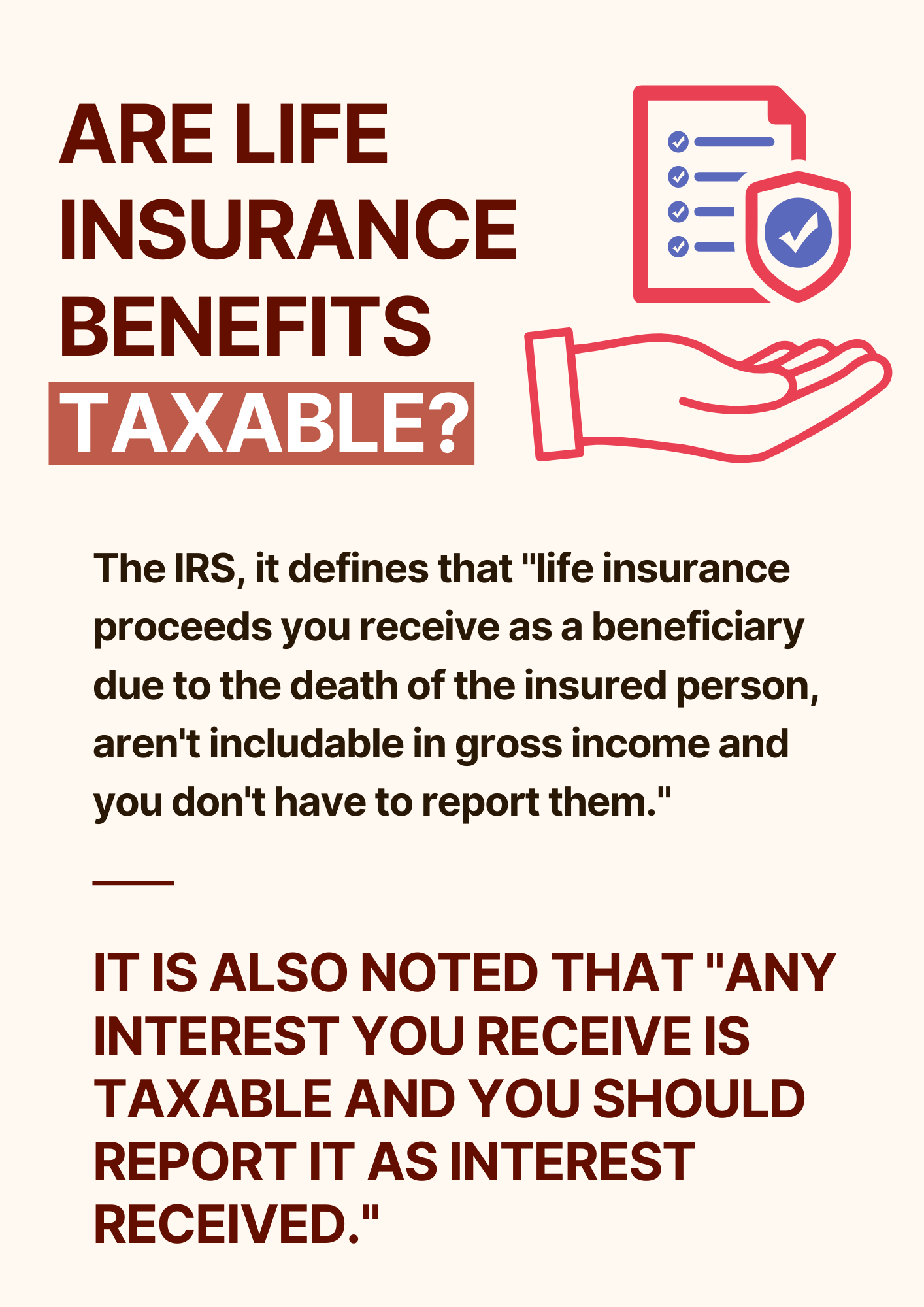
Under Internal Revenue Code Section 101(a), death benefits paid due to the death of the insured are generally excluded from the beneficiary’s gross income. This means if a spouse receives a $1 million check from an insurance company, they do not list that $1 million as "wages" or "income" on their Form 1040. This rule applies regardless of whether the policy is term, whole life, or universal life.
Federal and State Estate Tax
While the beneficiary may not pay income tax, the value of the death benefit may be subject to estate tax. If the deceased person held any "incidents of ownership" in the policy at the time of their death—such as the right to change beneficiaries, borrow against the cash value, or cancel the policy—the entire death benefit is included in the deceased’s gross estate. In 2026, with the sunsetting of many provisions from the Tax Cuts and Jobs Act of 2017, the federal estate tax exemption thresholds have decreased significantly from their previous highs, making this a pressing issue for a larger segment of the population.
Why Taxable Status Matters for Beneficiary Security
The taxable status of a life insurance policy directly impacts the net liquidity available to survivors. When a policyholder calculates the "needed" amount of coverage, they often do so based on specific debts and lifestyle costs. If a $500,000 policy is actually subject to taxation because of a legal technicality, the beneficiary may find themselves short of the funds required to maintain their standard of living.
Furthermore, the timing of tax liabilities matters. Income taxes are usually settled annually, but estate taxes are generally due within nine months of the date of death. If a large portion of an estate is tied up in non-liquid assets (like real estate or a family business) and the life insurance meant to pay the estate taxes is itself taxed, the estate could face a liquidity crisis. This often forces the fire-sale of assets to cover the tax bill, undermining the very purpose of the insurance.

Common Scenarios Where Benefits Become Taxable
There are several specific circumstances where the "tax-free" nature of life insurance is compromised. Awareness of these scenarios allows for proactive planning.
1. Interest Earned on Payouts
Insurance companies do not always pay the death benefit immediately. If the claim process is delayed or if the beneficiary chooses to leave the proceeds with the insurer for a period, the funds earn interest. While the base death benefit remains tax-free, the interest earned on that benefit is considered taxable ordinary income. The insurer will typically issue a Form 1099-INT to the beneficiary reporting this amount.
2. The Transfer-for-Value Rule
If a life insurance policy is sold or transferred to another party for "valuable consideration" (money or something of value), the tax-free status of the death benefit is partially lost. In this case, the beneficiary may owe income tax on the portion of the death benefit that exceeds the price paid for the policy plus any subsequent premiums paid. There are exceptions for transfers to the insured, a partner of the insured, or a corporation in which the insured is an officer, but professional legal guidance is essential whenever a policy changes hands for money.
3. Installment Payouts (Annuity Options)
Some beneficiaries choose to receive the death benefit in installments rather than a lump sum. Each payment consists of two parts: a portion of the principal (tax-free) and a portion of the interest earned while the insurer held the funds (taxable). The insurer calculates an "exclusion ratio" to determine how much of each check is subject to tax.
4. Group Term Life Insurance
For employer-provided life insurance, the IRS allows for the first $50,000 of coverage to be a tax-free fringe benefit. However, the "imputed cost" of any coverage exceeding $50,000 is considered taxable income to the employee. This is reported on the employee’s W-2 and is subject to Social Security and Medicare taxes.
Permanent Life Insurance: Cash Value and Taxation
Permanent policies, such as whole life or universal life, accumulate a "cash value" component. The tax treatment of this cash value during the policyholder's lifetime is a major reason why taxable status matters.
Tax-Deferred Growth
One of the primary benefits of permanent life insurance is that the cash value grows on a tax-deferred basis. You do not pay taxes on the annual gains within the policy, which allows for compound growth that is more efficient than a standard brokerage account.
Surrendering the Policy
If you decide to cancel (surrender) your policy for its cash value, you will owe taxes on any amount that exceeds your "cost basis." The cost basis is generally the total amount of premiums you have paid into the policy, minus any dividends received or previous tax-free withdrawals. The gain is taxed as ordinary income, not at the lower capital gains rate.
Policy Loans
Generally, you can borrow against the cash value of a life insurance policy tax-free. However, the taxable status becomes a critical issue if the policy lapses or is surrendered while a loan is outstanding. If the loan amount exceeds the cost basis at the time of the lapse, the excess is treated as taxable income, even though you didn't receive a new check—the "forgiveness" of the debt is the taxable event.
Navigating the 2026 Estate Tax Landscape
The year 2026 represents a significant turning point in tax history. Following the expiration of the temporary increases in the estate tax exemption established nearly a decade ago, the exemption amounts have reverted to lower levels (inflation-adjusted).
For many families who considered themselves "middle class" and exempt from estate taxes, this shift means that the inclusion of a life insurance death benefit in their gross estate could now push them over the threshold. If the total value of your home, retirement accounts, business interests, and life insurance exceeds the new lower exemption, your heirs could face a federal estate tax rate as high as 40%.
The Role of the Irrevocable Life Insurance Trust (ILIT)
To combat the inclusion of death benefits in the taxable estate, many individuals use an Irrevocable Life Insurance Trust (ILIT). By having the trust own the policy rather than the individual, the insured gives up "incidents of ownership." When the insured passes away, the death benefit is paid into the trust. Because the deceased did not own the policy, the proceeds are not included in their gross estate, effectively keeping the entire benefit tax-free for the beneficiaries.
Comparative Summary of Tax Impacts
The following table outlines how different aspects of life insurance are treated by the IRS as of 2026.
| Feature / Event | Income Tax Status | Estate Tax Status | Notes |
|---|---|---|---|
| Lump-Sum Death Benefit | Generally Tax-Free | Taxable if owned by deceased | The core benefit is protected from income tax via IRC 101(a). |
| Interest on Payouts | Taxable | N/A | Reported as ordinary income in the year received. |
| Cash Value Growth | Tax-Deferred | Included in Estate | Tax is only triggered upon surrender or policy lapse. |
| Policy Loans | Tax-Free | Reduces Net Death Benefit | Taxable only if the policy terminates with a loan exceeding basis. |
| Employer-Paid Premiums | Taxable over $50k | Taxable if owned by deceased | Excess coverage creates "imputed income" for the employee. |
| Policy Surrender | Taxable on Gains | N/A | Only the amount above the total premiums paid is taxed. |
Practical Steps to Protect Your Benefits
Understanding why taxable status matters is the first step toward optimization. Here are several actions policyholders should take to ensure their coverage remains as tax-efficient as possible:
- Review Policy Ownership: Check your policy documents to see who is listed as the "Owner." If you are the owner and your estate is near the 2026 exemption limits, consider transferring the policy to an ILIT or another individual, keeping in mind the "three-year rule" (the IRS may still include the policy in your estate if you die within three years of the transfer).
- Evaluate Beneficiary Designations: Ensure your beneficiaries are up to date. Naming "the estate" as a beneficiary is generally a mistake, as it subjects the proceeds to the probate process and ensures they are included in the taxable estate.
- Monitor Your Cost Basis: If you have a permanent policy, keep records of your total premium payments. This is essential for calculating the tax-free portion of any future withdrawals or surrenders.
- Coordinate with Professional Advisors: Tax laws are complex and subject to change. Work with a qualified tax professional or estate planning attorney to ensure your life insurance strategy aligns with the 2026 tax codes and your state-specific regulations.
Frequently Asked Questions
Are life insurance dividends taxable?
No, the IRS generally views dividends from a mutual insurance company as a partial return of the premiums you paid. Therefore, they are not taxable as long as the total dividends received do not exceed the total premiums paid into the policy. If they do exceed the cost basis, the excess becomes taxable as ordinary income.
What is the "three-year rule" in life insurance?
If you own a life insurance policy and transfer the ownership to another person or a trust within three years of your death, the IRS will still include the death benefit in your taxable estate. This rule is designed to prevent "deathbed transfers" intended solely to avoid estate taxes.
Can my state tax my life insurance benefits even if the federal government doesn't?
Yes. While federal law sets the standard for income tax, states have their own rules regarding inheritance and estate taxes. Some states have much lower exemption thresholds than the federal government, meaning your life insurance could be subject to state-level taxes even if it is below the federal limit.
Is the payout from a "Key Person" insurance policy taxable?
For businesses, the taxable status depends on whether the premiums were deducted. Generally, if a business is the beneficiary of a key person policy, the death benefit is income tax-free under IRC 101(a), provided that the notice and consent requirements of IRC 101(j) were met at the time the policy was issued.
Does the 2026 tax change affect term insurance?
Yes, in terms of estate taxes. If you have a large term insurance policy (e.g., $5 million) and you own it personally, that $5 million is added to your other assets when calculating your estate tax liability. With the 2026 reduction in exemptions, more term policyholders may find their estates subject to taxation.
Strategic Recommendation
The taxable status of life insurance is not merely a technicality; it is the difference between a secure financial legacy and a diminished one. As the tax landscape shifts in 2026, you should perform a comprehensive audit of your "incidents of ownership." If your total assets—including death benefits—approach the current estate tax exemption levels, consult with an estate planning attorney to discuss the use of trusts. For those with permanent policies, focus on maintaining a high cost basis and avoid policy lapses that could trigger a "phantom tax" on outstanding loans.
Image Gallery
Select an image to open it in a new tab.






Vivian Cho
Executive IT and Emerging Technologies Reporter
