How to Find Net Present Worth: A Comprehensive Guide to Valuation
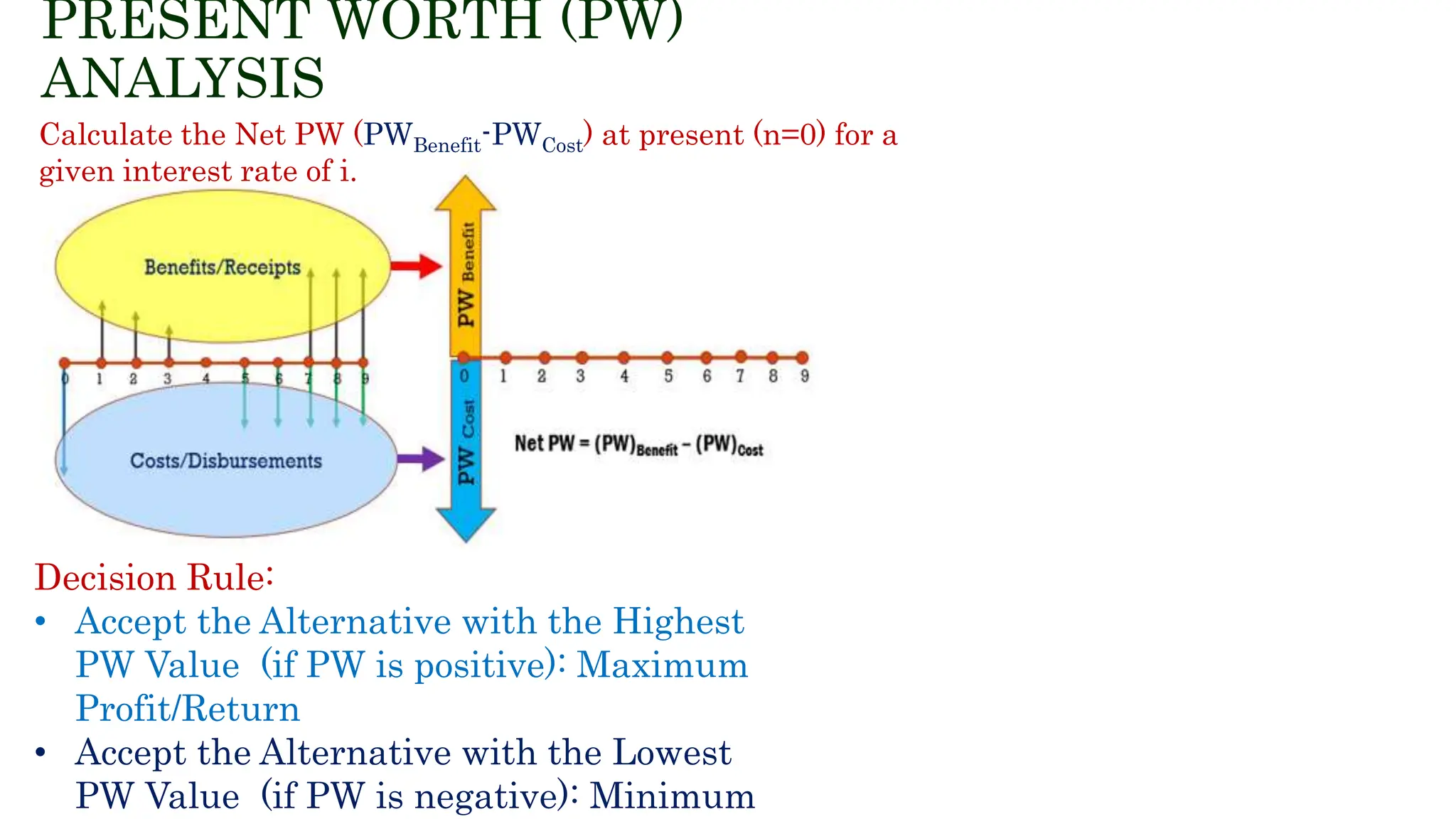
Net present worth, more commonly recognized in financial analysis as Net Present Value (NPV), is the calculation used to determine the current value of a stream of future cash flows minus the initial investment. By discounting future money back to its value today using a specific rate of return, this metric accounts for the time value of money—the principle that a dollar today is worth more than a dollar tomorrow due to its potential earning capacity.
Understanding the Foundation: The Time Value of Money
To master how to find net present worth, one must first grasp the core economic concept underpinning the entire calculation: the time value of money. Cash available at the present time is worth more than the identical sum in the future because of its potential earning capacity. Provided money can earn interest, any amount of money is worth more the sooner it is received.
Why Future Cash Must Be Discounted
When businesses or investors evaluate long-term projects, capital budgeting proposals, or acquisitions, they face cash flows occurring across multiple years. Simply adding up raw nominal dollars received over five or ten years creates a distorted picture of profitability because it ignores inflation, opportunity costs, and risk.
For instance, receiving $10,000 five years from now carries significantly less purchasing power and utility than having $10,000 today. Discounting translates those distant inflows and outflows into a common baseline—today's dollars—allowing for an apples-to-apples comparison between different financial alternatives.
The Role of the Discount Rate
The discount rate is the annual percentage rate used to discount future cash flows to their present value. Choosing the appropriate discount rate is one of the most critical steps in the net present worth process.
- Cost of Capital: For corporations, the discount rate is frequently tied to the Weighted Average Cost of Capital (WACC), which represents the blended cost of debt and equity financing.
- Opportunity Cost: For individual investors, the discount rate often mirrors the expected return of an alternative investment with a similar risk profile.
- Risk Premium: Higher-risk projects require a higher discount rate to penalize uncertainty, driving down the present value of future cash flows.
The Net Present Value Formula
The mathematical framework for finding net present worth relies on a standard equation that accumulates discounted cash flows across multiple periods. While it looks intimidating at first glance, breaking it down into individual components reveals a straightforward arithmetic process.
The Standard Equation
The general mathematical formula for net present value is expressed as:
$$NPV = \sum_{t=1}^{n} \frac{CF_t}{(1 + r)^t} - C_0$$
Where:
- $CF_t$ = Net cash flow during a single period $t$
- $r$ = Discount rate or rate of return
- $t$ = Number of time periods (usually years)
- $C_0$ = Initial investment or initial cash outflow (expressed as a positive number subtracted at the start)
- $n$ = Total number of periods in the project lifecycle
Component Breakdown
- Initial Outflow ($C_0$): This is the upfront capital required to launch the project, purchase the asset, or execute the investment. Because it occurs immediately at $t = 0$, it is not discounted.
- Periodic Cash Flows ($CF_t$): These are the net inflows (revenues minus operating expenses) or outflows generated during each specific interval.
- Discount Factor ($(1 + r)^t$): This denominator scales down future cash amounts based on how far away they are in time ($t$) and how aggressive the discount rate ($r$) is.
Step-by-Step Guide to Calculating Net Present Worth
Calculating net present worth requires a methodical approach. Skipping steps or misestimating cash flows can lead to poor capital allocation decisions. Follow this systematic workflow to perform an accurate valuation.
Step 1: Identify and Map All Expected Cash Flows
Begin by constructing a cash flow timeline for the entire lifespan of the project or asset.
- Estimate the initial capital expenditure required on day one. This represents your $C_0$ value.
- Forecast every subsequent operational cash inflow and outflow for each year, quarter, or month. Be conservative with revenue estimates and thorough with ongoing maintenance, tax, and operating expenses.
Step 2: Determine the Appropriate Discount Rate
Select a discount rate that accurately reflects the risk and funding sources of the project. If you are financing a commercial real estate purchase, use your hurdle rate or required rate of return. If you are an corporate finance analyst, consult your finance department for the current WACC benchmark.
Step 3: Calculate the Present Value of Each Period
For every individual future period, divide the net cash flow by one plus the discount rate raised to the power of the period number:
$$\text{Present Value} = \frac{CF_t}{(1 + r)^t}$$
Repeat this calculation for every single year of the project projection.
Step 4: Sum the Discounted Cash Flows
Add together all the present values calculated in Step 3. This aggregate figure represents the total present value of all future benefits generated by the project.
Step 5: Subtract the Initial Investment
Finally, subtract the initial cash outlay ($C_0$) from the sum of the discounted cash flows. The resulting figure is your net present worth.
Practical Example of an NPV Calculation
To see the formula in action, consider a small manufacturing company deciding whether to purchase a new piece of production machinery.
Scenario Parameters
- Initial Investment ($C_0$): $50,000
- Discount Rate ($r$): 8% (0.08)
- Project Lifespan: 3 Years
- Projected Cash Inflows:
- Year 1: $20,000
- Year 2: $25,000
- Year 3: $30,000
Step-by-Step Computation
Year 1 Cash Flow: $$\text{PV}_1 = \frac{20,000}{(1 + 0.08)^1} = \frac{20,000}{1.08} = $18,518.52$$
Year 2 Cash Flow: $$\text{PV}_2 = \frac{25,000}{(1 + 0.08)^2} = \frac{25,000}{1.1664} = $21,433.47$$
Year 3 Cash Flow: $$\text{PV}_3 = \frac{30,000}{(1 + 0.08)^3} = \frac{30,000}{1.2597} = $23,815.11$$
Sum of Present Values: $$$18,518.52 + $21,433.47 + $23,815.11 = $63,767.10$$
Net Present Worth Calculation: $$NPV = $63,767.10 - $50,000 = $13,767.10$$
Because the net present worth is positive ($13,767.10), the investment is expected to add value above the required 8% return and should generally be accepted.
Evaluating Results: What NPV Values Mean
Interpreting the final output of your calculation is straightforward once you understand the financial thresholds.
| Net Present Value Result | Financial Interpretation | Strategic Recommendation |
|---|---|---|
| Positive NPV ($> 0$) | The project is expected to generate more value than its cost, exceeding the required rate of return. | Accept the project. It increases the overall value of the firm or investor's portfolio. |
| Zero NPV ($= 0$) | The project breaks even, earning exactly the required rate of return with no net value added or lost. | Indifferent. Acceptable only if strategic non-financial benefits exist, but purely financially, it offers no excess returns. |
| Negative NPV ($< 0$) | The project will lose money or fail to meet the minimum required rate of return. | Reject the project. It destroys capital and reduces overall financial worth. |
Limitations and Common Mistakes in Net Present Worth Analysis
While net present worth is widely considered the gold standard in capital budgeting, it is not without flaws. Understanding its limitations helps analysts avoid costly strategic errors.
Sensitivity to Forecast Assumptions
The accuracy of an NPV calculation relies entirely on the quality of its inputs. If revenue projections are overly optimistic or discount rates are set arbitrarily low, a flawed project can appear highly profitable on paper. Analysts should always perform sensitivity analysis by testing best-case, expected, and worst-case cash flow scenarios.
Difficulty with Changing Discount Rates
Standard NPV models assume a constant discount rate throughout the entire project lifecycle. In reality, macroeconomic conditions shift, interest rates fluctuate, and corporate capital structures change over multi-year horizons. While advanced financial modeling can incorporate variable discount rates, basic calculations do not account for these shifts.
Inability to Capture Managerial Flexibility
Traditional net present worth calculations assume a rigid path: you invest today, receive predetermined cash flows, and exit at the end. In the real world, managers have flexibility—known as real options—to expand operations, abandon failing projects early, or pivot strategies mid-stream. Standard NPV can undervalue projects that offer high strategic flexibility.
Frequently Asked Questions
What is the difference between Net Present Value and Net Present Worth?
In financial terminology, Net Present Value (NPV) and Net Present Worth (NPW) are exact synonyms. Both terms refer to the calculation that subtracts the present value of cash outflows from the present value of cash inflows over a period of time. Different industries and textbooks simply favor one label over the other.
How do I calculate NPV using Microsoft Excel or Google Sheets?
You can easily calculate NPV in spreadsheet software using the =NPV(rate, value1, [value2], ...) function. Note that Excel's NPV function assumes that cash flows occur at regular intervals and that the initial investment is not included in the value range. To get the true net present worth, you must add the initial cash outflow (entered as a negative number) to the result of the NPV formula: =C0 + NPV(rate, range_of_inflows).
Can net present worth be used for personal financial planning?
Yes. While commonly used in corporate finance and real estate, individuals can use net present worth to evaluate major financial decisions, such as comparing the long-term costs of buying versus leasing a car, evaluating solar panel installations, or analyzing retirement withdrawal strategies against alternative investment yields.
What happens to NPV if the discount rate increases?
As the discount rate increases, the present value of future cash flows decreases. This happens because a higher discount rate heavily penalizes cash flows received further out in time. Consequently, raising the discount rate can quickly turn a positive NPV project into a negative one.
How does inflation affect the net present worth calculation?
Inflation can be handled in two ways. If your projected cash flows are expressed in nominal dollars (accounting for expected future inflation), your discount rate must also be nominal. If your cash flows are expressed in real dollars (constant purchasing power), you must use a real discount rate that strips out expected inflation. Mixing nominal cash flows with real discount rates leads to distorted valuations.
Image Gallery
Select an image to open it in a new tab.
Declan O'Connor
Higher Education and Campus Culture Reporter
