Comprehensive Guide to Cleaner Burning Coal Technologies and Operational Practices

Cleaner burning coal encompasses a suite of advanced engineering systems, chemical treatments, and regulatory frameworks designed to significantly reduce the environmental footprint of coal combustion. By integrating technologies like supercritical boilers, flue gas desulfurization, and carbon capture, energy producers and industrial facilities minimize sulfur dioxide, nitrogen oxides, particulate matter, and carbon dioxide emissions while maintaining high operational efficiency.
Understanding Cleaner Burning Coal
The terminology of cleaner burning coal spans a broad spectrum of methodologies, stretching from the physical beneficiation of raw coal before it enters a furnace to complex chemical scrubbing systems attached to industrial exhaust stacks. Unlike historical combustion models that released untreated byproducts directly into the atmosphere, modern thermal power generation and heavy industrial applications rely on a multi-tiered approach. This strategy targets pollutants at three distinct phases: pre-combustion, during combustion, and post-combustion.
Pre-combustion strategies focus on upgrading the raw material itself. Raw coal frequently contains impurities such as pyritic sulfur, mineral ash, and excessive moisture. Through washing, crushing, and gravity separation, processing plants remove a significant percentage of these unwanted elements before the fuel ever reaches a boiler.
During combustion, modern engineering alters the thermal environment inside the furnace. By precisely controlling oxygen levels, flame temperature, and fuel-air mixing ratios, engineers suppress the formation of harmful nitrogen oxides. Post-combustion technologies then intercept the flue gases, deploying chemical solvents, electrostatic precipitators, and catalytic converters to capture remaining particulate matter and gaseous pollutants before they exit the stack.
The Evolution of Combustion Technologies
The thermal efficiency of a coal-fired boiler dictates how much fuel is required to generate a specific quantity of electricity or heat. Higher efficiency naturally translates to lower resource consumption and reduced emissions per megawatt-hour produced. The energy sector has systematically transitioned through several generations of boiler technology to maximize this efficiency.
Subcritical Versus Supercritical Boilers
Traditional subcritical boilers operate at steam pressures below the critical point of water, which is approximately 22.1 megapascals (MPa) or 3,200 pounds per square inch. At these pressures, water boils and turns into steam inside the boiler tubes with a distinct phase change. Subcritical units typically achieve thermal efficiencies ranging from 33% to 37%.
In contrast, supercritical and ultra-supercritical (USC) boilers operate at pressures and temperatures where water transitions directly into steam without boiling, bypassing the latent heat phase. Operating pressures in USC systems frequently exceed 30.0 MPa, with steam temperatures pushing past 600 degrees Celsius.
| Boiler Type | Operating Pressure | Typical Efficiency Range | Primary Environmental Benefit |
|---|---|---|---|
| Subcritical | Below 22.1 MPa | 33% - 37% | Baseline thermal generation with standard emissions controls. |
| Supercritical | Above 22.1 MPa | 38% - 42% | Reduced coal consumption per megawatt-hour generated. |
| Ultra-Supercritical | 30.0+ MPa | 44% - 48%+ | Significant reduction in greenhouse gas intensity and fuel usage. |
By elevating operating parameters, ultra-supercritical plants boost thermal efficiency up to 45% or higher. This operational jump directly lowers the amount of carbon dioxide and other combustion byproducts released per unit of energy output.
Fluidized Bed Combustion (FBC)
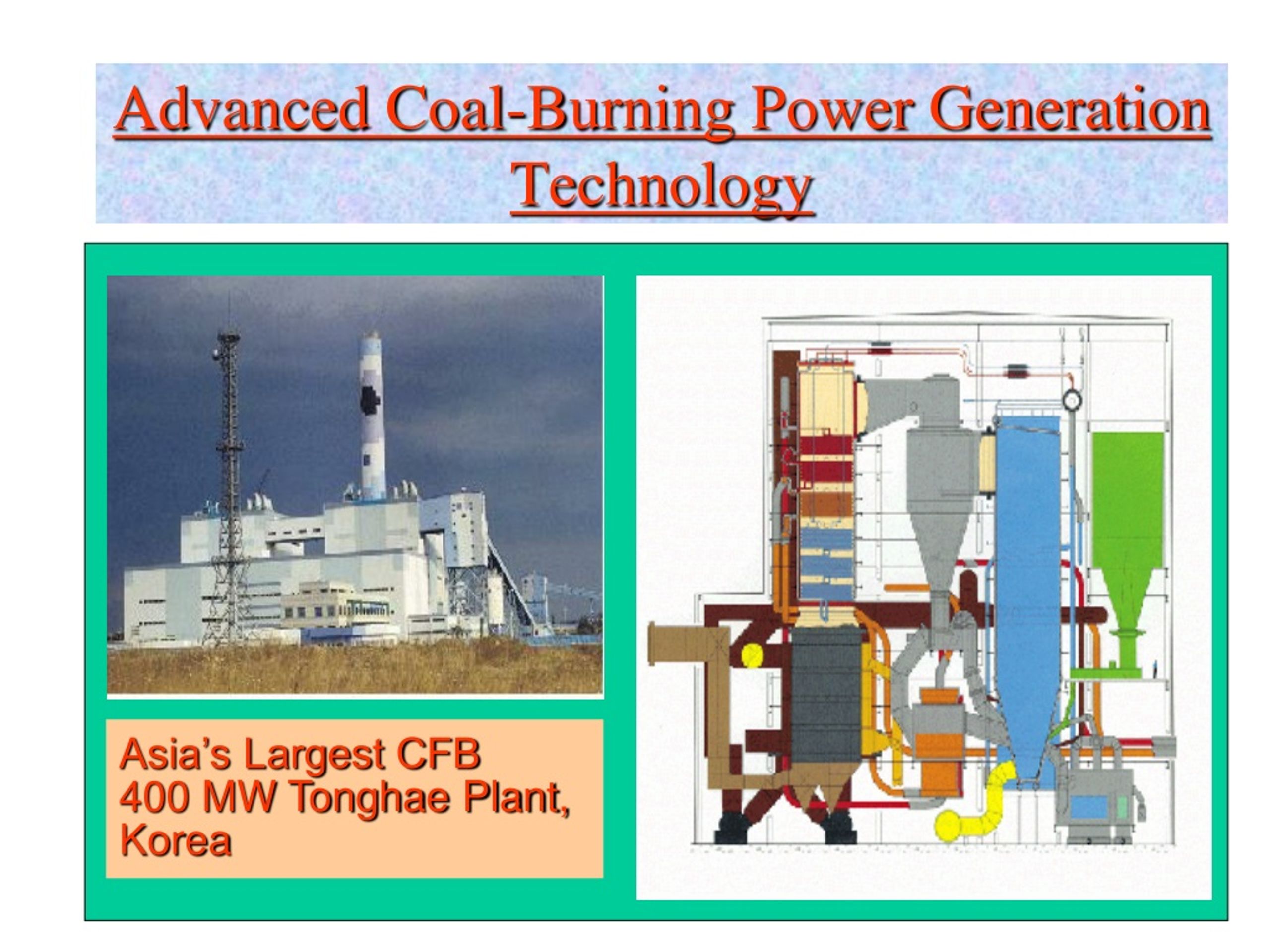
Fluidized Bed Combustion represents an alternative approach to traditional pulverized coal boilers. In an FBC system, crushed coal is suspended on a hot, turbulent bed of inert materials such as limestone or sand through the upward blowing of primary combustion air.
This technique operates at lower combustion temperatures—typically between 800 and 900 degrees Celsius—compared to pulverized coal systems that exceed 1,300 degrees Celsius. The lower temperature range inherently inhibits the thermal formation of nitrogen oxides. Furthermore, mixing limestone directly into the fluidized bed allows for in-situ sulfur capture. The calcium in the limestone reacts with sulfur dioxide released during combustion to form solid calcium sulfate, which is then removed with the bottom ash, eliminating the need for extensive external flue gas desulfurization towers in certain configurations.
Flue Gas Treatment and Emission Control Systems
Even with advanced combustion controls, exhaust gases contain residual pollutants that require aggressive post-combustion treatment. Regulatory compliance mandates the deployment of specialized environmental control equipment downstream from the boiler.
Particulate Matter Controls
Particulate matter, comprising fine ash and unburned carbon particles, is captured using two primary mechanical and electrical technologies:
- Electrostatic Precipitators (ESPs): ESPs apply a high-voltage electrical charge to incoming flue gas, causing suspended dust particles to become ionized. These charged particles are then attracted to grounded collection plates, where they adhere until mechanical rappers dislodge them into hoppers for disposal. Modern ESPs achieve collection efficiencies exceeding 99%.
- Fabric Filter Baghouses: Flue gas passes through long, cylindrical fabric bags that act as physical filters. As gas flows through the porous fabric, particulate matter is trapped on the outer surface of the bags. Pulse-jets of compressed air periodically clean the bags, dropping accumulated ash into collection systems below.
Acid Gas Abatement
Sulfur dioxide ($SO_2$) and nitrogen oxides ($NO_x$) are primary drivers of acid rain and regional air quality degradation. Power plants utilize specific chemical systems to neutralize these gases:
- Flue Gas Desulfurization (FGD): Commonly referred to as "scrubbers," wet FGD systems spray an alkaline slurry—typically limestone or lime dissolved in water—into the exhaust gas stream. The alkaline reagent reacts chemically with sulfur dioxide to produce calcium sulfite or gypsum, which is filtered out of the slurry. Dry scrubbers inject a similar sorbent in a dry or semi-dry state, vaporizing moisture within the flue gas and yielding a dry powder byproduct.
- Selective Catalytic Reduction (SCR): To control nitrogen oxides, an ammonia ($NH_3$) or urea reagent is injected into the flue gas stream upstream of a catalyst bed. In the presence of the catalyst, the ammonia reacts selectively with $NO_x$ to convert the pollutants into harmless molecular nitrogen and water vapor.
Carbon Capture, Utilization, and Storage (CCUS)
As industrial standards increasingly prioritize greenhouse gas mitigation, Carbon Capture, Utilization, and Storage has become a central component of discussions surrounding cleaner burning coal. CCUS involves separating carbon dioxide emissions from industrial exhaust streams, compressing the gas, and either repurposing it for industrial applications or sequestering it deep underground.
Post-Combustion Capture Mechanisms
The most common capture technique for existing coal infrastructure is chemical absorption using amine-based solvents. Flue gas is bubbled through a liquid solvent column where the amine chemically binds with carbon dioxide molecules. The solvent is then routed to a stripper column, where heat breaks the chemical bond, releasing a high-purity stream of carbon dioxide gas while regenerating the solvent for reuse.
Other emerging approaches include solid sorbent adsorption, cryogenic separation, and membrane filtration technologies. While these systems successfully capture upwards of 90% of carbon dioxide from exhaust gases, they impose a significant energy penalty, requiring parasitic electrical load to run compressors, pumps, and regeneration reboilers.
Permanent Geological Sequestration
Once captured and compressed into a supercritical fluid state, carbon dioxide is transported via pipeline to dedicated storage sites. Geologists inject the fluid deep into stable subsurface formations, such as saline aquifers or depleted oil and gas reservoirs, typically located a kilometer or more beneath impermeable caprock formations. Monitoring wells, seismic surveys, and pressure sensors track the underground plume to ensure long-term containment and permanence.
Economic and Operational Considerations
Adopting cleaner burning coal technologies requires substantial capital investment. Integrating supercritical boilers, advanced scrubbers, and carbon capture infrastructure alters the financial landscape of thermal energy generation.
- Capital Expenditure (CapEx): Equipment retrofits or greenfield construction projects involving ultra-supercritical designs and comprehensive emission controls demand high upfront financing compared to legacy subcritical installations.
- Operational Expenditure (OpEx): Parasitic power loads required to operate pumps, fans, scrubbers, and carbon compressors reduce the net electrical output sent to the grid. Additionally, ongoing expenditures include chemical reagents like limestone and ammonia, catalyst replacement, and waste management for gypsum and fly ash.
- Regulatory Compliance Costs: Facilities must balance the costs of advanced environmental controls against penalties, taxes, or caps associated with unmitigated emissions under regional and international environmental frameworks.
Frequently Asked Questions
What makes modern coal combustion cleaner than traditional methods?
Modern coal combustion utilizes high-efficiency supercritical boilers, chemical scrubbers, and catalytic converters to remove sulfur dioxide, nitrogen oxides, and particulate matter before exhaust gases leave the stack. These engineering controls drastically lower pollutant concentrations compared to older, uncontrolled plants.
Can carbon capture be retrofitted to existing coal power plants?
Yes, post-combustion carbon capture systems can be retrofitted to existing facilities, typically using chemical solvent absorption. However, the retrofit process requires significant physical space, structural modifications, and a reliable secondary energy source to power the capture and compression equipment.
How do supercritical boilers reduce emissions?
Supercritical boilers operate at much higher temperatures and pressures than subcritical units, increasing the overall thermodynamic efficiency of the steam cycle. Because efficiency is higher, the plant burns less coal per megawatt-hour of electricity produced, resulting in lower absolute emissions of carbon dioxide and other byproducts per unit of output.
What happens to the byproducts captured by scrubbers?
Wet flue gas desulfurization systems commonly produce synthetic gypsum as a byproduct. This material is widely dewatered and repurposed for commercial manufacturing applications, such as wallboard production. Fly ash collected by electrostatic precipitators is frequently utilized as a supplementary cementitious material in concrete manufacturing.
Does coal washing completely eliminate sulfur?
Coal washing is a physical beneficiation process that removes a substantial portion of pyritic sulfur and mineral ash, but it does not remove organically bound sulfur. Consequently, washed coal still requires secondary flue gas desulfurization systems during or after combustion to meet strict environmental sulfur dioxide limits.
Conclusion and Next Actions
Evaluating cleaner burning coal requires a thorough assessment of technical specifications, environmental regulations, and capital requirements. Energy planners, industrial operators, and engineering firms should review specific regional emissions mandates, conduct detailed feasibility studies for boiler upgrades, and model the parasitic energy loads associated with advanced scrubbers and carbon capture systems prior to committing capital resources.
Image Gallery
Select an image to open it in a new tab.
Simon Caldwell
Enterprise Technology and Systems Editor
