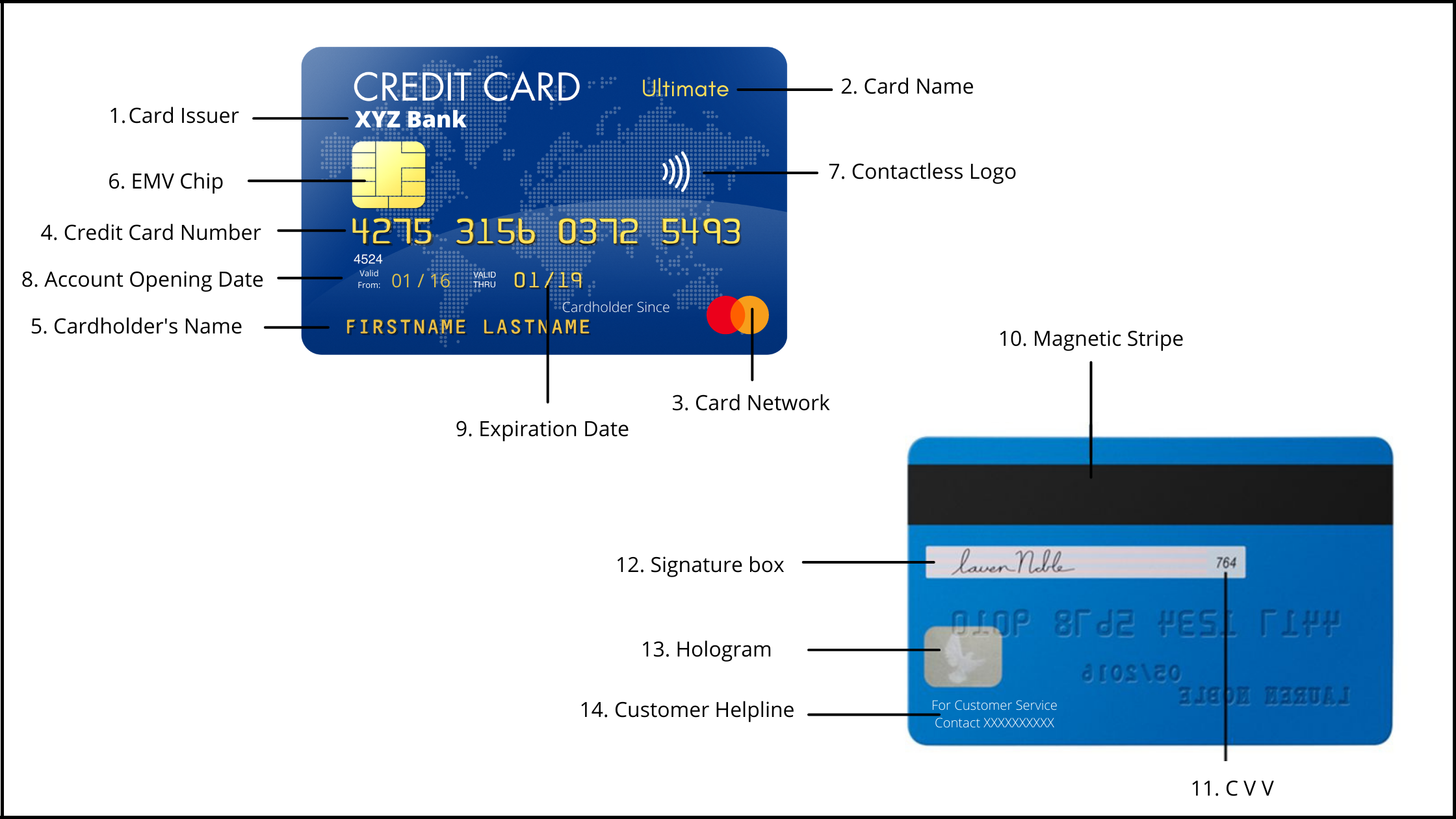
An ATM works by reading the primary account number (PAN) and associated data from a card’s magnetic stripe, EMV chip, or NFC antenna. Once the card number is captured, the ATM encrypts the data and transmits it via a secure network—using the ISO 8583 standard—to the issuing bank to verify the cardholder's identity and account balance before authorizing a transaction.
The seamless experience of inserting a card into an Automated Teller Machine (ATM) and receiving cash is the result of a highly sophisticated, multi-layered technological process. While most users see only a 16-digit number on their plastic card, that number serves as the foundational data point for a global financial communication network. As of 2026, while physical cards remain a staple, the way ATMs interpret these numbers has evolved to include advanced encryption, biometric cross-referencing, and real-time fraud detection.
The Anatomy of a Card Number (PAN)
The number printed on the front or back of a debit or credit card is formally known as the Primary Account Number (PAN). It is not a random sequence of digits; rather, it is a structured identifier governed by the International Organization for Standardization (ISO/IEC 7812). Understanding this structure is essential to understanding how the ATM begins its work.
The Major Industry Identifier (MII)
The first digit of the card number represents the Major Industry Identifier. This tells the ATM and the processing network what type of institution issued the card. For example, cards starting with 4 are typically Visa (Banking and Financial), while those starting with 5 are often Mastercard. This initial digit allows the ATM to immediately categorize the transaction routing path.
The Issuer Identification Number (IIN)
The first six to eight digits (including the MII) are known as the Issuer Identification Number (IIN), formerly called the Bank Identification Number (BIN). This segment identifies the specific financial institution that issued the card. When you insert your card, the ATM uses the IIN to determine which "switch" or network (such as Plus, Cirrus, or a local interbank network) it must contact to reach your bank.
The Individual Account Identifier
The digits following the IIN, up to the final digit, are unique to the individual’s account. Contrary to popular belief, this is usually not the same as your actual bank account number. Instead, it is a unique proxy number that the bank maps to your internal records. This adds a layer of security, ensuring that even if a card number is compromised, the primary bank account details remain shielded.
The Check Digit and the Luhn Algorithm
The final digit of the card number is a "check digit." ATMs use a mathematical formula called the Luhn Algorithm (or Modulus 10) to verify that the card number is valid before even attempting to contact the bank.
- The algorithm involves doubling every second digit starting from the right.
- If doubling a digit results in a number greater than 9, the two digits of that result are added together.
- All digits are then summed.
- If the total sum ends in zero, the number is mathematically valid.
This process allows the ATM to immediately reject mistyped or "fake" card numbers locally, saving network bandwidth and reducing unnecessary traffic to the banking servers.
Physical Mechanisms: How the ATM Reads the Number
By 2026, ATMs have become "tri-hybrid" readers, capable of processing data through three distinct physical interfaces. Each method handles the card number and security data differently.
Magnetic Stripe (Legacy Support)
The magnetic stripe (magstripe) on the back of the card is composed of tiny iron-based magnetic particles. Data is stored in three "tracks." ATMs primarily read Track 2, which contains the PAN, the expiration date, and the Service Code. While magstripe technology is considered less secure because the data is static (it never changes), ATMs in 2026 still maintain these readers to ensure compatibility with international travelers or older card stocks.
EMV Chip (The Current Standard)
EMV (Europay, Mastercard, and Visa) technology uses an integrated circuit embedded in the card. Unlike the magstripe, the chip does not just "give" the card number to the ATM. Instead, it engages in a complex "handshake." The ATM provides power to the chip, and the chip generates a unique, one-time transaction code (a cryptogram). While the card number is still shared, it is protected by this dynamic verification, making it nearly impossible for criminals to create functional "cloned" cards.
Near-Field Communication (NFC/Contactless)
Contactless ATMs use Radio Frequency Identification (RFID) or NFC technology to read the card number. When a user taps their card or mobile wallet against the NFC symbol, the card transmits the PAN and a dynamic security code over a 13.56 MHz frequency. This method is increasingly preferred in 2026 due to its speed and the reduced wear and tear on the ATM’s mechanical components.
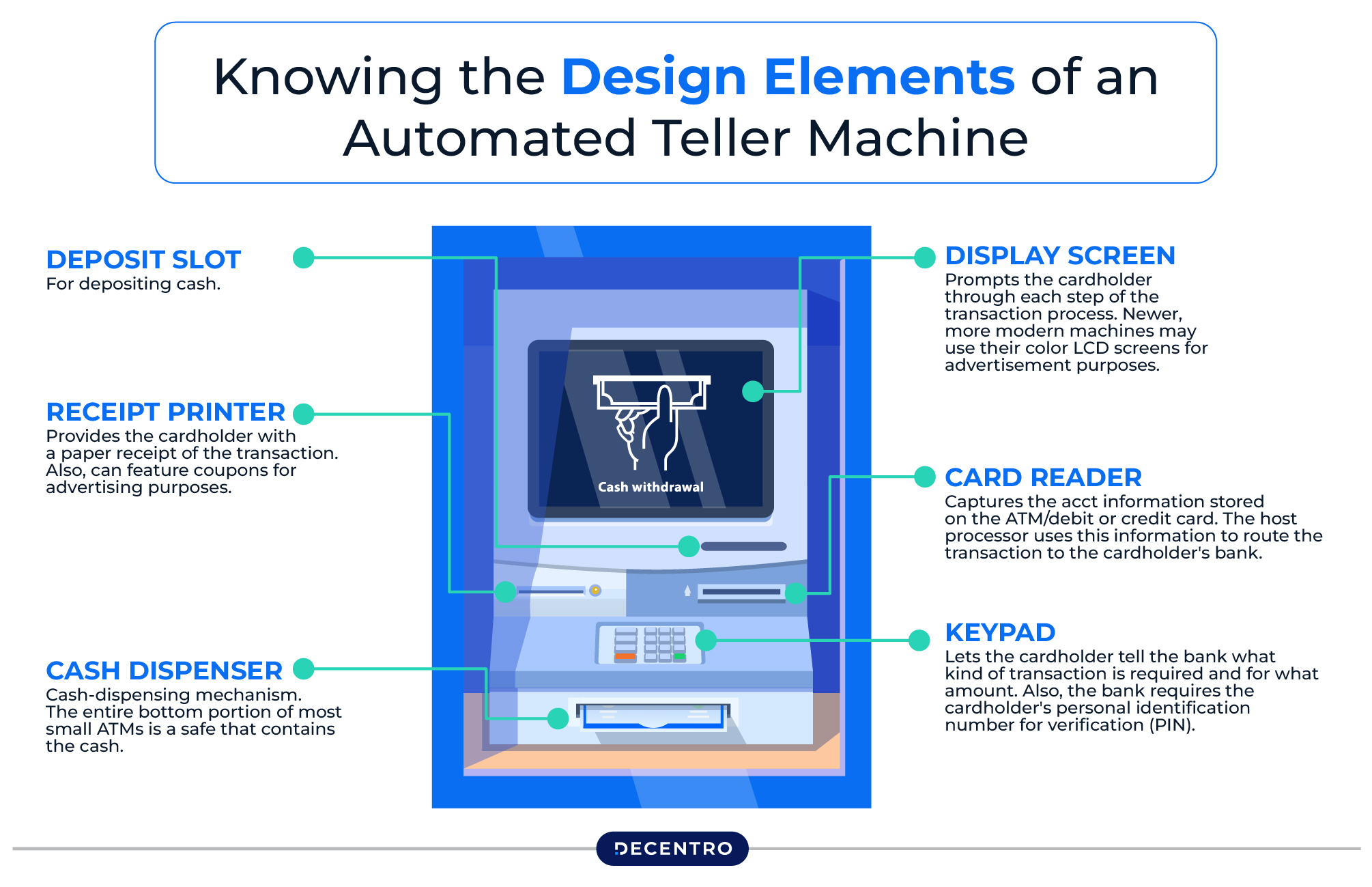
The Transaction Flow: From Capture to Cash
Once the ATM has successfully read the card number and the user has entered their Personal Identification Number (PIN), a complex journey through the global financial "plumbing" begins.
1. The Local Encryption
Before the card number or PIN leaves the ATM, they are encrypted using a Hardware Security Module (HSM) located inside the machine. The PIN is typically encrypted into a "PIN Block" using 3DES (Triple Data Encryption Standard) or AES (Advanced Encryption Standard). This ensures that even if the communication line is tapped, the cardholder's sensitive data remains unreadable.
2. The Request to the Processor
The ATM sends a digital packet—often formatted according to the ISO 8583 standard—to an ATM Controller or Acquirer. This message contains:
- The Card Number (PAN).
- The Transaction Amount.
- The encrypted PIN Block.
- The ATM’s unique ID and location.
3. The Switch and Routing
The Acquirer acts as a traffic controller. It looks at the IIN (the first part of the card number) and routes the request to the appropriate network (like Visa's VisaNet or Mastercard’s Banknet). These networks are the "highways" of the financial world, capable of processing thousands of transactions per second.
4. The Issuing Bank Authorization
The network delivers the request to the "Issuing Bank"—the bank that actually holds the user’s money. The bank’s computer system performs three critical checks:
- Identity: Does the PIN block match the record for this card number?
- Status: Is the card reported stolen or expired?
- Funds: Does the account associated with this card number have sufficient funds for the requested withdrawal?
5. The Response Cycle
The Issuing Bank sends back a response code (e.g., "00" for approval or "51" for insufficient funds). This response travels back through the network to the ATM. If approved, the ATM’s software triggers the mechanical "pick" unit to count and dispense the cash.
Comparison of Card Reading Technologies in 2026
| Feature | Magnetic Stripe | EMV Chip | NFC/Contactless |
|---|---|---|---|
| Data Storage | Static (Fixed) | Dynamic (Programmable) | Dynamic (Encrypted) |
| Security Level | Low (Susceptible to Skimming) | High (Prevents Cloning) | High (Tokenized Data) |
| Speed | Moderate | Slow (Requires constant contact) | Very Fast |
| Common Use | Backup/Legacy | Standard ATM Withdrawals | Mobile Wallets/Fast Tap |
| Vulnerability | Physical Copying | Relay Attacks (Rare) | Proximity Interception (Extremely Rare) |
Security Protocols and the Role of Tokenization
In 2026, the concept of the "card number" is shifting. With the rise of mobile banking and digital wallets (like Apple Pay or Google Pay), many ATMs now work with tokens rather than the actual 16-digit PAN printed on the physical card.
Tokenization replaces the card number with a surrogate value (the token). When you tap your phone at an ATM, the ATM reads this token. The bank then de-tokenizes the value in its secure vault to identify the account. This adds a massive layer of security: if a hacker intercepts the "card number" from a tokenized transaction, that number is useless for any other transaction or at any other merchant.
Furthermore, ATMs utilize End-to-End Encryption (E2EE). This means the data is encrypted at the very moment the chip touches the reader and is only decrypted when it reaches the secure environment of the bank. Not even the ATM’s own internal operating system sees the raw card data in an unencrypted state.
Why Your Card Number Might Not Work: Common Failures
Despite the complexity, the system is remarkably reliable. However, several factors can cause the ATM to fail to read or process a card number:
- Physical Degradation: The magnetic stripe may be demagnetized by exposure to strong magnets, or the EMV chip's contact points may be scratched or dirty.
- Card Reader Shimming: Criminals sometimes insert "shimmers"—thin devices that sit inside the chip reader—to intercept data. Modern 2026 ATMs often have "anti-shimming" sensors that disable the machine if an obstruction is detected.
- Network Latency: If the communication "switch" between the ATM and the bank is down, the ATM cannot verify the card number, leading to a "System Unavailable" error.
- IIN Restrictions: Some ATMs are configured to only accept specific IINs (e.g., only domestic cards or only cards from a specific network).
The Future of the "Card Number" in 2026 and Beyond
As we move through 2026, the physical card number is becoming less central to the ATM experience. We are seeing a transition toward Cardless ATMs. In this model, the "card number" is stored securely in the cloud or on a mobile device. The user initiates a withdrawal on their banking app, and the app generates a one-time code or a QR code. When the user scans this at the ATM, the machine already knows the account details, bypassing the need for a physical card read entirely.
Additionally, biometric integration—such as palm vein scanning or facial recognition—is increasingly used to "unlock" the card number. In these systems, the card number serves as the back-end identifier, while the user’s physical traits serve as the "key" that authorizes the machine to use that number for a transaction.
FAQs
What happens if an ATM reads my card number but I enter the wrong PIN?
The ATM sends the card number and the encrypted PIN block to the bank. The bank compares the entered PIN against the one stored in its secure database. If they don't match, the bank sends a "Deny" code back to the ATM. Most banks allow three attempts before the ATM is instructed to either "capture" (keep) the card or lock the account for 24 hours to prevent "brute force" attacks.
Is my card number stored inside the ATM after I leave?
No. To comply with PCI DSS (Payment Card Industry Data Security Standard), ATMs are prohibited from storing sensitive authentication data like PINs or full magnetic stripe data after a transaction is completed. While the ATM may keep a "journal" or log of the transaction for audit purposes, the card number is usually truncated (e.g., showing only the last four digits).
Can a card number be "stolen" wirelessly from a contactless ATM?
While theoretically possible, it is functionally impossible in a real-world setting. Contactless transactions at ATMs in 2026 use tokenization and one-time cryptograms. Even if a thief used a high-powered antenna to "sniff" the transmission, they would only capture a one-time code that cannot be reused for another transaction or to create a physical card.
Why do some ATMs ask if my card is "Debit" or "Credit" if they can read the number?
Even though the IIN tells the ATM which bank issued the card, some cards are "co-branded" or "dual-purpose." For instance, a card might be able to process through a local low-cost debit network or a global credit network (like Visa). By asking the user, the ATM ensures it routes the card number through the specific network the user prefers, which may affect transaction fees.
Does the ATM read the CVV/CVC code on my card?
Yes, but not the one printed on the back. There are actually two types of CVV. CVV1 is stored on the magnetic stripe or chip and is read by the ATM to verify the physical card's authenticity. CVV2 is the three-digit code printed on the card used for online "card-not-present" transactions. The ATM uses CVV1 to ensure the card hasn't been digitally altered.
Practical Recommendations
To ensure your card number works correctly and remains secure at any ATM, follow these best practices:
- Keep the Chip Clean: If an ATM fails to read your card, gently wipe the gold EMV chip with a dry microfiber cloth to remove oils and dirt.
- Prefer Contactless: Whenever possible, use the "Tap" feature or a mobile wallet. These methods are more resistant to physical skimming and wear-and-tear than the "Insert" or "Swipe" methods.
- Monitor Your Statements: Even with advanced 2026 security, always review your transaction history. If you see an ATM withdrawal you didn't make, notify your bank immediately so they can "kill" the compromised card number and issue a new IIN-mapped identifier.
- Check for Physical Tampering: Before inserting your card, give the card slot a quick wiggle. If it feels loose or looks bulky, it may have a skimmer attached.
Image Gallery
Select an image to open it in a new tab.


Mateo Castillo
Decentralized Finance and E-Payments Strategist
