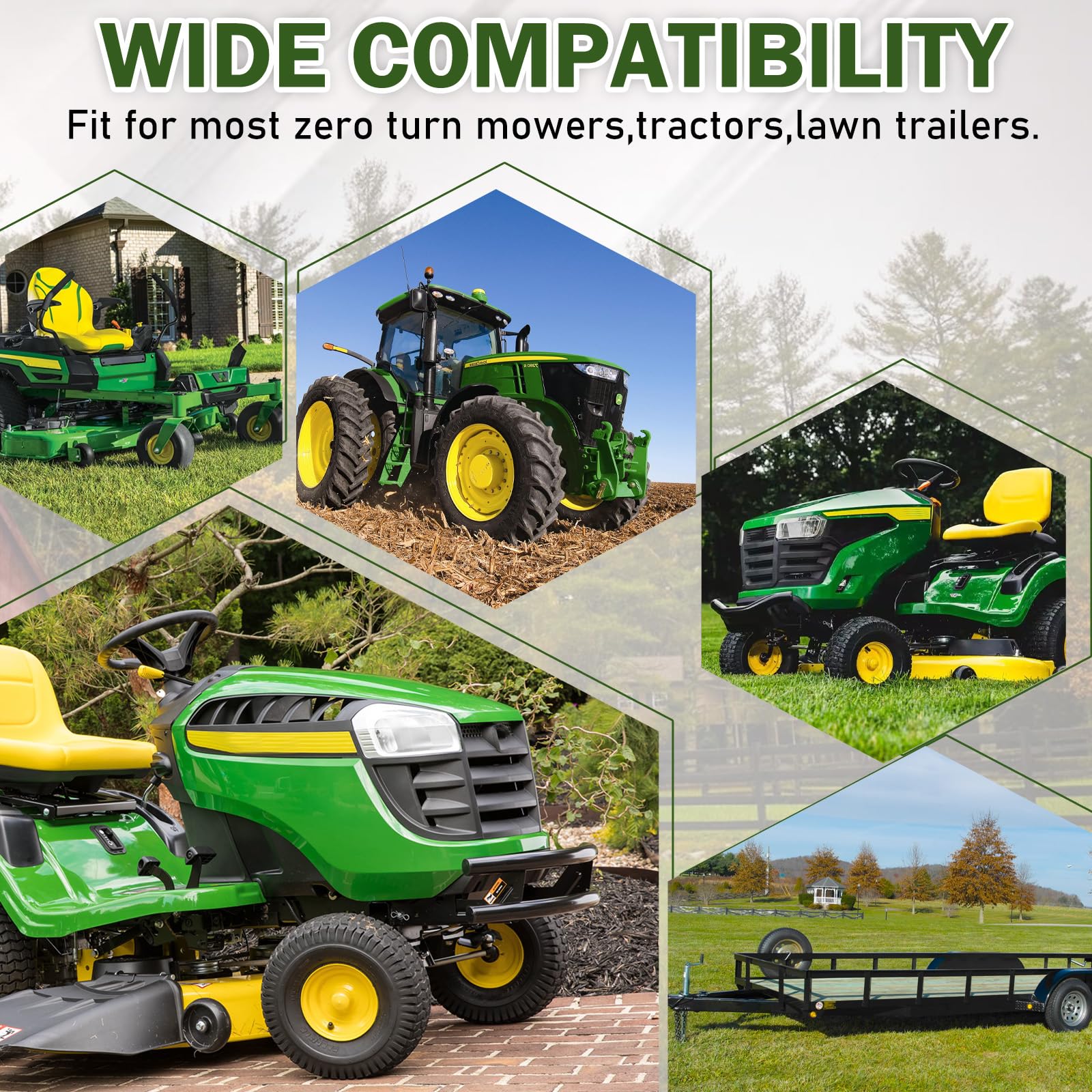
To buy a zero turn mower for under $1,000 in 2026, you must focus exclusively on the used market, as new residential models typically start at $3,500. Success requires searching local marketplaces like Facebook and Craigslist, prioritizing well-maintained residential brands like Toro or Cub Cadet, and performing a rigorous mechanical inspection of the hydrostatic transmissions and engine.
The landscape of lawn maintenance equipment has shifted significantly by 2026. While technology in high-end electric and autonomous mowers has advanced, the entry-level price for new internal combustion zero-turn mowers has remained well above the $3,000 mark due to manufacturing and material costs. For a homeowner with a strict $1,000 budget, the goal is not to find a "cheap" new machine, but to find a "value-heavy" used machine that has survived its initial depreciation cycle without reaching the end of its mechanical life.
The Reality of the $1,000 Zero-Turn Market in 2026
In 2026, a $1,000 budget places you firmly in the "pre-owned residential" category. It is highly unlikely to find a commercial-grade unit at this price point unless it requires a complete engine or transmission overhaul. Most units available for under $1,000 will be 10 to 15 years old, featuring stamped steel decks and entry-level hydrostatic transaxles.
The primary challenge is that zero-turn mowers are more complex than standard lawn tractors. They rely on two independent transmissions to provide the "zero-degree" turning radius. These components are expensive to replace, often costing $500 to $800 per side for parts alone. Therefore, buying in this price bracket is an exercise in risk management. You are looking for a machine that was stored indoors, serviced regularly, and perhaps sold by someone moving or upgrading, rather than someone trying to offload a mechanical nightmare.
Understanding Your Targets: Common Models
When searching, you will frequently encounter the following models in the sub-$1,000 range:
- Toro TimeCutter Series: Known for a reliable ride and decent parts availability.
- Cub Cadet RZT Series: Older models with Briggs & Stratton or Kohler engines are common.
- John Deere Z225/Z235: Older "Z-Trak" residential models that hold their value well but occasionally dip into three figures.
- Craftsman/Ariens: These often share platforms with Husqvarna or Poulan Pro and offer straightforward DIY repair paths.
Where to Find Quality Low-Budget Mowers
Finding a deal requires moving faster than the general public. In 2026, digital marketplaces remain the dominant source, but they are also the most competitive.
Digital Marketplaces and Local Listings
Facebook Marketplace and Craigslist remain the primary hubs for private sales. To succeed here, you must set up alerts for "zero turn" with a price cap of $1,100 (leaving room for negotiation). Speed is essential; a functional zero-turn listed for $800 will often sell within hours.
When browsing these ads, look for "clues of care." A mower pictured in a clean garage is a better bet than one pictured sitting in tall weeds. Avoid listings with phrases like "ran last year" or "just needs a battery," as these are often euphemisms for significant fuel system or electrical issues.
Estate Sales and Retirement Auctions
Estate sales are often overlooked but are goldmines for well-maintained equipment. When an older homeowner moves to assisted living or passes away, their equipment is often sold quickly. These machines are frequently "one-owner" units that were serviced by local dealers. You can find estate sale listings on sites like EstateSales.net or through local auctioneer websites.
Small Engine Repair Shops
Local repair shops often have "abandoned" units. When a customer is quoted $600 to fix a $1,200 mower, they might choose to leave the machine with the shop instead of paying the diagnostic fee. The shop owner may fix it during the off-season and sell it to recoup costs. These mowers are excellent buys because a professional has already vetted the mechanical integrity.

The Technical Inspection: Avoiding the "Money Pit"
Because you are buying a used machine, you must act as your own mechanic during the inspection. A $900 mower that needs a $700 transmission is no longer a bargain.
1. The Hydrostatic Transmission Test
This is the most critical step. Once the mower is warmed up (at least 10 minutes of driving), find a slight incline. If the mower struggles to climb the hill or if the handles feel "mushy" and unresponsive, the transmissions are likely wearing out. Listen for high-pitched whining; while some noise is normal, excessive screaming from the rear of the machine indicates internal wear or cavitation.
2. Engine Health and Cold Starts
Insist that the seller does not "warm up" the engine before you arrive. A "cold start" reveals much about the engine's health. Watch for smoke:
- Blue/White Smoke: Indicates oil burning, which could mean worn piston rings.
- Black Smoke: Indicates a rich fuel mixture, usually a simple carburetor adjustment or air filter issue.
- No Smoke: The ideal scenario.
Check the oil dipstick. If the oil is pitch black and thick, the owner neglected basic maintenance. If it looks like a "chocolate milkshake," water has entered the oil, or there is a blown head gasket.
3. The Mower Deck and Spindles
The deck is the body of the mower. In 2026, many older mowers suffer from deck rot (rust holes). While a small hole can be patched, a structurally compromised deck is dangerous. Turn the mower off, remove the key, and reach under the deck (or use a flashlight) to check for "thin" metal.
Engage the PTO (Power Take-Off) to start the blades. Listen for a loud grinding or roaring sound. This indicates the deck spindles or the electric PTO clutch is failing. A new PTO clutch can cost upwards of $250, so factor this into your offer.
Evaluation Criteria for Used Zero Turns
The following table helps categorize the value of a sub-$1,000 zero-turn mower based on its condition in the 2026 market.
| Feature | "Good Deal" ($800–$1,000) | "Project" ($400–$600) | "Walk Away" (Any Price) |
|---|---|---|---|
| Engine | Starts instantly, no smoke. | Needs carb clean/battery. | Knocks or burns heavy oil. |
| Transmissions | Strong tracking, climbs hills. | Slow on one side after heat-up. | Will not move or "screams." |
| Deck | Surface rust only, quiet spindles. | Minor holes, noisy bearings. | Structural rot, bent shell. |
| Tires | Hold air, good tread. | Dry rotted or slow leaks. | Missing or shredded. |
| Hours | Under 300 hours (residential). | 500+ hours. | Meter is broken/missing. |
Negotiation Strategies for the Budget Buyer
When you find a machine that passes inspection but has minor flaws, use those flaws as leverage. In 2026, parts and labor are expensive. If the tires are dry-rotted, point out that a full set of four tires will cost you roughly $200. If the blades are dull and the oil is dirty, that is another $100 in immediate maintenance.
The "Cash in Hand" Approach: Many sellers in the used market prefer a quick, headache-free transaction. If a mower is listed for $1,200, showing up with $950 in cash and a trailer ready to load can often close the deal. The seller avoids the hassle of more "is this available?" messages and the risk of the next buyer flaking.
Essential Maintenance After Purchase
Once you bring your mower home, you should immediately perform a "Baseline Service." Do not trust the seller’s word on when it was last serviced. This initial investment ensures the machine lasts for several more seasons.
- Change the Oil and Filter: Use the manufacturer-recommended weight (usually 10W-30 or SAE 30).
- Replace the Fuel: Modern ethanol fuels degrade quickly. Drain the old gas and use a high-quality non-ethanol fuel if available.
- Clean the Cooling Fins: Remove the engine shroud and blow out any grass clippings. Overheating is the #1 killer of air-cooled engines.
- Sharpen or Replace Blades: Dull blades put unnecessary strain on the engine and PTO clutch.
- Check Transmission Oil: If the unit has serviceable transaxles (like the Hydro-Gear ZT-2800 and up), change the fluid. Most entry-level units (ZT-2200/EZT) are "sealed," but can often be drained and refilled by a determined DIYer.
Frequently Asked Questions
Is 500 hours too many for a used zero turn?
In the residential world, 500 hours is a significant milestone. Most residential engines (like the Kohler Courage or Briggs & Stratton Intek) are designed for a 500–750 hour service life if well-maintained. If a $1,000 mower has 500 hours, it is nearing the end of its reliable life, and you should inspect the engine and transmissions with extreme care. Commercial units, by contrast, can easily go 2,000+ hours.
Can I buy a used electric zero turn for under $1,000?
In 2026, it is possible but risky. Early Ryobi or Ego models from the early 2020s may appear at this price point. However, the battery packs are the most expensive component. If a 5-year-old electric mower is $800 but needs $1,200 in new lithium batteries, it is not a bargain. Only buy an electric unit if the seller can prove the battery health or "runtime" under load.
Why are zero turns more expensive than lawn tractors?
Zero turns require two independent transmissions and a more complex frame to handle the torque of rapid pivoting. They also use a more robust steering linkage. This complexity provides the speed and maneuverability that saves time, but it also increases the initial purchase price and the cost of used parts.
What is the best time of year to buy?
The best time to buy is late October through early February. During the "off-season," demand drops significantly, and sellers are often more willing to negotiate to clear space in their garage or avoid winterizing the machine. Conversely, prices are highest and competition is fiercest in April and May.
Should I avoid "stamped" decks?
Not necessarily. While "fabricated" (welded) decks are stronger and more desirable, they are rarely found on mowers under $1,000. A stamped deck is perfectly fine for typical residential use as long as it is cleaned regularly to prevent grass buildup from rusting through the metal.
Final Recommendation
To successfully buy a zero turn under $1,000 in 2026, you must prioritize mechanical integrity over aesthetics. A mower with faded paint and a torn seat that has strong transmissions and a smooth-running engine is a far better investment than a shiny machine with a dying hydrostat. Focus your search on local private sellers, be prepared to act quickly with cash, and always perform a thorough "heat-test" of the transmissions before handing over your money. Once purchased, a full fluid and filter service will be your best defense against future breakdowns.
Image Gallery
Select an image to open it in a new tab.

Simon Caldwell
Enterprise Technology and Systems Editor
