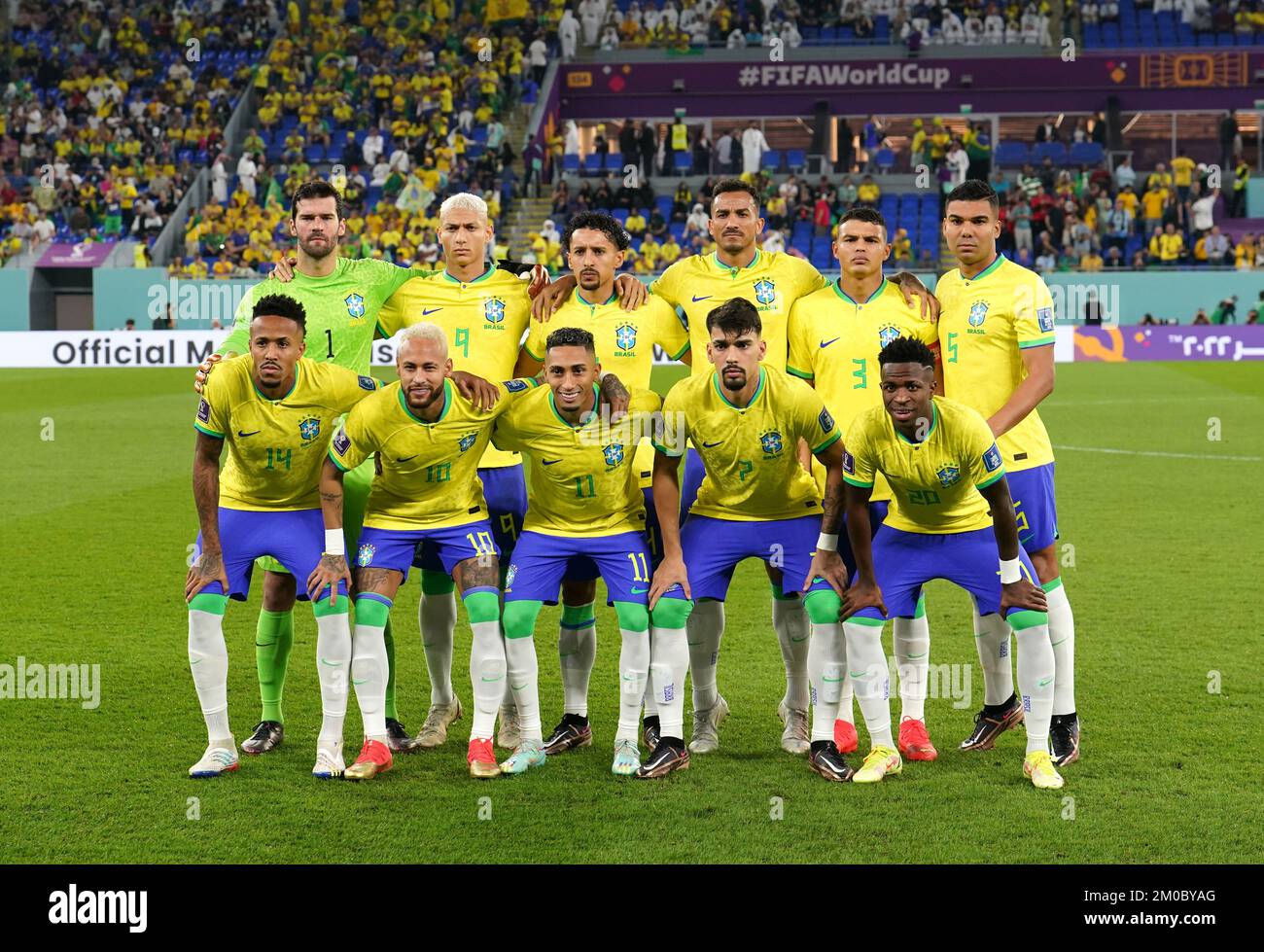
The Brazil national football team is colloquially known as the Seleção (The Selection) and the Canarinho (Little Canary). These names represent a profound heritage rooted in national identity, born from the 1950 "Maracanazo" trauma that saw the team abandon its original white kit for the iconic yellow jersey to symbolize Brazilian pride and renewal.
The Etymology of "Seleção": More Than Just a Selection
In most footballing nations, the national side is referred to as "the national team" or a specific nickname like "The Three Lions" or "Les Bleus." In Brazil, the primary designation is simply A Seleção. While the word literally translates to "The Selection," its cultural weight in Brazil is far more significant. It implies that the players representing the country are the "chosen ones," distilled from a population of over 200 million where football is often likened to a religion.
The term reflects the meritocratic ideal that permeates Brazilian football culture. Historically, being "selected" for the national squad was seen as the highest possible honor, transcending club rivalries between giants like Flamengo, Palmeiras, or Corinthians. When Brazilians speak of the Seleção, they are referring to a collective national soul. This linguistic choice reinforces the idea that the team does not belong to a federation or a group of professionals, but to the people themselves.
This heritage of "selection" dates back to the early 20th century. The team played its first unofficial match in 1914 against Exeter City, and even then, the press began using the term to describe the assembly of the best players from Rio de Janeiro and São Paulo. Over the decades, the name has become a brand of excellence, synonymous with technical mastery and the "Samba" style of play that conquered the world five times.
The Trauma of 1950 and the Birth of the "Canarinho"
The most recognizable aspect of the Brazil football team’s heritage is the bright yellow jersey, known as the Amarelinha (The Little Yellow One) or the Canarinho. However, this iconic look was not the original identity of the team. From 1914 until 1950, Brazil primarily wore white jerseys with blue collars.
The transition was forced by one of the most significant sporting tragedies in history: the Maracanazo. During the 1950 FIFA World Cup, hosted by Brazil, the home nation only needed a draw against Uruguay in the final match to secure their first title. In front of an estimated 200,000 people at the Maracanã Stadium, Brazil lost 2-1. The defeat was treated as a national mourning. The white kit, associated with the failure and "curse" of 1950, was deemed unpatriotic and lacking in "vitality."
In 1953, the newspaper Correio da Manhã held a competition to design a new kit that incorporated the four colors of the Brazilian flag: yellow, green, blue, and white. The goal was to create a visual identity that radiated the energy and diversity of the nation. The winner was an 18-year-old illustrator named Aldyr Garcia Schlee, who lived on the border with Uruguay and, ironically, was a fan of the Uruguayan team. His design—a yellow shirt with green trim, blue shorts with white stripes, and white socks—debuted in 1954 and transformed the team’s heritage forever.
The Architect of Identity: Aldyr Garcia Schlee’s Vision
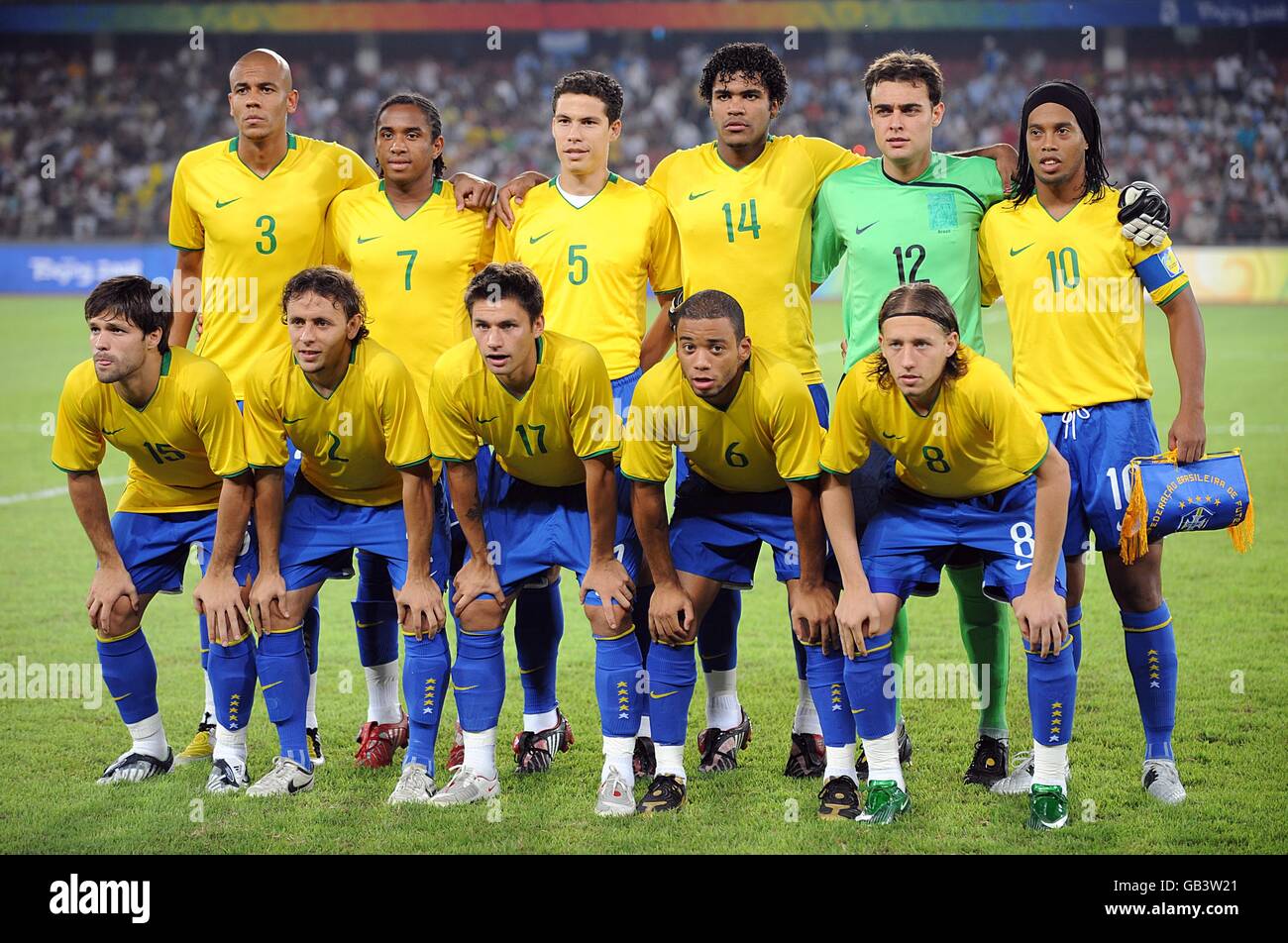
Aldyr Garcia Schlee’s contribution to the heritage of the Brazil football team cannot be overstated. Before his design, the team lacked a cohesive visual language that resonated with the flag. Schlee’s genius was in the balance of colors. The yellow (Oro) represented the nation's wealth and gold, the green (Verde) represented the lush Amazon rainforest and Atlantic forests, and the blue (Azul) mirrored the starry sky over Rio de Janeiro.
This kit earned the team the nickname Canarinho (Little Canary). In the 1950s, canary birds were popular pets in Brazil, and the vibrant yellow of the jersey immediately drew comparisons to the bird’s plumage. The nickname stuck, and by the 1958 World Cup in Sweden, the "Canarinho" had become a symbol of a new, confident Brazil. It was in this yellow kit that a 17-year-old Pelé introduced himself to the world, cementing the relationship between the color yellow and footballing genius.
In 2026, as we look back at the history of the kit, the "Amarelinha" has evolved through various technical iterations with manufacturers like Umbro and Nike, but Schlee’s core color palette remains untouched. It is a rare example of a design born from defeat that eventually came to represent total global dominance.
Joga Bonito: The Heritage of "The Beautiful Game"
The heritage of the Brazil football team is defined as much by its philosophy as by its name. The phrase Joga Bonito (Play Beautifully) became a global marketing slogan in the early 2000s, but its roots are deeply embedded in the 1950s and 60s. Brazilian football heritage is built on the concept of Ginga.
Ginga is a movement found in Capoeira (a Brazilian martial art) and Samba. In a footballing context, it refers to the rhythmic, fluid, and unpredictable way Brazilian players move their bodies. This heritage arose from the streets and favelas, where young players developed extraordinary ball control in tight spaces using makeshift balls. Unlike the rigid, tactical systems found in Europe during the mid-20th century, the Brazilian heritage prioritized individual expression, flair, and "malandragem" (shrewdness).
The 1970 World Cup squad, featuring Pelé, Jairzinho, Tostão, Gérson, and Carlos Alberto, is widely considered the ultimate expression of this heritage. Their performance in Mexico was more than just a tournament victory; it was a cultural explosion that broadcast the "Canarinho" identity in color television for the first time. The team’s name became synonymous with the "Beautiful Game," a term popularized by Pelé himself. Even today, in 2026, any Brazil squad is measured against the artistic standards set by the class of '70.
The Five Stars: Evolution of the "Pentacampeão" Status
A central part of the Brazil football team’s name and visual heritage is the inclusion of stars above the crest. Brazil is the only nation to be a Pentacampeão (five-time champion), winning the FIFA World Cup in 1958, 1962, 1970, 1994, and 2002.
Each star represents a different era of Brazilian football heritage:
- 1958 & 1962: The rise of Pelé and Garrincha, establishing Brazil as a global superpower.
- 1970: The perfection of the attacking game and the permanent acquisition of the Jules Rimet Trophy.
- 1994: A shift toward a more pragmatic, defensively solid style led by Romário and Dunga, ending a 24-year title drought.
- 2002: The "Three Rs" (Ronaldo, Rivaldo, and Ronaldinho) bringing the Ginga back to the forefront to claim a fifth title.
The "Five Stars" (Cinco Estrelas) have become a nickname in their own right. When fans refer to the Esquadrão de Ouro (Golden Squad), they are referencing this unmatched history of success. The heritage of the stars creates a unique pressure for current players; in Brazil, finishing second is often viewed with the same disappointment as a first-round exit, because the name "Brazil" carries the weight of five world titles.
Institutional Pillars: The CBF and the Shield
The official name of the governing body is the Confederação Brasileira de Futebol (CBF). Founded in 1914 as the Federação Brasileira de Sports (FBS), it has undergone several name changes before settling on CBF in 1979. The shield on the jersey is a critical part of the team's heritage.
The crest has evolved from a simple circular design to the current shield. The central cross is a nod to the Order of Christ, a historical Portuguese order, reflecting Brazil’s colonial heritage. In 2019, the CBF updated the logo to a more modern, vibrant version to improve digital visibility, though it faced some criticism from traditionalists. The update was part of a larger effort to separate the team’s heritage from the political controversies that have sometimes surrounded the federation.
The institutional heritage also includes the Granja Comary, the team’s training center in Teresópolis. Since 1987, this facility has been the "home of the Seleção," where the team prepares for international campaigns. It is a site of pilgrimage for fans and a symbol of the professionalization of Brazilian football.
Key Eras in Brazilian Football Identity
The following table outlines the major shifts in the Brazil national team's identity, kit, and heritage markers.
| Era | Primary Nickname | Kit Colors | Key Heritage Milestone |
|---|---|---|---|
| 1914–1950 | A Seleção | White / Blue | Initial formation and the 1919 Copa América win. |
| 1954–1970 | Canarinho | Yellow / Blue | The "Golden Age" of Pelé; transition to the yellow jersey. |
| 1971–1993 | O Time do Povo | Yellow / Blue | The era of "The Best Team Never to Win" (1982). |
| 1994–2002 | Pentacampeão | Yellow / Blue | Modern dominance and the addition of the 4th and 5th stars. |
| 2003–2026 | A Amarelinha | Yellow / Blue / Green | Global branding era and focus on reclaiming World Cup glory. |
Global Impact and the "Amarelinha" as a Cultural Icon
The heritage of the Brazil football team extends far beyond the borders of South America. The yellow jersey is one of the most recognized sports garments in the world. It is not uncommon to see the "Amarelinha" in the streets of Tokyo, Nairobi, or London. This global reach is a result of the team’s historical commitment to entertaining football.
The name "Brazil" in football functions as a seal of quality. This has led to a unique phenomenon where fans from other nations often adopt Brazil as their "second team" during World Cups. This international heritage was solidified during the Nike "Airport" commercials of the late 90s and the "Joga Bonito" campaigns of 2006, which showcased the team's playful, creative spirit.
However, the heritage has also faced challenges. In recent years, the yellow jersey has occasionally been co-opted for political movements within Brazil. This led to a conscious effort by the CBF and players to "reclaim the jersey" as a symbol for all Brazilians, regardless of political affiliation. In 2026, the focus remains on the jersey as a unifying force, representing the "Brazilian-ness" (Brasilidade) that unites the nation's diverse population.
Frequently Asked Questions
Why did Brazil stop wearing white jerseys?
Brazil stopped wearing white after the 1950 World Cup final loss to Uruguay. The defeat, known as the Maracanazo, caused the white kit to be viewed as a "jinx" or a symbol of national failure. A nationwide competition was held to design a more patriotic kit using the colors of the flag, leading to the adoption of the yellow and blue kit in 1954.
Who is the "Canarinho" mascot?
The mascot of the Brazil national team is Canarinho, a stylized canary bird. In 2016, a "pissed off" version known as Canarinho Pistola became a viral sensation. This version of the mascot, with a stern and determined expression, was embraced by fans as a reflection of their own passion and demand for victory after the 7-1 loss to Germany in 2014.
What does "Ginga" mean in Brazilian football?
Ginga is a Portuguese word that describes a swinging or rocking motion. It originated in Capoeira and Samba. In football, it refers to the rhythmic and deceptive body movements used by players to dribble past opponents. It is considered the soul of Brazilian football heritage and the defining characteristic of their "Beautiful Game."
How many stars are currently on the Brazil jersey?
As of 2026, there are five stars on the Brazil jersey. Each star represents a FIFA World Cup victory (1958, 1962, 1970, 1994, and 2002). Brazil is currently the only nation permitted to wear five stars, signifying their status as "Pentacampeão."
Is "Seleção" an official name?
"Seleção" is not the official legal name of the team—that would be the "Seleção Brasileira de Futebol"—but it is the name used by the CBF, the media, and the public. It has evolved from a simple noun into a proper noun that specifically identifies the national football team.
Practical Recommendation for Fans and Researchers
To truly understand the heritage of the Brazil football team, one should visit the Museu Seleção Brasileira in Rio de Janeiro. This state-of-the-art museum offers an immersive look at the team's trophies, iconic kits (including the original 1950 white jersey), and technical breakdowns of historical matches.
For those looking to engage with the team's current identity in 2026, following official CBF communications is essential, as the federation has increasingly focused on digital archives and "Behind the Scenes" content to connect the new generation of fans with the legends of the past. Watching the "Seleção" live, whether in the Maracanã or during a world tour, remains the best way to witness the living heritage of the "Canarinho" in action.
Image Gallery
Select an image to open it in a new tab.
Omar Farooq
EdTech Innovation and Virtual Pedagogy Journalist
