
Traveling to Hong Kong for business and leisure requires a strategic approach that balances logistical efficiency with cultural exploration. Success depends on navigating updated entry requirements, selecting accommodations within key commercial hubs like Central or West Kowloon, and leveraging the city’s world-class transport infrastructure to access both high-level networking and premier leisure destinations.
In 2026, Hong Kong remains a preeminent global financial hub and a vibrant cultural destination. The integration of the Greater Bay Area (GBA) has transformed the city into a dual-purpose powerhouse, where a morning meeting in the Central Business District can easily be followed by an afternoon of hiking on Lantau Island or a high-speed rail trip to a manufacturing summit in Shenzhen. For the "bleisure" traveler—those combining business obligations with leisure activities—Hong Kong offers a seamless transition between corporate rigor and high-end relaxation.
Entry Requirements and Documentation for 2026
Before embarking on a trip to the Hong Kong Special Administrative Region (HKSAR), it is critical to verify your entry status. As of 2026, Hong Kong maintains its autonomous immigration system under the "One Country, Two Systems" framework.
Visa-Free Entry and Business Visas
Citizens from over 170 countries and territories, including the United States, Canada, the United Kingdom, and most European Union members, enjoy visa-free entry for periods ranging from 7 to 180 days. For most business travelers, this "visitor" status permits attending meetings, signing contracts, and participating in trade fairs or exhibitions. However, if your trip involves taking up employment, establishing a business, or participating in long-term projects, a specific Employment or Business Investment Visa is required.
The HKSAR Travel Pass
Frequent business travelers should consider the HKSAR Travel Pass. This document streamlines the immigration process at the Hong Kong International Airport (HKIA) and other control points. Eligibility generally requires a valid passport, the ability to visit Hong Kong without a visa or entry permit, and a demonstrated need to visit frequently (typically three or more times in the 12 months preceding the application).
Digital Health and Customs Declarations
While the global health landscape has stabilized, Hong Kong utilizes a streamlined digital health and customs declaration system. Travelers are encouraged to complete these forms via the official government portal before arrival to generate a QR code, which significantly reduces processing time at the arrivals hall.
Navigating Hong Kong's Business Ecosystem
The geography of business in Hong Kong has expanded beyond the traditional confines of the northern shore of Hong Kong Island. Understanding the specialized nature of each district allows for better scheduling and more effective leisure integration.
Central and Admiralty: The Financial Heart
Central remains the epicenter of global finance, law, and consulting. It is home to the Hong Kong Stock Exchange and the headquarters of major international banks. For travelers with meetings here, the "elevated walkway system" is a vital tool, allowing you to move between iconic buildings like the IFC, Jardine House, and Exchange Square without descending to street level or dealing with the humidity.
West Kowloon: The New Frontier
In 2026, West Kowloon has matured into a premier business and cultural hybrid. The International Commerce Centre (ICC) stands as a landmark for commerce, while the surrounding West Kowloon Cultural District provides immediate access to leisure. This area is also the terminus for the High-Speed Rail (HSR), linking Hong Kong to over 60 destinations in Mainland China, making it the ideal base for those whose business spans the border.
Quarry Bay and Taikoo Place: Tech and Creative Hubs
On the eastern side of Hong Kong Island, Quarry Bay—specifically the Taikoo Place complex—has evolved into a major hub for the technology, media, and creative sectors. It offers a more contemporary corporate atmosphere compared to the traditional "suit-and-tie" environment of Central, with numerous co-working spaces and "smart" offices.
Optimizing the Leisure Experience
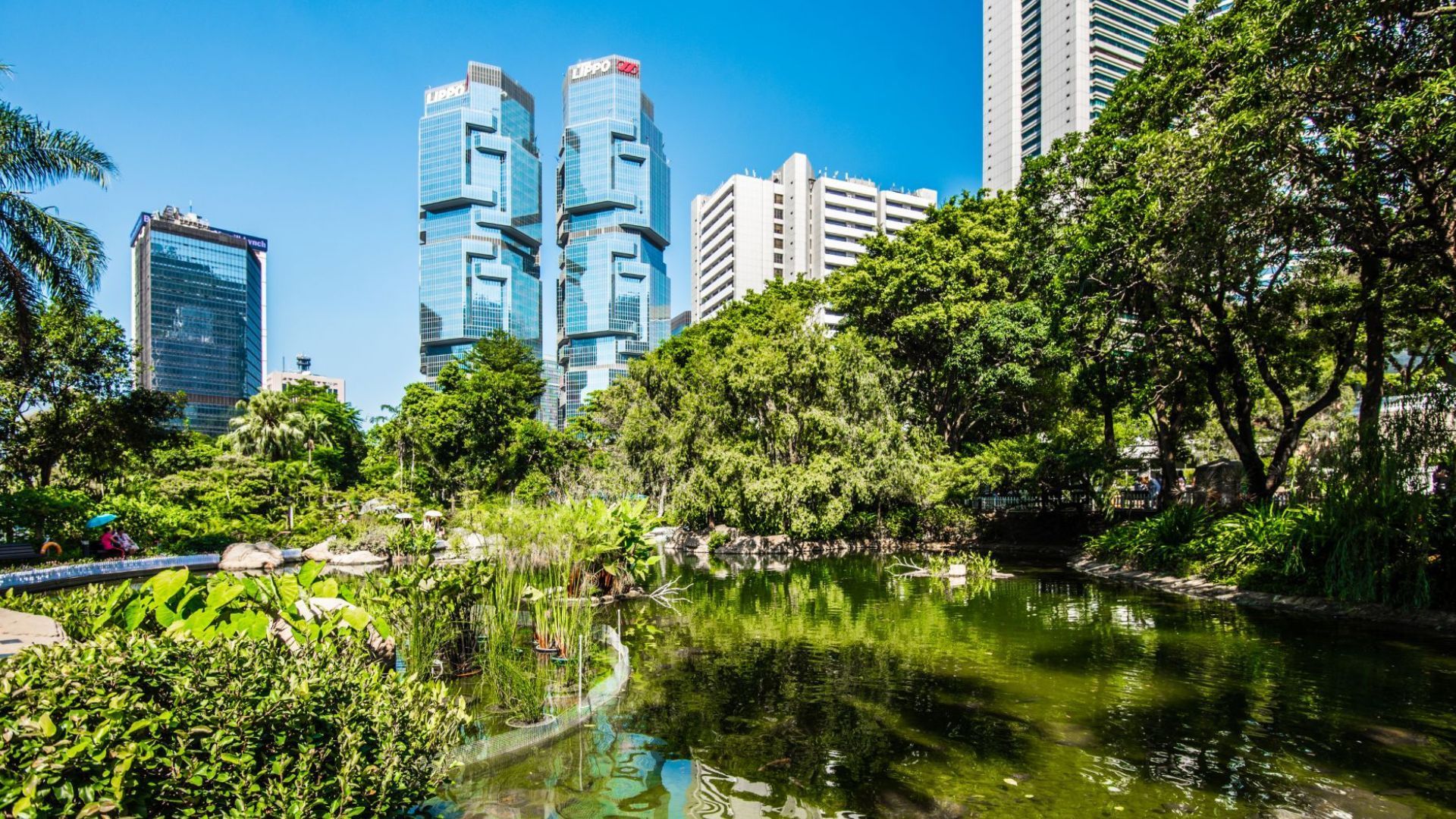
The "leisure" component of a bleisure trip to Hong Kong is defined by contrast. The city offers a unique juxtaposition of hyper-urban density and pristine natural landscapes.
Cultural Immersion in the West Kowloon Cultural District
A visit to the M+ Museum is essential for anyone interested in contemporary visual culture. As one of the largest museums of its kind globally, it provides a deep dive into 20th and 21st-century art, design, and moving images. Nearby, the Hong Kong Palace Museum offers a look at imperial treasures, providing a historical counterpoint to the modern business landscape.
Nature and the "Outdoors" Reset
One of Hong Kong’s most surprising features is that about 40% of its land is protected parkland. Business travelers can decompress on the Dragon’s Back hike, which is accessible within 30 minutes from the city center and offers stunning views of the South China Sea. Alternatively, a trip to Lantau Island to see the Tian Tan Buddha provides a spiritual and scenic respite from corporate negotiations.
Gastronomy: From Dai Pai Dongs to Michelin Stars
Hong Kong is arguably the world’s premier dining destination. For a quick business lunch, the dim sum at Tim Ho Wan or Lung King Heen offers excellence at different price points. For leisure, exploring the street food stalls (Dai Pai Dongs) in Sham Shui Po provides an authentic taste of local life that is often missed by those who stay strictly within the financial districts.
Logistics, Connectivity, and Practicalities
Efficiency is the currency of Hong Kong. To maximize your time, you must master the local logistical infrastructure.
The Airport Express and In-Town Check-In
The Airport Express remains the most efficient way to reach the city, taking just 24 minutes to reach Central. A significant advantage for bleisure travelers is the In-Town Check-In service available at Hong Kong and Kowloon stations. This allows you to drop your luggage and receive your boarding pass hours before your flight, freeing you to attend a final meeting or enjoy a last meal unburdened by bags.
Digital Infrastructure and Payments
In 2026, Hong Kong is a near-cashless society. The Octopus Card remains ubiquitous, but it has largely migrated to mobile wallets (Apple Pay, Google Pay, Samsung Pay). It is used for all public transport, convenience stores, and even many high-end retailers. Furthermore, the integration of FPS (Faster Payment System) and the widespread acceptance of AliPay HK and WeChat Pay HK make transactions seamless.
Connectivity: 5G and Beyond
With 5G coverage extending into even the deepest MTR tunnels and remote hiking trails, staying connected is never an issue. Most international travelers find that purchasing a local "eSIM" is the most cost-effective way to maintain high-speed data for video conferencing and navigation.
Cost Analysis for Business and Leisure Travel
Budgeting for Hong Kong requires an understanding of its premium pricing in certain sectors versus its affordability in others (like public transport).
| Expense Category | Budget (Daily) | Mid-Range (Daily) | Luxury (Daily) |
|---|---|---|---|
| Accommodation | HKD 800 - 1,200 | HKD 1,800 - 3,000 | HKD 4,500+ |
| Dining | HKD 200 - 400 | HKD 600 - 1,200 | HKD 2,500+ |
| Transport | HKD 50 - 100 | HKD 150 - 300 | HKD 800+ (Private Car) |
| Activities | HKD 0 - 200 | HKD 300 - 600 | HKD 1,500+ |
| Total (Appx) | HKD 1,050 - 1,900 | HKD 2,850 - 5,100 | HKD 9,300+ |
Note: Exchange rates in 2026 fluctuate, but the HKD remains pegged to the USD (approx. 7.8 HKD to 1 USD).
Strategic Accommodation Choices
Where you stay will dictate the rhythm of your trip.
- For Maximum Business Efficiency: Stay in Central or Admiralty. Hotels like The Murray or the Four Seasons provide immediate access to the financial heart and the Star Ferry for a scenic commute to Kowloon.
- For Modern Bleisure: Stay in West Kowloon. The Ritz-Carlton (located in the ICC) or the W Hong Kong offers proximity to the HSR and the cultural district.
- For Local Flavor and Tech Access: Stay in Causeway Bay or Quarry Bay. This puts you near the tech hubs of Taikoo Place while being surrounded by the city's most dense shopping and dining districts.
Challenges and Troubleshooting
Despite its efficiency, Hong Kong presents specific challenges that can disrupt a bleisure itinerary.
- Weather Disruptions: The typhoon season (typically May to September) can lead to the suspension of business operations and public transport. Familiarize yourself with the Hong Kong Observatory's warning signals (T1, T3, T8). A T8 signal usually means business meetings will be canceled and the city will "shut down" temporarily.
- Space Constraints: Hong Kong is famously dense. Even high-end hotel rooms may be smaller than what international travelers are accustomed to in Europe or North America. If you require significant desk space for work, verify the "room square footage" and "business center" facilities before booking.
- Language Nuances: While English is an official language and widely used in the business community and service industry, many taxi drivers and local shop owners primarily speak Cantonese. Having your destination written in Chinese characters (available on most map apps) is a necessary precaution.
Frequently Asked Questions
Can I conduct business on a tourist visa in Hong Kong?
Yes, under the current 2026 regulations, visitors are generally permitted to attend meetings, trade fairs, and sign contracts. However, you cannot take up localized employment or receive a salary from a Hong Kong-based entity without a specific work visa. Always check the latest Immigration Department guidelines for specific activity permissions.
What is the best way to travel from Hong Kong to Shenzhen for a day trip?
The High-Speed Rail (HSR) from West Kowloon Station is the fastest method, reaching Futian or Shenzhen Bei in 15 to 20 minutes. Ensure you have the appropriate visa for Mainland China (such as a 5-day VOA for certain nationalities at the border or a pre-arranged multi-entry visa) before departing Hong Kong.
Is the Octopus Card still necessary in 2026?
While credit cards and mobile payments are now widely accepted, the Octopus system (physical or digital) remains the most deeply integrated payment method for the MTR, buses, and small local vendors. It is highly recommended to have a digital Octopus on your phone for seamless movement.
How do I handle business etiquette in Hong Kong?
Business culture in Hong Kong is a blend of British formality and Chinese traditional values. The exchange of business cards is still a vital ritual; cards should be given and received with both hands. Punctuality is highly valued, and while "small talk" is common, it is usually brief before moving into the core agenda of the meeting.
What are the "must-see" leisure spots for someone with only a few hours of free time?
If time is limited, take the Star Ferry across Victoria Harbour at sunset. It is an inexpensive, iconic experience that provides the best view of the skyline. Follow this with a visit to the Victoria Peak via the Peak Tram for a panoramic view of the city and the surrounding islands.
Practical Recommendation for Travelers
For a successful 2026 bleisure trip to Hong Kong, prioritize location over luxury. Staying in a district that aligns with your primary business meetings will save hours of transit time, which can then be reinvested into the city's leisure offerings. Download the MTR Mobile app and the HKeMobility app immediately upon arrival to navigate the city with the same precision as a local professional. Finally, ensure your mobile device is eSIM compatible to maintain the high-speed connectivity required for modern hybrid work.
Image Gallery
Select an image to open it in a new tab.
Declan O'Connor
Higher Education and Campus Culture Reporter
