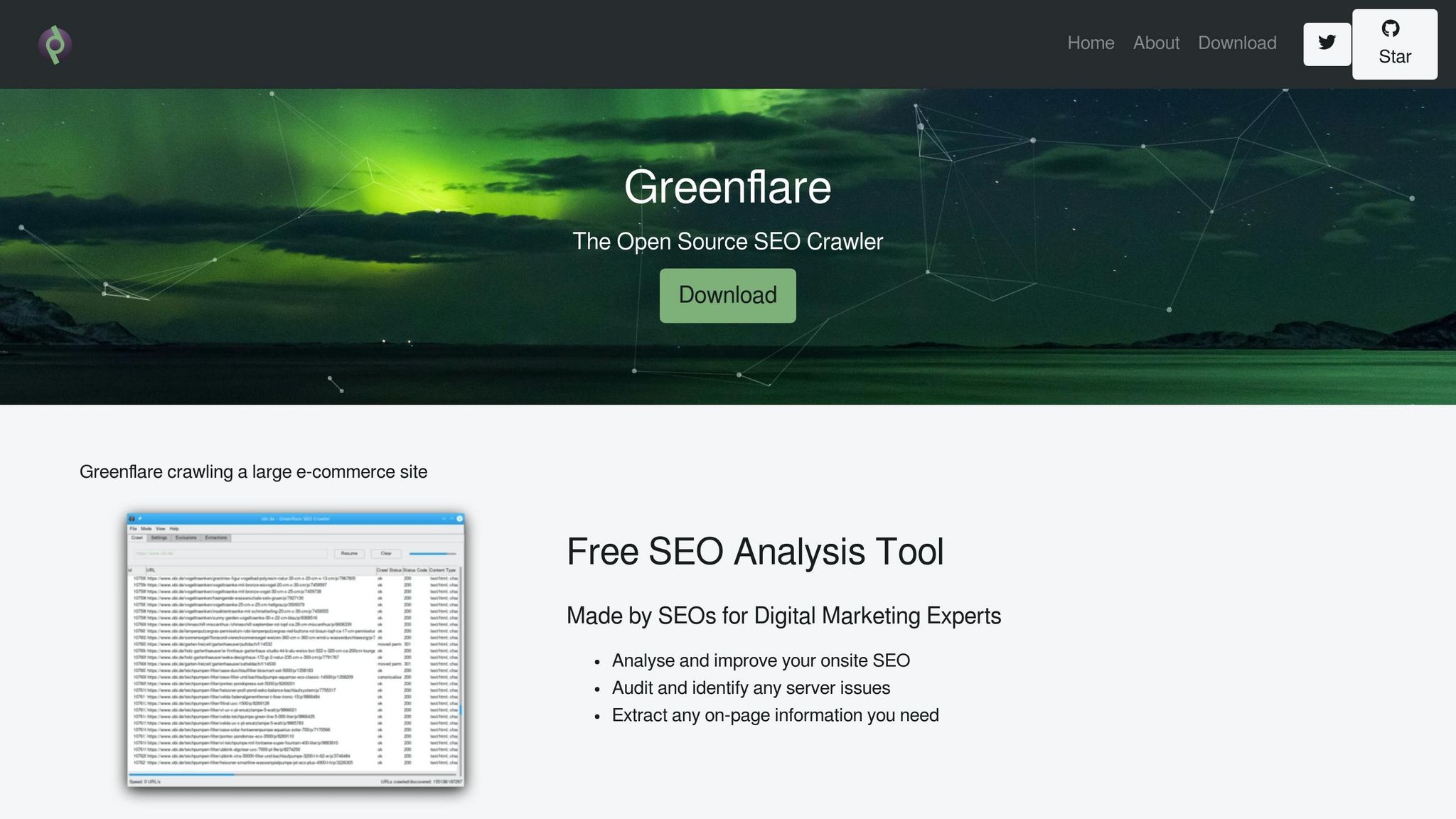
Open source SEO tools provide a transparent alternative to proprietary software, allowing security-conscious teams to audit, inspect, and host their own crawling and analysis infrastructure. By eliminating black-box dependencies, organizations can prevent data leakage, maintain strict control over server logs, and ensure that sensitive site architecture or competitive data remains within their internal network perimeter.
The Security Landscape of SEO Tooling
Search Engine Optimization (SEO) requires deep access to a website’s internal architecture. Traditional SaaS-based SEO crawlers often require users to whitelist specific IP addresses or provide access to robots.txt files, sitemaps, and even direct access to logs. In a modern enterprise environment, where data privacy regulations and cybersecurity posture are paramount, relying on third-party SaaS platforms to process your site’s most sensitive structural data introduces a third-party risk management challenge.
Open source tools—such as Screaming Frog alternatives, custom Python crawlers using libraries like Scrapy, or local log analysis scripts—shift the security burden from the vendor back to the practitioner. When you control the source code of the tool, you gain the ability to verify exactly how data is being processed, where it is being stored, and how it is being transmitted.
The Risks of Proprietary Black-Box Solutions
Proprietary SEO platforms are frequently "black boxes." When you initiate a crawl, you are essentially sending a map of your entire digital presence to a third-party server. If that provider experiences a data breach, your internal URL structures, unpublished staging site maps, and internal linking strategies—which may contain sensitive intelligence—could be exposed.
Furthermore, many commercial tools aggregate data across their user base to improve their own algorithms or benchmarking features. While often anonymized, this process effectively turns your proprietary search data into a commodity used to benefit your competitors. By moving to open source tools, you retain full ownership of your data ecosystem.
Key Security Benefits of Open Source SEO Tools
1. Data Sovereignty and Perimeter Control
When you run a crawler locally, the data never leaves your environment. If you are conducting a site audit for a highly regulated industry—such as finance, healthcare, or government—maintaining the integrity of your site data is a legal and operational requirement. Open source frameworks allow you to configure crawls that run entirely behind your firewall, ensuring that internal staging environments or non-public directory structures are never exposed to external cloud infrastructure.
2. Verification of Logic
With proprietary tools, you must trust the vendor’s documentation regarding how they handle sensitive data. With open source tools, you can perform a code review. Whether you are using a Python-based crawler or an open source log parser, your internal engineering or security teams can verify that the software is not creating outbound connections to unauthorized servers or leaking environmental variables.
3. Integration with Existing Security Stacks
Open source tools are inherently modular. They can be integrated directly into your existing CI/CD (Continuous Integration and Continuous Deployment) pipelines. For example, by using command-line interface (CLI) versions of open source SEO tools, you can automate site health checks that run alongside your security vulnerability scanners. This creates a unified view of your site’s security and search performance.
Comparison: Proprietary vs. Open Source SEO Tools
| Feature | Proprietary SaaS Tools | Open Source Tools |
|---|---|---|
| Data Ownership | Vendor-controlled | Self-controlled |
| Hosting | Third-party cloud | Local or private cloud |
| Customization | Limited to UI/Dashboard | Unlimited via code modification |
| Security Audit | Dependent on SOC2/Compliance reports | Independent code review |
| Implementation Cost | Recurring subscription fees | Development/Maintenance time |
| Scalability | Managed by vendor | Requires internal infrastructure |
Developing a Secure SEO Workflow
For organizations looking to transition toward open source, the process requires moving beyond the convenience of a web dashboard. The transition follows a clear path:
- Requirement Definition: Determine which metrics are actually required. Many SEO professionals over-collect data. By defining specific requirements, you can build a leaner, more secure tool that only tracks what is necessary.
- Environment Setup: Deploy tools within isolated virtual environments. Whether using Docker containers or dedicated local servers, ensure that the machine running the crawl is hardened according to your organization’s standard security policy.
- Log Analysis Safety: Log analysis is the most sensitive area of SEO. Ensure that any script you use to process server logs is scrubbing PII (Personally Identifiable Information) before it hits any long-term storage or analysis phase. Open source scripts allow you to insert custom "scrubbing" logic that proprietary tools often lack.
- Version Control: By managing your SEO tools through a repository like GitHub or GitLab, you can track changes to your auditing logic, ensure that only authorized personnel have access to the crawler configuration, and maintain an audit trail of every crawl performed.
Common Mistakes to Avoid
The move to open source is not without its pitfalls. One of the most common mistakes is underestimating the maintenance burden. Unlike a SaaS product, open source tools require manual updates. If you are using an open source library to parse HTML or analyze HTTP headers, you must ensure that your team monitors the repository for security vulnerabilities (e.g., CVEs) and updates the dependencies regularly.
Another mistake is the lack of proper logging. When using a custom tool, ensure that your audit logs are as robust as the ones you would receive from a major vendor. If you do not track the performance of your own tools, you may end up with inaccurate data, which can lead to poor SEO decision-making.
Addressing the Scalability Gap
One primary concern for large enterprises is scale. Can an open source tool handle a site with millions of pages? The answer is yes, provided the infrastructure is built to support it. By using distributed systems—such as running crawl workers across multiple nodes managed via Kubernetes—you can achieve the same, or better, crawl speed than proprietary tools, while keeping all data contained within your own cloud architecture.
Frequently Asked Questions
Are open source SEO tools free? Open source refers to the licensing model, not necessarily the cost of operation. While you avoid subscription fees, you will incur costs for internal resources, server infrastructure, and maintenance time.
How do I ensure an open source tool is secure? You should conduct a code audit before deployment. Look for active repositories with frequent security patches, check the number of contributors, and verify the tool against standard dependency-scanning software to detect known vulnerabilities.
Can I use open source tools for large-scale enterprise websites? Yes. By deploying custom crawling solutions on scalable cloud infrastructure, you can handle massive datasets. This is a common practice in enterprise engineering, where SEO is integrated into the site architecture rather than treated as an external service.
Do I need a developer to use these tools? Generally, yes. While some open source tools offer desktop interfaces, the most robust and secure implementations usually require technical proficiency to configure, secure, and maintain.
Are open source tools compliant with GDPR/CCPA? They can be. Because you own the environment and the data storage, you have total control over how PII is handled, which makes compliance easier to manage and document compared to sending data to a third-party vendor.
What is the biggest risk of open source SEO tools? The biggest risk is "orphan" software. If you adopt a tool that is no longer maintained by its community, you risk running software that may contain unpatched security vulnerabilities or become incompatible with modern web standards over time.
Recommendation for Next Steps
Begin by auditing your current SEO stack. Identify which tools you use strictly for data collection and which you use for analysis. For data collection, explore Python-based frameworks like Scrapy or Playwright to perform targeted, secure crawls of your own infrastructure. Evaluate your team’s internal capacity for managing these scripts. Start with a pilot project—such as a weekly crawl of a staging site—to gain experience in maintaining your own audit infrastructure before moving your primary production environment over to open source solutions. By taking control of your SEO tools, you significantly reduce your organization’s attack surface and ensure that your search strategy remains a private competitive advantage.

Image Gallery
Select an image to open it in a new tab.







Celine Dubois
Contemporary Living and Global Arts Columnist
