In California, you generally have one year from the date of your injury to file a formal application for workers' compensation benefits with the state. However, you must also report the injury to your employer in writing within 30 days of the accident to avoid potential loss of benefits.
Navigating the California workers’ compensation system in 2026 requires a precise understanding of several overlapping timelines. While the one-year statute of limitations is the primary legal boundary, secondary deadlines regarding reporting, medical evaluations, and appeals can significantly impact the success of your claim. Missing even a minor administrative window can lead to a denial of benefits, even if the injury is clearly work-related.
The Critical Distinction Between Reporting and Filing
To understand how long you have to claim workers' compensation, you must distinguish between "reporting" an injury to your employer and "filing" an official claim with the California Division of Workers' Compensation (DWC).
The 30-Day Reporting Requirement
According to California Labor Code Section 5400, an injured worker should provide written notice of an injury to their employer within 30 days of the occurrence. This report should include the time, place, and nature of the injury.
Failure to report within 30 days does not automatically disqualify you, but it provides the employer’s insurance carrier with a strong defense. They may argue that the delay "prejudiced" their ability to investigate the claim or that the injury did not actually happen at work. If the employer can prove they were harmed by your failure to report—for example, if a witness is no longer available—your benefits could be reduced or denied entirely.
The One-Year Statute of Limitations
The formal "claim" for workers' compensation is governed by a one-year statute of limitations (Labor Code Section 5405). This is the deadline to file an Application for Adjudication of Claim with the Workers' Compensation Appeals Board (WCAB). Simply filling out a claim form provided by your boss is often not enough to "toll" (pause) this one-year clock if the insurance company decides to deny your benefits later.
Understanding the "Date of Injury"
The one-year clock starts ticking on the "date of injury," but defining that date depends on the nature of your condition. California recognizes two primary types of work-related injuries, each with its own set of rules for the statute of limitations.
1. Specific Injuries
A specific injury results from a single incident or exposure, such as a fall from a ladder, a lifting strain, or a car accident while making deliveries. For these cases, the date of injury is straightforward: it is the day the event occurred. If you were injured on March 1, 2026, the statute of limitations typically expires on March 1, 2027.
2. Cumulative Trauma (CT)
Cumulative trauma injuries occur over a period of time due to repetitive mental or physical stress. Examples include carpal tunnel syndrome from years of typing, hearing loss from constant machinery noise, or back issues from repetitive lifting.
Under Labor Code Section 5412, the date of injury for a cumulative trauma claim is the date the employee first suffered a "disability" from the injury and knew (or should have known) that the disability was caused by their employment. "Disability" in this context usually means you missed work or required medical treatment. This "discovery rule" means the one-year clock might not start until months or even years after the repetitive stress began, provided you can prove you weren't aware of the work connection until then.

The Role of the DWC-1 Claim Form
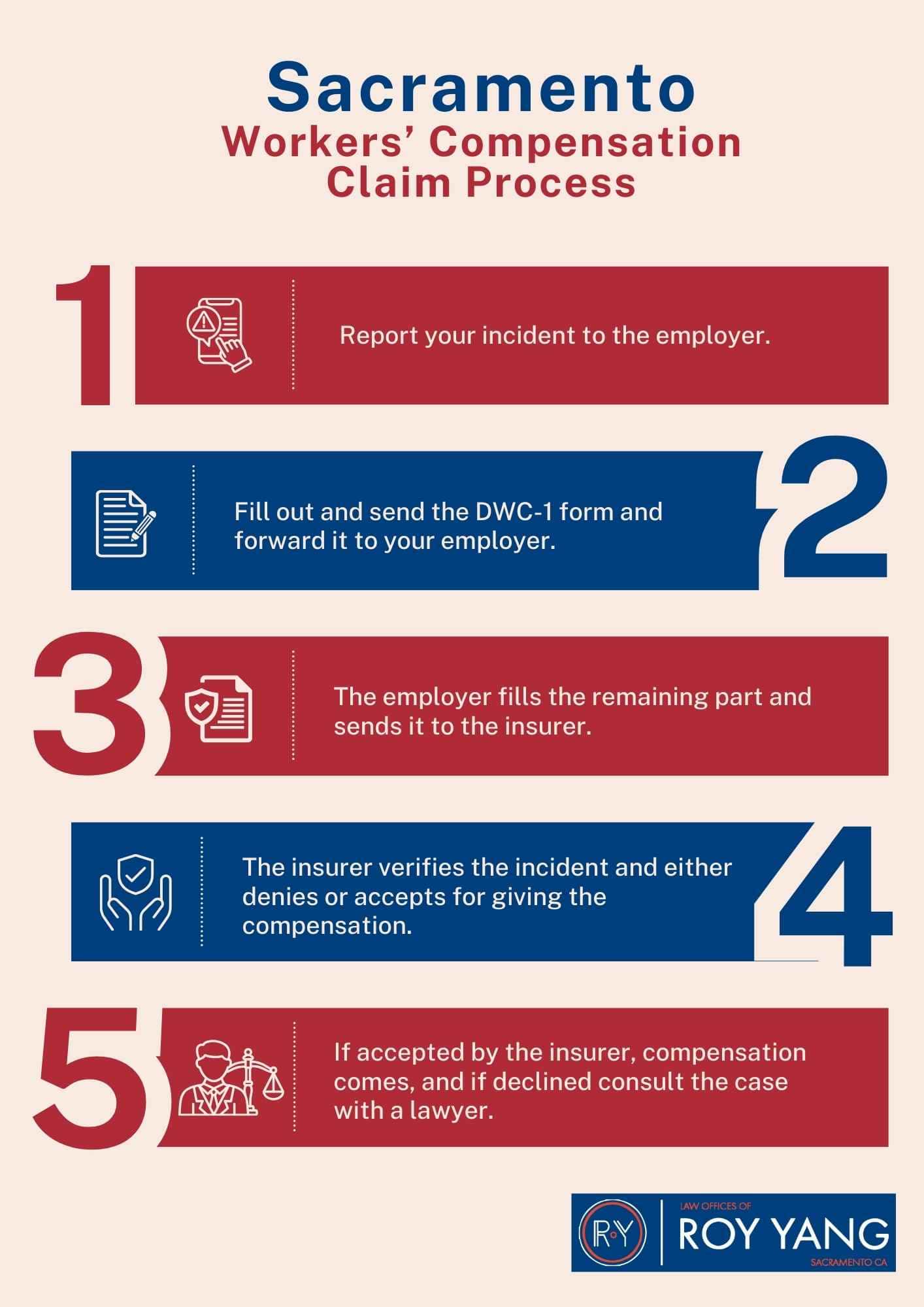
When you notify your employer of an injury, they are legally required to provide you with a DWC-1 Claim Form within one working day. This form is the initial step in the process.
- Employee’s Action: You fill out the top portion of the form and return it to the employer.
- Employer’s Action: The employer fills out the bottom portion and sends it to their insurance claims administrator.
- Legal Protection: Once you file this form, it triggers the insurance company’s obligation to pay up to $10,000 in medical treatment while they investigate the claim (even if they eventually deny it).
It is a common mistake to assume that filing the DWC-1 form satisfies the one-year statute of limitations. While it starts the process, if the insurance company denies your claim or stops paying benefits, you must file the formal Application for Adjudication of Claim with the WCAB within that one-year window to preserve your rights to a trial.
Exceptions to the One-Year Deadline
California law recognizes that certain circumstances should pause or extend the statute of limitations. These "tolling" events ensure that workers are not unfairly penalized when they are unable to file a claim.
Tolling for Minors
If an employee is under the age of 18 at the time of the injury, the statute of limitations does not begin to run until they reach their 18th birthday. In 2026, a 17-year-old injured on the job would effectively have until their 19th birthday to file a formal claim.
Failure to Notify (The Reynolds Rule)
If an employer knows or should know about a work-related injury but fails to provide the employee with the required notices regarding their rights to workers' compensation, the statute of limitations may be extended. Under the "Reynolds" doctrine, the one-year clock may be paused until the employer provides the necessary information to the worker.
Provision of Benefits
If the employer or their insurance carrier has already provided benefits (such as paying for a doctor's visit or providing disability checks), the statute of limitations is often extended. You typically have one year from the date of the last benefit payment or medical treatment provided by the employer to file a formal claim.
Summary of Workers' Compensation Deadlines in California (2026)
The following table outlines the critical timeframes workers must adhere to under the California workers' compensation system.
| Action Required | Deadline | Authority/Source |
|---|---|---|
| Report injury to employer | Within 30 days of the injury | Labor Code § 5400 |
| Employer provides DWC-1 form | 1 working day after report | CA DIR DWC Guidelines |
| File Application for Adjudication | 1 year from Date of Injury | Labor Code § 5405 |
| Insurance Decision to Accept/Deny | 90 days after DWC-1 filing | Labor Code § 5402 |
| Appeal a denied claim | 20 days after the judge's decision | WCAB Procedural Rules |
| Claim for New and Further Disability | 5 years from Date of Injury | Labor Code § 5410 |
Why You Should Not Wait to File
Even if you are well within the one-year legal limit, delaying a claim can be detrimental to the value and success of your case.
1. Evidence Degradation
The longer you wait, the harder it becomes to gather evidence. Witnesses may leave the company, security footage might be erased, and the physical scene of the accident may change. In 2026, digital evidence is more prevalent than ever, but many systems overwrite data within 30 to 60 days.
2. Medical Causation Challenges
Insurance companies frequently use delays in treatment to argue that the injury occurred elsewhere. If you wait six months to see a doctor for a back injury, the insurer will likely claim you hurt your back at home or during a weekend activity, rather than at work. Prompt medical documentation creates a "paper trail" that links the injury directly to your employment.
3. Financial Hardship
Workers' compensation provides Temporary Disability (TD) payments if you cannot work. These payments are usually two-thirds of your average weekly wage. If you delay filing, you delay the onset of these payments, which can lead to significant financial stress while you are unable to earn a paycheck.
How to Handle a Denied Claim Near the Deadline
If you have already reported your injury but the insurance company denies the claim as you approach the one-year mark, you must act immediately.
- Check the Date: Verify the exact date of injury and any dates where benefits (like a medical bill payment) were last issued.
- Contact an Information & Assistance (I&A) Officer: The DWC provides free Information and Assistance officers who can help you navigate the forms required to stop the statute of limitations from running.
- File an Application for Adjudication of Claim: This is the legal document that opens a case file with the state. Filing this document is the only definitive way to satisfy the statute of limitations under Labor Code Section 5405.
Common Mistakes That Lead to Missed Deadlines
- Believing the "Helpful" Supervisor: A manager might tell you, "Don't worry, we'll take care of it," without ever filing the paperwork. Their verbal promise does not stop the legal statute of limitations.
- Waiting for the Injury to "Get Better": Many workers try to push through the pain, only realizing months later that they need surgery. If that realization happens more than a year after the initial event, the claim may be barred.
- Miscalculating Cumulative Trauma: Workers often think the year starts when they first feel a "twinge," but legally it starts when they have a disability and knowledge of the cause. However, waiting to "be sure" is a risky strategy.
Frequently Asked Questions
Can I still file if I was fired after the injury?
Yes, you can still file a claim, but "post-termination" claims are subject to higher scrutiny in California. You generally must prove that the employer had notice of the injury prior to your termination or that medical records existing before your termination show you had a work-related injury.
What if my employer doesn't have workers' compensation insurance?
If your employer is illegally uninsured, you can still file a claim. In these cases, you may also be eligible to seek benefits from the Uninsured Employers Benefits Trust Fund (UEBTF). Additionally, the one-year statute of limitations still applies, but you may have additional civil remedies against the employer.
Is the 30-day reporting rule strictly enforced?
It depends on whether the employer was "prejudiced" by the delay. If you have witnesses and immediate medical records from an ER visit, a judge might allow the claim even if you reported it on day 45. However, it is never worth the risk; report the injury immediately in writing (text or email counts as a record).
What if I discover a new problem from the same injury three years later?
Under Labor Code Section 5410, you can reopen a claim for "new and further disability" within five years of the original date of injury, provided that the original claim was timely filed and not settled via a "Compromise and Release" agreement.
Does the deadline change if the injury resulted in death?
Yes. For death benefits, a claim must generally be filed within one year from the date of death, provided the death occurred within one year of the injury (or within one year of the last payment of benefits, but no more than 240 weeks from the date of injury).
Practical Recommendation
If you have sustained a work-related injury in California, do not rely on the one-year statute of limitations as a reason to delay. Report the injury in writing today. If your employer does not immediately provide a DWC-1 claim form and send you to a doctor, consult with a qualified workers' compensation attorney or a DWC Information & Assistance officer. In 2026, the administrative complexity of California law means that early filing is the single best way to ensure your medical bills are paid and your lost wages are reimbursed.
Image Gallery
Select an image to open it in a new tab.
Vivian Cho
Executive IT and Emerging Technologies Reporter
