Understanding Why Dividends Expense Is a Misnomer in Accounting

Dividends are not an expense. They are a distribution of a corporation's accumulated earnings to its shareholders. Unlike business expenses, dividends do not reduce net income on the income statement; instead, they are a direct reduction of equity, specifically recorded as a decrease in retained earnings on the balance sheet.
In the world of corporate finance and accounting, terminology is everything. One of the most common points of confusion for students, small business owners, and novice investors is the term "dividends expense." While it sounds like a logical phrase—after all, money is leaving the company—it is technically incorrect under both Generally Accepted Accounting Principles (GAAP) and International Financial Reporting Standards (IFRS).
As of 2026, the distinction between an operating cost and a capital distribution remains a cornerstone of financial integrity. Understanding why dividends are not classified as expenses is crucial for accurately reading a balance sheet, calculating tax liabilities, and evaluating a company’s true profitability.
The Fundamental Accounting Distinction: Expense vs. Distribution
To understand why the term "dividends expense" is a misnomer, we must first look at the definition of an expense. In accounting, an expense is a cost incurred by a business in the process of generating revenue. This includes salaries, rent, utilities, cost of goods sold (COGS), and marketing. These items appear on the Income Statement and are subtracted from gross revenue to arrive at net income (profit).
Dividends, however, represent the "reward" given to the owners (shareholders) for their investment. They are paid out of the profits that remain after all expenses have been accounted for. Because dividends are a distribution of wealth rather than a cost of doing business, they are recorded on the Statement of Retained Earnings or the Statement of Stockholders' Equity, never on the Income Statement.
The Income Statement vs. The Balance Sheet
The Income Statement measures performance over a specific period. If a company generates $1 million in revenue and incurs $700,000 in expenses, its net income is $300,000.
If the board of directors then decides to pay out $50,000 in dividends, that $50,000 does not lower the $300,000 profit. The profit remains $300,000. The dividend payout simply means that only $250,000 will be added to the company's "Retained Earnings" (the cumulative pool of profit kept for future growth) on the Balance Sheet, while $50,000 is sent to shareholders.
The Life Cycle of a Dividend: Recording the Journal Entries
Accounting for dividends involves a specific timeline. There are three key dates that dictate how a company records these transactions. Understanding these steps clarifies why they are treated as equity movements rather than expenses.
1. The Date of Declaration
This is the date on which the Board of Directors formally votes to pay a dividend. At this moment, the company incurs a legal obligation to pay its shareholders. Even though no cash has changed hands yet, the accounting department must record the liability.
- Debit: Retained Earnings (or Dividends Declared)
- Credit: Dividends Payable (a current liability)
By debiting Retained Earnings, the company is signaling that a portion of its accumulated wealth is now "earmarked" for exit.
2. The Date of Record
This is a purely administrative date. The company looks at its ledger to see who officially owns the stock on this day. Those individuals will receive the dividend. From an accounting perspective, no journal entry is required on the date of record.
3. The Date of Payment
This is the day the company actually sends the checks or electronic transfers to shareholders. The liability created on the declaration date is now settled.
- Debit: Dividends Payable
- Credit: Cash
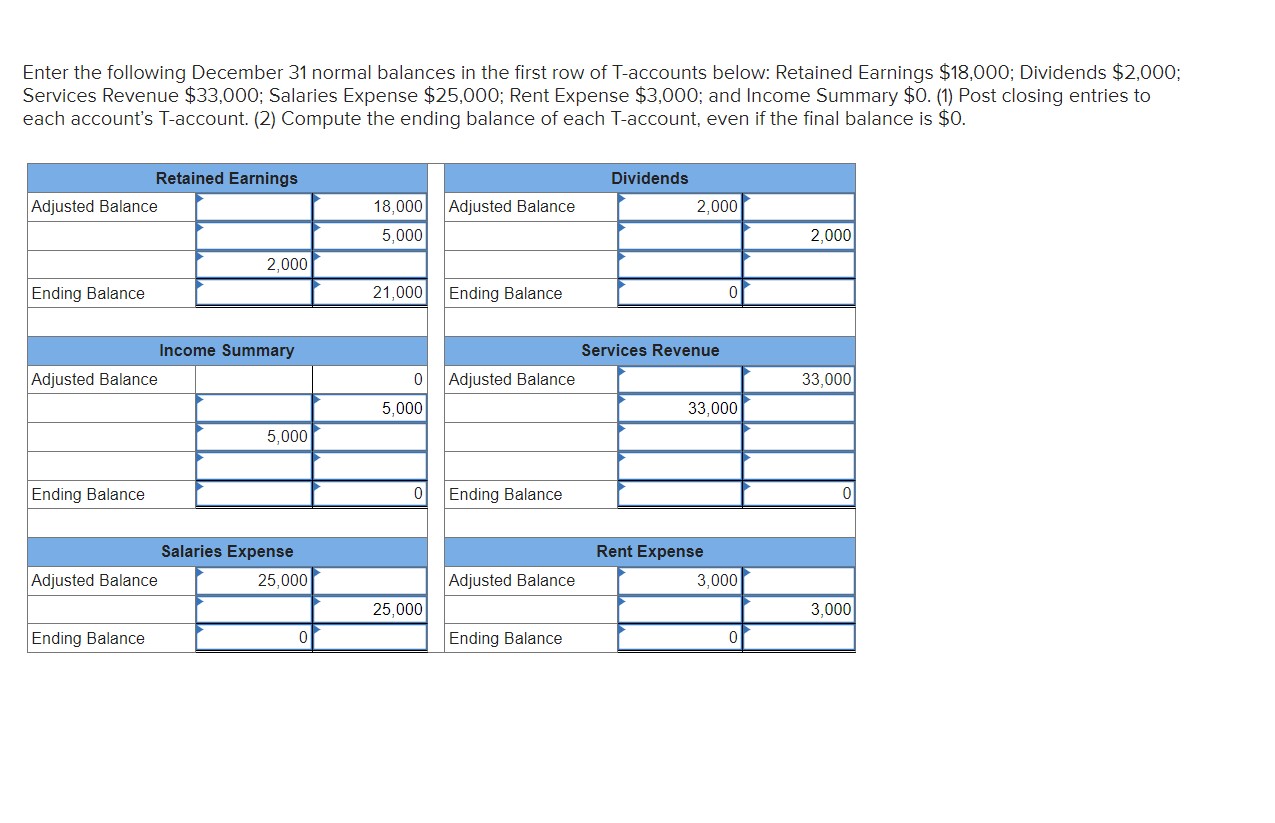
At the end of the fiscal year, any temporary "Dividends Declared" account is closed out to the Retained Earnings account, ensuring the balance sheet accurately reflects the remaining equity of the company as it enters 2026.
Comparing Dividends and Business Expenses
The following table highlights the critical differences between these two types of cash outflows. This distinction is vital for financial modeling and tax preparation.
| Feature | Business Expense | Dividend Distribution |
|---|---|---|
| Primary Goal | Generate revenue and maintain operations. | Reward shareholders and return capital. |
| Financial Statement | Income Statement (Profit & Loss). | Statement of Stockholders' Equity. |
| Impact on Net Income | Reduces net income. | No impact on net income. |
| Tax Treatment | Generally tax-deductible for the corporation. | Not tax-deductible; paid from after-tax profit. |
| Recipients | Employees, vendors, landlords, lenders. | Owners/Shareholders. |
| Frequency | Ongoing and often mandatory for survival. | Discretionary; decided by the Board of Directors. |
| Accounting Nature | Operating activity. | Financing activity. |
Tax Implications: Why the "Expense" Label Matters
If dividends were considered an expense, they would be tax-deductible. In the United States and many other jurisdictions in 2026, business expenses are "pre-tax." This means if a company earns $100,000 and has $20,000 in expenses, it only pays corporate income tax on the remaining $80,000.
However, dividends are "post-tax." The company pays tax on the full $80,000 of profit. Only then can it choose to distribute dividends from the remaining cash. This leads to what economists call "double taxation."
- The corporation pays tax on its earnings.
- The shareholders pay personal income tax on the dividends they receive.
Because dividends are not an "expense," a company cannot use dividend payments to lower its corporate tax bill. This is one reason why some companies prefer stock buybacks or reinvesting profits into R&D (which can be an expense) rather than issuing high dividends.
Types of Dividends and Their Variations
While cash dividends are the most common, companies may distribute value in other ways. Regardless of the form, the rule remains: they are not expenses.
Stock Dividends
A stock dividend is a distribution of additional shares of stock rather than cash. This is often used when a company wants to reward shareholders but keep its cash for operations.
- Small Stock Dividend: Usually less than 20-25% of outstanding shares. It is recorded at the fair market value of the shares.
- Large Stock Dividend: Usually more than 25%. It is recorded at the par value of the shares. Even though the number of shares changes, the total stockholders' equity remains the same; it is simply "reshuffled" between different equity accounts.
Property Dividends
A company might distribute physical assets, such as inventory or equipment, to its shareholders. In this case, the asset must be written up or down to its fair market value on the declaration date. Any gain or loss on that adjustment is recorded on the income statement, but the distribution of the asset itself is still a reduction of equity, not an expense.
Liquidating Dividends
A liquidating dividend occurs when a company is closing down or selling off a major portion of its business. This isn't a distribution of profit, but a return of the original capital the shareholders invested. This is recorded as a reduction in Additional Paid-in Capital rather than Retained Earnings.
The Impact on Financial Ratios
Analysts in 2026 use several ratios to determine if a company's dividend policy is sustainable. Because dividends are not expenses, they don't affect the Operating Margin or Net Profit Margin. However, they drastically affect other metrics:
- Dividend Payout Ratio: This measures what percentage of net income is being paid out as dividends. If a company has a net income of $100,000 and pays $30,000 in dividends, the payout ratio is 30%. A ratio over 100% is usually a warning sign, as it means the company is paying out more than it earns.
- Dividend Yield: This is the annual dividend per share divided by the share price. Investors use this to compare the "interest rate" of a stock to other investments like bonds.
- Retention Ratio: The opposite of the payout ratio. It measures how much profit the company is keeping to reinvest. If the payout ratio is 30%, the retention ratio is 70%.
Common Mistakes in Small Business Accounting
For small business owners, particularly those operating as S-Corporations or LLCs, the line between "Salary" and "Distribution" can get blurry.
If an owner-operator takes money out of the business to pay for personal needs, they must decide if that money is a Salary Expense or a Dividend Distribution.
- If it is a Salary, the business records an expense, the net income decreases, and the business pays less tax. However, the owner must pay payroll taxes (Social Security and Medicare).
- If it is a Dividend (Distribution), the business net income stays high, the business pays more tax (or the owner pays tax on the full profit in pass-through entities), but there are no payroll taxes on that specific distribution.
Misclassifying a dividend as an expense (or vice versa) can lead to significant issues during an IRS or tax authority audit in 2026. Correct bookkeeping ensures that the "Dividends" account is correctly closed to "Equity" and not mixed into the "General Expenses" ledger.
Reporting Dividends on the Statement of Cash Flows
When viewing a company's Statement of Cash Flows, you will find dividends in the Financing Activities section.
The Statement of Cash Flows is divided into three parts:
- Operating Activities: Cash from day-to-day business (Net income, changes in accounts receivable, etc.).
- Investing Activities: Cash spent on long-term assets (Buying machinery or selling a building).
- Financing Activities: Cash related to owners and lenders (Issuing stock, paying off loans, and paying dividends).
Because dividends represent a transaction between the company and its owners regarding the capital structure, they are strictly a financing activity. This further reinforces the fact that they are not an operating expense.
Frequently Asked Questions
Is "Dividends Declared" a temporary account?
Yes. Much like revenue and expense accounts, "Dividends Declared" (or simply "Dividends") is a temporary account used during the fiscal year. At the end of the year, this account is closed, and its total balance is transferred to the Retained Earnings account, which is a permanent equity account.
Why do some people call it "Dividend Expense" if it's wrong?
The confusion usually stems from the fact that both expenses and dividends involve a "debit" to an account and an eventual "credit" to cash. In the double-entry bookkeeping system, both transactions feel similar because they both reduce the overall value of the company's assets. However, they serve different economic purposes and are governed by different accounting rules.
Does a dividend payment reduce the company's value?
Technically, yes. On the "ex-dividend date," the market price of a stock typically drops by an amount roughly equal to the dividend. This is because the company is literally "emptying" part of its cash reserves and giving it to shareholders. The company is now worth less because it has less cash on hand.
Are preferred dividends handled differently?
Preferred dividends are still not an expense, but they have a higher priority than common dividends. On the financial statements, preferred dividends are subtracted from Net Income to calculate Earnings Per Share (EPS) for common stockholders. Even though they are subtracted in that specific calculation, they still appear in the equity section of the balance sheet, not as an expense on the income statement.
Can a company pay dividends if it has a net loss?
Yes, a company can pay dividends even if it loses money in a specific year, provided it has sufficient Retained Earnings from previous years and enough cash. However, if a company has a "Deficit" (negative retained earnings), legal restrictions often prevent it from paying dividends, as this would be considered a return of capital that could harm creditors.
Summary Recommendation for 2026 Reporting
When preparing or analyzing financial statements in 2026, always ensure that dividends are clearly separated from operating expenses. If you are a business owner or accountant:
- Check your Chart of Accounts: Ensure "Dividends" is categorized as an Equity account, not an Expense account.
- Review the Income Statement: Confirm that net income is calculated before any dividends are considered.
- Verify Tax Compliance: Do not list dividends as a deductible expense on tax returns.
- Monitor the Payout Ratio: Use the distinction between net income and dividends to ensure the company is retaining enough capital for future growth and contingencies.
By maintaining this rigorous distinction, you ensure that the financial health of the organization is transparent, legally compliant, and useful for stakeholders.
Image Gallery
Select an image to open it in a new tab.


Declan O'Connor
Higher Education and Campus Culture Reporter
