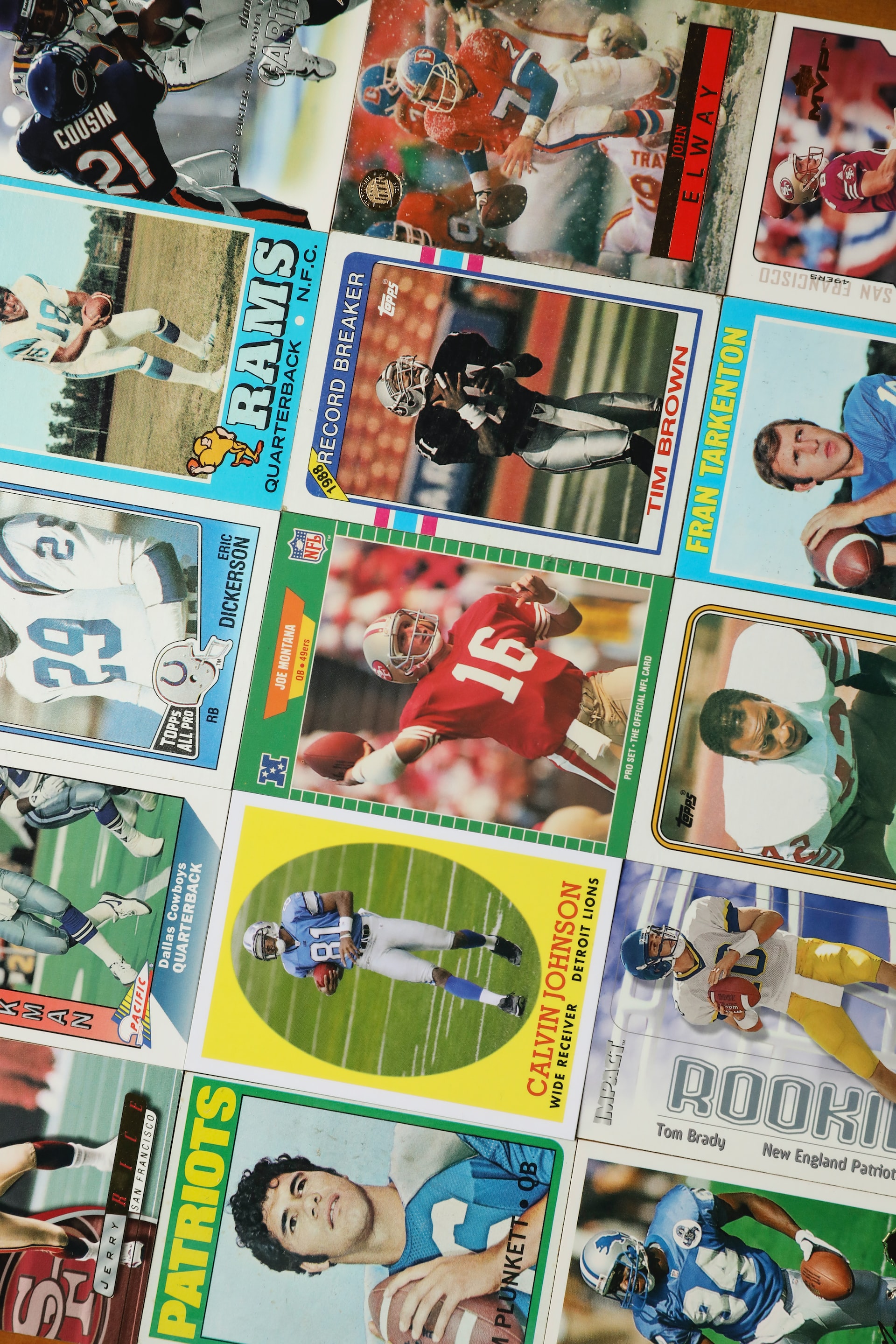
Collecting sports cards the right way requires a balance of clear financial budgeting, disciplined research into market trends, and a commitment to proper physical preservation. By defining whether you are a hobbyist or an investor, mastering the nuances of card grading, and sourcing from reputable marketplaces, you can build a sustainable collection that retains value and provides long-term enjoyment.
The landscape of sports card collecting has evolved significantly by 2026. While the "junk wax" era of the late 1980s is long gone, the modern market is defined by scarcity, technical precision, and a high barrier to entry for high-end assets. Whether you are returning to the hobby after a hiatus or starting from scratch, the following framework ensures you navigate this complex market with professional-grade strategy.
Defining Your Collecting Philosophy
Before purchasing a single pack or individual card (known as a "single"), you must identify your primary objective. Most collectors fall into one of three categories: the "Set Registry" collector, the "Player/Team" collector, or the "Investor/Flipper."
The Hobbyist Approach
For those collecting for personal satisfaction, the "right way" involves focusing on "PC" (Personal Collection) items. This might mean completing a specific year’s set, gathering every card of a favorite athlete, or focusing on a specific team. The value here is emotional, though financial prudence still applies. Hobbyists often prefer the "rip" (opening packs), though this is statistically the least efficient way to acquire high-value cards.
The Investor Approach
If your goal is financial appreciation, you must treat cards like equities. This requires analyzing "pop reports" (population reports) from grading companies to understand rarity and monitoring player performance metrics. Investors typically avoid opening boxes, instead spending their entire budget on "graded singles"—cards already authenticated and encased by professional services.
Understanding Modern Card Types and Rarity
In 2026, the complexity of card types can be overwhelming. To collect correctly, you must distinguish between the various tiers of "hits" found in modern products.
- Base Cards: The standard cards in a set. In the modern era, these hold very little value unless they are high-grade rookies of Hall of Fame-caliber players.
- Parallels: These are versions of base cards with different colors or textures (e.g., "Silver Prizms," "Gold Refractors"). They are often serial-numbered (e.g., 10/25), which provides "forced scarcity."
- Inserts: Special subsets within a product, such as "Downtown" or "Kaboom!" cards. These are often more valuable than standard parallels due to their unique artistic design.
- Relic/Jersey Cards: Cards containing a piece of a player's uniform. Experts in 2026 prioritize "Game-Worn" over "Player-Worn" or "Not from any specific game or event" materials.
- Autograph Cards (Certified): Cards signed by the player, usually featuring a "Topps Certified" or "Panini Authentic" stamp. "On-card" autographs are universally preferred over "sticker" autographs, where the player signs a clear label later applied to the card.

The Critical Role of Professional Grading
Grading is the process of sending a card to a third-party service like PSA (Professional Sports Authenticator) or SGC to be evaluated on a 1-10 scale. In 2026, a "raw" card (ungraded) often sells for a fraction of the price of a "Gem Mint 10."
Collecting the right way means understanding when to grade. Grading costs can range from $15 to over $100 per card depending on the service level and declared value. You should only grade cards that appear to be in "Mint" condition—meaning centered images, sharp corners, smooth edges, and a surface free of scratches or dimples.
Comparison of Major Grading Services (2026 Standards)
| Service Provider | Primary Strength | Best For | Typical Turnaround |
|---|---|---|---|
| PSA | Highest resale value/Liquidity | Modern & Ultra-Modern | 30–60 Days |
| SGC | Aesthetic "Tuxedo" slab; Vintage expertise | Vintage Baseball & Pre-War | 5–10 Days |
| BGS (Beckett) | Detailed sub-grades (Corners, Edges, etc.) | High-end modern (thick cards) | 20–45 Days |
| CGC | Competitive pricing and clarity | TCG Crossovers & Modern | 15–20 Days |
Strategic Sourcing: Where to Buy
Buying cards the right way involves avoiding high-margin retail traps. While "retail" products found in big-box stores are accessible, they rarely contain the "chase" cards found in "hobby boxes" sold at specialized shops.
- Local Card Shops (LCS): These remain the heartbeat of the hobby. They offer the ability to inspect cards in person and build relationships that lead to better deals.
- Online Marketplaces: eBay remains the dominant platform. When using eBay, always filter by "Sold Listings" to see what people are actually paying, rather than what sellers are asking.
- COMC (Check Out My Cards): An excellent platform for buying thousands of low-to-mid-tier cards and shipping them all at once to save on costs.
- Card Shows: These events allow for "trading up"—combining several smaller cards to acquire one major "grail" card.
Preservation and Archival Storage
You cannot collect the right way if you allow your assets to degrade. Environmental factors like UV light, humidity, and physical handling are the enemies of card value.
The "Three-Tier" Protection System
- Penny Sleeve: A soft plastic sleeve that prevents the surface from scratching. This is the first line of defense for every card.
- Top-Loader or One-Touch: A rigid plastic holder. Use top-loaders for general collection and "One-Touch" magnetic holders for your most prized "raw" cards.
- Storage Box: Keep cards in "Monster Boxes" or specialized hard-shell cases (like Pelican cases) in a climate-controlled room. Never store cards in an attic or basement, as temperature fluctuations can cause "warping" or "paper loss."
For high-value graded cards, consider "Slab Guards" or specialized sleeves that prevent the plastic casing from getting scratched, which can obscure the card’s presentation.
Market Analytics and Avoiding Scams
By 2026, data tools have become essential. Services like Market Movers or Card Ladder allow you to track the price history of specific cards. Never buy a high-value card based on a single "comp" (comparable sale). Look for a trend line over 30, 60, and 90 days.
Avoiding "Trimmed" or Altered Cards
"The right way" includes a healthy dose of skepticism. Some unscrupulous sellers "trim" edges to make a card look sharper or use "color touching" to hide white spots on corners. To protect yourself, only buy high-value cards that are already authenticated by a reputable grading company, or use "Authenticity Guarantee" services provided by major marketplaces.
Common Pitfalls to Avoid
Even experienced collectors stumble. To maintain the integrity of your collection, avoid these three major errors:
- FOMO (Fear Of Missing Out): Do not buy a player's cards during a "hype cycle" (e.g., immediately after a Super Bowl win). Prices are almost always highest during these peaks. Buy during the off-season when interest is low.
- Neglecting Shipping Costs: If you buy 100 cards on eBay for $1 each, but pay $5 shipping on each, you have spent $600 on $100 worth of cards. Consolidate your purchases.
- Ignoring the "Prospecting" Risk: Buying dozens of cards of an unproven 18-year-old minor leaguer is gambling, not collecting. Limit prospecting to a small percentage (less than 10%) of your total portfolio.
The 2026 Tech Integration: Digital and Physical
In 2026, many physical cards come with digital twins or "Redemption" codes for digital platforms. "The right way" to handle these is to ensure you secure the digital assets immediately. If you buy a card that has a "Scratch-off" code that has already been used, its value may be lower than a fully intact version. Always verify the status of digital-integrated physical cards before finalizing a transaction.
FAQs
Is it better to buy packs or individual cards?
It is almost always better to buy individual cards ("singles"). While opening packs is exciting, the "expected value" (EV) of a box is typically 40-60% of its retail price. By buying singles, you ensure 100% of your budget goes toward a card you actually want in a condition you can verify.
How do I know if a card is worth grading?
A card is worth grading if the "upside" (the increase in value if it gets a 10) significantly exceeds the grading fee and the "downside" (the value if it gets an 8 or 9) doesn't result in a net loss. Use a magnifying loupe and a centering tool to inspect the card before sending it off.
What is the most important factor in a card's value?
Condition and rarity are the primary drivers, but "Liquidity" is the most overlooked factor. A rare card of an obscure player might have a high "book value," but if no one wants to buy it, that value is theoretical. Focus on "Liquid" players—those with large, active fanbases.
How should I handle "Redemption" cards?
Redemption cards are placeholders for cards the athlete hasn't signed yet. In 2026, manufacturers have improved turnaround times, but risks remain. If you pull a redemption, redeem it immediately. If you are buying one, ensure the code hasn't expired, as many companies have strict windows for fulfillment.
Does the brand of the card matter?
Yes. Licenses drive value. In 2026, Fanatics holds the primary licenses for the MLB, NBA, and NFL. While "unlicensed" cards (those without team logos) may have beautiful designs, they generally sell for 30-50% less than licensed "True Rookie" cards.
Final Recommendation for 2026
To collect sports cards the right way, start by allocating a specific monthly "hobby budget" that does not interfere with your essential finances. Focus your initial efforts on "Blue Chip" vintage (Hall of Famers from the 1950s-1970s) or highly-graded modern rookies of established superstars. By prioritizing quality over quantity and maintaining a rigorous standard for card condition, you will build a collection that stands the test of time both aesthetically and financially.
Image Gallery
Select an image to open it in a new tab.




Declan O'Connor
Higher Education and Campus Culture Reporter
