Why Audiobooks Count as Reading: The Science and Psychology of Auditory Literacy

Audiobooks count as reading because the human brain processes the narrative, semantic meaning, and emotional resonance of a story identically whether the input is visual or auditory. While the physical act of decoding symbols differs, the cognitive task of comprehension, vocabulary building, and critical thinking remains the same across both formats.
The Cognitive Science of Storytelling
For decades, a cultural hierarchy placed physical books at the pinnacle of intellectual pursuit, often dismissing audiobooks as a "lazy" alternative. However, as we navigate 2026, the scientific consensus has firmly shifted. The fundamental goal of reading is the extraction of meaning from language, a process that the brain handles with remarkable consistency regardless of the sensory medium.
In a landmark study published by the Gallant Lab at the University of California, Berkeley, researchers used functional MRI to map the brain activity of subjects while they listened to stories and while they read them. The results, published in the journal Nature Communications, revealed that the semantic maps—the areas of the brain responsible for processing the meaning of words—were virtually identical for both reading and listening. Whether the word "cat" was seen on a page or heard through headphones, the same neural pathways in the prefrontal cortex and temporal lobe were activated.
This research underscores that once the brain moves past the initial sensory input (the eyes tracking ink or the ears tracking sound waves), the "reading" of the story happens in the same mental space. The brain is not merely recording sounds; it is constructing a mental model of the narrative, predicting outcomes, and empathizing with characters, which is the hallmark of true literacy.
Decoding vs. Comprehension: The Simple View of Reading
To understand why audiobooks are a valid form of reading, it is helpful to look at the "Simple View of Reading," a theoretical framework first proposed by Philip Gough and William Tunmer in 1986. This model suggests that reading comprehension is the product of two distinct components: Decoding and Language Comprehension.
Decoding is the ability to translate printed words into sounds. This is the mechanical skill children learn in early primary school. Language Comprehension is the ability to understand those sounds once they are decoded.
For a fluent adult reader, decoding has become an automatic, subconscious process. We do not "see" letters; we see meanings. Because the mechanical hurdle of decoding has been cleared, the heavy lifting of reading is entirely focused on comprehension. Audiobooks bypass the decoding step and plug directly into the comprehension engine. While a child learning to read still needs to practice decoding to become a proficient visual reader, an adult who "reads" an audiobook is engaging in the exact same high-level cognitive work as someone holding a paperback.

Accessibility and the Democratization of Literature
The debate over whether audiobooks "count" often overlooks the vital role they play in accessibility. For millions of individuals, audio is not just a convenience; it is the primary gateway to literature.
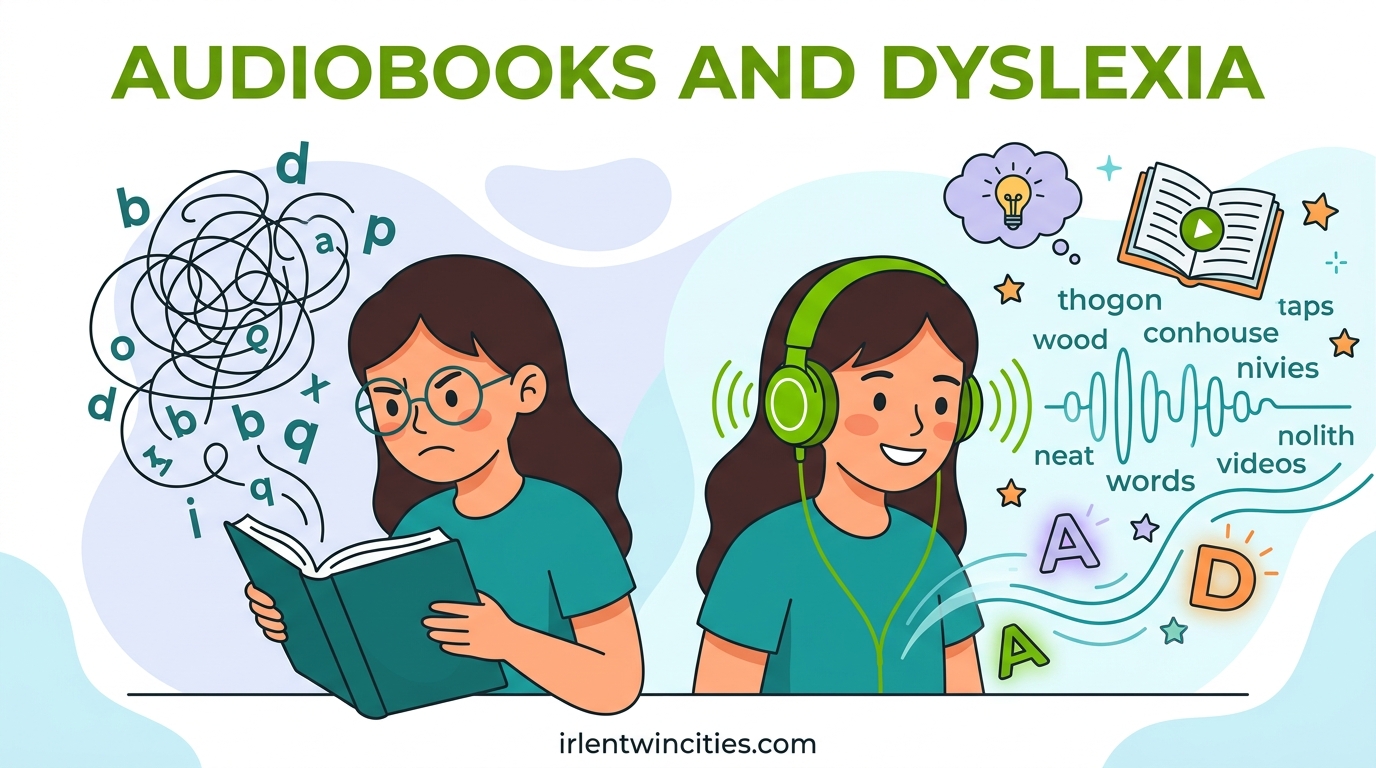
- Dyslexia and Learning Differences: Individuals with dyslexia often struggle with the decoding aspect of reading. For them, audiobooks are a "leveling" technology that allows their intellectual consumption to match their cognitive ability rather than being limited by their phonological processing speed.
- Visual Impairment: For the blind or those with low vision, auditory formats (including Braille and audiobooks) are the standard for literacy. Claiming audio doesn't count as reading is a form of unintentional gatekeeping that excludes the visually impaired community from the definition of "reader."
- Neurodivergence: Many people with ADHD find that the "dual-tasking" nature of audiobooks—listening while performing a mindless task like walking or cleaning—actually helps them focus. The auditory input provides a steady stream of information that prevents the mind-wandering that often occurs when staring at a static page.
By 2026, the inclusion of audiobooks in school curricula and library "Summer Reading" programs has become standard, recognizing that the emotional and intellectual benefits of a story are not exclusive to those who can process physical print.
The Unique Benefits of the Auditory Format
While audiobooks and print books share the same semantic processing, the auditory format offers unique advantages that print cannot replicate.
The Return to Oral Tradition
Humanity has been "reading" through listening far longer than we have been reading through sight. For millennia, knowledge, history, and mythology were passed down through oral storytelling. Our brains are evolutionarily hardwired to process spoken narratives. The nuance of a narrator’s voice—the cadence, the pauses, and the emotional inflection—adds a layer of interpretive depth to the text. In many ways, a well-produced audiobook is a collaborative performance between the author’s words and the narrator’s delivery.
Vocabulary and Pronunciation
Audiobooks are exceptionally effective at teaching vocabulary. Hearing a word used in context, with the correct pronunciation and emphasis, makes it more likely that a listener will integrate that word into their own lexicon. This is particularly beneficial for complex non-fiction, historical texts, or fantasy novels with intricate, invented names and languages.
Comparing the Mediums: A Functional Overview
The following table compares the different modes of literary consumption as of 2026, highlighting how each medium serves different needs while contributing to overall literacy.
| Feature | Physical Print | E-Books | Audiobooks |
|---|---|---|---|
| Primary Input | Visual (Eyes) | Visual (Eyes) | Auditory (Ears) |
| Decoding Effort | High (for learners) | High (for learners) | Minimal/None |
| Cognitive Load | High focus required | High focus required | Variable (allows multitasking) |
| Spatial Memory | Strong (page location) | Moderate | Low |
| Accessibility | Low (requires sight) | High (adjustable fonts) | Highest (no sight needed) |
| Emotional Nuance | Reader-generated | Reader-generated | Narrator-enhanced |
| Device Dependency | None | High | High |
Retention and the "Mind-Wandering" Problem
One of the most common arguments against audiobooks is the claim that listeners don't "retain" as much information. Skeptics point to instances where they "zoned out" during a chapter and had to rewind.
However, research into reading psychology shows that "mind-wandering" is just as prevalent during visual reading. Have you ever "read" three pages of a book only to realize your mind was thinking about dinner, and you have no idea what you just looked at? This is the visual equivalent of zoning out during an audiobook.
Retention is not a byproduct of the medium, but of engagement. Active listening—where the listener is focused on the narrative—results in retention levels comparable to active reading. In fact, many people find they retain character voices and dialogue better in audio format because the brain treats the information as a "social" interaction, which can lead to stronger emotional memory.
Audiobooks in the 2026 Publishing Landscape
In the current year of 2026, the distinction between "reading" and "listening" has blurred significantly due to technological integration. Hybrid reading, also known as "immersion reading," allows users to sync their e-books with their audiobooks. This technology highlights the text on the screen as the narrator speaks, creating a multi-sensory experience that has been shown to increase comprehension and retention by up to 40% in some educational studies.
Major literary awards, including the National Book Awards, now frequently feature audio-first productions, acknowledging that the "book" is the content itself, not the paper it is printed on. The rise of "Spatial Audio" and Dolby Atmos in audiobook production has further transformed the experience into a cinematic journey, making the "reading" experience more immersive than ever before.
Strategies for Effective "Auditory Reading"
If you are new to audiobooks or feel that you don't "count" them, consider these strategies to maximize your cognitive engagement:
- Adjust the Speed: Most people speak slower than they read. Increasing the narration speed to 1.25x or 1.5x can often bring the auditory input closer to your natural reading pace, which can actually help maintain focus.
- Listen During "Low-Cognitive" Tasks: Audiobooks are ideal for times when your body is busy but your mind is idle—such as during a commute, while exercising, or doing household chores. Avoid listening during tasks that require high linguistic processing, like writing an email.
- Use the "Bookmark" Feature: Most modern apps (Audible, Libby, Spotify) allow you to save clips. If you hear a particularly poignant passage or an important fact, bookmark it just as you would highlight a physical page.
- Engage with the Text: Join a book club or discuss the book on social platforms. Articulating the themes and plot points of an audiobook reinforces the same neural connections that discussing a print book does.
FAQs About Audiobooks and Reading
Do audiobooks count for children’s reading goals? Yes. For children, audiobooks help develop "ear reading" skills, which are essential for vocabulary development and story structure understanding. While they still need to practice visual decoding (phonics), audiobooks prevent them from falling behind in general knowledge and language comprehension while their mechanical skills catch up.
Does the brain remember audiobooks differently than print books? Research suggests that while spatial memory (remembering where a quote was on a page) is stronger with print, the emotional and temporal memory (the sequence of events and the feelings associated with them) is often stronger with audiobooks. Overall comprehension levels for the plot and themes are generally equal.
Is listening to an audiobook "cheating"? No. "Cheating" implies gaining an unfair advantage to avoid work. Since the "work" of reading is the mental processing of the narrative and the engagement with the author’s ideas, and since audiobooks require the same cognitive processing, there is no shortcut being taken. You are simply using a different sensory "port" to deliver the data to your brain.
Can audiobooks improve my focus? For many, yes. Audiobooks provide a consistent rhythm that can help drown out environmental distractions. For individuals with certain types of neurodivergence, the constant stream of auditory information can actually act as a "focus anchor," making it easier to stay present in a story than with a silent, static page.
What is the best way to start with audiobooks if I’m a "visual" person? Start with a memoir narrated by the author or a full-cast production. These formats highlight the unique strengths of audio. Additionally, try "re-reading" a favorite book in audio format first to get used to the sensation of listening without the pressure of following a new plot.
Practical Recommendation for Your Next Move
To truly experience the validity of auditory literacy, transition from passive listening to active engagement. If you are a skeptic, try a "Sync-Read" by following along with a physical copy while an audiobook plays. You will likely find that your understanding of the text’s rhythm and emotion deepens significantly. Whether you consume 52 books a year through your eyes or your ears, the result is the same: a mind expanded by the power of words.
Image Gallery
Select an image to open it in a new tab.



Vivian Cho
Executive IT and Emerging Technologies Reporter
