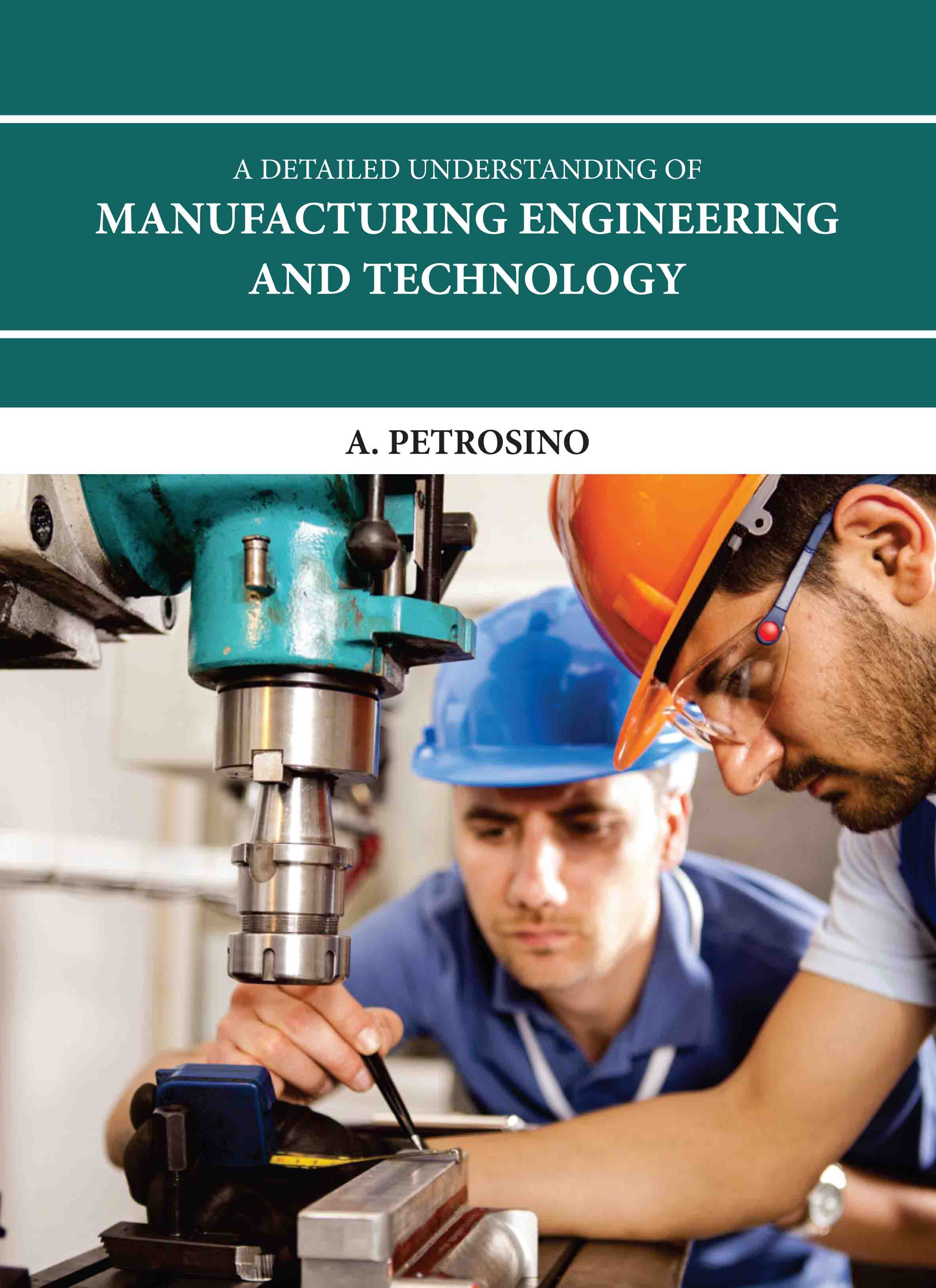
The primary difference between an engineer and a technologist lies in the focus of their work: engineers emphasize theoretical design, complex mathematical modeling, and the conceptualization of new systems, while technologists focus on the practical application, implementation, and management of existing technologies. Engineers typically innovate "from scratch," whereas technologists optimize and maintain the physical manifestation of those innovations.
Choosing a career path in the technical arts requires a nuanced understanding of how these two roles interact, the educational requirements for each, and how professional licensure affects long-term career trajectory. While both professionals are vital to the modern industrial landscape of 2026, their daily tasks and cognitive approaches differ significantly.
The Conceptual Divide: Theory vs. Application
The distinction between engineering and engineering technology is often described as a spectrum ranging from theoretical science to practical implementation. At the far left of the spectrum sits the theoretical scientist; at the far right sits the technician. The engineer and the technologist occupy the broad middle, but they lean toward opposite poles.
Engineers are trained to be innovators and designers. Their work involves high-level conceptualization, where they use advanced calculus and physics to predict how a system that does not yet exist will behave. When an aerospace company wants to develop a new propulsion system that utilizes unconventional fuels, the engineers are the ones who perform the structural analysis, thermodynamics calculations, and fluid dynamics simulations to prove the concept is viable. They focus on the "why" and "what if," pushing the boundaries of current technical knowledge.
Technologists, on the other hand, are the masters of the "how." They take the blueprints and theoretical models provided by engineers and turn them into functional reality. A technologist's expertise lies in the application of established engineering principles. In the same aerospace example, the technologist would be responsible for designing the production line, selecting the specific manufacturing tools, supervising the assembly, and troubleshooting the hardware when it fails to meet the engineer's specifications. They ensure that the design is manufacturable, maintainable, and economically viable in a real-world setting.
Educational Pathways and Accreditation
The educational foundation for these two roles is the most significant point of divergence. In the United States and many other jurisdictions, the Accreditation Board for Engineering and Technology (ABET) distinguishes between these two paths through two separate commissions: the Engineering Accreditation Commission (EAC) and the Engineering Technology Accreditation Commission (ETAC).
The Engineering Curriculum (EAC)
An engineering degree (Bachelor of Engineering or Bachelor of Science in Engineering) is heavily rooted in advanced mathematics and theoretical science. Students are expected to master multiple levels of calculus, differential equations, and linear algebra. The science courses are usually calculus-based physics and chemistry. The curriculum focuses on derivation—learning how to derive formulas from first principles. This allows the engineer to solve "unstructured" problems—problems that have never been seen before and have no pre-existing solution.
The Engineering Technology Curriculum (ETAC)
An engineering technology degree (Bachelor of Engineering Technology) focuses on algebra-based and trigonometry-based mathematics. While some programs include introductory calculus, the emphasis is on the application of math rather than theoretical derivation. The coursework is heavily laboratory-based. While an engineering student might spend six hours a week in a lecture hall studying the theory of heat transfer, an engineering technology student might spend four of those hours in a lab measuring the actual heat dissipation of various heat sinks. This "hands-on" approach prepares the technologist to be immediately productive in production and operations environments.
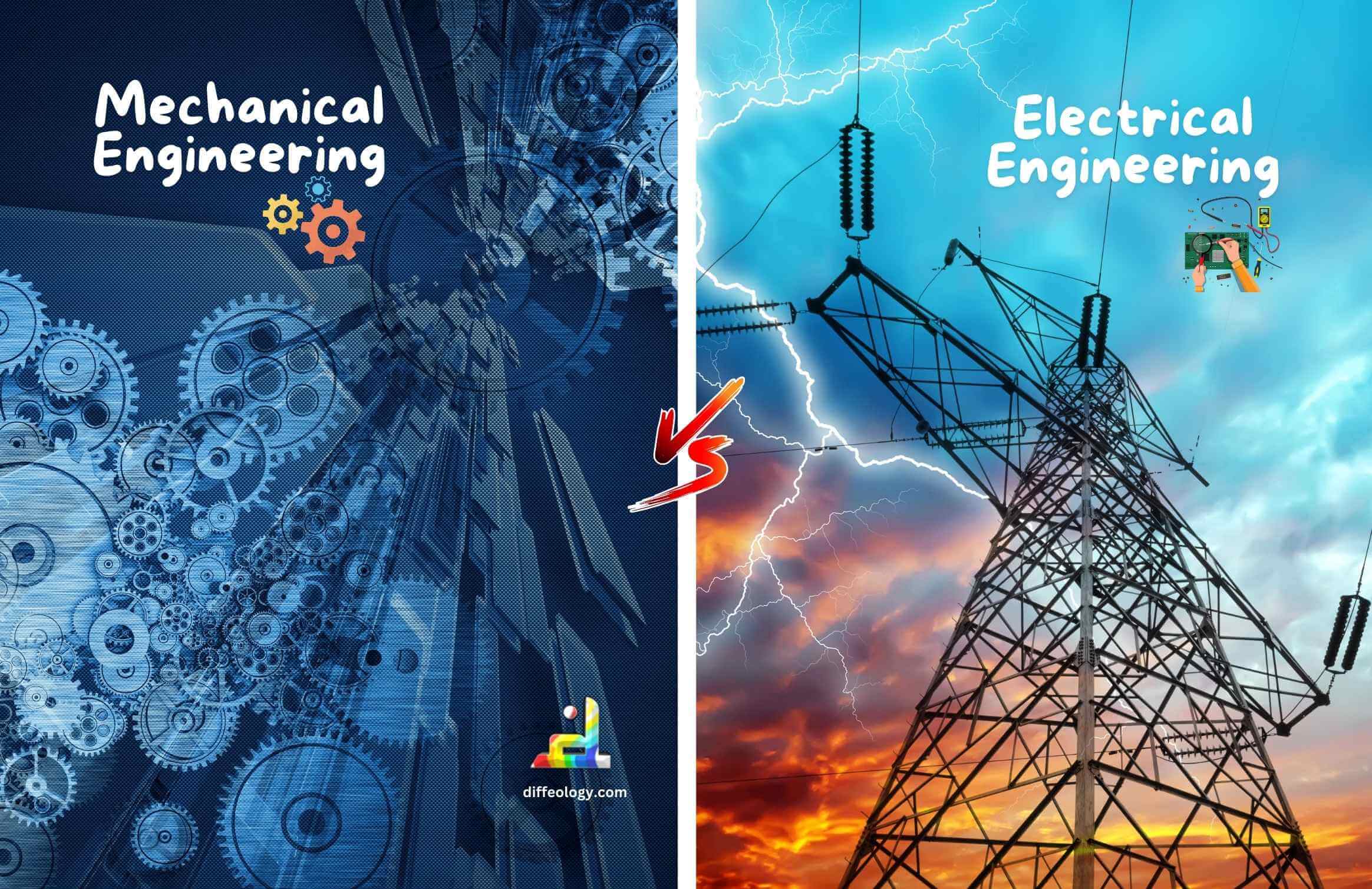
Mathematics and Science Intensity
The level of mathematical rigor is often the deciding factor for students choosing between these two paths. It is a common misconception that technologists are "bad at math"; rather, their math is applied.
Engineers use mathematics as a tool for modeling. They must understand the underlying proofs of the equations they use because they are often working in "limit states"—the boundaries where materials fail or systems become unstable. If an engineer is designing a bridge, they must account for non-linear dynamics and complex vibrations that require differential equations to model accurately.
Technologists use mathematics as a tool for verification and implementation. They use formulas to determine the correct torque for a bolt, the required flow rate for a cooling system, or the necessary voltage for a circuit. Because they are typically working with established systems and components, the mathematical models are already defined; the technologist’s job is to input the correct variables and interpret the results to ensure the system functions within its intended parameters.
Professional Licensure and the PE Designation
One of the most consequential differences between these roles involves professional licensure. In the United States, a Professional Engineer (PE) license is required for anyone who wishes to offer engineering services directly to the public or sign off on official design documents.
The National Council of Examiners for Engineering and Surveying (NCEES) sets the standards for the Fundamentals of Engineering (FE) and Professional Engineering (PE) exams. The path to licensure is significantly more straightforward for graduates of EAC-accredited engineering programs. In most states, an engineering graduate can take the FE exam during their senior year and apply for PE licensure after four years of supervised experience.
For technologists (ETAC graduates), the path is more restricted. In some states, technologists are not eligible for PE licensure at all. In others, they may be required to have six to eight years of experience (rather than four) before they can sit for the PE exam. As of 2026, several jurisdictions have moved toward a "decoupled" experience model, but the distinction between the four-year engineering degree and the four-year technology degree remains a primary gatekeeper for legal practice in civil, structural, and environmental engineering.
Comparing Roles in the Workplace
In a professional setting, the titles "Engineer" and "Technologist" are sometimes used interchangeably by HR departments, which can lead to confusion. However, the functional roles usually remain distinct.
| Feature | Engineer | Technologist |
|---|---|---|
| Primary Focus | Research, Design, and Development | Production, Implementation, and Operation |
| Problem Type | Unstructured, open-ended problems | Structured, application-based problems |
| Education | B.S. Engineering (EAC/ABET) | B.S. Engineering Technology (ETAC/ABET) |
| Math Level | High (Multivariable Calculus, Differential Eq.) | Moderate (Algebra, Trig, Intro Calculus) |
| Licensure | Eligible for PE in all jurisdictions | Limited or restricted PE eligibility |
| Work Environment | Office, Design Studio, Simulation Lab | Manufacturing Floor, Field Site, Test Lab |
| Entry-Level Title | Design Engineer, Junior Engineer | Project Technologist, Systems Specialist |
The Engineer’s Daily Routine
A design engineer in 2026 likely spends the majority of their time using Computer-Aided Engineering (CAE) software. They perform Finite Element Analysis (FEA) to test the stress points of a new component or use Computational Fluid Dynamics (CFD) to analyze airflow. Their output is a set of specifications, CAD models, and technical reports that define what a product should be. They attend meetings to discuss system integration and ensure that the electrical components don't interfere with the mechanical housing.
The Technologist’s Daily Routine
A manufacturing technologist spends their day bridging the gap between the design office and the shop floor. They might spend their morning configuring a robotic assembly arm and their afternoon analyzing a batch of parts that failed a quality control test. When the design engineer's CAD model proves too difficult to machine, the technologist is the one who suggests modifications to the geometry to make it compatible with existing CNC (Computer Numerical Control) equipment. They are the experts in the tools and processes used to bring the design to life.
Industry-Specific Nuances
The gap between these two roles varies significantly depending on the industry.
Civil and Structural Engineering
In civil engineering, the distinction is strictly enforced due to public safety concerns. Engineers do the structural calculations for buildings and bridges. Technologists in this field often work as inspectors, project managers, or CAD managers. It is rare to find a technologist performing primary structural design because of the licensure requirements mentioned previously.
Electronics and Computer Hardware
In the electronics industry, the roles are highly complementary. An electrical engineer might design a new microprocessor architecture at the gate level (theory). An electronic technologist will then design the printed circuit board (PCB) layout, select the physical components, and manage the surface-mount technology (SMT) assembly process (application).
Software and Systems
In the software world, the distinction is often blurred. "Software Engineer" is a common title, but many professionals performing the work have backgrounds that align more closely with technology degrees. However, for safety-critical systems (like autonomous vehicle sensors or medical device firmware), the rigorous theoretical background of an engineer is still the industry standard in 2026.
Career Outlook and Salary Considerations
Generally, starting salaries for engineers are higher than those for technologists. This is a reflection of the perceived difficulty of the engineering curriculum and the higher level of responsibility associated with design and licensure.
However, the "salary ceiling" is where the most significant difference occurs. Because engineers are eligible for professional licensure, they can move into senior principal roles or open their own consulting firms. Technologists often find themselves moving into management, quality assurance, or technical sales. While a senior technologist can earn a very comfortable living—often surpassing the salary of a junior engineer—the path to the highest levels of technical leadership usually favors the engineering degree.
In 2026, the rise of "smart" manufacturing and Industry 4.0 has actually increased the demand for technologists. Companies need people who understand both the high-level digital twins (the engineering side) and the physical sensors and actuators (the technology side).
Which Path Is Right for You?
The choice between becoming an engineer or a technologist often comes down to how you prefer to interact with technology.
Choose Engineering if:
- You enjoy deep theoretical study and complex mathematics.
- You are interested in research, development, and "blue-sky" innovation.
- You want the option to become a licensed Professional Engineer.
- You prefer working on the conceptual stage of a project.
Choose Engineering Technology if:
- You are a "hands-on" learner who prefers labs to long lectures.
- You enjoy troubleshooting, optimizing, and making things work.
- You want to enter the workforce with practical skills that are immediately applicable to production.
- You are interested in how things are made and maintained rather than just how they are designed.
FAQ
Can a technologist become an engineer? Yes, but it usually requires additional education or significant documented experience. Some technologists return to school for a Master’s in Engineering to bridge the theoretical gap. In many US states, a technologist can eventually earn the title of "Engineer" through years of practice and by passing the PE exam, though the requirements are stricter than for those with an engineering degree.
Is an engineering technology degree "easier" than an engineering degree? The curriculum is different, not necessarily easier. While it requires less theoretical math, it often requires more time in the lab and a deeper understanding of specific manufacturing processes and equipment. An engineering student might struggle with the practical assembly and troubleshooting that a technology student masters easily.
Do engineers and technologists work together? Almost always. In any large-scale industrial project, they form a symbiotic relationship. The engineer provides the vision and the technical constraints, and the technologist provides the practical execution and operational feedback. A project rarely succeeds without the expertise of both.
Which degree is better for the future of AI and automation? Both are essential. Engineers are needed to design the AI algorithms and the complex robotic systems. Technologists are needed to integrate those systems into existing factories, maintain the hardware, and bridge the gap between the digital AI and the physical world.
Practical Recommendation
If you are currently deciding between these two majors, examine the course catalog for a university that offers both. Look at the junior and senior year classes. If the prospect of "Advanced Heat Transfer" and "Partial Differential Equations" excites you, the Engineering path is likely your best fit. If you find yourself more interested in "Robotic Interfacing," "Quality Control Systems," and "Applied Fluid Power," then Engineering Technology will provide a more fulfilling career.
Regardless of the path chosen, ensure the program is ABET-accredited. This accreditation is the gold standard for employers and licensing boards, ensuring that your degree will be recognized and respected throughout your professional life.
Image Gallery
Select an image to open it in a new tab.

Vivian Cho
Executive IT and Emerging Technologies Reporter
