
Moving to New York City requires mastering complex housing markets, navigating extensive public transit networks, and adjusting to a fast-paced urban lifestyle. Success depends on rigorous financial preparation, understanding local legal frameworks, and securing stable accommodation before arrival.
Introduction to Relocating to New York City
Relocating to New York City remains one of the most exciting yet challenging life transitions. Whether you are moving for a career opportunity, educational pursuits, or a fresh start in a culturally vibrant metropolis, the five boroughs present a unique set of logistical hurdles. From the moment you begin packing your belongings to the day you sign a residential lease, every step requires careful planning and a realistic understanding of urban economics.
The city is a mosaic of distinct neighborhoods spread across Manhattan, Brooklyn, Queens, the Bronx, and Staten Island. Each borough offers a completely different rhythm, cost structure, and community vibe. Navigating this transition successfully requires moving past romanticized media depictions and focusing on the mechanical realities of renting an apartment, budgeting for high living costs, establishing utility accounts, and learning how to commute efficiently. This guide outlines the essential phases of your move, providing actionable strategies to help you settle into your new home with minimal friction.
Financial Preparation and Budgeting
Before packing a single box, you must conduct a rigorous financial assessment. New York City is consistently ranked among the most expensive cities in the world, and underestimating your expenses is the primary reason relocations fail.
The Real Cost of Living
Rent is typically your largest monthly expense, but you must also factor in state and city income taxes, high utility bills during peak summer and winter months, groceries, entertainment, and transportation. Unlike smaller cities where a modest savings cushion might suffice, financial planners generally recommend securing a liquid emergency fund equivalent to three to six months of living expenses after you have paid your moving costs and apartment security deposit.
A common baseline rule for renting in the city is the "40x rule," enforced by landlords and property management companies. This rule dictates that your annual gross income must be at least 40 times your monthly rent. For example, if an apartment costs $2,500 per month, your annual household income must be at least $100,000. If you do not meet this threshold, landlords will typically require a guarantor—usually a relative who earns 80 to 100 times the monthly rent and lives in the tri-state area.
Estimated Monthly Expense Breakdown
To help visualize your financial commitments, the following table outlines estimated monthly expenses for a single person living in a standard one-bedroom apartment or sharing space in a multi-room apartment.
| Expense Category | Estimated Monthly Cost (Individual) | Notes |
|---|---|---|
| Rent | $2,000 – $3,800 | Varies heavily by neighborhood and apartment size. |
| Utilities | $100 – $250 | Electricity, gas, and high-speed internet. Heating is often included. |
| Transportation | $132 (Unlimited MetroCard) | Standard 30-day unlimited ride fare for subways and buses. |
| Groceries & Dining | $500 – $900 | Depends heavily on cooking at home versus eating out. |
| Entertainment & Misc. | $300 – $600 | Gym memberships, events, shopping, and personal care. |

Navigating the Housing Market
Finding an apartment in New York City is notoriously competitive and fast-moving. Properties can rent within hours of being listed, requiring you to act decisively when you find a suitable match.
Timing and Broker Fees
Never attempt to apartment-hunt more than 30 to 45 days before your desired move-in date. The inventory turns over rapidly, and landlords will not hold apartments vacant for longer periods while waiting for a tenant.
Be prepared for upfront costs that shock newcomers. When signing a lease, you will typically need to pay:
- The first month's rent.
- A security deposit (capped at one month's rent under New York housing laws).
- A broker fee, which historically ranged from 12% to 15% of the annual rent, though ongoing legislative debates continue to scrutinize how these fees are charged.
Essential Documentation Packet
Landlords in New York City act quickly and demand thorough financial vetting. Assemble a digital folder containing all necessary documents before you begin your search. Missing a single document can cause you to lose an apartment to another applicant. Required items typically include:
- Government-issued photo identification (Passport or Driver’s License).
- An official employment letter on company letterhead stating your salary, start date, and position.
- The last two to three pay stubs.
- The previous year's federal tax return (W-2 or 1099 forms).
- Bank statements from the last two to three months showing proof of liquid funds.
- Previous landlord references or contact information.
Logistics, Packing, and Moving Day
Executing the physical move requires precision, particularly because New York City streets are congested, parking rules are strictly enforced, and many buildings lack elevators (walk-ups).
Hiring Movers vs. DIY
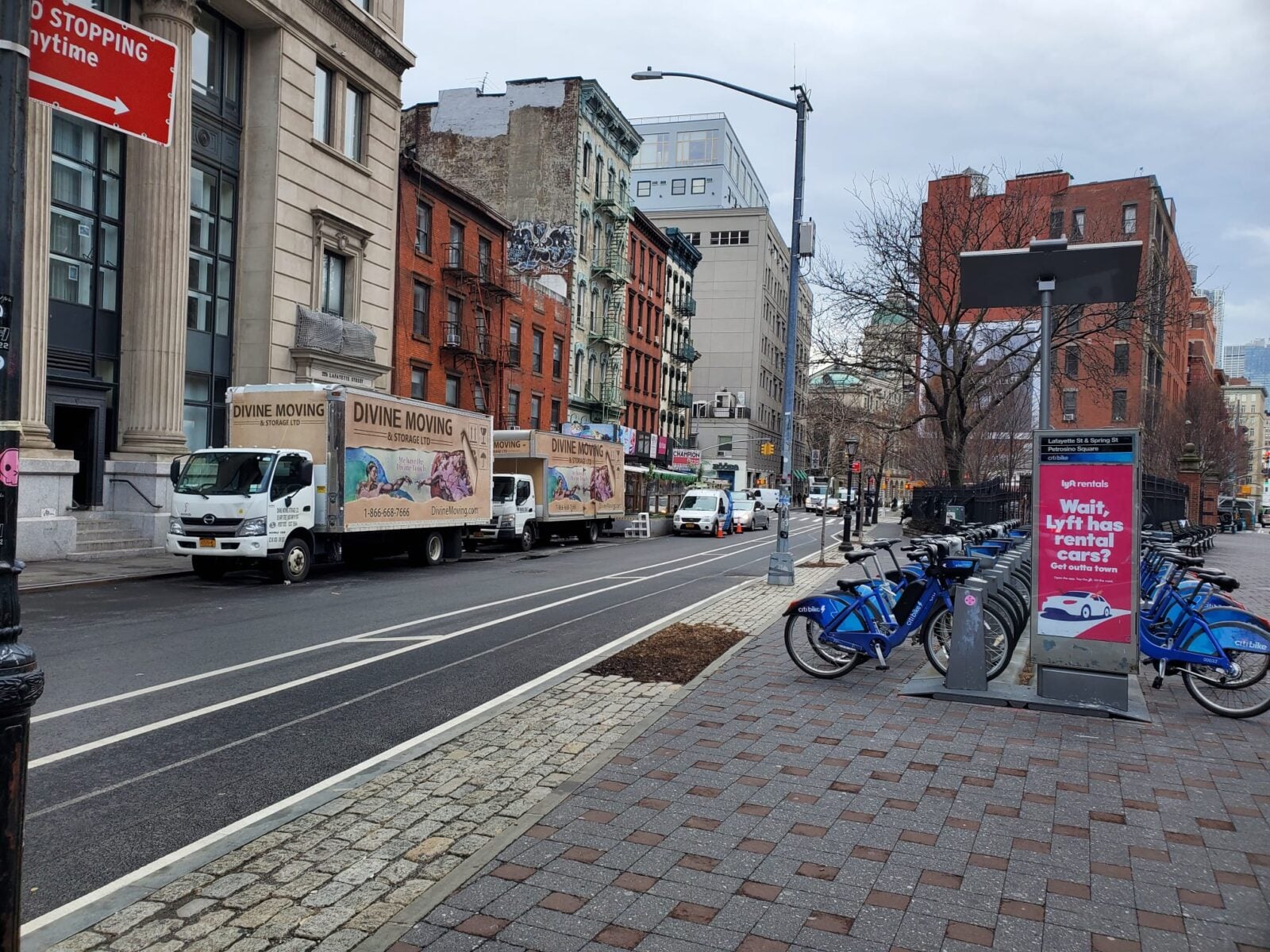
Driving a large rental truck through Manhattan traffic is a high-stress endeavor that often results in parking tickets or vehicle damage. If possible, hire professional movers who possess experience navigating city regulations. Ensure the moving company carries proper licensing and insurance, as many New York apartment buildings require a Certificate of Insurance (COI) from your movers before allowing them to use the service elevator or load-in dock. Provide this requirement to your moving company well in advance.
Dealing with Walk-Ups and Narrow Entryways
Many classic New York apartments are located in walk-up buildings featuring narrow stairwells and tight turns. Measure your furniture before packing. Oversized sectional sofas, king-size mattresses, and massive dressers frequently do not fit up three flights of narrow stairs. Downsizing your furniture collection before moving will save you money on moving fees and reduce physical strain.
Settling In: Utilities, Transit, and Administration
Once you receive your keys, you must quickly establish your day-to-day infrastructure to ensure a smooth transition into city life.
Setting Up Utilities and Connectivity
If your lease does not include utilities, you must transfer accounts into your name immediately.
- Electricity and Gas: ConEdison is the primary provider for most of the city. Set up your account online prior to your move-in date to ensure service is active when you arrive.
- Internet: Options vary by building. Providers like Spectrum, Verizon Fios, and Optimum dominate different neighborhoods. Check which high-speed fiber or cable networks are wired into your specific unit.
Mastering Public Transit
Owning a car in New York City is more of a liability than an asset due to exorbitant garage fees, street sweeping regulations (Alternate Side Parking), and perpetual traffic congestion. Rely instead on the Metropolitan Transportation Authority (MTA) subway and bus systems.
Purchase a contactless payment device or use smartphone NFC technology (OMNY) to tap and pay at turnstiles. Familiarize yourself with express versus local trains. Express trains skip numerous stops, saving significant time during long commutes, but boarding the wrong train can send you to an entirely different borough.
Updating Official Documents
Within 30 days of moving, you must update your address with the United States Postal Service (USPS) and schedule an appointment at the New York State Department of Motor Vehicles (DMV) to update your driver's license or non-driver identification card, as well as vehicle registrations if you brought a car.
Frequently Asked Questions
Do I need a car when moving to New York City?
No. The vast majority of residents rely entirely on the subway, buses, walking, and rideshare services. Parking is scarce and expensive, and traffic congestion makes driving impractical for daily commuting.
What is a guarantor, and why do I need one?
A guarantor is a third party—usually a relative—who legally promises to pay your rent if you default on your lease. Landlords require them if your annual income does not meet the 40x rent threshold or if you lack an established credit history in the United States.
How much money should I save before moving?
Financial experts recommend saving at least three to six months' worth of living expenses in addition to your initial move-in costs. Upfront costs typically include the first month's rent, a security deposit, broker fees, and moving truck or professional mover expenses.
What are the best neighborhoods for newcomers?
The "best" neighborhood depends entirely on your budget, lifestyle, and workplace location. Astoria (Queens) and Williamsburg or Park Slope (Brooklyn) are popular for newcomers balancing community feel with relative affordability, while Manhattan neighborhoods like the Upper East Side offer classic city living with robust transit access.
How do I establish credit history if I am moving from another country?
Establishing credit can be challenging for international arrivals. Consider opening an account with a bank that has international branches, applying for a secured credit card, or utilizing specialized tenant-screening services that evaluate international credit profiles and employment histories.
Next Actions for Your Relocation
Begin your transition by auditing your finances, organizing your digital document folder, and researching neighborhoods that align with your daily commute. Do not sign any leases sight-unseen or send funds without verifying the legitimacy of the landlord or management company to protect yourself against rental scams. Take a systematic approach to each phase of the process, and you will establish a solid foundation for your new life in New York City.
Image Gallery
Select an image to open it in a new tab.




Omar Farooq
EdTech Innovation and Virtual Pedagogy Journalist
