
The "Miracle on the Hudson," involving US Airways Flight 1549, took place on January 15, 2009. Captain Chesley "Sully" Sullenberger and First Officer Jeffrey Skiles successfully executed an emergency water landing on the Hudson River after a bird strike disabled both engines, ensuring the survival of all 155 people on board.
The Significance of January 15, 2009
In the annals of aviation history, few dates carry as much weight as January 15, 2009. It was a cold Thursday afternoon in New York City when a routine domestic flight transformed into one of the most celebrated examples of airmanship and emergency response in modern history. The event, which lasted only about five minutes from takeoff to ditching, redefined safety protocols and captured the global imagination during a period of economic uncertainty and transition.
The flight was scheduled as a trip from New York’s LaGuardia Airport (LGA) to Charlotte Douglas International Airport (CLT) in North Carolina. The aircraft, an Airbus A320-214 registered as N106US, departed at approximately 3:24 PM EST. Within minutes, the crew faced a catastrophic dual-engine failure—an event so rare it was often considered a "black swan" scenario in simulator training.
A Minute-by-Minute Timeline of Flight 1549
Understanding the timeline of the Miracle on the Hudson is essential to appreciating the speed at which the crew had to process information and make life-altering decisions. In 2026, aviation historians still point to these specific minutes as the gold standard for Cockpit Resource Management (CRM).
Takeoff and the Bird Strike (3:24 PM – 3:27 PM)
Flight 1549 was cleared for takeoff from Runway 4 at LaGuardia. The weather was clear but frigid, with air temperatures around 20°F (-7°C). At 3:27:11 PM, while the aircraft was climbing through an altitude of approximately 2,800 feet, it encountered a large flock of Canada geese.
Unlike minor bird strikes that might damage a wing or a single engine, the geese were ingested into both CFM56-5B turbofan engines. This resulted in an almost total loss of thrust. Captain Sullenberger immediately took control of the aircraft, while First Officer Skiles began working through the emergency QRH (Quick Reference Handbook) for dual engine failure.
The Decision-Making Window (3:27 PM – 3:29 PM)
Sullenberger’s first instinct was to return to LaGuardia. However, he quickly realized that the aircraft lacked the kinetic energy (altitude and airspeed) to clear the New York skyline and reach the runway. He queried Air Traffic Control (ATC) about Teterboro Airport in New Jersey as an alternative.
As the aircraft continued to lose altitude at a rate of roughly 1,000 feet per minute, Sullenberger made the iconic radio call: "We’re gonna be in the Hudson." This decision was based on a calculated risk assessment—the river provided a long, flat "runway" free of buildings and people on the ground, despite the obvious risks of ditching a 150,000-pound jet into water.
The Ditching (3:31 PM)
At 3:31:02 PM, the aircraft touched down on the North Hudson River, near 48th Street in Manhattan. Sullenberger managed to keep the wings level and the nose up, hitting the water at approximately 125 knots (144 mph). This specific attitude was critical; if one wing had dipped into the water first, the aircraft likely would have cartwheeled and broken apart.
Technical Specifications and Environmental Factors
The success of the ditching was not merely a matter of luck; it involved the specific engineering of the Airbus A320 and the physical conditions of the river that day.
| Feature/Factor | Detail | Impact on Outcome |
|---|---|---|
| Aircraft Type | Airbus A320-214 | Fly-by-wire system helped maintain stability during the glide. |
| Water Temperature | 36°F (2°C) | Created an immediate risk of hypothermia for passengers. |
| Air Temperature | 20°F (-7°C) | Complicated the rescue as ice began to form on the wings. |
| Ditching Button | Not Activated | A320 has a "ditching" switch to seal valves; the crew was too busy to hit it. |
| Engine Status | Dual Flameout | Left the aircraft as a glider with no power-assisted climb capability. |
| Passenger Count | 150 Passengers, 5 Crew | High density required rapid evacuation via overwing exits and slides. |
The Airbus A320 is equipped with a "ditching button" that closes the outflow valve, the emergency ram air inlet, the avionics ventilation inlet, and the pack discharge valves. This is designed to slow the rate of water ingress. Because the bird strike happened at such a low altitude, the crew did not have time to reach this item on the checklist. Despite this, the aircraft remained buoyant long enough for a full evacuation.
The Role of the Flight Crew and Cabin Safety
While Captain Sullenberger became the face of the event, the "Miracle" was a collective effort of the entire crew. First Officer Jeffrey Skiles had just completed his captaincy training on the A320 and was highly proficient in the aircraft's systems. His focus on the restart checklists allowed Sullenberger to focus entirely on the flight path.
In the cabin, flight attendants Donna Dent, Sheila Dail, and Doreen Welsh played a pivotal role. As the plane hit the water, the impact caused significant damage to the rear fuselage, allowing water to enter the cabin quickly. Doreen Welsh, stationed at the rear, was injured but continued to direct passengers toward the forward exits and overwing rafts.
The evacuation was completed in less than two minutes. Passengers were instructed to don life vests and move onto the wings and into the inflatable slides, which doubled as life rafts. The sight of dozens of passengers standing on the wings of a sinking jet in the middle of the Hudson remains one of the most striking images of the 21st century.
The "Miracle" of the Rapid Water Rescue
The date of January 15, 2009, is also significant for the New York maritime community. The location of the ditching was adjacent to several major ferry terminals. Within minutes of the aircraft hitting the water, commercial ferries operated by NY Waterway were on the scene.
The Thomas Jefferson, commanded by Captain Vincent Lombardi, was the first to arrive, reaching the aircraft just four minutes after the ditching. The ferry crews utilized "Jason's Cradles"—specialized maritime rescue nets—to pull shivering passengers from the water and the aircraft's wings. They were soon joined by FDNY and NYPD harbor units.
The speed of this rescue was vital. In 36-degree water, the onset of hypothermia occurs within minutes. Had the ditching occurred in a remote area or during a time of day with less maritime traffic, the survival rate likely would have been much lower despite the successful landing.
Post-Event Investigation and the NTSB Findings
Following the events of January 15, the National Transportation Safety Board (NTSB) launched an exhaustive investigation. The primary focus was whether Sullenberger could have safely returned to LaGuardia or reached Teterboro.
Initial flight simulations suggested that a return to LaGuardia was mathematically possible. However, these simulations did not account for "human factor" delays—the time required for a pilot to process the emergency, decide on a course of action, and execute the turn. When a 35-second delay was added to the simulations to reflect real-world reaction times, every attempt to land at an airport resulted in a crash.
The NTSB ultimately cleared the crew of any wrongdoing, concluding that Captain Sullenberger’s decision to ditch in the Hudson was the highest-probability path to survival. The board also made several recommendations regarding bird strike resistance in engine design and the inclusion of more water-landing scenarios in pilot training.
Legacy and the Sullenberger Aviation Museum
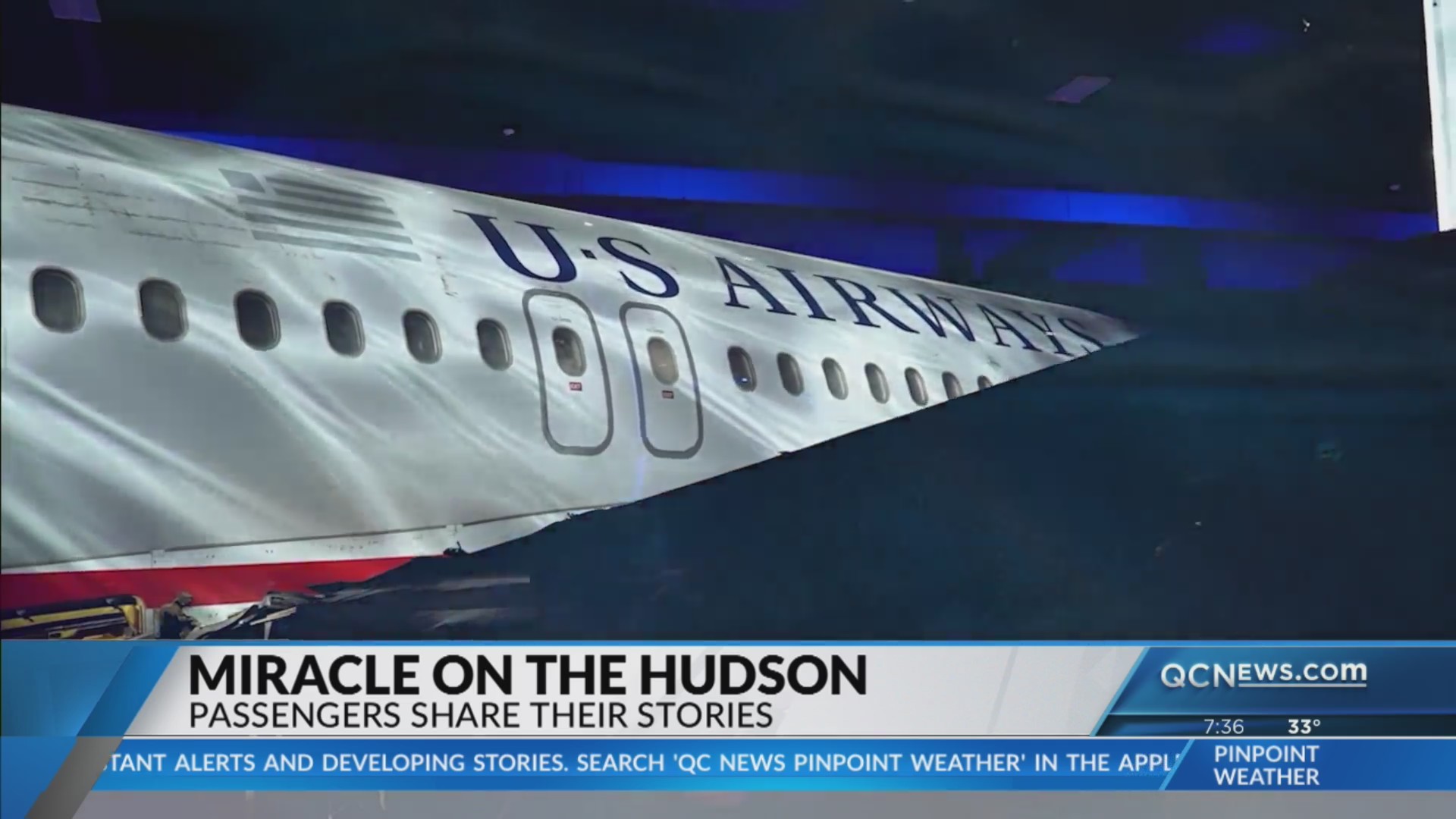
As of 2026, the legacy of Flight 1549 is preserved not just in safety manuals, but in a physical monument to human ingenuity and calm under pressure. The aircraft itself, N106US, was recovered from the river and eventually moved to the Sullenberger Aviation Museum (formerly the Carolinas Aviation Museum) in Charlotte, North Carolina.
The exhibit serves as a permanent educational tool. Visitors can see the bird-strike damage on the engines and the dented underbelly of the fuselage. It stands as a reminder of how technology, training, and the human spirit intersected on that cold January day.
Furthermore, the "Miracle on the Hudson" led to significant changes in aviation:
- Bird Mitigation: Airports worldwide implemented more aggressive wildlife management programs to prevent flocks from nesting near runways.
- CRM Training: The event is used as a case study in how effective communication between a captain and a first officer can prevent disaster.
- Emergency Equipment: The effectiveness of the A320’s slide-rafts influenced future cabin safety designs.
Frequently Asked Questions
What time did the Miracle on the Hudson happen?
The event began with takeoff at 3:24 PM EST on January 15, 2009. The bird strike occurred at 3:27 PM, and the aircraft ditched in the river at 3:31 PM. The entire duration from the loss of power to the landing was approximately four minutes.
How cold was the water during the Flight 1549 rescue?
The Hudson River water temperature was approximately 36°F (2°C). This extreme cold posed a life-threatening risk of hypothermia, making the rapid arrival of NY Waterway ferries critical to the survival of the passengers who were forced to stand on the wings or enter the water.
Were there any fatalities or serious injuries?
There were no fatalities. All 155 people on board survived. There were five serious injuries, including a deep laceration to flight attendant Doreen Welsh's leg and several cases of hypothermia, but everyone was successfully treated.
Where is the Miracle on the Hudson plane located now?
In 2026, the Airbus A320 is the centerpiece of the Sullenberger Aviation Museum in Charlotte, North Carolina. It was transported there via truck in 2011 and remains a major historical exhibit.
Why couldn't the plane fly back to the airport?
The aircraft was at a low altitude (2,800 feet) and had lost all thrust in both engines. To return to LaGuardia, the pilot would have had to perform a 180-degree turn, which causes a significant loss of altitude and airspeed. Calculations and simulations proved the plane would have crashed into a densely populated area before reaching a runway.
Recommendation for Further Exploration
If you are interested in the technical nuances of the Miracle on the Hudson, the most comprehensive resource remains the NTSB Final Accident Report (AAR-10/03). This document provides the full telemetry data, cockpit voice recorder transcripts, and engineering analysis of the bird strike. For those who prefer a more personal perspective, visiting the Sullenberger Aviation Museum in Charlotte offers a unique opportunity to see the physical evidence of the ditching and learn about the individual stories of the passengers and crew who were part of this historic day.
Image Gallery
Select an image to open it in a new tab.




Declan O'Connor
Higher Education and Campus Culture Reporter
