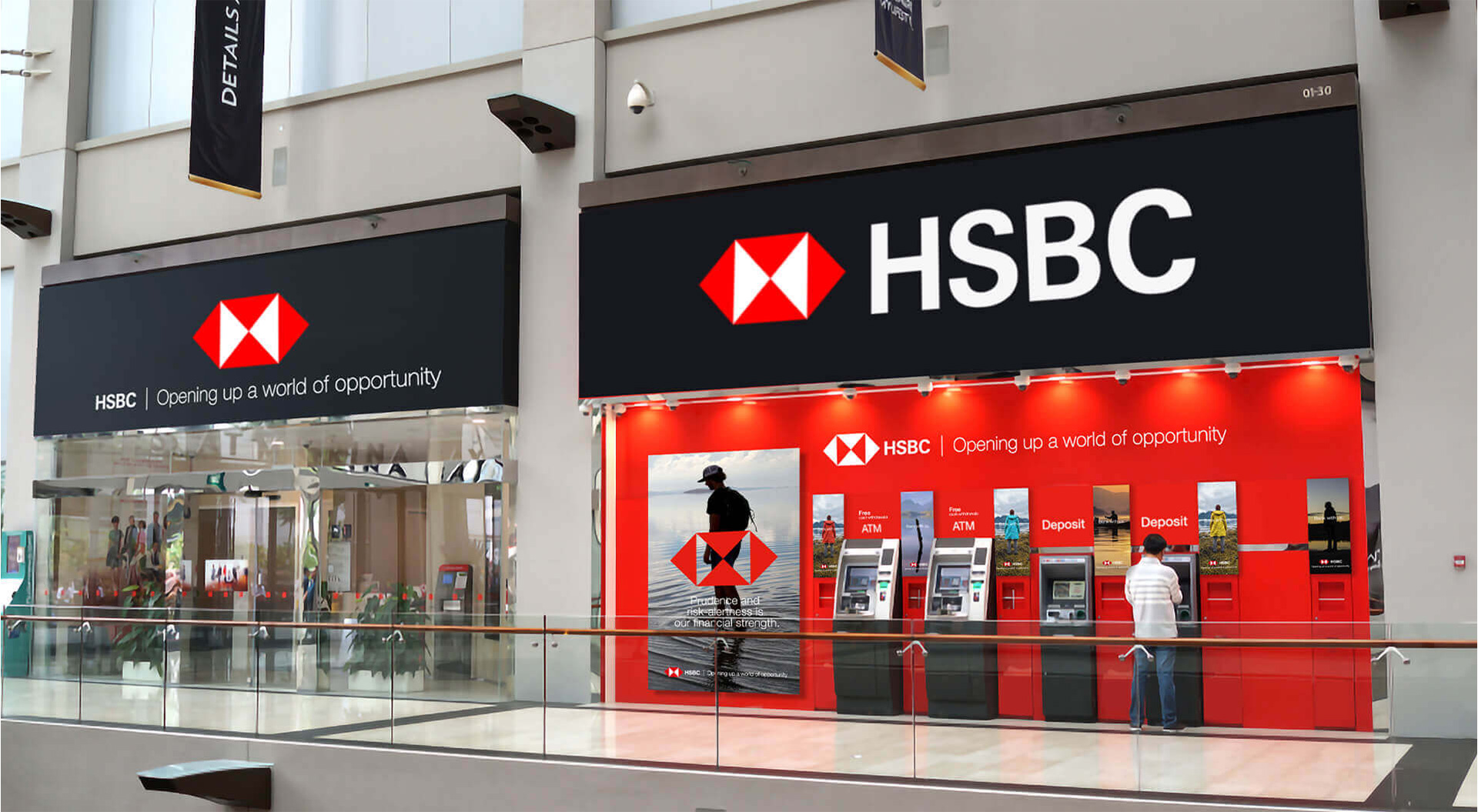
For international travelers and expatriates, HSBC France is no longer a separate retail branch within the HSBC global network; as of 2026, the retail banking operations formerly known as HSBC France have been fully transitioned to CCF (Crédit Commercial de France). This means the seamless "Global View" and "Global Transfers" features that once linked French accounts to other HSBC international accounts are no longer available for retail customers.
The Evolution of HSBC Retail Banking in France
The landscape of French banking underwent a seismic shift at the beginning of 2024, the repercussions of which are fully felt by travelers and international clients today in 2026. For decades, HSBC France was the premier choice for globetrotters because it operated as a key node in a unified global system. However, following a strategic decision to pivot toward wealth management and wholesale banking, HSBC Group sold its French retail banking business to My Money Group, which is backed by the private equity firm Cerberus Capital Management.
This sale was not merely a change in name; it was a total separation of entities. While the brand "HSBC" still exists in France for corporate and institutional clients under the name HSBC Continental Europe, the bank that travelers used to walk into on the Champs-Élysées is now CCF. For a traveler, this means that an account held in France is now legally and operationally distinct from any HSBC accounts held in the UK, USA, Hong Kong, or elsewhere.
The Rebirth of Crédit Commercial de France (CCF)
The transition involved the migration of nearly 800,000 customers and approximately 250 branches. CCF, a historic brand that HSBC originally acquired in 2000, was resurrected to house these retail operations. By 2026, the integration process is complete, but the "separate bank" status remains a point of confusion for those who remember the old system.
The primary takeaway for travelers is that CCF operates as a domestic French bank. While it provides excellent service within the Eurozone, it does not share the proprietary global infrastructure that HSBC users were accustomed to. If you are a traveler looking for a bank that treats your French account as a "sister" account to your foreign one, that era of French retail banking has ended.
Why the "One Bank" Experience Disappeared for Travelers
The core reason why HSBC France is no longer a separate, integrated option for travelers lies in the loss of Global Interconnectivity. In the past, HSBC’s "Premier" and "Jade" statuses were portable. If you were a Premier customer in London, you were a Premier customer in Paris. This status granted you:
- Global View: The ability to see all your international balances on a single dashboard.
- Global Transfers: Instant, fee-free transfers between your own accounts across borders.
- Emergency Assistance: The ability to walk into a French branch and receive emergency cash based on your global standing.
Since the sale to My Money Group, these links have been severed. A traveler with an HSBC account in New York cannot walk into a CCF branch in Lyon and expect the staff to access their credit history or provide "Premier" benefits. CCF and HSBC are now two different companies with different shareholders, different IT systems, and different regulatory compliance frameworks.
The Impact on Global Transfers and Fees
In 2026, moving money between an HSBC account abroad and a CCF account in France is treated as a standard international transfer. While CCF belongs to the SEPA (Single Euro Payments Area) network, making transfers within Europe relatively efficient, the "instant and free" nature of the old HSBC-to-HSBC internal transfer is gone.
Travelers must now navigate:
- SWIFT Fees: Transfers from outside the SEPA zone (like the US or Australia) incur standard international banking fees.
- Exchange Rate Spreads: Without the internal HSBC rate, customers are subject to CCF’s retail currency conversion rates, which may include a wider margin.
- Validation Delays: Transfers no longer happen in real-time; they are subject to standard inter-bank clearing times.

How the Transition Affects International Clients in 2026
If you are a traveler who still holds an account that was originally opened with HSBC France, you are now a customer of CCF. For those who used the bank primarily for its international features, the value proposition has changed significantly.
Losing the Portable Credit History
One of the greatest advantages for expats and frequent travelers was HSBC’s ability to use your global credit history to help you secure a mortgage or a credit card in France. Since the retail business is now CCF, that data bridge no longer exists. CCF is a French entity regulated by the Autorité de Contrôle Prudentiel et de Résolution (ACPR) and does not have automatic access to HSBC’s global databases.
Changes in Digital Banking
The old HSBC France mobile app has been replaced by the CCF digital platform. For travelers, this means a new interface and, crucially, the absence of other international HSBC accounts within that app. This lack of a "hub" makes managing a multi-currency lifestyle more cumbersome, requiring users to juggle multiple banking apps and authentication devices.
Alternatives for the Global Traveler in France
Since HSBC France no longer functions as a global branch for retail travelers, what options exist in 2026 for those who need international connectivity?
1. HSBC Expat (Jersey-based)
For many, the solution to the "HSBC France" problem is HSBC Expat. Based in Jersey (Channel Islands), this branch remains part of the HSBC Global network. While it is not a "French" account in the sense of having a French IBAN (beginning with FR), it allows you to hold Euros and maintain your Global View and Global Transfer links to other HSBC entities. Many travelers who previously used HSBC France have migrated their primary wealth management to HSBC Expat to keep the "One Bank" experience.
2. Neobanks and Fintechs
Digital-first banks like Revolut and Wise have filled the gap left by the retreat of international retail giants. These platforms offer:
- Multi-currency accounts: Hold Euros, Dollars, and Pounds in one place.
- Local IBANs: Some fintechs now offer French IBANs, allowing you to pay French utilities or receive a French salary.
- Market-rate FX: Generally lower fees than traditional retail banks like CCF.
3. International Banks with French Presence
While HSBC exited the retail market, other banks like BNP Paribas have partnerships (such as the Global Alliance) with banks like Bank of America or Barclays, offering fee-free ATM withdrawals for travelers. However, even these do not offer the full "Global View" integration that HSBC once pioneered.
Comparative Analysis: Banking for Travelers in France (2026)
The following table compares the current options for travelers who previously relied on the integrated HSBC France model.
| Feature | CCF (Formerly HSBC France) | HSBC Expat (Jersey) | Neobanks (Revolut/Wise) |
|---|---|---|---|
| Global View Integration | No | Yes (with other HSBC accounts) | No (Integrated multi-currency) |
| French IBAN (FR) | Yes | No (Uses GB or JE IBAN) | Sometimes (Market dependent) |
| Physical Branches | Yes, throughout France | No (Online/Phone only) | No |
| Instant Transfers | SEPA Instant only | Yes (HSBC to HSBC) | Yes (Platform to platform) |
| Premier Status Portability | No | Yes | No |
| Primary Target | French residents | High-net-worth travelers | Frequent travelers/Digital nomads |
Managing the Technical Reality of CCF in 2026
For those who chose to stay with CCF after the transition, it is important to understand the technical requirements for maintaining the account from abroad.
Authentication and Security
CCF utilizes the CCF Sécur’Pass or physical security keys for transaction validation. Travelers must ensure their registered mobile number is kept up to date, especially if they are using a foreign SIM card. Many French banks struggle with sending SMS authentication codes to non-French numbers, so verifying this connectivity is a prerequisite for any international trip.
KYC and Resident Status
In 2026, French banks are under increased pressure to maintain updated "Know Your Customer" (KYC) documentation. If you are a non-resident traveler holding a CCF account, you must regularly provide proof of tax residency in your home country. Failure to do so can result in account restrictions, a common headache for travelers who are not physically present in France to visit a branch.
The Future of "Global" Banking in France
The departure of HSBC’s retail brand from France signals a broader trend in 2026: the "localization" of retail banking. Large global banks are finding it increasingly difficult to navigate the differing regulatory and tech requirements of retail banking across multiple borders. Instead, they are focusing on Wealth Management and Commercial Banking.
For the traveler, this means that the "separate bank" concept is being replaced by "interoperable apps." You no longer look for one bank that is everywhere; you look for a digital tool that can connect to various local banks. While CCF is an excellent domestic bank for those living in France, its role as a tool for the international traveler is significantly diminished compared to its time under the HSBC banner.
Professional Advice for Moving Forward
If you are a traveler who currently feels "stranded" by the fact that HSBC France is no longer part of the HSBC network, consider the following steps:
- Verify your IBAN: Ensure any automatic payments (prélèvements) are updated to reflect the CCF BIC/IBAN if they haven't been already.
- Evaluate HSBC Expat: If you have more than £50,000 (or equivalent) in assets, HSBC Expat can restore your "Global View" and give you a hub for your international finances.
- Use a Fintech Bridge: Use a service like Wise to move money between your foreign HSBC account and your French CCF account to avoid the high wire fees associated with traditional inter-bank transfers.
- Check Insurance Coverage: If you relied on the travel insurance provided by an HSBC Premier card in France, review the new CCF card terms. The coverage levels and underwriters may have changed significantly since 2024.
Frequently Asked Questions
Can I still use my HSBC Premier credit card at CCF branches?
You can use any HSBC credit card at a CCF ATM to withdraw cash, but you will be treated as a "visitor." This means you may be subject to out-of-network ATM fees, and you cannot perform advanced functions like depositing checks or managing your account details at the branch counter.
Does HSBC still have any presence in France for individuals?
Yes, but only for Private Banking and certain high-net-worth wealth management services. For the average retail customer or traveler, there is no longer a "branded" HSBC bank for daily transactions. The physical branches with the red hexagon logo have almost entirely been rebranded to the CCF logo.
What happened to my "Global View" link to France?
The link was officially severed during the migration. Your French account will no longer appear when you log into your HSBC UK, US, or Hong Kong app. You must download the CCF mobile app and manage that account entirely separately.
Are my deposits still safe after the transition from HSBC to CCF?
Yes. Your deposits remain protected by the Fonds de Garantie des Dépôts et de Résolution (FGDR), the French deposit guarantee scheme, which covers up to €100,000 per person, per institution. The safety of your money is tied to the French regulatory system, not the global HSBC Group.
Is it possible to open a new HSBC account in France in 2026?
Only if you qualify for Private Banking (typically requiring several million euros in investable assets). For standard retail or "Premier" level banking, you would need to apply with CCF or another French domestic bank.
Final Recommendation
For the modern traveler in 2026, the strategy has shifted from "One Bank" to "One Hub." Since HSBC France no longer functions as a separate international branch of the HSBC network, travelers should treat their French CCF account as a local tool for Euro-denominated expenses within France. For global connectivity, the best path forward is to utilize HSBC Expat as your central financial engine while using a neobank or a local CCF account for boots-on-the-ground spending in France. This "hybrid" approach ensures you maintain the benefits of a global banking relationship without losing the practical necessity of a French bank account.
Image Gallery
Select an image to open it in a new tab.
Ingrid Bjornson
Global Cyber Policy and Regulation Analyst
