Employee Monitoring Systems: A Comprehensive Guide for 2026

Employee monitoring systems encompass a range of software and hardware tools designed to track, measure, and record workplace activities. As remote and hybrid work models remain standard across industries, these systems allow organizations to oversee productivity, secure sensitive data, and ensure operational compliance while navigating complex privacy and regulatory requirements.
Understanding Employee Monitoring Systems
Employee monitoring systems have evolved from basic punch-card clocks and restricted internet gateways into sophisticated, multi-layered digital platforms. Modern tracking solutions can capture keystrokes, log active versus idle time, take periodic screenshots, record application usage, and even monitor physical locations via GPS or badge swipes.
The primary catalyst for the adoption of these tools is the decentralization of the modern workforce. When teams operate across different time zones and home offices, traditional managerial methods—such as observing an employee at a desk—are no longer viable. Organizations deploy these systems to maintain visibility, manage workloads, and evaluate performance objectively. However, this visibility introduces tension between operational oversight and individual privacy rights.
Understanding these systems requires looking past the software features to examine the underlying intent. Employers generally categorize monitoring objectives into three pillars:
- Productivity Optimization: Identifying workflow bottlenecks, measuring task completion speeds, and understanding how time is allocated during work hours.
- Data Security and Loss Prevention: Detecting unauthorized access to intellectual property, preventing data exfiltration, and flagging suspicious insider behaviors.
- Compliance and Accountability: Ensuring adherence to industry regulations, internal company policies, and legal mandates, particularly in heavily regulated sectors like finance and healthcare.
Core Features and Technical Capabilities
Deploying an employee monitoring system requires evaluating specific technical capabilities. Different tools offer varying depths of tracking, ranging from passive metadata collection to active surveillance.
Activity Tracking and Time Management
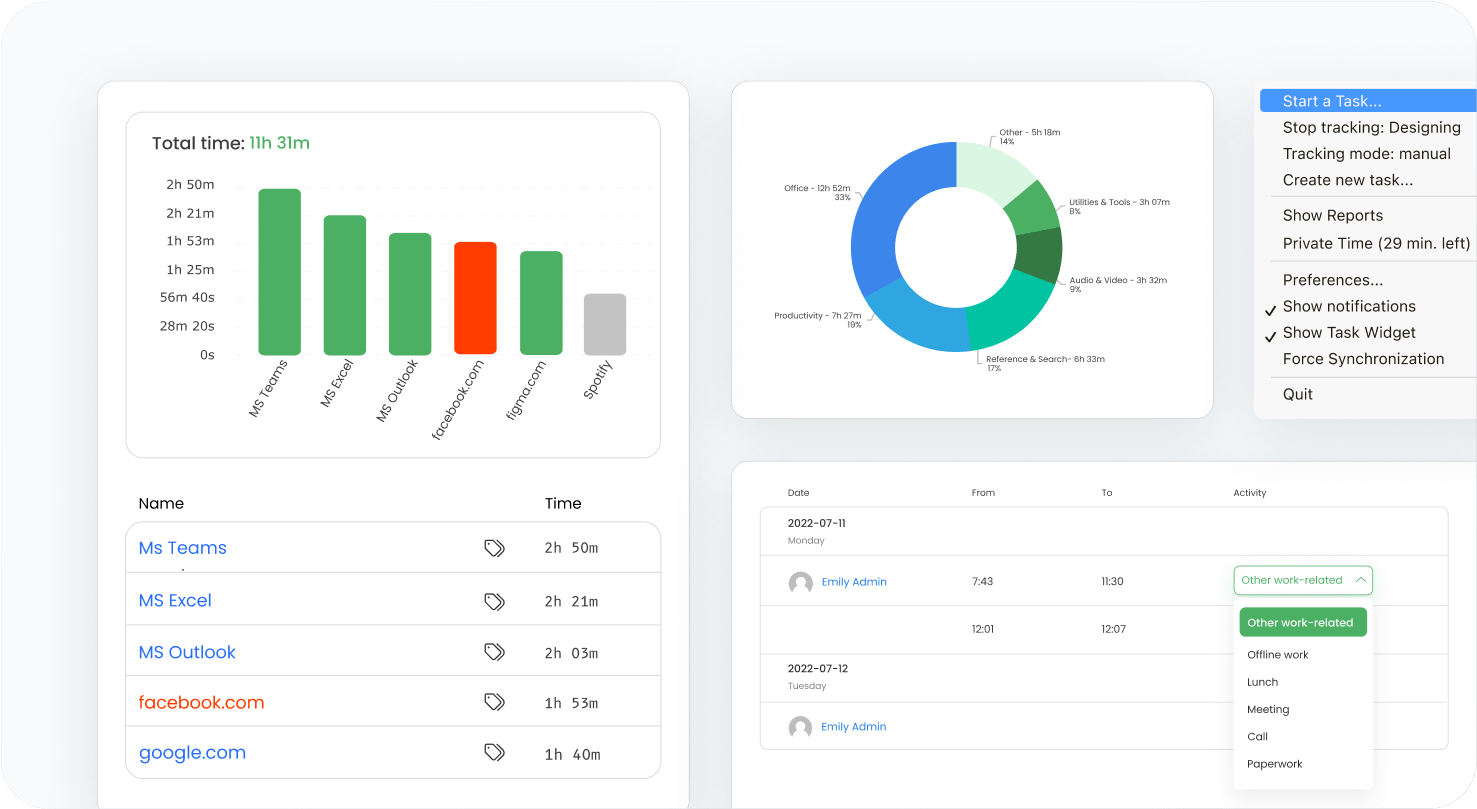
At the foundational level, these systems track when an employee logs in, how long they remain active, and when they log out. Advanced platforms measure active keystrokes and mouse clicks—though not necessarily recording the specific text typed—to distinguish between active engagement and an idle machine. Time-tracking modules often integrate with project management software to bill client hours accurately or allocate internal labor costs.
Application and Website Monitoring
Visibility into digital tools is essential for modern management. Monitoring software logs every application opened and website visited, often categorizing them into "productive," "neutral," or "unproductive" based on predefined company guidelines. Employers can configure alerts for prohibited activities, such as accessing personal social media networks during core hours or visiting unauthorized domains.
Visual Surveillance and Screen Recording
More intrusive features include real-time viewing and automated screen capture. Systems can be configured to take screenshots at random intervals or trigger captures based on specific events, such as copying a file or opening a restricted application. In some configurations, continuous video recording of the user's screen or webcam is utilized, though this level of tracking is typically restricted to high-security environments or call centers.
Data Loss Prevention (DLP) and File Tracking
DLP features focus on protecting corporate assets rather than individual behavior. These tools monitor file transfers, print jobs, USB drive usage, and email attachments. If an employee attempts to send sensitive customer data to a personal email address or upload proprietary code to an unapproved cloud storage service, the system can block the action instantly and notify security teams.

Regulatory Landscape and Legal Considerations
The deployment of employee monitoring systems is heavily influenced by regional laws, labor unions, and data protection regulations. Operating an oversight program without understanding these boundaries exposes organizations to severe legal liabilities.
In the United States, federal law generally grants employers wide latitude to monitor company-owned devices and networks. The Electronic Communications Privacy Act (ECPA) of 1986 provides exceptions for business-use monitoring and consent. However, state-level regulations are tightening. For instance, states like Connecticut and New York require explicit, written notice to employees before any electronic monitoring begins.
Conversely, the regulatory environment in the European Union and the United Kingdom is governed by stringent frameworks such as the General Data Protection Regulation (GDPR). Under GDPR, monitoring must be transparent, necessary, and proportionate. Employers must establish a lawful basis for tracking, conduct Data Protection Impact Assessments (DPIAs), and avoid blanket, continuous surveillance unless specific, justified risks demand it.
| Jurisdiction | Primary Regulation / Standard | Notice Requirement | Key Compliance Focus |
|---|---|---|---|
| United States | ECPA & State Laws (e.g., NY, CT) | Varies by state (mandatory in some) | Company-owned vs. BYOD, wiretapping laws |
| European Union | GDPR & National Labor Laws | Mandatory, prior to deployment | Proportionality, consent, data minimization |
| United Kingdom | UK GDPR & Data Protection Act 2018 | Mandatory and transparent | Legitimate interest, employee privacy rights |
| Canada | PIPEDA & Provincial Privacy Acts | Implied or explicit depending on province | Reasonableness of data collection |
Evaluating Benefits Versus Operational Risks
Implementing tracking tools creates a trade-off between administrative control and workforce morale. Organizations must weigh the tangible advantages against the hidden costs of heightened surveillance.
The Benefits of Comprehensive Oversight
When implemented transparently, monitoring tools offer clear advantages:
- Objective Performance Metrics: Managers rely on data rather than proximity bias when evaluating output, supporting fairer reviews and promotions.
- Enhanced Cybersecurity: Early detection of irregular data movement stops external breaches and internal data theft before widespread damage occurs.
- Streamlined Workflows: Identifying administrative friction points helps organizations optimize internal processes and reallocate resources effectively.
The Hidden Costs and Operational Risks
Over-surveillance carries significant drawbacks that can undermine the intended productivity gains:
- Erosion of Trust: Excessive monitoring communicates a lack of trust, which can damage workplace culture and lower overall engagement.
- Increased Turnover: Employees subjected to aggressive tracking often seek alternative employment, leading to higher recruitment costs and loss of institutional knowledge.
- Anxiety and Burnout: The pressure to maintain constant "active" metrics can force employees to skip necessary breaks, degrading mental health and long-term output.
Best Practices for Transparent Implementation
Deploying an employee monitoring system successfully requires a strategic approach that balances corporate security with respect for the workforce. Organizations should follow structured guidelines to minimize pushback and ensure ethical deployment.
1. Define Clear Objectives and Scope
Before purchasing software, leadership must define the exact business problem they intend to solve. If the goal is data security, the implementation should focus on DLP tools rather than keystroke logging. Narrowing the scope prevents unnecessary surveillance and builds internal credibility.
2. Prioritize Transparency and Communication
Secrecy breeds resentment. Organizations should publish clear, accessible policies outlining what is being tracked, why it is being tracked, and how the collected data will be used. Employees should sign acknowledgment forms confirming they understand the monitoring parameters.
3. Practice Data Minimization
Collect only the data necessary to achieve the stated business objectives. Continuous webcam recording or constant screen video is rarely justifiable for standard desk jobs. Limiting data collection reduces legal exposure and protects employee privacy.
4. Secure the Collected Data
Employee monitoring generates sensitive personal data, including keystroke logs, location histories, and performance metrics. Organizations must apply strict access controls, encryption, and retention schedules to this data. Stored tracking information should be deleted once it is no longer required for operational or legal purposes.
Frequently Asked Questions
Are employee monitoring systems legal?
Yes, employee monitoring systems are generally legal, provided employers comply with local labor laws, privacy regulations, and notification requirements. In many jurisdictions, employers must inform workers in writing if their digital activity, emails, or keystrokes are being recorded, particularly on company-owned hardware.
Can employers monitor personal devices used for work (BYOD)?
Monitoring personal devices (Bring Your Own Device) is legally and technically complex. While employers have a right to secure corporate data accessed via a personal phone or laptop, tracking personal activities, photos, or browsing history violates privacy laws in many regions. Organizations usually require containerized security solutions that isolate corporate data from personal data.
Do monitoring tools track keystrokes and passwords?
Many monitoring systems possess the technical capability to log keystrokes (keylogging). However, reputable software providers incorporate privacy filters to obscure password fields, banking information, and private communications to prevent the collection of sensitive personal credentials.
How does monitoring impact remote employee productivity?
The impact varies based on implementation. When used to track micromanaged metrics, productivity often drops due to stress and "gaming the system" behaviors. Conversely, when monitoring is used to identify workload imbalances or secure remote infrastructure without micromanagement, it can support sustainable remote operations.
What is the difference between time tracking and employee surveillance?
Time tracking focuses on measuring how long a specific task or project takes, typically initiated or managed by the employee for billing and scheduling purposes. Employee surveillance involves continuous, often automated observation of digital behavior, application usage, and screen activity, usually managed covertly or passively by IT and security teams.
Next Steps for Organizations
Organizations considering an employee monitoring system should begin by conducting a comprehensive audit of their security needs, remote work infrastructure, and compliance obligations. Consult with legal counsel to draft clear monitoring policies tailored to regional regulations. Engage in open dialogues with department heads and employee representatives to ensure the chosen tool addresses operational friction points without degrading organizational culture. Test potential platforms on a small scale before rolling out enterprise-wide deployment.
Image Gallery
Select an image to open it in a new tab.
Zara El-Hashem
Sociocultural Dynamics and Academics Writer
