General Colin Powell and Operation Desert Storm: Strategy, Leadership, and Legacy

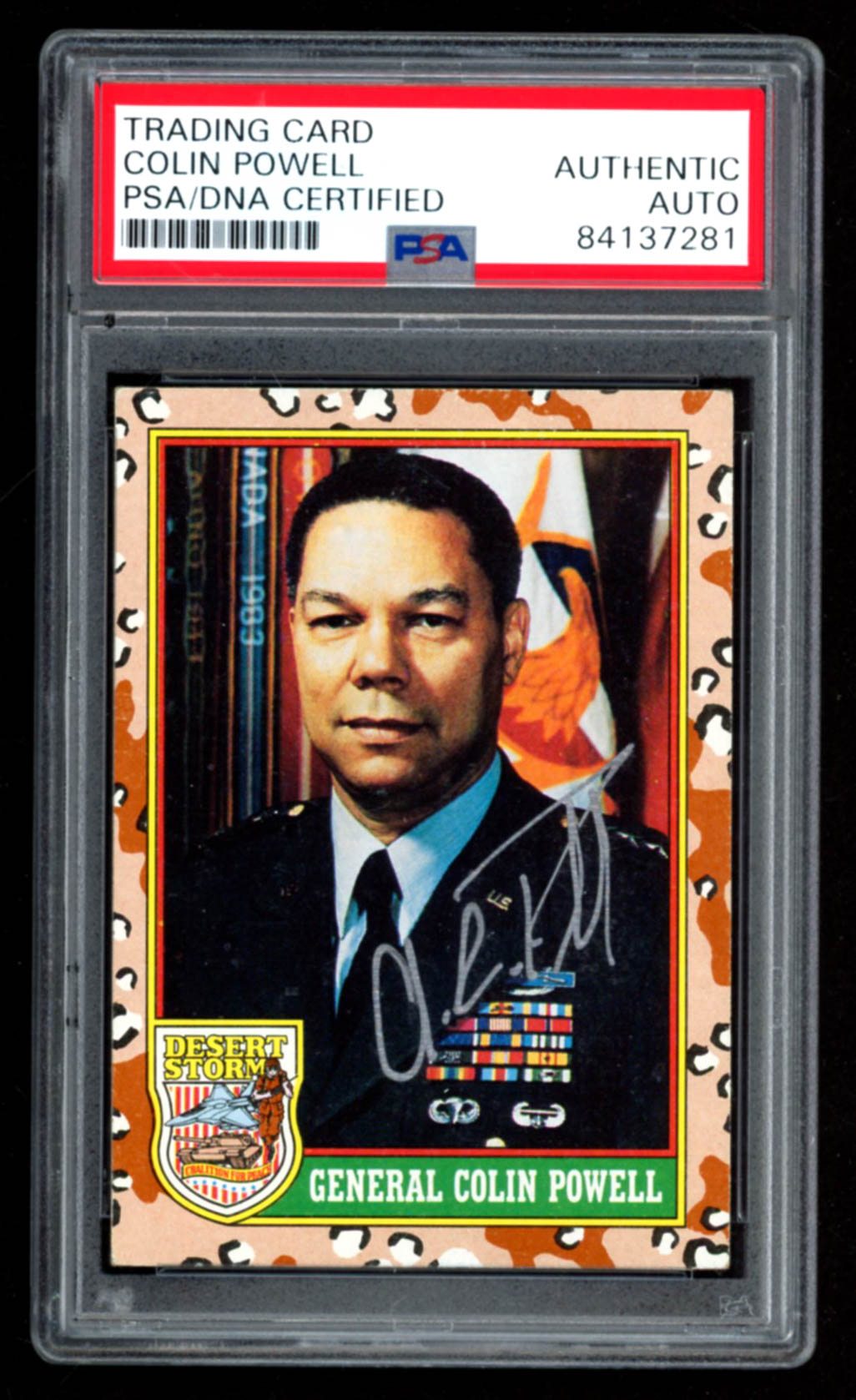
As Chairman of the Joint Chiefs of Staff during Operation Desert Storm in 1991, General Colin Powell served as the principal military advisor to President George H.W. Bush and Secretary of Defense Dick Cheney. Powell orchestrated the grand strategy and military logistics that led to the swift liberation of Kuwait, popularizing the "Powell Doctrine"—the application of overwhelming, decisive force paired with clearly defined exit strategies to ensure rapid victory with minimal coalition casualties.
Historical Context: Iraq’s Invasion of Kuwait and the Road to War
On August 2, 1990, Iraqi forces under President Saddam Hussein invaded and occupied the neighboring nation of Kuwait. Annexing Kuwait gave Iraq control over a significant portion of the world’s proven oil reserves and positioned its army along the border of Saudi Arabia, a critical partner of the United States. President George H.W. Bush famously declared that Iraq’s aggression "will not stand," setting in motion a diplomatic and military response that would redefine post-Cold War international relations.
- UN Security Council Authorizes Force (Res. 678)
- Operation Desert Shield (Aug 1990) (Defensive Coalition Buildup in Saudi Arabia)
- Operation Desert Storm (Jan 1991) (Phase 1: 39-Day Air Campaign)
- 100-Hour Ground War (Feb 1991) ("Left Hook" Flanking Maneuver & Liberation)
- Ceasefire (Kuwait Liberated; Saddam Retains Power)
The United Nations Security Council quickly issued a series of resolutions condemning the invasion, culminating in Resolution 678, which set a deadline of January 15, 1991, for Iraq to withdraw from Kuwait. If Iraq failed to comply, member states were authorized to use "all necessary means" to restore international peace and security.
Inside the Pentagon, General Colin Powell occupied the nation’s top military position. Appointed Chairman of the Joint Chiefs of Staff in October 1989, Powell was the first African American officer to hold the post. He faced an immediate strategic challenge: transforming a military originally optimized for Cold War containment in Western Europe into an expeditionary force capable of mounting massive, multi-domain operations in the Middle East.
The Powell Doctrine: Principles of Decisive Force
The military strategy executed in the Persian Gulf was heavily influenced by the lessons of the Vietnam War. Having served two tours in Vietnam as a young officer, Powell witnessed firsthand the operational dangers of gradual escalation, ambiguous political goals, and declining domestic support.
Working from the strategic framework laid out by former Secretary of Defense Caspar Weinberger in 1984, Powell codified what historians and military analysts term the Powell Doctrine. This strategic framework asserts that military force should be used only when explicit criteria are satisfied:
- Vital National Interest: Is a core national security interest threatened?
- Clear Objectives: Are the political and military goals clear and attainable?
- Overwhelming Force: Is the United States prepared to commit decisive, irresistible military power rather than incremental force?
- Public and Congressional Support: Is there broad domestic political backing for the mission?
- International Support: Has a strong international coalition been assembled?
- Last Resort: Have all non-military options (diplomacy, economic sanctions) been fully exhausted?
- Defined Exit Strategy: Is there a clear protocol for ending the conflict and withdrawing forces?
THE POWELL DOCTRINE
- Vital National Interest at Stake
- Clear, Attainable Political & Military Objectives
- Deployment of Overwhelming, Decisive Force
- Strong Domestic (Public & Congressional) Support
- Broad International Coalition Backing
- Exhaustion of Non-Military/Diplomatic Options
- Explicit, Well-Defined Exit Strategy
When President Bush sought options for confronting Iraq, Powell argued against half-measures. Rather than relying solely on naval blockades or limited surgical airstrikes, Powell advocated deploying a force so large that victory would be swift and unquestioned. This approach aimed to minimize American casualties and prevent the conflict from devolving into a prolonged war of attrition.

Command Structure: Powell, Cheney, and Schwarzkopf
The success of Operation Desert Storm relied on a restructured command hierarchy resulting from the Goldwater-Nichols Department of Defense Reorganization Act of 1986. This legislation designated the Chairman of the Joint Chiefs of Staff as the principal military advisor to the President, streamlining the chain of command from the Commander-in-Chief through the Secretary of Defense directly to the Combatant Commanders.
- President George H.W. Bush (Commander-in-Chief)
- Secretary of Defense Dick Cheney
- Chairman of Joint Chiefs Gen. Colin Powell
- CENTCOM Commander Gen. H. Norman Schwarzkopf
Powell used this framework to maintain clear boundaries between political strategy in Washington and operational execution in the field:
- General Colin Powell (Washington, D.C.): Managed the political-military interface. He aligned military planning with the National Security Council, communicated strategy to Congress and the press, and ensured the theater commander received required logistical resources.
- General H. Norman Schwarzkopf Jr. (Riyadh, Saudi Arabia): As Commander of U.S. Central Command (CENTCOM), Schwarzkopf designed and executed the operational maneuver plans for coalition land, air, and sea forces.
- Dick Cheney (Secretary of Defense): Maintained civilian oversight, ensuring that military objectives aligned with administration policy, while defending the Pentagon’s resource requests on Capitol Hill.
This structure established operational alignment. Powell shielded Schwarzkopf from political interference, allowing the field commander to focus on combat operations while ensuring Schwarzkopf’s strategic concepts met the President’s political goals.
Operational Phases: From Mobilization to Liberation
The U.S.-led response unfolded in two distinct operational phases: Operation Desert Shield (the defensive posture and force buildup) and Operation Desert Storm (the offensive combat operation).
Timeline of Key Events (1990–1991)
| Date | Event / Operational Milestone |
|---|---|
| August 2, 1990 | Iraqi forces invade and occupy Kuwait. |
| August 7, 1990 | Operation Desert Shield begins; U.S. troops deploy to Saudi Arabia. |
| Nov 8, 1990 | President Bush orders defensive force doubled to offensive posture. |
| Jan 15, 1991 | UN deadline for Iraqi withdrawal expires. |
| Jan 17, 1991 | Operation Desert Storm launched with a massive coalition air campaign. |
| Feb 24, 1991 | Coalition ground invasion begins ("100-Hour War"). |
| Feb 27, 1991 | Kuwait City liberated; President Bush orders suspension of combat operations. |
| Feb 28, 1991 | Formal ceasefire takes effect at 0800 hours GMT. |
Operation Desert Shield: The Logistics Miracle
Beginning in August 1990, the military mounted one of the largest logistical movements in history. Under Powell’s direction, the U.S. deployed over 500,000 military personnel, along with thousands of armored vehicles, aircraft, and millions of tons of supplies, to the Saudi Arabian desert. Powell insisted on doubling the initial deployment force in November 1990, shifting the strategic posture from a defensive screen to a powerful offensive capability.
Operation Desert Storm: The Air Campaign
On January 17, 1991, the coalition initiated an extensive air campaign. Guided by stealth technology, precision-guided munitions, and advanced electronic warfare, coalition air forces targeted Iraqi command-and-control centers, air defenses, communication nodes, and supply lines.
At a famous Pentagon press briefing during the air war, Powell summarized the coalition strategy regarding the Iraqi Army occupying Kuwait: "Our strategy to deal with this army is very simple. First we're going to cut it off, and then we're going to kill it."
The air campaign lasted 39 days, severely degrading Iraq’s operational capabilities, destroying critical infrastructure, and reducing the morale of frontline troops before ground units advanced.
The Ground War and the "Left Hook"
On February 24, 1991, coalition land forces launched the ground invasion. While amphibious units and frontline coalition divisions threatened Iraq's defenses along the Kuwaiti coast, General Schwarzkopf executed a sweeping armored maneuver known as the "Left Hook."
- IRAQ
- Coalition Flanking Force ("Left Hook" Armored Strike)
- Iraqi Defense Forces (Entrenched in Kuwait)
- KUWAIT CITY LIBERATED (Iraqi Retreat via Highway 80)
Coalition armored corps drove deep into the Iraqi desert west of Kuwait, bypassing main defensive line positions, before wheeling east to encircle the Iraqi Republican Guard. The ground combat phase lasted just 100 hours. Iraqi forces retreated in disarray, and Kuwait City was liberated on February 27, 1991.
Strategic Analysis: Comparing Gulf War Operational Models
The operational execution of Desert Storm established a strategic template for post-Cold War military operations. Below is a comparison of the doctrinal approaches considered and executed under Colin Powell’s leadership.
| Strategic Dimension | Gradual Escalation (Vietnam Model) | Sanctions & Encirclement Option | Overwhelming Force (Powell Doctrine) |
|---|---|---|---|
| Primary Goal | Compel enemy negotiation via incremental pressure | Starve enemy resources through economic blockades | Swift destruction of enemy combat capability |
| Force Deployment | Slow, piecemeal commitment of troops | Naval and air patrols; minimal ground footprint | Massive force buildup prior to initiating combat |
| Air Power Usage | Restricted target sets, micromanaged rules of engagement | Defensive interdiction of trade routes | Integrated, precision air campaign targeting command infrastructure |
| Duration Risk | High risk of prolonged, indecisive commitment | Indefinite timeframe; vulnerable to coalition erosion | Short operational window; high initial violence |
| Political Outcome | Erosion of domestic public and congressional support | Uncertain political pressure on dictator | Clear tactical victory; high domestic and international consensus |
War Termination and the Contested Ceasefire Decision
By February 27, 1991, coalition forces had shattered Iraq's military capacity in the theater. As Iraqi troops fled north toward Basra along what became known as the "Highway of Death," President Bush, General Powell, and civilian leaders evaluated whether to continue combat operations.
Powell advised President Bush that the primary military objectives authorized by UN Security Council Resolution 678—liberating Kuwait and restoring its legitimate government—had been achieved. Powell voiced concern that continuing to destroy retreating troops could turn a military victory into an unprovoked slaughter, damaging the moral authority of the U.S. and its coalition partners.
- UN Mandate (Res. 678) (Liberate Kuwait; Restore Order)
- Military Objectives Achieved (100 Hours of Ground Combat)
- Options Evaluated:
- Option A: Ceasefire (Adopted Strategy)
- Retains Coalition Unity
- Prevents Urban Warfare
- Spares American Lives
- Option B: Advance to Baghdad (Rejected Option)
- Exceeds UN Mandate
- Destabilizes Regional Balance
- Risk of Protracted Occupation
- Option A: Ceasefire (Adopted Strategy)
President Bush ordered a ceasefire effective at 0800 hours GMT on February 28, 1991, ending hostilities after 100 hours of ground combat.
Historical Debates Surrounding the Ceasefire
The decision to end the war without marching to Baghdad or removing Saddam Hussein from power remains a subject of analysis among strategic historians:
- The Defense of the Decision: Historians note that invading Iraq to overthrow Saddam Hussein would have breached the UN mandate, dissolved the Arab-led coalition, and drawn U.S. forces into a complex urban occupation without a clear post-war political structure—outcomes that Powell explicitly warned against.
- The Critique: Critics argue that leaving Saddam Hussein in power permitted his regime to brutally suppress domestic uprisings by Shiite and Kurdish populations immediately following the war. This required the U.S. and its allies to enforce extended no-fly zones (Operations Provide Comfort and Southern Watch) for over a decade, ultimately leading to the full-scale U.S. invasion of Iraq in 2003.
Historical Impact and Legacy
General Colin Powell’s leadership during Operation Desert Storm represented a high point for American public confidence in the military after the Vietnam War. According to historical records published by the U.S. Army Center of Military History, the strategic execution of Desert Storm demonstrated the effectiveness of joint operational planning mandated by the Goldwater-Nichols Act.
- Post-Vietnam Doctrine Reform
- Implementation of Goldwater-Nichols Act (1986)
- Execution of Desert Storm Strategy (1990–1991)
- High Public Trust & Modern Joint Operational Standard
Powell’s approach established key modern military standards:
- Joint Warfare Integration: Unifying land, sea, air, and space forces under a single operational command framework.
- Dominant Information & Precision Battlespace: Demonstrating the military value of real-time satellite communications, stealth technology, and GPS-guided weapons systems.
- Public Affairs Strategy: Utilizing structured, direct military briefings to inform the global public while preserving operational security.
Powell retired from active military service in 1993, later serving as the 65th U.S. Secretary of State from 2001 to 2005 under President George W. Bush. His operational framework during the 1990–1991 Gulf War remains a foundational case study taught at professional military education institutions worldwide, including the U.S. Army War College and the National Defense University.
Frequently Asked Questions
What was Colin Powell's exact role during Operation Desert Storm?
Colin Powell was the Chairman of the Joint Chiefs of Staff, the highest-ranking military officer in the U.S. Armed Forces. He served as the primary military advisor to President George H.W. Bush and Secretary of Defense Dick Cheney, translating political directives into military strategy and coordinating military logistics from Washington, D.C.
What is the difference between the Weinberger Doctrine and the Powell Doctrine?
The Weinberger Doctrine was introduced in 1984 by Secretary of Defense Caspar Weinberger as a set of six principles governing the use of U.S. military force post-Vietnam. Colin Powell expanded these concepts into the Powell Doctrine, placing additional emphasis on applying decisive, overwhelming force, securing international coalition support, and ensuring a clear exit strategy before committing troops to combat.
Why didn't General Powell and President Bush remove Saddam Hussein from power in 1991?
The coalition stopped short of marching to Baghdad because the United Nations mandate (Resolution 678) explicitly authorized force only to liberate Kuwait and restore regional stability. Advancing into Iraq to overthrow the regime would have shattered the international coalition, exceeded legal mandates, and risked embroiling U.S. troops in a prolonged occupation.
How long did Operation Desert Storm last?
The combat phase of Operation Desert Storm lasted 43 days. It began with a 39-day air campaign on January 17, 1991, followed by a 100-hour ground offensive that began on February 24 and ended with a ceasefire on February 28, 1991.
How did the Goldwater-Nichols Act affect Powell's command during the Gulf War?
The Goldwater-Nichols Act of 1986 elevated the Chairman of the Joint Chiefs of Staff to the principal military advisor to the President, streamlining the chain of command. This structure allowed Powell to manage strategic political decisions in Washington while giving operational command to General H. Norman Schwarzkopf in the field.
Strategic Takeaways for Historical Research
For researchers, students, and analysts evaluating the military leadership of the 1990–1991 Gulf War, the following primary sources provide verified documentation:
- Official Military History Records: Review official operational summaries provided by the Joint Chiefs of Staff Official History Office regarding command structure evolution.
- Presidential Archives: Consult primary documents hosted by the George H.W. Bush Presidential Library and Museum concerning National Security Council decision-making during Operation Desert Shield and Desert Storm.
- Autobiographical Accounts: Cross-reference strategic decisions with General Powell’s memoir, My American Journey, which outlines the internal Pentagon deliberations preceding the ceasefire.
Image Gallery
Select an image to open it in a new tab.




Vivian Cho
Executive IT and Emerging Technologies Reporter
