
Reaching a $100,000 net worth by age 24 is a significant financial milestone that places an individual well ahead of the national average for young adults. Achieving this goal requires a combination of early financial literacy, disciplined savings, strategic career progression, and aggressive investing, as compound interest requires time to generate substantial momentum.
Disclaimer: This article is provided for educational and informational purposes only and does not constitute personalized financial, tax, or legal advice.
Understanding Net Worth and the Age 24 Baseline
Net worth is the fundamental metric of individual financial health. It is calculated by subtracting total liabilities (what you owe) from total assets (what you own):
$$\text{Net Worth} = \text{Total Assets} - \text{Total Liabilities}$$
What Counts as Assets and Liabilities?
- Assets include: High-yield savings accounts (HYSA), checking account balances, retirement portfolios (401(k), Roth IRA), taxable brokerage accounts, home equity, equity in a business, and cash value of liquid investments.
- Liabilities include: Student loans, credit card debt, auto loans, personal loans, and mortgages.
Consumer assets that depreciate rapidly—such as everyday clothing, consumer electronics, or heavily used vehicles—are typically excluded from precise personal net worth calculations to maintain an accurate picture of financial strength.
- TOTAL ASSETS (Cash, HYSA, 401k, Roth IRA, Brokerage, Home Equity)
- MINUS
- TOTAL LIABILITIES (Student Debt, Car Loans, Credit Cards, Loans)
- EQUALS
- NET WORTH
Where $100k Places You Relative to Peers
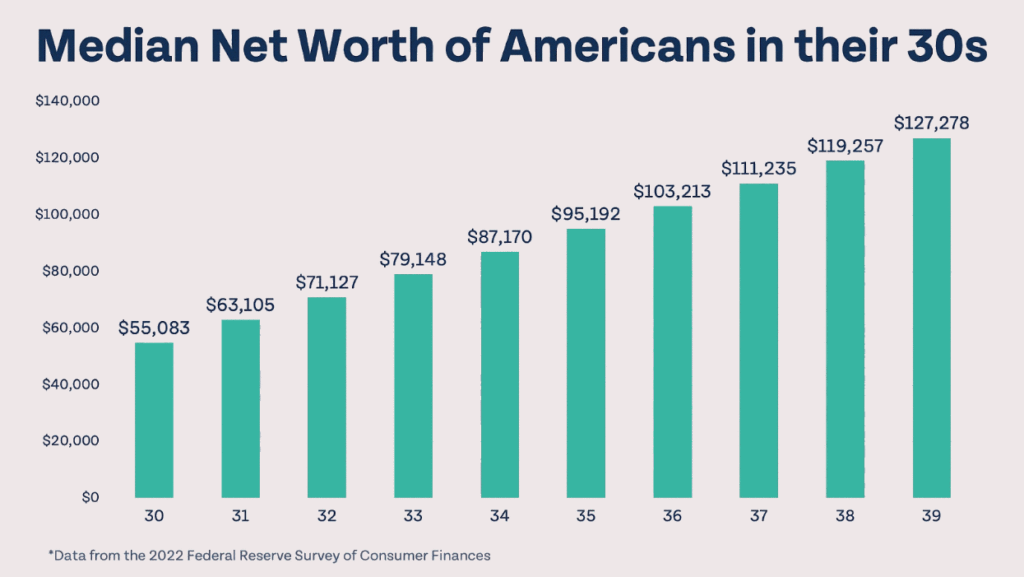
According to historical data from the Federal Reserve Survey of Consumer Finances, the median net worth for households under age 35 hovers around $39,000, while the mean (average) net worth is significantly higher due to top-tier wealth concentration.
However, looking specifically at the 20 to 24 age bracket, the median net worth is far lower—often under $10,000. Many young adults at age 24 are recent college graduates entering the workforce with entry-level salaries and active student loan obligations. Accumulating a net worth of $100,000 by 24 places an individual in approximately the top 10% of their immediate age cohort.
The Financial Math Behind $100,000 by Age 24
Building a six-figure net worth by 24 is primarily a mathematical function of three variables: income volume, savings rate, and investment timeline. Because young adults have a short runway after high school or college, relying solely on investment returns is rarely enough; aggressive capital preservation and contributions do the heavy lifting.
Scenario Analysis: Savings Timelines
Assuming a baseline annualized real market return of 7% (historically consistent with long-term broad market indexes like the S&P 500 after inflation adjustment), the required monthly contribution varies drastically depending on the starting age.
Starting at Age 18 (6-Year Horizon)
- Time Horizon: 72 months
- Target: $100,000
- Required Monthly Contribution: ~$1,120 per month
- Total Principal Invested: ~$80,640
- Compound Interest Earned: ~$19,360
Starting at Age 21 (3-Year Horizon)
- Time Horizon: 36 months
- Target: $100,000
- Required Monthly Contribution: ~$2,500 per month
- Total Principal Invested: ~$90,000
- Compound Interest Earned: ~$10,000
Starting at Age 22 (2-Year Horizon)
- Time Horizon: 24 months
- Target: $100,000
- Required Monthly Contribution: ~$3,900 per month
- Total Principal Invested: ~$93,600
- Compound Interest Earned: ~$6,400
These scenarios highlight a crucial reality: for someone graduating college at age 21 or 22, achieving $100,000 by 24 requires saving between $2,500 and $3,900 per month. This demands either a high-earning early career, exceptionally low living expenses, or a combination of both.
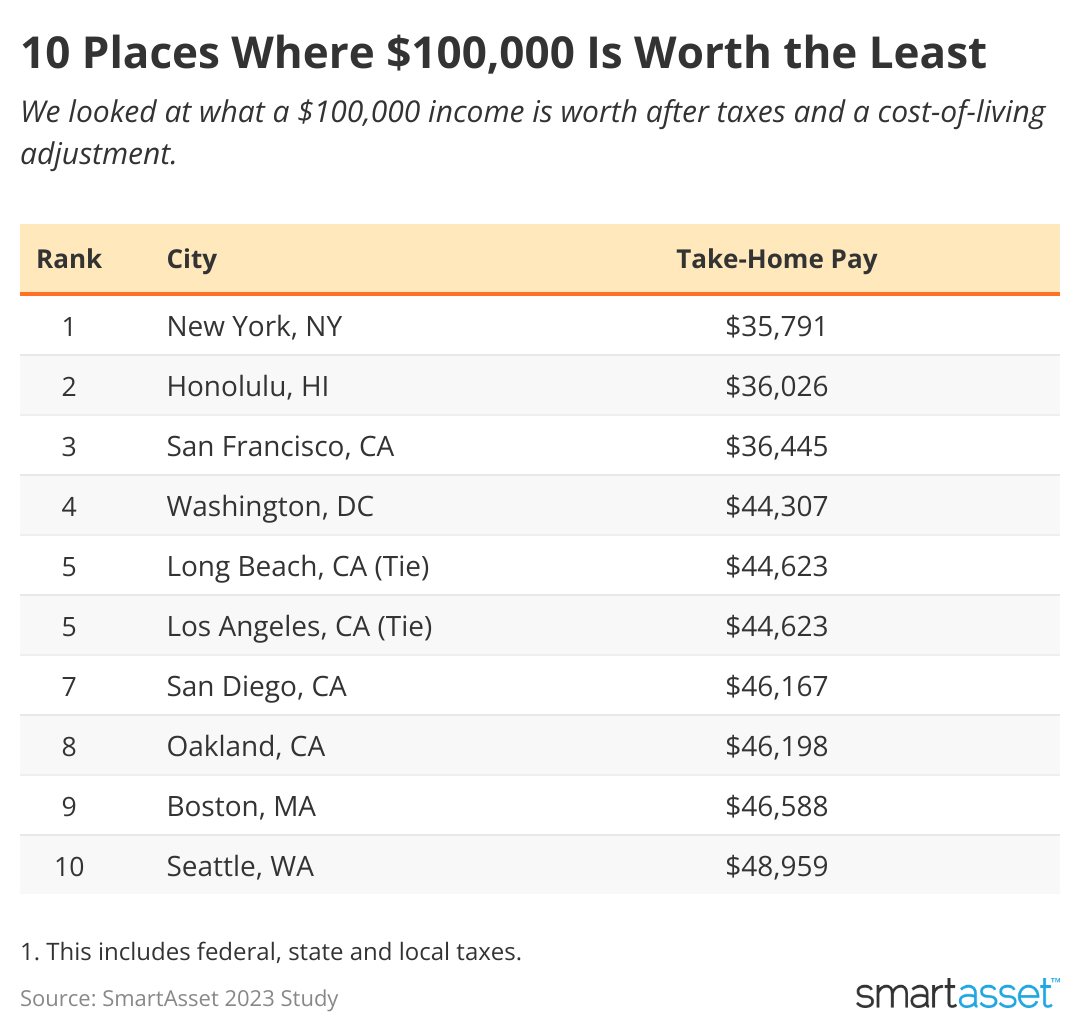
Financial Trajectory Comparison Matrix
The table below outlines common structural pathways for young adults attempting to reach a $100,000 net worth by age 24, detailing income requirements, savings intensity, and primary financial drivers.
| Strategy Pathway | Typical Starting Age | Estimated Annual Income Range | Required Monthly Savings Rate | Key Leverage Points | Primary Financial Risk |
|---|---|---|---|---|---|
| High-Income Professional (Tech, Finance, Consulting) | Age 21–22 | $85,000 – $140,000+ | 40% – 60% | Employer 401(k) match, performance bonuses, high baseline cash flow | High initial cost of living in metro hubs |
| Trades & Skilled Labor | Age 18–19 | $55,000 – $85,000 | 35% – 50% | Zero student debt, 3–4 extra earning years vs. college grads | Physical toll, variable overtime availability |
| High-Frugality / Family Living | Age 21–22 | $55,000 – $75,000 | 50% – 70%+ | Subsidized housing/utilities, minimal overhead cost | Dependency on external living arrangements |
| Early Business / Sales Commission | Age 18–21 | $60,000 – $120,000+ (Variable) | 30% – 50% | Uncapped commission structure, tax deductions for business assets | Income volatility, irregular cash flow management |
Four Core Pillars to Accumulate $100k Early
1. High-Income Skill Acquisition and Earnings Velocity
The fastest accelerator of net worth in early adulthood is primary income velocity. Saving 50% of a $100,000 salary yields $50,000 per year, whereas saving 50% of a $40,000 salary yields only $20,000 per year.
Fields that typically provide higher starting compensation for young adults include:
- Software Engineering and Data Science: Entry-level base salaries often range from $85,000 to $130,000 depending on location and company size.
- Investment Banking and Corporate Finance: First-year analyst positions frequently offer substantial performance-based year-end bonuses.
- Specialized Trades: Electricians, plumbers, and industrial technicians who complete apprenticeships early can begin earning full journeys-level wages by age 20 or 21 without debt.
- Enterprise Tech Sales: Business Development Representatives (BDRs) and Account Executives (AEs) can leverage commission structures to achieve six-figure earnings early in their careers.
2. Debt Elimination and Avoidance
High-interest debt is a primary obstacle to building net worth. Carrying balances on credit cards with interest rates above 20% effectively cancels out typical market investment returns.
To protect asset building:
- Target High-Interest Debt First: Pay off any debt with an interest rate above 7% immediately using either the debt avalanche method (prioritizing highest interest rates) or debt snowball method (prioritizing smallest balances).
- Manage Student Loans Strategically: Federal student loans with low fixed rates (e.g., under 4–5%) can often be paid on standard schedules while excess cash flow is directed toward broad-market investing.
- Avoid Excessive Auto Loans: Purchasing a new vehicle with a high monthly payment and rapid depreciation drains monthly cash flow. Opting for reliable, used transportation keeps money working in assets rather than depreciating liabilities.
3. Hyper-Efficient Expense Optimization
During the early accumulation phase, controlling overhead provides direct leverage over net worth accumulation. The largest consumer budget items are housing, transportation, and food.
- Housing Hacks: Living with parents during the first 1 to 3 years of post-college employment eliminates the largest single expense for most young adults. If living independently, sharing an apartment with roommates or house-hacking (renting out additional bedrooms in a multi-unit property) drastically reduces housing costs.
- Fixed Expense Auditing: Keeping total fixed commitments (rent, utilities, insurance, basic groceries) below 50% of net take-home pay creates a large margin for saving and investing.
4. Early Strategic Asset Allocation
To compound wealth effectively, capital must be deployed into appreciating, yield-generating assets rather than sitting idle in zero-interest accounts.
Recommended Account Hierarchy:
- Emergency Reserve: Maintain 3 to 6 months of essential living expenses in a High-Yield Savings Account (HYSA) earning competitive interest rates to handle unexpected expenses without incurring debt.
- Employer 401(k) / 403(b) Match: Contribute enough to capture 100% of any employer match. This provides an immediate, risk-free return on investment.
- Roth IRA: Tax-advantaged retirement accounts like a Roth IRA allow contributions made with after-tax dollars to grow tax-free, with tax-free withdrawals in retirement. The annual contribution limit is set by the Internal Revenue Service (IRS).
- Taxable Brokerage Accounts: Once tax-advantaged accounts are maximized or optimized, surplus funds should be directed toward standard taxable brokerage accounts. These offer complete liquidity without early-withdrawal penalties, providing flexibility for pre-retirement life goals.
- MONTHLY TAKE-HOME INCOME
- Emergency Reserve (HYSA) (3 to 6 Months Expenses)
- Employer 401(k) Match Cap (Capture 100% Free Match)
- Roth IRA (Max Annual IRS Limit)
- Taxable Brokerage / Assets (Uncapped Liquid Investing)
Core Investment Vehicles
For most 24-year-olds, index investing offers low-cost, broad diversification:
- Total US Stock Market Index Funds / ETFs: Provide broad exposure to thousands of small-, mid-, and large-cap US equities.
- S&P 500 Index Funds: Track the top 500 publicly traded American companies, serving as a reliable benchmark for growth.
- Total International Stock Index Funds: Provide international exposure to balance domestic market cycles.
Guidance on investing fundamentals and low-cost index strategies is maintained by the U.S. Securities and Exchange Commission Investor Education Portal.
Common Pitfalls to Avoid
Achieving a $100k net worth by 24 requires avoiding common financial traps that can derail progress:
Lifestyle Inflation (Creep)
As income increases with early promotions or career changes, it is easy to raise standard of living proportionally—upgrading apartments, leasing luxury cars, and spending more on dining out. Keeping fixed expenses stable while directing pay raises straight into investments protects your savings rate.
Speculative Asset Over-Concentration
Putting a large portion of a net worth into speculative investments—such as single penny stocks, unhedged options contracts, or high-risk crypto tokens—can lead to sudden portfolio drops. High-risk assets can be part of a broader strategy, but a solid financial foundation is built on diversified, low-cost index investments.
Neglecting Health and Disability Risk
Uninsured medical events can quickly erode years of hard work. Maintaining adequate health coverage, auto liability insurance, and personal emergency funds helps protect accumulated assets from unmanaged risks.
The Psychology of the First $100,000
Financial author and investor Charlie Munger famously emphasized that the first $100,000 is the hardest financial milestone to reach because capital accumulation initially relies almost entirely on personal savings rates rather than compound growth.
Consider a 7% average annual return on different portfolio benchmarks:
- 7% return on $10,000: Generates $700 in passive annual growth.
- 7% return on $100,000: Generates $7,000 in passive annual growth.
- 7% return on $500,000: Generates $35,000 in passive annual growth.
At $100,000, compound interest starts generating meaningful financial returns. At this baseline, your money works alongside you, taking on a larger share of the effort needed to reach your next financial goals.
Frequently Asked Questions
Is $100k net worth realistic at age 24 without family financial help?
Yes, but it typically requires specific conditions: entering a high-paying career field right after graduation (such as software engineering, corporate sales, or finance), working in the skilled trades straight out of high school, or maintaining an exceptionally low expense structure (such as living with parents during early career years).
Does 401(k) balance count toward total net worth?
Yes. Total net worth includes all financial assets, including retirement accounts such as 401(k)s, 403(b)s, and Roth IRAs, minus any outstanding loans or debts. However, keep in mind that traditional retirement accounts carry future income tax liabilities and potential early withdrawal penalties if accessed before age 59½.
Should I prioritize paying off student loans or building up investments to reach $100k?
It depends on interest rates. High-interest debt (above 7%) should generally be cleared first, as paying it off provides a guaranteed return equal to the interest rate. Low-interest student loans (under 4–5%) can often be paid on schedule while putting extra cash flow into market investments with higher long-term average expected returns.
What should I do after reaching $100k net worth at 24?
Once you hit $100,000, focus on optimizing your portfolio for long-term tax efficiency, reassessing your risk tolerance, and setting clear goals for your next financial targets (such as $250k or $500k). Maintain your savings discipline, avoid lifestyle inflation, and consider working with a fee-only Certified Financial Planner (CFP) to align your wealth strategy with major life milestones.
Practical Action Plan
To reach a $100,000 net worth by 24, follow this clear step-by-step framework:
- Calculate Your Baseline Net Worth: List all cash accounts, investments, and physical assets, then subtract total debt to determine your starting point.
- Eliminate Consumer Debt: Create an aggressive repayment strategy for any credit cards, high-interest auto loans, or high-yield personal loans.
- Build an Emergency Reserve: Store 3 to 6 months of basic living costs in a high-yield savings account to protect against unexpected financial setbacks.
- Maximize Earner Potential: Seek early career promotions, acquire high-income skills, or build side cash flows to raise total gross income.
- Automate Monthly Contributions: Set up direct transfers to employer-matched 401(k) accounts, Roth IRAs, and index-based taxable brokerage accounts every payday to maintain a steady investing routine.
Image Gallery
Select an image to open it in a new tab.





Declan O'Connor
Higher Education and Campus Culture Reporter
