
Understanding the tax rate in China for businesses requires navigating a multi-layered fiscal system that includes corporate income tax, value-added tax, and various local surcharges. The standard corporate income tax rate sits at 25%, but preferential rates of 15% or 20% are widely available for qualified high-tech enterprises, small low-profit businesses, and entities operating in special economic zones.
Operating a business in the People's Republic of China involves a sophisticated framework of national and local tax obligations. For foreign investors, domestic entrepreneurs, and multinational corporations alike, understanding how these tax rates apply is vital for compliance, financial modeling, and operational success. China’s tax administration, managed primarily by the State Taxation Administration (STA), has undergone significant modernization. Digitalized tax filing systems and increased international information-sharing agreements mean that corporate tax compliance demands meticulous attention to detail. This guide breaks down the core business tax rates in China, the structural differences across entity types, and the practical steps organizations must take to maintain compliance.
Overview of the Chinese Business Tax System
The Chinese tax landscape for commercial entities is built upon several foundational pillars. Unlike many Western jurisdictions that rely heavily on a single consolidated tax filing for all revenue streams, China separates its tax obligations into distinct categories. The most impactful taxes for businesses include Corporate Income Tax (CIT), Value-Added Tax (VAT), Urban Maintenance and Construction Tax, and educational surcharges.
The State Taxation Administration sets the overarching statutory rates, but local tax bureaus handle collection and often hold discretionary power regarding certain local incentives. When establishing a Wholly Foreign-Owned Enterprise (WFOE), a Joint Venture (JV), or a representative office, corporate leaders must map out their anticipated revenue streams, supply chain locations, and industry classifications to project their effective tax burden accurately.
Furthermore, China distinguishes between resident and non-resident enterprises. A resident enterprise—defined as an enterprise established within China, or established under foreign laws but with its effective management organization located inside China—is subject to CIT on its worldwide income. Conversely, non-resident enterprises that have establishments or places of business within China are taxed on income derived from those establishments, as well as on China-source income derived outside those establishments.
Corporate Income Tax (CIT) Rates and Tiers
The baseline Corporate Income Tax rate in China is 25%. This rate applies to standard domestic enterprises and Foreign-Invested Enterprises (FIEs) that do not qualify for any special preferential policies. However, the Chinese government frequently deploys tax incentives to steer economic development toward specific sectors, geographical regions, and business scales.
Standard Corporate Income Tax (25%)
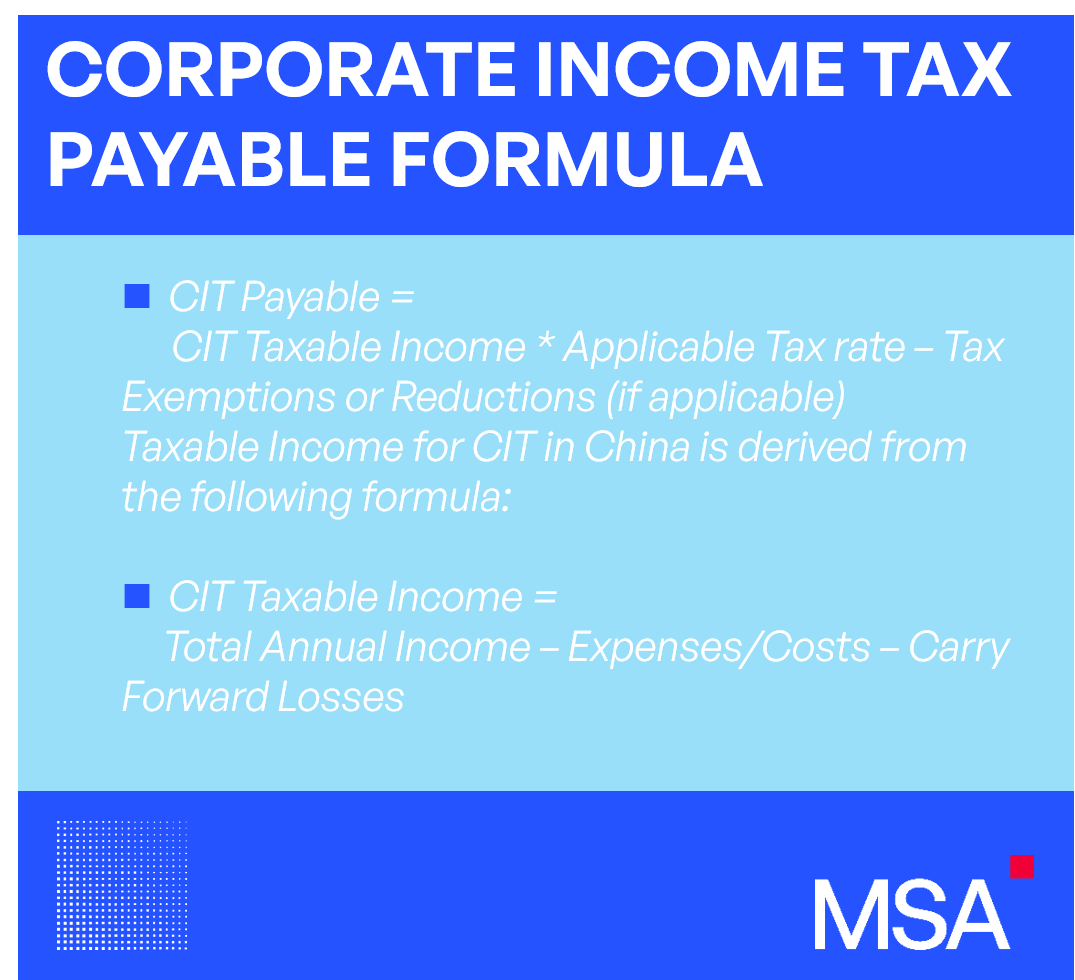
The 25% statutory rate applies to the net taxable income of a corporation. Taxable income is calculated by taking gross revenue and subtracting allowable deductions, costs, expenses, and losses. Compliance requires strict adherence to Chinese Accounting Standards (CAS), which may differ significantly from International Financial Reporting Standards (IFRS) or US GAAP, particularly regarding expense recognition and asset depreciation timelines.
Preferential CIT Rates for High-Tech Enterprises (15%)
To encourage innovation and technological self-reliance, the Chinese government offers a reduced CIT rate of 15% to High and New Technology Enterprises (HNTEs). To qualify for this status, a company must meet rigorous criteria, including:
- Holding core intellectual property rights over the technology that forms the primary feature of its products or services.
- Operating within designated supported technology domains (e.g., electronic information, biotechnology, new materials, advanced manufacturing).
- Maintaining a specified percentage of R&D staff relative to total employees.
- Meeting minimum thresholds for R&D expenditure as a percentage of total sales revenue over the preceding three years.
- Generating a minimum percentage of total revenue from high-tech products or services.
Preferential CIT Rates for Small Low-Profit Enterprises (20% or Lower Effective Rates)
China provides substantial relief for small and medium-sized enterprises (SMEs) categorized as "small low-profit enterprises." These businesses enjoy a nominal CIT rate of 20%. Moreover, temporary regulatory notices frequently introduce additional reductions, such as taxing only a fraction of their taxable income, which can lower the effective tax rate to as low as 5% or 10% for income falling beneath specified thresholds. Eligibility criteria typically restrict these concessions based on annual taxable income limits, total asset values, and employee headcounts.
Regional Incentives and Special Economic Zones
Geographical location plays a major role in determining tax liability. Enterprises operating in regions such as the Hainan Free Trade Port, the Western Regions of China, or designated pilot free trade zones often benefit from reduced CIT rates of 15% provided their primary business operations align with the encouraged catalog for that specific region.
Value-Added Tax (VAT) System and Rates
Value-Added Tax is the primary indirect tax in China, replacing the legacy business tax system. VAT applies to the sale of goods, provision of repairs, replacement services, importation of goods, and the provision of modern services. China divides businesses into two primary VAT classifications based on annual taxable turnover and accounting soundness: General VAT Payers and Small-Scale VAT Payers.
General VAT Payers vs. Small-Scale VAT Payers
The distinction between these two classifications dictates invoicing capabilities, tax calculation methods, and compliance burdens.
| Feature | General VAT Payers | Small-Scale VAT Payers |
|---|---|---|
| Annual Turnover Threshold | Exceeds statutory thresholds (typically 5 million RMB for manufacturing/wholesale) | Below statutory turnover thresholds |
| Input VAT Deduction | Allowed to credit input VAT against output VAT | Not allowed to credit input VAT; tax is calculated on gross sales |
| Standard Tax Rates | 13%, 9%, 6%, or 0% depending on the industry | Generally 3% (subject to periodic temporary reductions to 1%) |
| Invoicing Capability | Can issue and receive special VAT invoices independently | Can issue special VAT invoices through the tax bureau portal |
Breakdown of General VAT Rates
For general taxpayers, the applicable VAT rate varies by sector:
- 13%: Applies to the sale or importation of general goods, repairs and replacement services, and leasing of tangible movable property.
- 9%: Applies to transportation services, postal services, basic telecommunications services, construction services, real estate leasing services, sales of immovable property, and farm products.
- 6%: Applies to modern service industries (such as research and development, information technology, cultural and creative services, logistics support, certification, and consulting), financial services, and lifestyle services.
- 0%: Applies to exported goods and certain international transportation services, allowing businesses to claim refunds or exemptions on input VAT.
Withholding Tax and Other Corporate Levies
When foreign corporations receive dividends, interest, rentals, royalties, or capital gains from sources within China without maintaining a physical establishment there, a Withholding Income Tax (WIT) applies.
Withholding Tax (WHT)
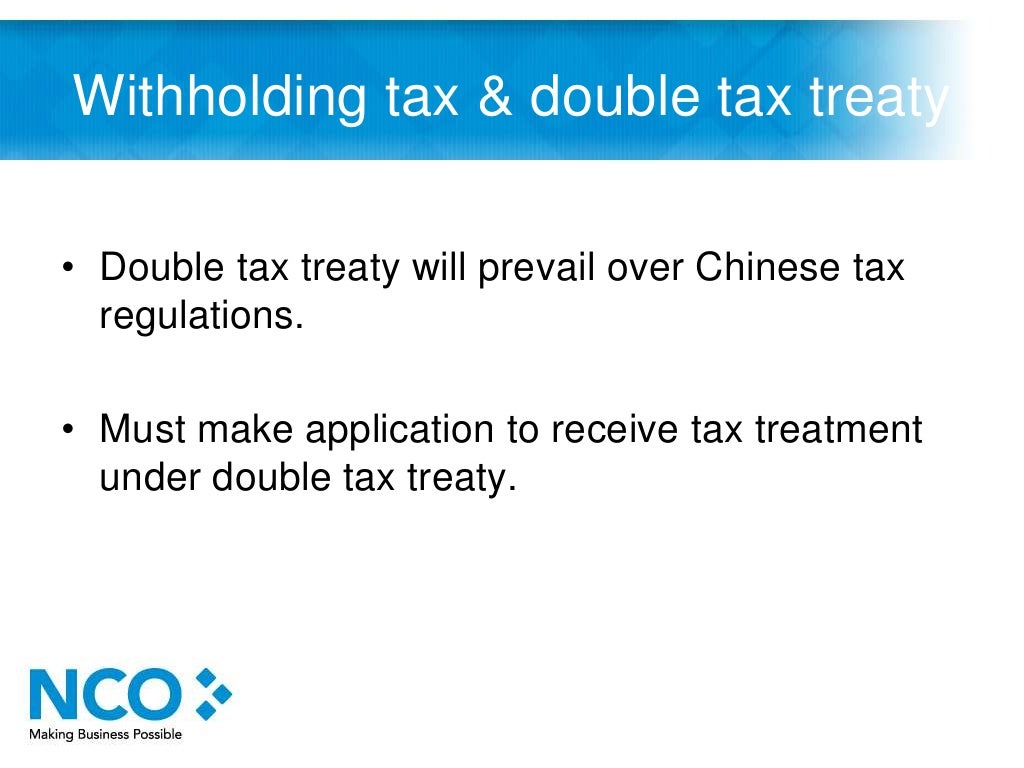
The statutory withholding tax rate is 10%. However, this rate can be reduced or eliminated if the recipient company is a tax resident in a jurisdiction that has signed a Double Taxation Avoidance Agreement (DTAX) with China and meets the "beneficial owner" criteria set by the STA.
Surcharges and Local Taxes
Businesses must also account for surcharges calculated based on the total amount of indirect taxes (VAT and Consumption Tax) paid. These include:
- Urban Maintenance and Construction Tax (UMCT): Ranging from 1% to 7% depending on the enterprise's geographic location (urban, county, or other areas).
- Education Surcharge: Typically levied at 3%.
- Local Education Surcharge: Typically levied at 2%.
Additionally, businesses owning real estate must pay Real Estate Tax, and those transferring land use rights or property are subject to Land Appreciation Tax (LAT).
Compliance, Filing Cycles, and Practical Steps for Businesses
Maintaining compliance with Chinese tax authorities requires structured internal controls and localized accounting expertise.
- Tax Registration: Upon establishing a legal entity, the business must register with the local tax bureau within 30 days to obtain its tax identification credentials and set up its digital tax disk (Tax Control System).
- Bookkeeping and Invoicing (Fapiao): China operates on a strict official invoice system known as Fapiao. Businesses must issue electronic or physical fapiaos for all sales through government-monitored software. Invoicing and accounting records must be kept in Renminbi (RMB) and maintained for a minimum statutory period (often 10 to 30 years depending on the document type).
- Filing Frequencies:
- CIT: Filed on a provisional quarterly basis within 15 days following the end of each quarter, with an annual reconciliation settlement conducted between January 1 and May 31 of the subsequent year.
- VAT and Surcharges: Generally filed on a monthly basis by the 15th day of the following month, though certain small-scale taxpayers or qualified financial institutions may file quarterly.
- Audit and Inspection: Tax authorities in China utilize advanced big data analytics (the Golden Tax System phase IV) to cross-reference corporate invoicing data, bank transactions, customs declarations, and social security payments. Discrepancies trigger automated alerts and physical or digital tax audits.
Disclaimer: Tax laws, local administrative interpretations, and preferential policies in China are subject to periodic revision. Businesses should consult certified public accountants or qualified tax advisors licensed in the People's Republic of China to address specific operational structures.
Frequently Asked Questions
What is the standard corporate income tax rate in China?
The standard corporate income tax rate in China is 25%. This rate applies to the net taxable income of resident enterprises and non-resident enterprises with establishments in China, unless they qualify for specific preferential reductions such as the 15% high-tech rate or the 20% small low-profit enterprise rate.
How do China's VAT rates impact foreign-invested enterprises?
Value-Added Tax impacts cash flow and pricing. General taxpayers charge VAT on sales (output VAT) and recover VAT paid on purchases (input VAT). Rates vary from 13% for physical goods down to 6% for modern services. FIEs must manage their fapiao issuance carefully to ensure customers can claim input VAT deductions.
Can foreign companies operating without a physical office in China be taxed?
Yes. Non-resident enterprises that derive China-source income—such as dividends, interest, royalties, or service fees—without having a physical establishment in the country are subject to a withholding income tax, typically levied at a flat rate of 10%, withheld at the source by the Chinese payer.
What is a Fapiao and why is it crucial for Chinese business tax compliance?
A Fapiao is an official, legally recognized tax invoice and receipt monitored by the State Taxation Administration. It serves as the legal basis for bookkeeping, expense substantiation, tax deductions, and VAT credit claims. Operating without proper fapiao management can lead to severe penalties and disallowed business deductions during tax audits.
Are there tax incentives for foreign businesses investing in specific industries?
Yes. China publishes encouraged industry catalogs and regional investment guidelines. Foreign enterprises operating in encouraged sectors—particularly advanced manufacturing, environmental protection, high-tech research, and investments in central and western provinces or specific free trade zones—frequently qualify for reduced corporate income tax rates, import duty exemptions, and local fiscal subsidies.
Conclusion and Next Actions
Navigating the tax environment for businesses in China requires balancing statutory obligations with available incentive programs. Enterprise leaders should immediately conduct a comprehensive classification review of their operations to verify whether they qualify for high-tech, regional, or SME tax reductions. Establishing a direct relationship with a qualified local accounting firm ensures that monthly VAT filings, quarterly CIT reconciliations, and strict fapiao compliance protocols are executed accurately under current State Taxation Administration guidelines.
Image Gallery
Select an image to open it in a new tab.
Ingrid Bjornson
Global Cyber Policy and Regulation Analyst
