Understanding Modular Home Insurance Quotes: A Complete Guide to Coverage, Costs, and Policy Selection

Evaluating modular home insurance quotes requires understanding how insurance companies classify factory-built housing, calculate replacement costs, and structure policy protections. Because modular homes are built to local and state building codes—just like traditional site-built structures—they generally qualify for standard homeowners insurance policies (such as HO-3 forms) rather than specialized mobile home policies.
Disclaimer: Insurance regulations, building code enforcement, and policy forms vary by state and jurisdiction. The information provided in this guide is for educational purposes. Consult a licensed insurance agent or broker to review specific policy terms and local coverage requirements.
Modular Homes vs. Manufactured Homes: How Insurers View the Difference
A primary source of confusion when shopping for home insurance quotes is the distinction between modular homes and manufactured homes. Insurers apply vastly different underwriting guidelines, policy forms, and pricing structures based on this classification.
- FACTORY-BUILT HOUSING
- MODULAR HOME
- State/Local Code (IRC)
- Transported via Flatbed
- Permanent Foundation
- Insured via HO-3 / HO-5
- MANUFACTURED HOME
- HUD Federal Code
- Built on Steel Chassis
- Insured via HO-7
- MODULAR HOME
Building Codes and Standards
- Modular Homes: Built off-site in factory modules and transported to the building site via flatbed trucks. Once assembled by a licensed contractor, the structure is placed on a permanent foundation (such as a full basement, conditioned crawlspace, or concrete slab). Modular construction must comply with the International Residential Code (IRC) or the specific state and regional building codes enforced in the destination municipality.
- Manufactured Homes: Built entirely off-site on a permanent structural steel chassis in accordance with the federal Housing and Urban Development (HUD) Code. While manufactured homes can be placed on permanent foundations, their construction standards, structural steel framing, and federal regulatory oversight set them apart from stick-built and modular properties.
Policy Form Classifications
Because modular homes meet the same building codes and structural performance standards as traditional stick-built dwellings, primary insurance carriers evaluate them using standard homeowners policy forms:
- HO-3 (Special Form): The most common homeowners policy, providing open-perils coverage for the physical structure (dwelling) and named-perils coverage for personal property.
- HO-5 (Comprehensive Form): An expanded policy offering open-perils coverage for both the physical structure and personal property, often selected for high-value modular builds.
- HO-7 (Mobile/Manufactured Home Form): Designed specifically for manufactured housing built to HUD standards. Premiums, coverage limits, and underwriting rules under HO-7 policies differ significantly from standard HO-3 forms.
Mistakenly listing a modular home as a manufactured home on an insurance application can result in inaccurate quotes, limited coverage options, higher premiums, or administrative delays during underwriting.
Core Components of a Modular Home Insurance Quote
When reviewing a quote, you will see several standard coverage categories designated by letters A through F. Understanding these sections ensures that you compare identical protections across competing carriers.
| SECTION I: PROPERTY COVERAGE | SECTION II: LIABILITY COVERAGE |
|---|---|
| • Coverage A: Dwelling | • Coverage E: Personal Liability |
| • Coverage B: Other Structures | • Coverage F: Medical Payments |
| • Coverage C: Personal Prop. | |
| • Coverage D: Loss of Use |
Coverage A: Dwelling Coverage
Coverage A represents the financial limit to repair or rebuild the physical structure of your modular home if it is damaged by a covered peril (such as fire, lightning, windstorm, or hail).
In modular home quotes, insurers calculate Coverage A based on Replacement Cost Value (RCV) rather than market value. Market value includes the value of the underlying land, location demand, and school district factors. Replacement cost focuses purely on the cost of materials, specialized factory module transport, local labor, crane services, foundation repair, and site assembly required to reconstruct the dwelling from scratch.
Coverage B: Other Structures
Coverage B protects detached structures on your property, such as unattached garages, storage sheds, gazebos, perimeter fencing, or guest houses. The default baseline for Coverage B is typically set at 10% of Coverage A, though this limit can be increased via policy endorsements if you have extensive outbuildings.
Coverage C: Personal Property
Coverage C covers your personal belongings inside the home—including furniture, electronics, clothing, and appliances. Standard quotes usually set Coverage C at 50% to 70% of Coverage A.
When examining quotes, pay close attention to the valuation method for personal property:
- Actual Cash Value (ACV): Pays the current market value of items at the time of loss, factoring in structural and mechanical depreciation.
- Replacement Cost Value (RCV): Pays the cost to purchase a new equivalent item without deducting for age or wear. RCV coverage typically adds a small surcharge to the annual premium but provides superior financial protection.
Coverage D: Loss of Use (Additional Living Expenses)
If a covered loss renders your modular home uninhabitable, Coverage D pays for temporary living arrangements, such as hotel stays, short-term rental leases, storage fees, and restaurant meals that exceed your normal baseline living costs. Limits are commonly set between 20% and 30% of Coverage A.
Coverage E & Coverage F: Liability and Medical Payments
- Coverage E (Personal Liability): Protects you against legal claims and lawsuit defense costs if someone is injured on your property or if you accidentally cause property damage to others. Standard base policies offer $100,000 in coverage, though raising this limit to $300,000 or $500,000 typically incurs minimal additional cost.
- Coverage F (Medical Payments to Others): Pays necessary medical bills for guests injured on your property regardless of fault, usually structured with limits ranging from $1,000 to $5,000.

Coverage Phases: From Transit to Permanent Settlement
Insuring a modular home involves distinct risk phases during the construction lifecycle. A standard HO-3 policy only takes effect once the home is set on its foundation and certified for occupancy. Protecting the home before that milestone requires specialized coverage arrangements.
- FACTORY PRODUCTION
- Manufacturer's Insurance
- TRANSIT & SET PHASE
- Transport Ins.
- Builder's Risk
- PERMANENT OCCUPANCY
- Standard HO-3/HO-5 Policy
Phase 1: Transit and Delivery
Modular home sections are constructed in a climate-controlled facility and then driven to the building site on specialized carrier frames.
- Responsibility: The transport company or modular manufacturer typically carries commercial auto and transit liability insurance to cover damage occurring while modules are on the road.
- Verification: Request proof of insurance (a Certificate of Insurance) from the manufacturer and freight contractor before shipping begins to confirm transit limits cover the full value of the delivered modules.
Phase 2: Site Assembly and Builder’s Risk
Once modules arrive on site, heavy cranes lift them off the transport trailers and set them onto the prepared foundation. General contractors then perform the "button-up" process—joining structural seams, completing roof marriage walls, connecting plumbing/electrical systems, and finishing interior drywall.
- Builder's Risk Insurance: During this period, the project requires a Builder's Risk policy (or a Installation Floater endorsement). This policy protects the unfinished structure against fire, vandalism, severe weather, and job-site mishaps.
- Contractor vs. Owner Policies: In many custom modular builds, the general contractor maintains the primary Builder's Risk coverage. If you are acting as your own owner-builder, you must secure a specialized owner-builder policy prior to delivery.
Phase 3: Permanent Occupancy
Once construction finishes, local building inspectors issue a Certificate of Occupancy (CO). At this juncture, the Builder's Risk policy terminates, and your standard HO-3 or HO-5 homeowners insurance policy takes effect.
Comparing Insurance Quote Parameters
To systematically evaluate options, use this breakdown of policy characteristics across structure types and policy forms:
| Feature / Parameter | Standard Modular Home (HO-3) | High-End Modular Home (HO-5) | Manufactured Home (HO-7) |
|---|---|---|---|
| Applicable Building Code | International Residential Code (IRC) | International Residential Code (IRC) | HUD Federal Standard |
| Foundation Requirement | Permanent (Basement, Crawlspace, Slab) | Permanent (Basement, Crawlspace, Slab) | Tied-down, Pier System, or Permanent |
| Dwelling Coverage Scope | Open Perils | Open Perils | Named Perils or Open Perils |
| Personal Property Valuation | Named Perils (Actual Cash Value baseline) | Open Perils (Replacement Cost baseline) | Named Perils (Actual Cash Value default) |
| Reconstruction Cost Basis | Local Labor + Transit + Crane Operations | Extended / Guaranteed Replacement Cost | Stated Value or Actual Cash Value |
| Carrier Availability | Standard National/Regional Carriers | Premier / Specialty High-Net-Worth Carriers | Specialty / Non-Standard Line Carriers |
Key Factors That Influence Modular Insurance Premiums
Underwriters assess multiple risk parameters when calculating premiums for modular home quotes. While construction quality is often equal to or superior to site-built homes due to factory precision, specific structural and geographical details heavily influence pricing.
1. Foundation Type and Anchorage
Insurers examine how securely the modular units are anchored to the ground. A full poured-concrete basement or conditioned perimeter crawlspace presents lower structural risk during wind events than concrete pier systems. Proper anchoring minimizes movement, settling issues, and structural strain caused by high winds.
- FOUNDATION RISK PROFILE (UNDERWRITING)
- FULL BASEMENT (Poured Concrete)
- Lowest Risk
- Best Rates
- PERIMETER CRAWLSPACE
- Moderate Risk
- Standard Rates
- PIER & BEAM SYSTEM
- Elevated Risk
- Higher Premiums
- FULL BASEMENT (Poured Concrete)
2. Geographic Location and Peril Exposure
Location remains a major pricing variable across all residential property insurance:
- Windstorm and Hurricane Zones: Coastal regions require specialized hurricane deductibles and wind mitigation credits (such as hurricane straps, impact-rated windows, and sealed roof decks).
- Wildfire Exposure: Homes in high-risk western areas need defensible space management and hard wildfire-resistant siding materials.
- Public Protection Class (PPC): Insurance rating bureaus assign fire protection scores based on proximity to local fire departments and working fire hydrants.
3. Roof Design and Materials
Roof shape and material impact wind resistance and hail durability. Hip roofs (which slope down on all four sides) perform better in severe winds than standard gable roofs, often earning discounts. Synthetic composite shingles or architectural asphalt shingles rated for high-wind uplift can also lower annual premiums.
4. Safety Systems and Smart Home Technology
Installing protective technology can yield premium discounts ranging from 5% to 15%:
- Monitored fire and security alarm systems tied directly to a central dispatch station.
- Automatic main water shutoff valves equipped with smart leak detection sensors.
- Fire sprinkler systems integrated throughout the factory-built modules.
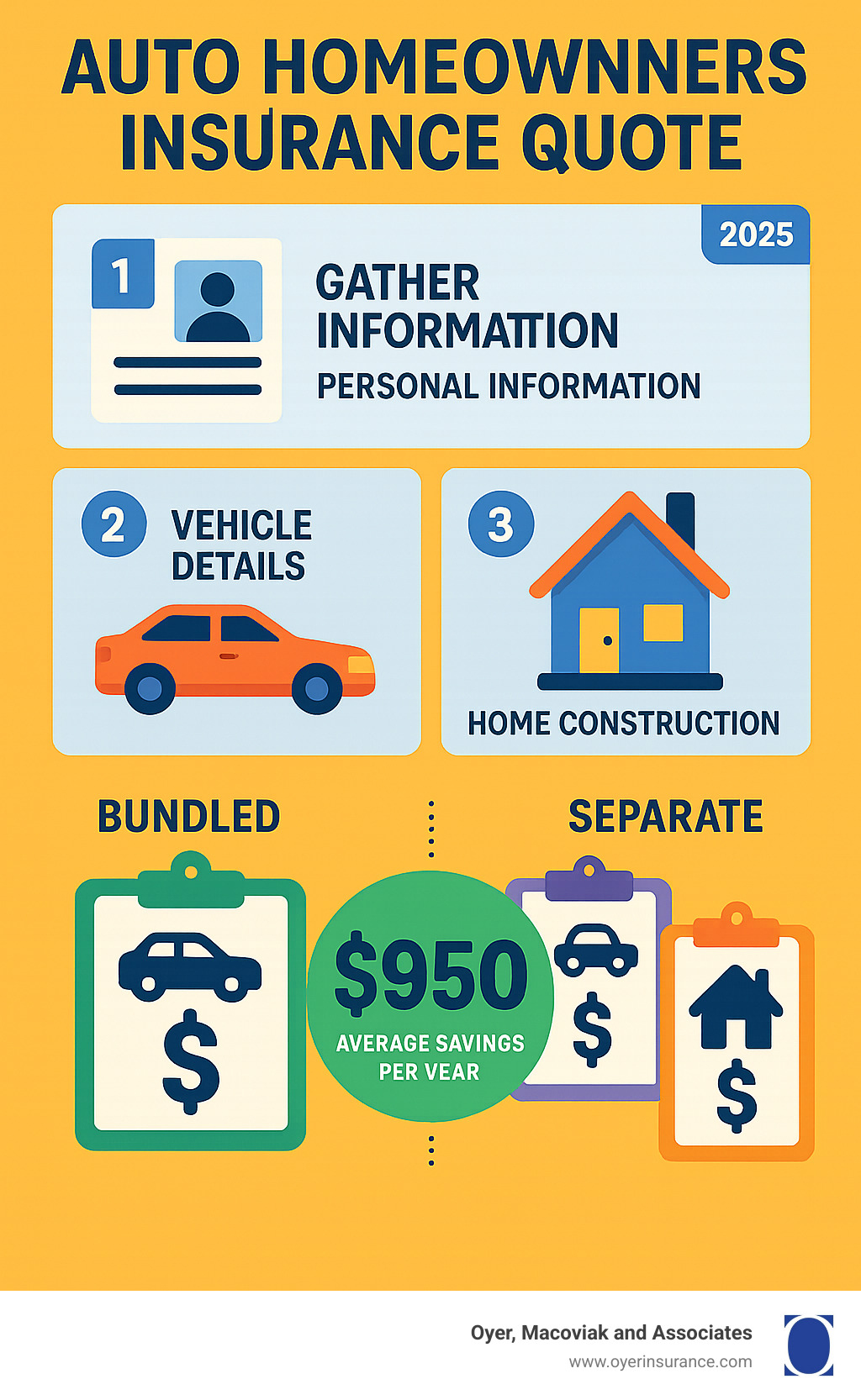
Step-by-Step Guide: Evaluating and Shopping for Quotes
To obtain accurate, cost-effective coverage for your modular home, follow a structured process from pre-construction through policy binding.
- Gather Documentation
- Verify Classification
- Define Limits & Endorsements
- Compare Deductibles & Bind
Step 1: Gather Documentation
Before requesting quotes, collect essential technical specifications from your builder or factory representative:
- Detailed architectural plans and module elevation drawings.
- Verification of state/local IRC building code compliance.
- Foundation construction specifications.
- Estimated total completion cost (including land preparation, foundation work, utility hookups, and module price).
Step 2: Ensure Proper Home Classification
When speaking with insurance agents, explicitly state that your property is an IRC-coded modular home on a permanent foundation, not a manufactured mobile home. Confirm that the agent selects an standard HO-3 or HO-5 application form rather than an HO-7 manufactured home form.
Step 3: Select Appropriate Endorsements
Standard homeowners insurance policies contain notable coverage exclusions. Enhance your modular policy by adding essential endorsements:
- Water Backup and Sump Pump Overflow: Protects against water backup through sewers, drains, or sump pump failures—risks generally excluded under standard base policies.
- Ordinance or Law Coverage: Pays for increased building costs required to bring damaged areas up to current local municipal codes during a major rebuild.
- Extended Replacement Cost Endorsement: Provides an extra buffer (typically 10% to 50% above Coverage A limits) to absorb unexpected demand surges for local materials and labor following regional disasters.
- Equipment Breakdown Coverage: Protects built-in HVAC systems, tankless water heaters, and electrical panels from mechanical or electrical failures not caused by external perils.
Step 4: Compare Deductible Structures
Evaluate how competing quotes handle deductibles:
- All-Peril Deductible: A fixed dollar amount (e.g., $1,000, $2,500, or $5,000) applied to common claims like fire, theft, or pipe bursts. Choosing a higher deductible lowers your base premium.
- Percentage-Based Deductibles: Applied specifically to coastal windstorms, hurricanes, or hail. A 2% hurricane deductible on a $400,000 Coverage A limit requires a $8,000 out-of-pocket payment before insurance proceeds apply.
Common Pitfalls to Avoid
Navigating modular home quotes requires attention to details unique to off-site construction:
- Gaps in Coverage Transition: Ensure uninterrupted coverage when transitioning from the general contractor's Builder's Risk policy to your personal homeowners policy. Align the transition date with the issuance of your Certificate of Occupancy.
- Relying on Modular Factory Cost Alone for Coverage A: Underinsuring your home by setting Coverage A equal to the factory invoice price is a common risk. Site preparation, excavation, foundation construction, utility connections, crane fees, local labor, and permit costs must be included in the total replacement estimate.
- Ignoring Flood and Earth Movement Exclusions: Standard HO-3 policies exclude damage caused by rising surface water, flash floods, mudslides, or earth movement (earthquakes). If your property resides in a special flood hazard area or seismic zone, purchase separate flood coverage through the National Flood Insurance Program (NFIP) or a private insurer, along with a standalone earthquake rider.
Frequently Asked Questions
Are modular home insurance quotes higher than stick-built home quotes?
No. Because modular homes comply with the same local International Residential Code (IRC) standards as stick-built structures, primary insurers rate them identically. In some cases, modular homes receive favorable risk scores due to precision factory engineering and straight, square structural framing.
What is the difference between an HO-3 and an HO-7 policy?
An HO-3 policy is designed for traditional site-built and IRC-coded modular homes, offering open-perils coverage on the building. An HO-7 policy is tailored for manufactured homes built to HUD standards on a structural steel chassis, carrying different underwriting criteria and valuation terms.
Can I get insurance while my modular home is still in the factory?
During factory construction, the home is protected under the manufacturer's commercial liability and property insurance policies. Personal insurance coverage is not required until modules leave the manufacturing floor and ownership transfers to the buyer or general contractor.
Does a modular home require a separate Builder's Risk policy during assembly?
Yes. Standard homeowners insurance policies do not cover structures under active construction. A Builder's Risk policy (or Installation Floater) is required to cover modules against theft, vandalism, weather damage, and transport incidents during site placement and final finishing.
How is replacement cost calculated for a modular home?
Insurers calculate replacement cost using specialized software that factors in local building material prices, prevailing labor rates, module transport costs, crane operator charges, site restoration expenses, and foundation reconstruction costs—rather than using real estate market values.
Recommended Next Actions
To secure proper insurance coverage for your modular home project:
- Confirm Structural Codes: Obtain written documentation from your home manufacturer confirming that your specific floor plan complies with local state or municipal building codes (IRC standards).
- Verify Contractor Insurance: Obtain a Certificate of Insurance showing active General Liability and Builder’s Risk coverage from your general contractor before site delivery.
- Request Quotes Early: Start gathering quotes from multiple licensed independent insurance agents at least 30 to 45 days prior to home installation to allow ample time for underwriting reviews.
- Review Exclusions: Compare endorsements across quotes—paying close attention to water backup limits, extended replacement cost options, and wind/hurricane deductibles—to ensure your investment is fully protected.
Image Gallery
Select an image to open it in a new tab.



Lars Thomsen
Global Labor Markets and Economic Strategy Editor
