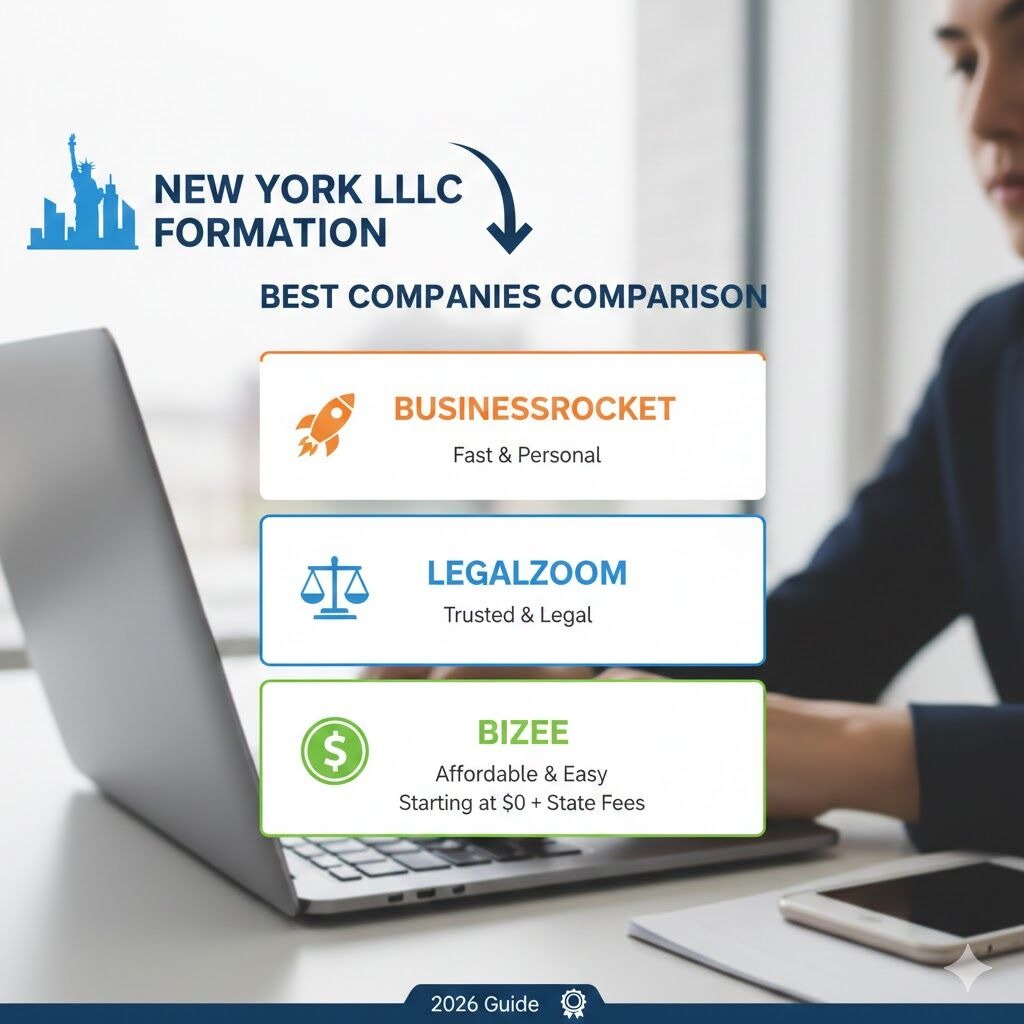
To register a new LLC, you must select a unique business name, appoint a registered agent, and file formal Articles of Organization with your state’s Secretary of State office. This legal process establishes your business as a separate entity, providing personal asset protection and flexible tax treatment for small business owners and entrepreneurs.
The Limited Liability Company (LLC) remains the most popular business structure for new ventures in 2026. It combines the liability protection of a corporation with the tax flexibility of a partnership or sole proprietorship. However, the registration process involves several critical legal and administrative steps that vary by jurisdiction. Failing to adhere to state and federal requirements can lead to "piercing the corporate veil," which may expose your personal assets to business creditors.
1. Selecting the Optimal Jurisdiction
The first decision in registering a new LLC is determining where to file. For most small business owners, the "home state"—the state where you physically live and conduct business—is the most cost-effective choice. If you register in your home state, you avoid the need to pay for "Foreign Qualification" in other states, which involves additional filing fees and the cost of maintaining registered agents in multiple locations.
However, certain states are frequently selected for specific strategic reasons. Delaware remains a top choice for startups seeking venture capital due to its sophisticated Chancery Court and well-established body of corporate law. Wyoming and Nevada are often cited for their strong privacy protections and lack of state corporate income taxes.
When choosing a state, consider the long-term operational costs. A state with a $50 filing fee might have a $400 annual report fee, while a state with a $200 initial fee might have no annual recurring costs. In 2026, digital nomads and remote service providers must also consider the "nexus" rules, which dictate that you may need to register in any state where you have a significant physical presence or employee base.
2. Naming Your New LLC
Your business name is more than a branding tool; it is a legal identifier that must comply with state statutes. Most states require that the name be "distinguishable" from all other business entities registered in that state.
Legal Designators and Restricted Words
Every state requires that your name include a "designator" that indicates its status as an LLC. Common acceptable suffixes include:
- Limited Liability Company
- L.L.C.
- LLC
- Ltd. Liability Co.
Furthermore, states restrict the use of certain words. You generally cannot use words like "Bank," "Insurance," "University," or "Trust" unless you have specific licenses and approvals from regulatory bodies. Additionally, your name cannot imply a connection to government agencies (e.g., using "Federal" or "Agency").
Availability and Trademarks
Before filing, perform a thorough search of the Secretary of State's business database. It is also highly recommended to search the United States Patent and Trademark Office (USPTO) database. Just because a name is available at the state level for registration does not mean it is free from federal trademark claims. Registering a name that infringes on a trademark can lead to costly rebranding and legal disputes later.
3. Appointing a Registered Agent
A Registered Agent is an individual or entity designated to receive official legal documents and "Service of Process" on behalf of the LLC. This ensures that the state and legal parties have a reliable way to contact the business.
Requirements for a Registered Agent
In 2026, the requirements remain strict:
- Physical Address: The agent must have a physical street address within the state of registration (P.O. Boxes are not permitted).
- Availability: The agent must be available at that address during standard business hours to sign for legal documents.
- Consent: The agent must agree to serve in this role.
While you can technically serve as your own registered agent if you reside in the state, many business owners hire a Commercial Registered Agent. Professional services provide privacy by keeping your home address off public records and ensure that you never miss a critical legal notice while you are on vacation or out of the office.
4. Filing the Articles of Organization
The "Articles of Organization" (sometimes called a Certificate of Formation) is the foundational document filed with the state to officially create your LLC. Most states in 2026 prioritize online filing through their respective Secretary of State portals, which typically results in faster approval times ranging from a few hours to several business days.
Essential Information in the Filing
While requirements vary by state, you will generally need to provide:
- LLC Name: The exact name, including the designator.
- Principal Office Address: The main location where business records are kept.
- Registered Agent Info: Name and physical address of the agent.
- Management Structure: Whether the LLC is "Member-Managed" (all owners participate in daily operations) or "Manager-Managed" (owners appoint a specific manager).
- Duration: Most LLCs are "perpetual," meaning they exist until dissolved.
- Purpose: A brief statement of the business activities (often a general statement like "any lawful business" is sufficient).
Filing Fees and Processing
Filing fees vary significantly. As of 2026, these are the typical ranges for representative states:
| State | Initial Filing Fee | Annual Report Fee | Typical Processing Time |
|---|---|---|---|
| Kentucky | $40 | $15 | 24–48 Hours |
| Florida | $125 | $138.75 | 1–3 Business Days |
| Texas | $300 | $0 (Franchise Tax) | 3–5 Business Days |
| California | $70 | $800 (Minimum Tax) | 5–10 Business Days |
| New York | $200 | $9 (Biennial) | 1–2 Weeks |
Note: New York also requires a "Publication Requirement" where you must publish a notice of your LLC formation in two newspapers for six consecutive weeks, which can add $600–$1,200 to your startup costs.
5. Drafting an Operating Agreement
An Operating Agreement is an internal document that outlines the ownership structure and operating procedures of the LLC. While only a few states (such as California, Delaware, Maine, Missouri, and New York) legally require an Operating Agreement, it is essential for every LLC.
Why an Operating Agreement is Critical
Without an Operating Agreement, your LLC is governed by the state’s default "LLC Act." These default rules may not align with your business goals. A well-drafted agreement covers:
- Capital Contributions: How much money each member is investing.
- Profit/Loss Distribution: How and when profits are shared among members.
- Voting Rights: How major decisions are made and if voting is proportional to ownership.
- Transfer of Interest: What happens if a member wants to sell their share or leaves the company.
- Dissolution: The process for closing the business and distributing remaining assets.
For single-member LLCs, this document is vital for maintaining the "corporate veil." It demonstrates to courts and creditors that the business is a separate entity with its own set of rules, rather than just an extension of the individual owner.
6. Obtaining an EIN and Federal Compliance
After the state approves your Articles of Organization, you must address federal requirements. The most immediate is obtaining an Employer Identification Number (EIN) from the IRS.
The EIN Application
The EIN is like a Social Security number for your business. It is required to open a business bank account, hire employees, and file federal tax returns. You can apply for an EIN for free on the IRS website. Approval is usually instantaneous for online applications.
FinCEN and BOI Reporting (The Corporate Transparency Act)
In 2026, compliance with the Corporate Transparency Act (CTA) is a mandatory step for almost all new LLCs. You must file a Beneficial Ownership Information (BOI) Report with the Financial Crimes Enforcement Network (FinCEN).
- What to Report: You must disclose the names, birthdates, and government-issued ID numbers of all "beneficial owners" (anyone with at least 25% ownership or substantial control).
- Deadlines: New LLCs registered in 2026 typically have 30 days from the date of formation to file this report.
- Penalties: Failure to report can result in civil penalties of up to $500 per day and potential criminal charges.
For more information on these federal requirements, visit the FinCEN BOI portal.
7. Licensing, Permits, and Local Requirements
Registering with the state is often only the first step in legal operation. Depending on your industry and location, you may need additional licenses:
- General Business License: Many cities and counties require a local license to operate within their jurisdiction.
- Professional Licenses: Doctors, lawyers, contractors, and hairstylists must maintain specific professional credentials.
- Sales Tax Permits: If you sell physical goods or certain services, you must register with the state’s Department of Revenue to collect and remit sales tax.
- Zoning Permits: If you are operating a home-based business or a physical storefront, ensure your location is zoned for that specific commercial activity.
8. Financial Separation and Maintenance
The primary reason to register a new LLC is to limit personal liability. However, this protection is not absolute. To keep your "limited liability" status intact, you must maintain a clear separation between your personal and business finances.
- Open a Business Bank Account: Never mix personal funds with business funds. Use the business account for all company expenses and income.
- Sign as an Agent: When signing contracts, always sign in your capacity as a member or manager (e.g., "John Doe, Manager of XYZ LLC") rather than just your name.
- Fund the LLC Adequately: Ensure the business has enough capital to meet its foreseeable obligations. Under-capitalization can sometimes be used by creditors to argue that the LLC is a "sham" entity.
- File Annual Reports: Most states require a yearly or biennial filing to keep the business's contact information current and to pay a renewal fee. Failure to file will lead to "Administrative Dissolution," which terminates your liability protection.
Frequently Asked Questions
Do I need a lawyer to register a new LLC?
No, you are not legally required to hire a lawyer to register an LLC. Most Secretary of State websites are designed for self-service. However, if your LLC has multiple members with complex ownership percentages, or if you are in a highly regulated industry, consulting with a business attorney is recommended to ensure your Operating Agreement and compliance steps are handled correctly.
How long does the registration process take?
The timeline depends entirely on the state. Online filings in states like Nevada or Michigan can be approved within hours. In other states, or if you file by mail, it can take several weeks. Many states offer "expedited processing" for an additional fee, which can guarantee a 24-hour turnaround.
Can a non-U.S. resident register an LLC?
Yes, non-U.S. residents can own and register an LLC in the United States. There are no citizenship or residency requirements for LLC ownership. However, the process for obtaining an EIN without a Social Security Number (SSN) is more complex and usually requires a paper application (Form SS-4) and an Individual Taxpayer Identification Number (ITIN).
What is the difference between a Member-Managed and Manager-Managed LLC?
In a Member-Managed LLC, all owners (members) have the authority to make decisions and sign contracts for the company. This is common for small, owner-operated businesses. In a Manager-Managed LLC, the members appoint one or more managers (who can be members or outside hires) to run the daily operations. This structure is often used when some owners are "silent investors" who do not want operational responsibility.
Is an LLC the same as an S-Corp?
No. An LLC is a legal business entity, whereas an "S-Corp" is a tax designation. An LLC can elect to be taxed as an S-Corp by filing Form 2553 with the IRS. This allows the business to potentially save on self-employment taxes once the profit exceeds a certain threshold, but it adds more complex administrative and payroll requirements.
Practical Recommendation
If you are ready to register your new LLC in 2026, start by visiting the website of the Small Business Administration (SBA) to review local resources and mentorship opportunities through programs like SCORE. Begin the formal process by performing a name search on your Secretary of State's website, and ensure you have a dedicated business email and physical address ready for your registered agent service to maintain professional separation from day one.
Image Gallery
Select an image to open it in a new tab.
Akira Tanaka
International Academic Trends Correspondent
