
Choosing the correct pet carrier for plane travel is a critical task that balances airline regulatory compliance, structural durability, and your pet’s physiological well-being during transit. To succeed, you must reconcile the specific dimensions and weight limits imposed by your chosen carrier with the anatomical requirements of your animal, ensuring the container remains compliant while providing adequate ventilation, stability, and security in an pressurized cabin environment.
Understanding Regulatory Frameworks and Carrier Categories
Before purchasing any carrier, you must distinguish between the two primary modes of transport: in-cabin and cargo/checked baggage. Airlines maintain strict, often divergent, policies regarding which mode is permissible based on the size, weight, and species of the animal. Most domestic and international commercial flights allow small dogs and cats to travel in-cabin if they fit within a carrier that slides comfortably under the seat in front of you.
In-Cabin Requirements
For in-cabin travel, carriers must be soft-sided or semi-rigid. The primary constraint is the under-seat clearance, which varies significantly by aircraft type (e.g., an Airbus A320 versus a Boeing 737) and the seat class (First, Business, or Economy).
- Dimensions: Airlines typically mandate a maximum length, width, and height. Because carriers must be able to compress slightly to fit into tight spaces, high-quality soft-sided carriers are preferred.
- Ventilation: Regulations generally require mesh panels on at least three sides to ensure airflow.
- Leak-Proofing: A waterproof base or a removable, absorbent mat is mandatory to manage accidents during flight.
- Security: Locking zippers are essential to prevent escape during movement through crowded terminals or turbulence.
Cargo and Checked Baggage Standards
If your pet exceeds the in-cabin weight limit (usually 20 lbs including the carrier) or if you are transporting a larger breed, you must utilize a hard-sided kennel that meets IATA (International Air Transport Association) Live Animals Regulations. These carriers must be constructed of rigid plastic or fiberglass with metal hardware and provide enough space for the animal to stand, turn around, and lie down in a natural position.
Technical Specifications and Material Selection
The material composition of a carrier dictates both its longevity and its suitability for specific travel conditions.
Soft-Sided Carriers (In-Cabin)
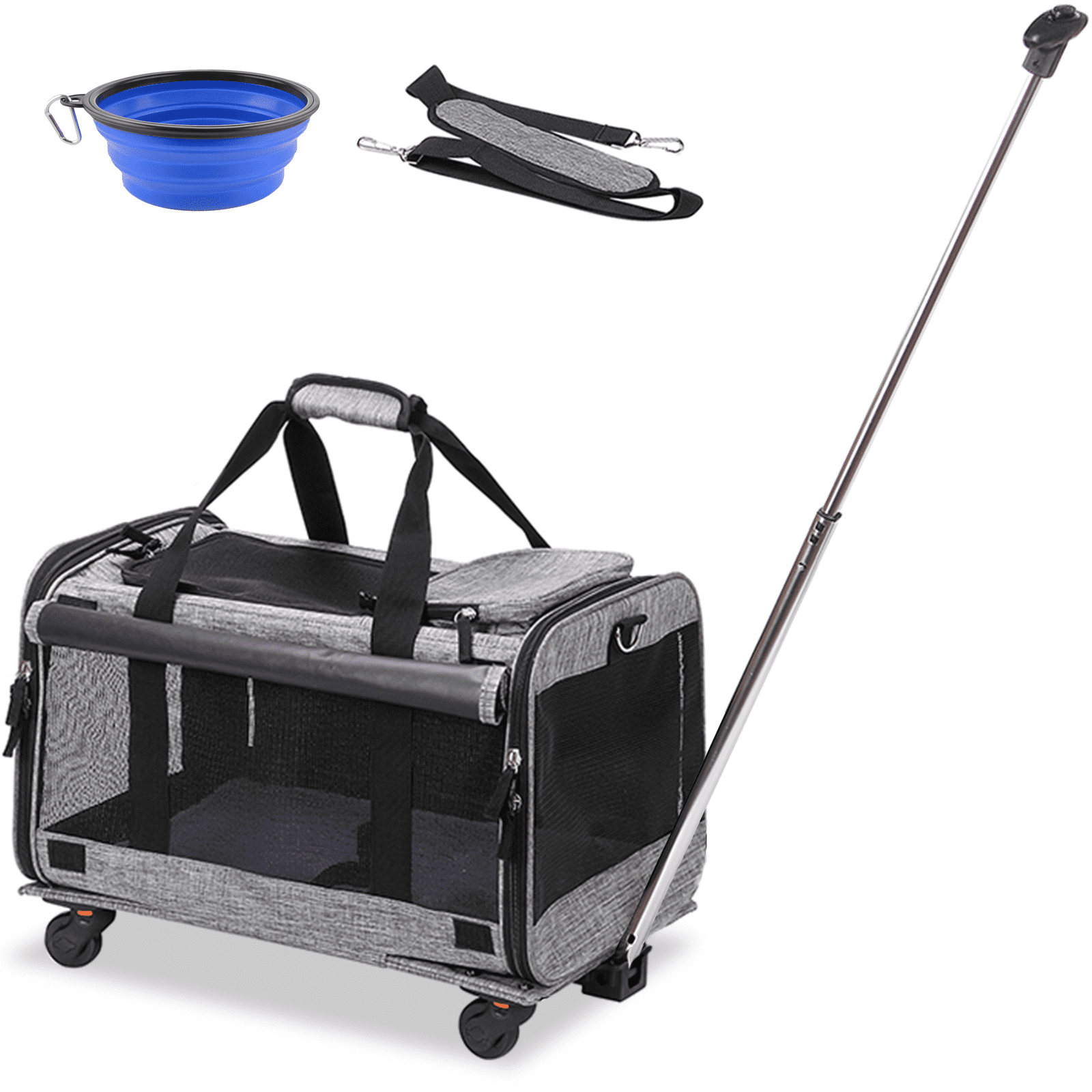
These are constructed from durable nylon, polyester, or canvas. Look for a reinforced frame—usually made from lightweight fiberglass or spring-wire—that prevents the roof from sagging onto the pet.
- The "Compression Factor": A high-quality in-cabin carrier features a spring-loaded or flexible frame that allows the height to be adjusted by 1–2 inches when placed under a seat, without compromising the structural integrity of the sides.
- Accessibility: Zippers should feature a "lock-head" design or have a mechanism to clip them together, preventing a curious or stressed pet from pushing the opening wide enough to escape.
Hard-Sided Kennels (Cargo/Hold)
For cargo travel, the IATA standard is the definitive reference. The kennel must be bolted, not snapped, together. Plastic "snap" locks are frequently rejected by airline cargo agents because they can pop open under the pressure of vibrations or impact. The floor must be solid and equipped with a leak-proof liner, covered by bedding that is not synthetic or flammable.

Comparison of Carrier Types for Plane Travel
| Feature | Soft-Sided (In-Cabin) | Hard-Sided (Cargo/Hold) |
|---|---|---|
| Primary Use | Domestic/International In-Cabin | Large pets or long-distance cargo |
| Material | Nylon, Mesh, Polyester | Rigid plastic, fiberglass, metal |
| Compliance | Airline-specific dimension caps | IATA Live Animals Regulations |
| Weight | Lightweight (2–5 lbs) | Heavy (10+ lbs) |
| Storage | Collapsible | Rigid (non-collapsible) |
| Security | Zippered access | Bolted doors with locking mechanisms |
Ensuring Physiological Comfort and Safety
Your pet’s anxiety level is directly correlated to the comfort of their environment. For air travel, a carrier is not merely a container; it is a "safe space."
Acclimatization Techniques
Never introduce the carrier for the first time on the day of the flight. Begin the process 4–6 weeks in advance.
- Positive Association: Place the carrier in your living room with the door open and place treats or favorite toys inside.
- Extended Stays: Feed your pet their meals inside the carrier so they associate the space with reward and comfort.
- Simulated Travel: Once the pet is comfortable, zip the carrier and carry it around your home, then eventually take it to the car for short, stress-free drives.
Environmental Controls
The cabin environment is dry and can fluctuate in temperature. Ensure your carrier includes a breathable liner that does not retain excessive heat. Avoid adding heavy blankets unless the flight is long, as these can restrict airflow. Verify that the carrier has enough height for the animal to stand up fully; if the pet is hunched, they will experience higher levels of stress and physiological fatigue.
Common Pitfalls and Troubleshooting
Travelers frequently encounter delays or denied boarding due to easily avoidable errors.
- Ignoring Aircraft Variations: A carrier that fits under the seat of a Boeing 737 might not fit under the seat of a regional Embraer jet. Always check your specific flight's aircraft type on your airline’s booking portal.
- The "Weight Limit" Confusion: Many travelers forget that airlines count the total weight of the carrier plus the pet. If the limit is 20 lbs and your carrier weighs 5 lbs, your pet must be 15 lbs or less.
- Hardware Failure: Check all screws and bolts on hard-sided carriers 48 hours before departure. If a screw is missing, replace it with the manufacturer-specified hardware; do not substitute with improvised fasteners like zip-ties, which are strictly prohibited in cargo transit.
Frequently Asked Questions
Will any mesh carrier pass airline inspection?
Not necessarily. While most airlines require mesh, they also have specific maximum dimensions. A carrier might have excellent ventilation but be two inches too tall to slide under the seat, which will result in your pet being denied boarding. Always verify the maximum height requirements provided by your specific airline.
Should I sedate my pet for the flight?
Most veterinary experts and airline guidelines strongly advise against sedation. Changes in air pressure and oxygen levels can affect a sedated animal's heart rate and breathing, leading to medical emergencies that are difficult to manage in-flight. Always consult a licensed veterinarian regarding your specific pet's health before travel.
What should I do if my pet is between sizes?
If your pet is on the upper end of the weight or size limit, always size up to the next available carrier. A carrier that is slightly too large can often be compressed to fit, whereas a carrier that is too small poses a safety risk and may be rejected at the gate by an agent who determines the animal is uncomfortable.
Can I travel with two pets in one carrier?
Generally, no. Most airlines allow only one pet per carrier. Even if the carrier is large enough to accommodate two pets, regulatory policies usually dictate a one-pet-per-passenger limit. Check your airline’s specific contract of carriage for any exceptions regarding littermates.
How do I handle airport security (TSA) with a carrier?
At the security checkpoint, you must remove your pet from the carrier. The carrier will then be sent through the X-ray machine like a piece of carry-on luggage. Ensure your pet is wearing a secure harness and leash so you can maintain control while they are out of the carrier.
Final Recommendation
When selecting your carrier, prioritize the airline’s maximum dimensions over aesthetics. Visit the manufacturer’s website to confirm that their specific product meets the current IATA or airline-specific guidelines for 2026. Prior to your departure date, conduct a "dry run" with your pet at home. If you are using a soft-sided carrier, ensure that the frame does not buckle under the weight of your pet when the carrier is carried by the shoulder strap, as this can compress the internal space and cause undue stress during the boarding process.
Image Gallery
Select an image to open it in a new tab.




Vivian Cho
Executive IT and Emerging Technologies Reporter
