The Myth About Kendrick Lamar and J. Cole: Unraveling a Decade of Expectations

The primary myth about Kendrick Lamar and J. Cole is the existence of a long-promised, fully recorded collaborative album that was supposedly shelved due to industry politics. While both artists teased a joint project for over a decade, the reality is that their divergent artistic paths, distinct creative processes, and the shifting competitive landscape of hip-hop made a full-length collaboration more of a fan-fueled legend than a tangible reality.
As we look back from the vantage point of 2026, the relationship between these two titans of the 2010s remains one of the most analyzed dynamics in music history. What began as a partnership of peers evolved into a complex narrative involving competitive friction, public apologies, and the eventual dissolution of the "Big Three" era. To understand the myth, one must examine the timeline of their interactions, the technical differences in their craft, and the specific events that finally laid the collaboration rumors to rest.
The Genesis of the Collaborative Album Myth
The myth took root in the early 2010s, a period when both artists were ascending to the throne of conscious rap. In 2011, J. Cole famously produced Kendrick Lamar’s "HiiiPoWeR," a track that served as a mission statement for the TDE (Top Dawg Entertainment) flagship artist. Shortly after, rumors of a joint project began to circulate.
In several interviews during this era, both artists confirmed they had "four or five" songs recorded. This small collection of tracks became the "holy grail" for hip-hop fans. The myth grew as fans speculated that these songs were part of a larger, finished body of work being held back by Interscope and Roc Nation. However, as Kendrick moved toward the avant-garde jazz and funk of To Pimp a Butterfly and Cole leaned into the self-produced, insular storytelling of 2014 Forest Hills Drive, the creative gap between them widened.
The "Black Friday" event in 2015—where Kendrick rapped over Cole’s "A Tale of 2 Citiez" and Cole rapped over Kendrick’s "Alright"—served as the peak of the myth. Cole’s lyric, "When you and K. Dot shit dropping? / Bitch, never, they can’t handle two black niggas this clever," was interpreted by some as a challenge to the industry, but in hindsight, it was the first honest admission that the project might never materialize.
The Technical Divergence: Why the Collaboration Stalled
One of the less-discussed aspects of the Kendrick-Cole myth is the technical incompatibility that developed as their careers matured. Analyzing their discographies reveals two very different approaches to song construction and album architecture.
Kendrick Lamar’s Concept-Heavy Architecture
Kendrick Lamar’s work is characterized by dense, cinematic layering. From the non-linear storytelling of good kid, m.A.A.d city to the internal dialogue of Mr. Morale & The Big Steppers, Kendrick views the album as a singular, cohesive piece of literature. For a collaboration to work within Kendrick’s framework, the entire project would need a unified conceptual "spine."
J. Cole’s Technical Precision and "The Climb"
J. Cole, conversely, focuses on the "sport" of rapping. His later work, particularly The Off-Season and the Might Delete Later era, emphasized technical proficiency, rhyme schemes, and flow variations. Cole’s approach is more modular; he focuses on being the best individual contributor to a track.
The friction between a "conceptualist" (Kendrick) and a "technical purist" (Cole) often makes for great individual songs but difficult full-length albums. The myth of the joint album ignored the logistical nightmare of reconciling these two distinct creative philosophies.
The "Big Three" Fallacy and the 2024 Shift
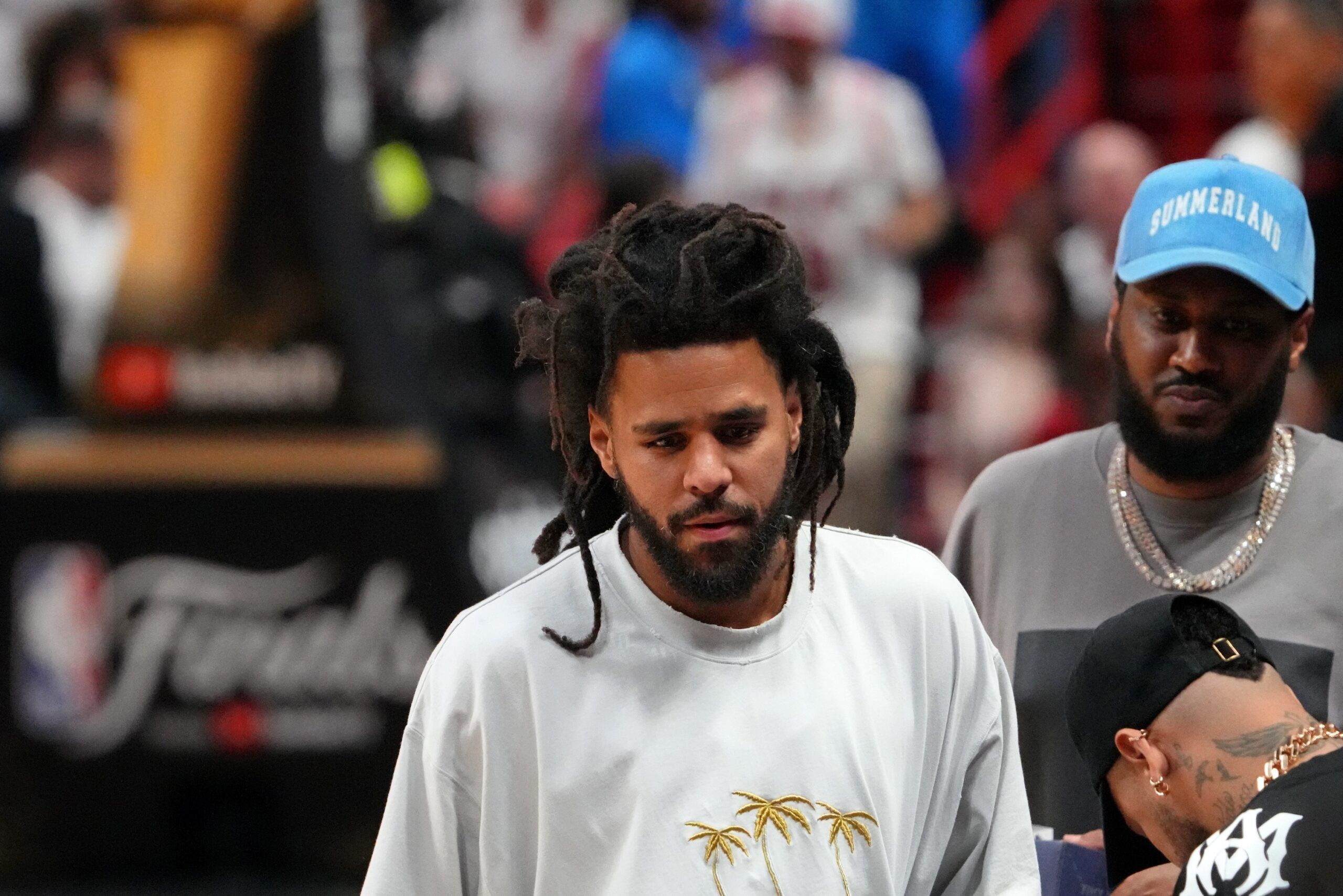
For years, the myth was sustained by the idea of the "Big Three"—a triumvirate consisting of Kendrick Lamar, J. Cole, and Drake. This grouping suggested a level of peer-to-peer respect and mutual standing that kept the possibility of a Kendrick-Cole alliance alive. However, the events of 2024 fundamentally dismantled this narrative.
The release of "Like That" by Future and Metro Boomin, featuring a blistering verse from Kendrick Lamar, targeted both Drake and Cole. Kendrick’s line, "Motherfuck the big three, nigga, it's just big me," was a direct assault on the "myth" of their shared status. This wasn't just a competitive jab; it was a declaration that the era of friendly collaboration was over.
J. Cole’s response, "7 Minute Drill," and his subsequent public apology at the Dreamville Festival, added a new layer to the myth. It revealed that while the fans wanted a war or a collaboration, Cole’s personal philosophy favored peace and "mental health" over industry-mandated conflict. This retraction effectively killed the last remnants of the collaborative album myth, as it became clear that their paths were no longer parallel.
Comparative Analysis of Career Milestones
To understand how the myth persisted, it is helpful to look at how their careers moved in tandem until the mid-2020s.
| Feature | Kendrick Lamar | J. Cole |
|---|---|---|
| Primary Label Home | TDE / pgLang | Dreamville / Roc Nation |
| Breakout Project | Section.80 (2011) | The Come Up / The Warm Up (2007-09) |
| Defining Masterpiece | To Pimp a Butterfly | 2014 Forest Hills Drive |
| Grammy Recognition | 17 Wins (as of 2024) | 2 Wins (as of 2024) |
| Creative Philosophy | Multi-media concept art | Technical excellence & community |
| Collaborative Approach | Selective, curated features | High-volume "feature run" (2018-19) |
The Role of "Lost" Media in Hip-Hop Folklore
The "Kendrick and Cole album" belongs to a specific category of hip-hop folklore known as "The Lost Classics." It sits alongside projects like Dr. Dre’s Detox or the Childish Gambino and Chance the Rapper collaborative EP. These myths serve a specific purpose in the culture: they provide a "what if" scenario that keeps fans engaged during long hiatuses.
In 2026, music historians recognize that the myth was partially a marketing tool. By not explicitly denying the project for years, both artists maintained a level of mystique. However, the technical reality of clearing samples, managing distribution rights between competing labels, and aligning two of the busiest schedules in music made the project nearly impossible to execute.
Addressing the "Ghost" Tracks
A common part of the myth is the claim that dozens of finished songs exist in a vault. Based on verified reports from producers like Terrace Martin and Sounwave, who have worked extensively with Kendrick, the number of collaborations is likely much smaller.
- "Temptation": A track often mentioned by Cole in 2011-2012 that never saw an official release.
- "Shock the World": Rumored sessions from the Born Sinner era.
- The "Black Friday" Sessions: While these were remixes of each other's work, they were the closest the public ever got to a joint release.
The "myth" often inflates these sessions into a 15-track masterpiece, but the evidence suggests these were experimental drafts rather than a polished album.
FAQ: Resolving the Kendrick and Cole Narrative
Did Kendrick Lamar and J. Cole ever actually start the album?
Yes. Both artists confirmed in various interviews between 2011 and 2013 that they had recorded several tracks together. However, J. Cole later clarified that they never reached a point where a "tracklist" or a "concept" was finalized. The project stayed in the "ideas" phase and never moved into formal production.
Why did J. Cole apologize for "7 Minute Drill"?
At the 2024 Dreamville Festival, J. Cole stated that his diss track toward Kendrick Lamar didn't "sit right with his spirit." He expressed that he felt pressured by the culture to respond competitively, but he still held genuine love and respect for Kendrick's craft. This apology was a pivotal moment that signaled Cole’s exit from the "Big Three" competition.
Is there still a chance for a collaboration in 2026?
While individual song features are always possible, the window for a collaborative album has effectively closed. Both artists have moved into different phases of their lives—Kendrick with pgLang and his focus on multi-disciplinary art, and Cole with his professional basketball aspirations and his mentorship role within Dreamville.
Who "won" the rivalry?
"Winning" is subjective in this context. Kendrick Lamar is generally viewed as having the more significant cultural and critical impact (exemplified by his Pulitzer Prize), while J. Cole is celebrated for his consistency, technical rapping ability, and his "everyman" relatability. The 2024 conflict suggested that Kendrick was more willing to engage in traditional rap combat, while Cole prioritized his personal peace.
What is the most famous song they have together?
The most widely recognized "collaboration" is the "Black Friday" release from 2015. Although they aren't on the same track together, it is the defining moment of their shared history. For a direct collaboration on the same track, "Forbidden Fruit" from J. Cole’s Born Sinner features Kendrick Lamar, but only on the hook—Kendrick does not have a verse.
The Final Reality: Maturity Over Myth
By 2026, the myth about Kendrick Lamar and J. Cole has shifted from a "missing album" to a "lesson in artistic evolution." The hip-hop community has largely accepted that these two artists served as the perfect foils for one another. Kendrick represented the radical, the experimental, and the complex; Cole represented the grounded, the disciplined, and the soulful.
The true "myth" was the belief that they needed each other to validate their greatness. In reality, their separate paths allowed them to define the 2010s and early 2020s more effectively than a joint project ever could. A collaborative album would have forced compromises on both sides—Kendrick might have had to scale back his conceptual density, and Cole might have had to adjust his natural rhythmic pocket.
Next Action for Fans: To truly understand the relationship between these two, listen to J. Cole’s "Middle Child" followed by Kendrick Lamar’s "Father Time." These tracks highlight their differing perspectives on legacy, competition, and the burden of being a "top tier" artist. This comparison provides more insight into their dynamic than any unreleased "vault" track ever could.
Image Gallery
Select an image to open it in a new tab.
Declan O'Connor
Higher Education and Campus Culture Reporter
