The Issuing Authority for a U.S. Passport: Roles, Regulations, and Identification

The U.S. Department of State is the sole issuing authority for all United States passports. Legally vested in the Secretary of State, this authority covers the issuance, denial, and revocation of passport books and cards. While various agencies accept applications, only the Department of State has the legal power to grant these documents.
Defining the Issuing Authority
When completing travel forms, visa applications, or international entry documents, you are frequently asked to identify the issuing authority of your travel document. For a U.S. citizen, this authority is always the United States Department of State. This distinction is critical because, while you may have visited a local post office or a county clerk to submit your paperwork, those entities do not "issue" the passport; they merely serve as "acceptance facilities."
The legal foundation for this authority is rooted in the Passport Act of 1926 and is codified under 22 U.S.C. § 211a. This law dictates that the Secretary of State may grant and issue passports under such rules as the President shall designate and prescribe. In the context of 2026, even with the widespread adoption of the Next Generation Passport (NGP) and digital application interfaces, the central authority remains unchanged. The Department of State manages a network of regional passport agencies and the National Passport Center, but all documents are issued under the singular umbrella of the federal government’s executive branch.
Where to Find the Issuing Authority on Your Document
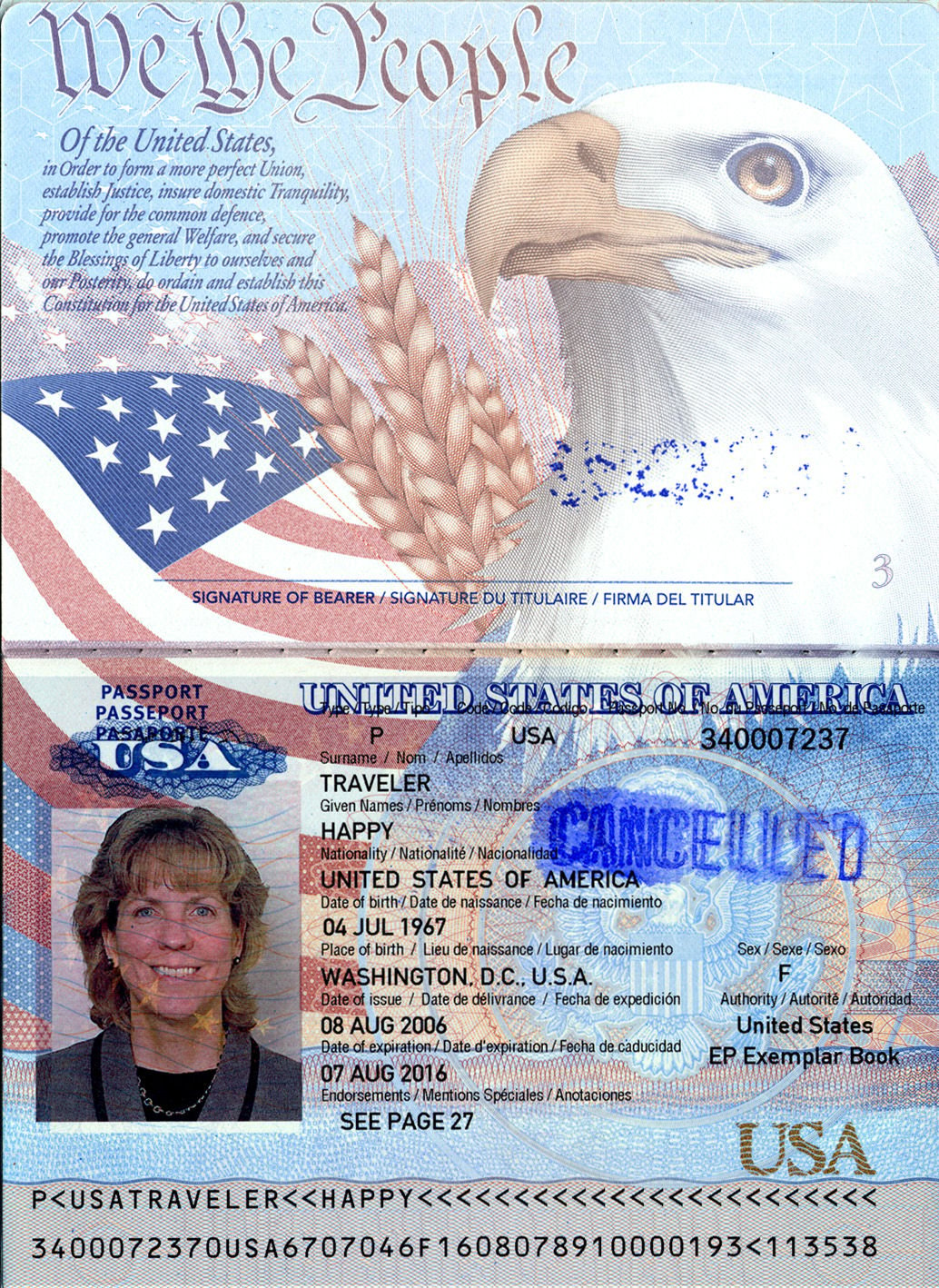
Locating the issuing authority on a U.S. passport is straightforward, but the exact visual placement depends on whether you have a traditional "e-passport" or the newer "Next Generation Passport" (NGP) which became the standard for all new issuances by the mid-2020s.
The Next Generation Passport (NGP)
On the NGP, which features a durable polycarbonate data page, the information is laser-engraved to prevent tampering. Look at the right side of the data page under the section labeled "Issuing Authority" or "Authority." It will explicitly state: United States Department of State. In some instances, depending on the specific layout of the page, it may simply say "Department of State" or "U.S. Department of State."
The Traditional e-Passport
If you are still carrying an older e-passport (valid for 10 years, meaning many are still in circulation in 2026), the data page is a printed paper page with a laminate coating. The "Authority" field is typically located on the bottom right of the personal data page. It is essential to distinguish this from the "Place of Issue," a field that appeared on much older passports but has largely been replaced by the uniform designation of the Department of State to align with international standards set by the International Civil Aviation Organization (ICAO).

The Difference Between Acceptance Facilities and the Issuing Authority
One of the most common points of confusion for travelers is the role of the location where they applied for their passport. Because most Americans interact with the U.S. Postal Service (USPS) or a local library during the application process, they often mistakenly believe these are the issuing authorities.
Passport Acceptance Facilities
An acceptance facility is an office authorized by the Department of State to accept passport applications on its behalf. Their primary responsibilities include:
- Verifying Identity: Ensuring the person standing before them is the same person in the photos and on the identification provided.
- Reviewing Documentation: Checking that birth certificates, naturalization papers, and other citizenship evidence meet federal requirements.
- Administering Oaths: Having the applicant swear that the information provided is true.
- Collecting Fees: Specifically the "execution fee," which the facility keeps to cover its administrative costs.
The Processing Centers
Once the acceptance facility packages your application, it is mailed to a Department of State processing center. These centers—such as the National Passport Center in New Hampshire or regional agencies in cities like Miami, Seattle, or New Orleans—are the locations where the actual adjudication happens. Adjudication is the legal process of a federal official reviewing the application to ensure the applicant is entitled to a U.S. passport under federal law. Only after this federal review is the document printed and dispatched.
The Secretary of State’s Role and Legal Framework
The Secretary of State holds the ultimate responsibility for the integrity of the U.S. passport. This is why, on the second page of every U.S. passport book, there is a formal request written in the name of the Secretary. It states: "The Secretary of State of the United States of America hereby requests all whom it may concern to permit the citizen/national of the United States named herein to pass without delay or hindrance..."
This message highlights that the passport is not just an ID card; it is a diplomatic document. The "authority" is an expression of the sovereign power of the United States. In 2026, this remains a vital component of international travel, as the Department of State works with foreign governments to ensure that U.S. travel documents are respected and that the security features within them—such as the embedded electronic chips—are verifiable through the ICAO Public Key Directory.
Why Centralized Authority Matters
If every city or state could issue its own passports, the security of the document would be impossible to maintain. Centralizing the authority within the Department of State ensures:
- Uniformity: Every U.S. citizen carries a document that looks the same and meets the same high security standards.
- Security Integration: The issuing authority can cross-reference applications against federal databases, such as the "Consular Lookout and Support System" (CLASS), to identify individuals who are ineligible due to federal warrants, significant child support arrears, or other legal restrictions.
- Global Trust: Foreign nations accept the U.S. passport because they trust the rigorous verification process performed by the Department of State.
Summary of Passport Types and Their Issuance Characteristics
While the issuing authority is the same, the Department of State issues different types of documents based on the traveler's needs and status.
| Document Type | Primary Use | Issuing Authority | Data Page Material |
|---|---|---|---|
| Regular Passport Book | International air, sea, and land travel. | U.S. Department of State | Polycarbonate (NGP) or Laminate |
| Passport Card | Land and sea entry from Canada, Mexico, Caribbean. | U.S. Department of State | Plastic (Credit card size) |
| Official Passport | U.S. Government employees traveling on official business. | U.S. Department of State (SIA) | Specialized Security Features |
| Diplomatic Passport | Accredited diplomats and high-ranking officials. | U.S. Department of State (SIA) | Distinctive Cover and Data Fields |
Specialized Issuance Agencies (SIA)
For certain individuals, the process of obtaining a passport goes through a specific branch of the Department of State known as the Specialized Issuance Agency (SIA). Located primarily in Washington, D.C., the SIA handles "no-fee" passports. These include:
- Diplomatic Passports: Issued to Foreign Service Officers and others with diplomatic status.
- Official Passports: Issued to government employees or contractors traveling for the U.S. government.
- Service Passports: Issued to certain non-diplomatic workers.
Even in these specialized cases, if you are asked for the "Issuing Authority" on a visa form, the answer remains the U.S. Department of State. The SIA is simply the internal office that managed the request.
How to List the Issuing Authority on International Forms
When traveling in 2026, you will frequently encounter digital or paper forms (like the ETIAS in Europe or various Electronic Travel Authorizations) that ask for passport details. Accuracy in these fields is essential to avoid delays at border crossings.
- Standard Visa Applications: When asked for "Issuing Authority," "Authority," or "Place of Issue," write "United States Department of State" or "U.S. Department of State."
- Electronic Gates (e-Gates): Many international airports use biometric e-gates. These machines read the chip inside your passport. The digital signature on that chip confirms the U.S. Department of State as the authority automatically.
- Avoid Using Local Names: Never list "Post Office," "USPS," or your local "County Clerk" as the issuing authority. Doing so can lead to a rejection of your visa application, as these entities do not have the legal standing to issue travel documents.
Common Errors and Troubleshooting
Despite the clarity of the Department of State’s role, errors can occur on the physical document or during the application process.
Typos in the Authority Field
On very rare occasions, a printing error might occur. If the "Authority" field on your passport is blank or contains garbled text, the document is technically considered mutilated or defective. You should contact the National Passport Information Center (NPIC) to have the document replaced. A passport with an incorrect issuing authority label may be flagged as fraudulent by foreign immigration officials.
The "Place of Issue" Confusion
Travelers who have held passports for several decades might remember a time when the "Place of Issue" was a specific city (e.g., "Chicago" or "New Orleans"). Since the early 2000s, the Department of State moved toward a centralized "U.S. Department of State" designation for all documents to improve security and comply with international digital standards. If an old form asks for "Place of Issue" and your current passport only lists the Department of State, you should use the Department of State as the answer for both "Place" and "Authority."
The Impact of the 2026 Processing Environment
As of 2026, the Department of State has further integrated the "Online Passport Renewal" (OPR) system. This system allows eligible citizens to renew their documents without mailing in a physical form. Even though this process is digital and direct-to-consumer, the U.S. Department of State remains the authority behind the digital validation. The shift toward digital processing has not decentralized the authority; rather, it has streamlined how the authority verifies the identity of the applicant.
When using these digital systems, the "Issuing Authority" information is pre-populated in many internal government records, but the traveler must still be aware of it for third-party interactions, such as booking international flights or applying for residency in a foreign country.
Frequently Asked Questions
1. What do I write for "Issuing Authority" on a Schengen Visa application?
You should write "U.S. Department of State". This is the standard recognized answer for all U.S. citizens. European authorities look for the sovereign entity responsible for the document, which is the federal government department managed by the Secretary of State.
2. Is the U.S. Embassy the issuing authority if I got my passport abroad?
While a U.S. Embassy or Consulate may physically print an emergency passport or process your application while you are overseas, the legal authority remains the U.S. Department of State. The data page of an overseas-issued passport will still list the Department of State as the authority.
3. Can a state government issue a U.S. passport?
No. Under the U.S. Constitution, the power to conduct foreign affairs and issue travel documents is reserved for the federal government. States may issue "Enhanced Driver's Licenses" (EDLs) that allow for certain land and sea border crossings, but these are not U.S. passports and do not carry the same international authority.
4. What if my passport was issued by the "National Passport Center"?
The National Passport Center (NPC) is a facility operated by the Department of State. While the NPC might be where your book was printed, the Issuing Authority is the Department of State itself. You should not list the NPC as the authority on any forms.
5. Why is the Secretary of State’s signature in my passport?
The signature (usually a facsimile) is included to certify the document’s authenticity. It serves as a visual representation of the federal authority granted to you to travel as a representative of the American populace. It reinforces that you are traveling under the protection and authority of the U.S. government.
Final Practical Recommendation
When filling out any travel-related documentation in 2026, always refer to the polycarbonate data page (or the printed data page on older models) of your passport. Locate the "Authority" field and copy the text exactly as it appears. In almost every case for a U.S. citizen, this will be United States Department of State. Consistent use of this term ensures your travel documents match federal and international databases, facilitating smoother transitions through customs and immigration checkpoints worldwide. If you are ever in doubt, remember that no matter where you handed in your paperwork, the power to grant you that passport came from Washington, D.C.
Image Gallery
Select an image to open it in a new tab.




Akira Tanaka
International Academic Trends Correspondent
