
The evolution of humans from a common ancestor shared with chimpanzees is a core principle of modern biological science, supported by fossil records, comparative anatomy, and genomic sequencing. Approximately 6 to 7 million years ago, a divergence occurred in Africa, leading to the distinct evolutionary paths of the hominin lineage and the precursors to modern chimpanzees and bonobos.
Defining the Evolutionary Relationship
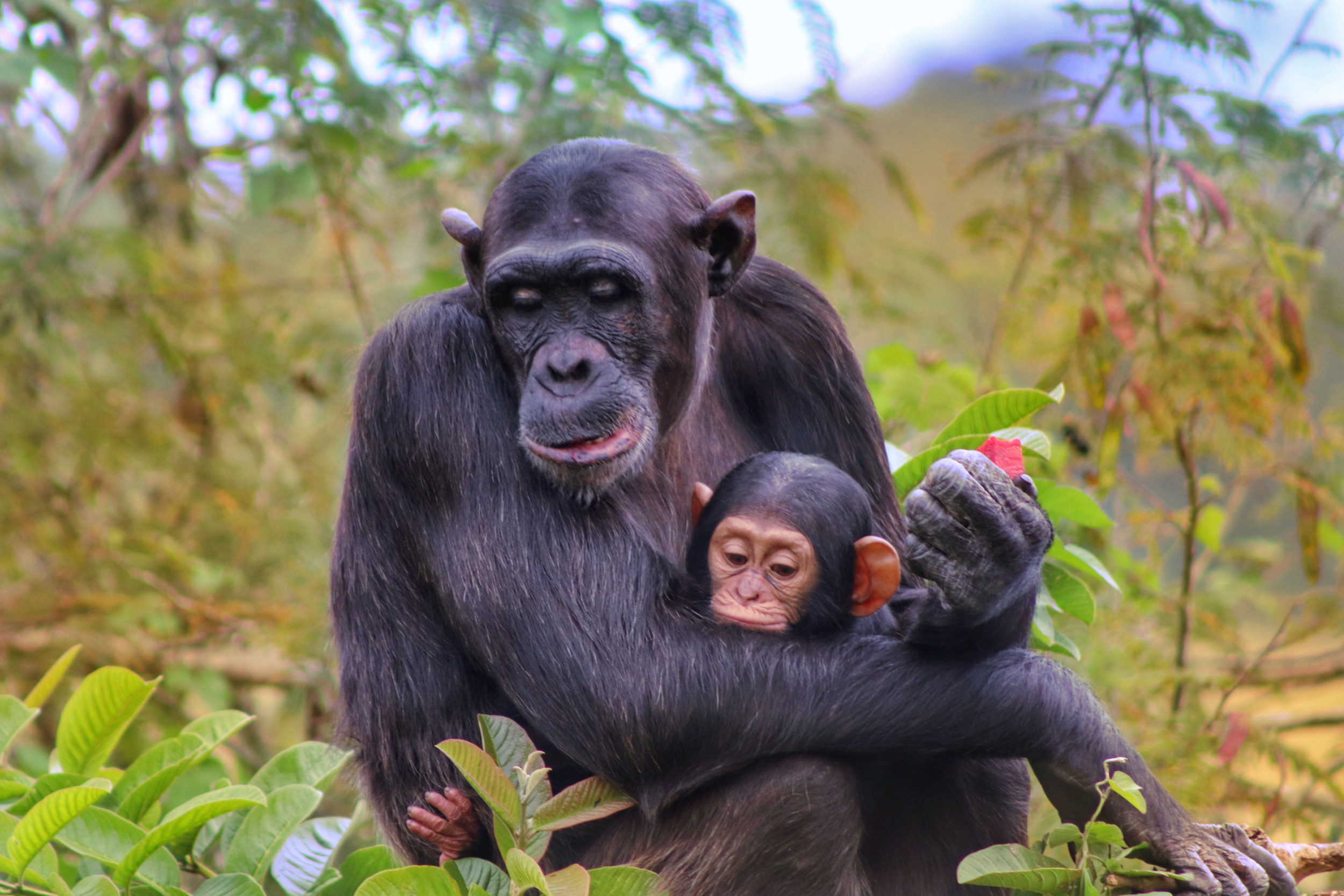
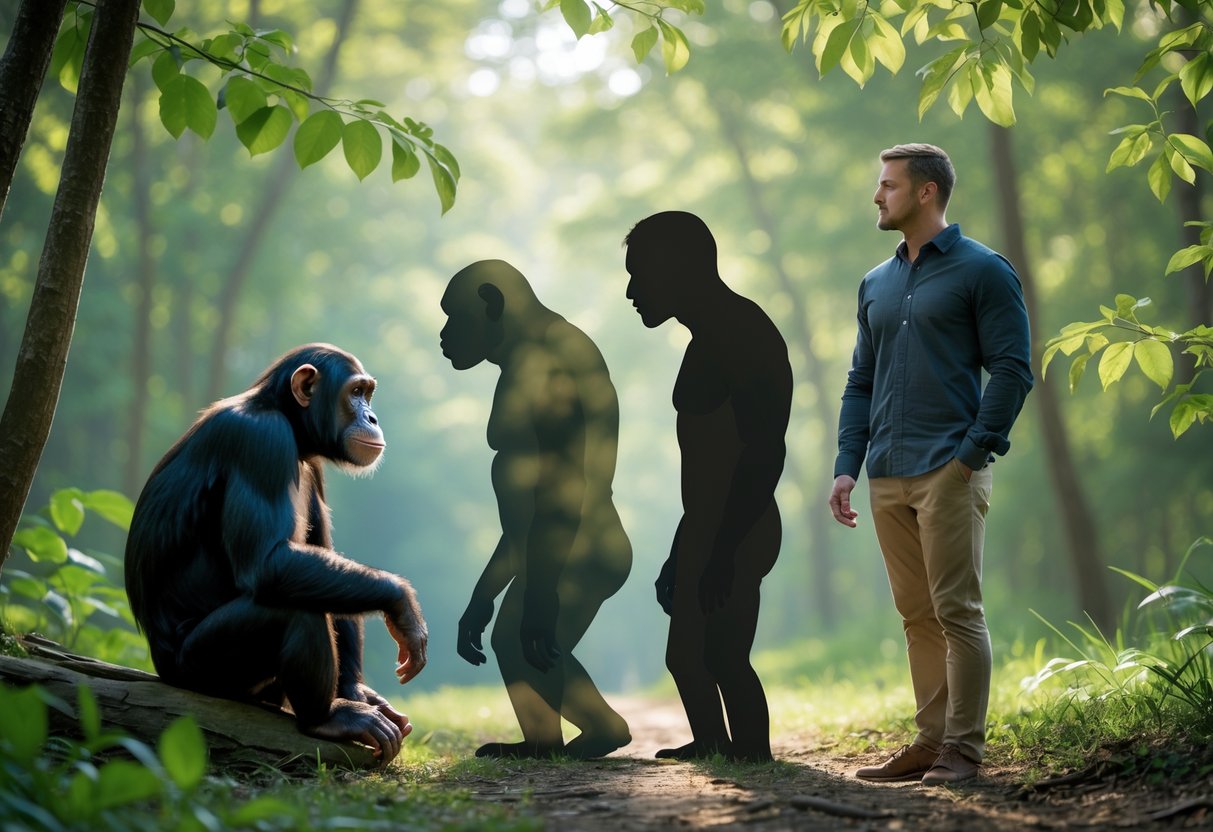
It is a common misconception that humans evolved directly from modern chimpanzees. Instead, both humans and chimpanzees are contemporary species that share a common ancestor who lived in the late Miocene epoch. This ancestor was neither a modern human nor a modern chimpanzee, but a distinct primate population that inhabited the forests of Africa. Over millions of years, environmental pressures, geographic isolation, and natural selection drove the divergent evolution of these two lineages.
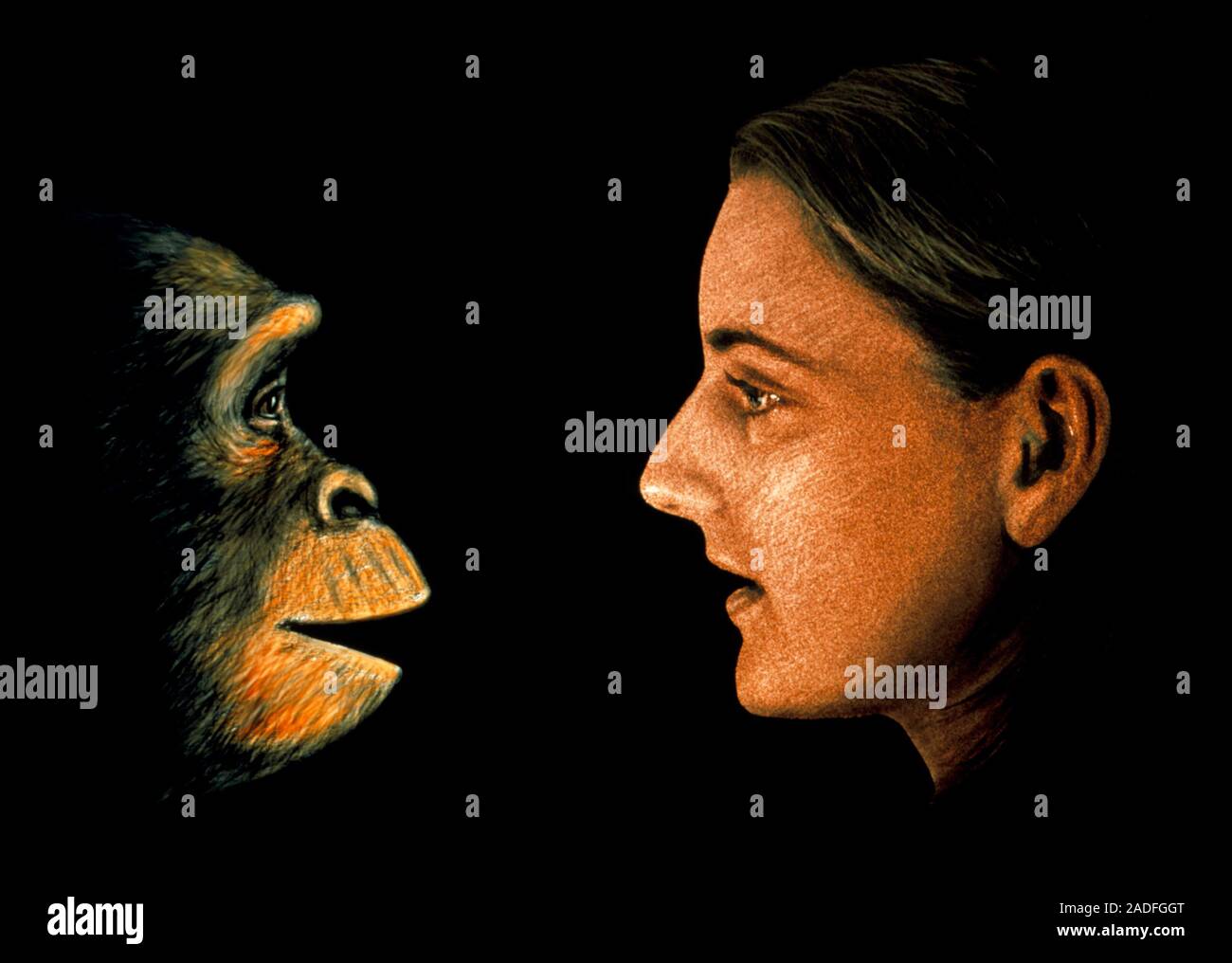
The divergence is supported by evidence that spans multiple scientific disciplines. Genomic comparisons have revealed that humans and chimpanzees share approximately 98.8% of their DNA, a striking similarity that highlights our deep biological kinship. Despite this genetic proximity, phenotypic differences—such as bipedalism, brain size, and vocal apparatus—are profound, resulting from changes in gene expression and regulatory sequences that have accumulated since the two groups split.
The Fossil Record and the Hominin Lineage
The path from the last common ancestor to Homo sapiens is marked by a series of transitional species, collectively known as hominins. The fossil record provides a tangible timeline of the adaptations that define the human lineage.
Early Hominins: The Transition to Bipedalism
The earliest known hominins, such as Sahelanthropus tchadensis (dated to approximately 7 million years ago) and Orrorin tugenensis, show signs of bipedal locomotion, the defining characteristic of the human lineage. Bipedalism is believed to have provided an evolutionary advantage in a shifting African landscape where forests were giving way to more open savanna environments. By walking upright, these early ancestors could travel more efficiently between food sources and maintain a lower profile while traversing exposed terrain.
The Genus Australopithecus
Following these early forms, the genus Australopithecus emerged around 4 million years ago. Species such as Australopithecus afarensis—famously represented by the "Lucy" fossil—demonstrate a combination of human-like walking capabilities and ape-like upper body anatomy. These organisms were not yet tool users in the modern sense but represent a critical stage of adaptation where upright posture became a permanent trait.
The Emergence of Genus Homo
The transition to the genus Homo occurred roughly 2.5 million years ago. Homo habilis is often cited as one of the first species to reliably utilize stone tools, a behavioral shift that corresponds with an increase in cranial capacity. This trajectory continued with Homo erectus, a species that mastered fire and expanded its range beyond Africa, followed eventually by the emergence of archaic humans like Homo heidelbergensis and Homo neanderthalensis, and finally the appearance of anatomically modern Homo sapiens roughly 300,000 years ago.
Biological and Genetic Divergence
While the morphological differences—such as the S-shaped spine in humans compared to the C-shaped spine in chimpanzees—are visually apparent, the genetic mechanisms driving these changes are complex. Evolutionary biologists point to "conserved non-coding elements" (CNEs) as key drivers of human-specific traits. These are segments of DNA that do not code for proteins but regulate when and how genes are expressed during development.
Brain Development and Cognitive Complexity
One of the most significant differences between humans and chimpanzees is the size and complexity of the brain. The human brain is roughly three times larger than that of a chimpanzee. This expansion has been linked to several human-specific gene mutations, particularly those affecting the rate of neural cell proliferation. These mutations have allowed for a prolonged period of juvenile development, facilitating increased social learning and the acquisition of complex language.
Comparative Biological Characteristics
To understand the evolutionary distance, it is useful to compare key anatomical and functional markers that differentiate the two lineages.
| Feature | Modern Chimpanzee | Modern Human |
|---|---|---|
| Locomotion | Quadrupedal (knuckle-walking) | Obligate Bipedalism |
| Brain Volume | ~300–400 cubic centimeters | ~1,300–1,500 cubic centimeters |
| Canine Teeth | Large and prominent | Small and non-projecting |
| Pelvis Shape | Long and narrow | Short and bowl-shaped |
| Foramen Magnum | Positioned toward the rear | Centrally positioned under skull |
Environmental Pressures and Selection
The "Savanna Hypothesis" has long been a foundational concept in human evolution, suggesting that the drying climate of East Africa forced early hominins to abandon the forest canopy in favor of open grasslands. Recent research suggests a more nuanced reality, involving a shifting mosaic of environments. This variability in climate forced early hominins to be generalists, capable of adapting to fluctuating resource availability.
The requirement for increased energy for a growing brain also dictated evolutionary strategy. The adoption of stone tools for foraging and the processing of meat provided higher-calorie nutrients, which likely supported the metabolic demands of a larger brain. This feedback loop—between tool use, diet, and brain size—is a central theme in the evolution of the Homo genus.
Frequently Asked Questions
Did humans evolve from chimpanzees currently living in zoos or the wild?
No. Humans and chimpanzees evolved along separate branches from a common ancestor that lived millions of years ago. Modern chimpanzees have undergone their own millions of years of evolutionary change since that divergence, just as humans have.
Why do we not see "half-human, half-ape" creatures in the fossil record?
The fossil record reveals a series of distinct species that occupy the space between the common ancestor and modern humans. These species are not "half-human"; they are complete, functional biological entities that existed in specific environments. The perceived "gap" is bridged by a dense collection of hominin fossils that document the gradual acquisition of traits like bipedalism and tool use.
What is the evidence that humans and chimpanzees are related?
The evidence is multifold, primarily centered on molecular biology. Genomic sequencing shows that humans and chimpanzees share nearly 99% of their genetic code. Furthermore, endogenous retroviruses—remnants of ancient viral infections—are found in identical locations in both the human and chimpanzee genomes, which is statistical evidence of common ancestry.
Does evolution imply that humans are "more evolved" than chimpanzees?
In biological terms, "more evolved" is a misleading concept. Both humans and chimpanzees are equally "evolved" in the sense that both have been subject to millions of years of natural selection, resulting in species perfectly adapted to their respective niches. Humans are specialized for culture and complex cognition, while chimpanzees are specialized for life in their native forest habitats.
What is the role of the "missing link" in current science?
The term "missing link" is largely considered obsolete by modern scientists. It implies a single, linear chain of evolution, whereas the actual process was a branching "bush" of many different species. Scientists no longer look for a single missing fossil, but rather study the diverse, documented hominin tree to understand the complex pathways of descent.
Next Steps in Evolutionary Research
As we move through 2026, research into the human lineage continues to evolve through the integration of ancient DNA (aDNA) analysis and advanced computational modeling. While the fossil record remains foundational, the ability to sequence the genomes of archaic hominins like Denisovans and Neanderthals has provided new insights into interbreeding and genetic exchange. For those interested in pursuing further study, the Smithsonian Institution’s Human Origins Program offers extensive digital archives and up-to-date documentation on the latest discoveries in the field.
Image Gallery
Select an image to open it in a new tab.


Omar Farooq
EdTech Innovation and Virtual Pedagogy Journalist
