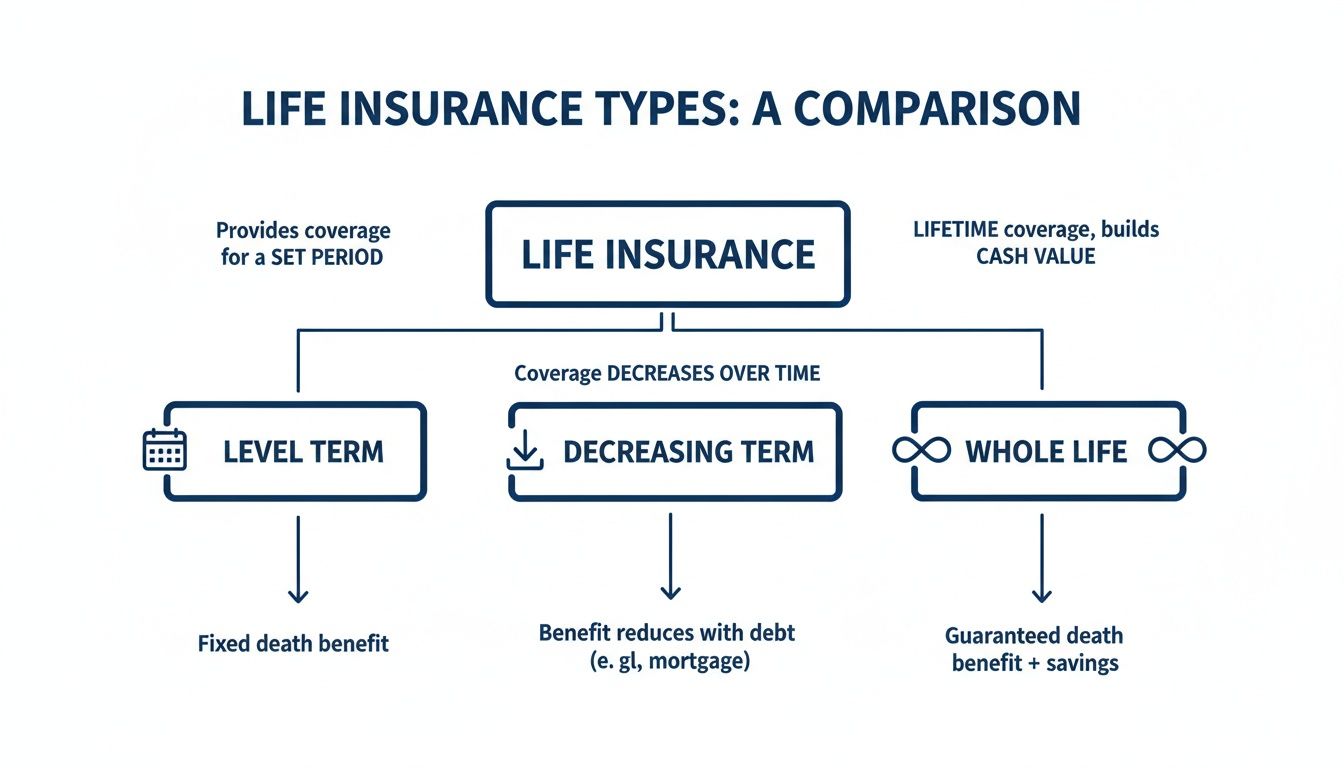
The AARP Level Benefit Term Life Insurance program, underwritten by New York Life Insurance Company, is designed to provide older adults with a straightforward, fixed-premium life insurance solution. It features coverage amounts that remain constant throughout the duration of the term, ensuring that beneficiaries receive the full death benefit regardless of when the insured passes away during the coverage period.
Understanding the Structure of AARP Level Benefit Term Life
To comprehend how this insurance product functions, it is necessary to first understand the distinction between "level benefit" and other common life insurance structures. In many older-age life insurance products, benefits may be "graded," meaning the death benefit increases over time or is limited during the first few years of the policy. The AARP Level Benefit Term Life policy removes this complexity by providing the full face amount of the policy from day one, provided the application is approved and premiums are paid.
"Term" life insurance refers to a policy that provides coverage for a specific period rather than for the entirety of one's life. When you enroll in an AARP Level Benefit Term Life policy, you are purchasing protection for a defined duration. During this term, your premiums are locked in at a fixed rate, protecting you from the annual cost increases often associated with age-based insurance renewals. This predictability is a primary driver for members who prefer stable budgeting for their estate planning needs.
Eligibility and Prerequisites for Enrollment
The AARP Level Benefit Term Life program is exclusively available to AARP members. If you are not currently a member, you must join AARP before you can apply for the insurance. Beyond membership, the program has specific age restrictions and residency requirements that must be met to qualify for coverage.
- Membership Status: You must be an active AARP member in good standing. This includes residents of the United States, Puerto Rico, and the U.S. Virgin Islands.
- Age Requirements: Eligibility is typically restricted to a specific age range. As of 2026, the enrollment age generally spans from 50 to 74 years old. It is important to note that once your policy is active, the coverage may continue beyond the initial enrollment age, provided you maintain your premium payments and meet the policy’s ongoing conditions.
- Health Documentation: Unlike "guaranteed acceptance" products, the Level Benefit Term Life policy involves a simplified underwriting process. While it does not always require a full medical examination, you will be required to answer health-related questions during the application process. Your eligibility is contingent upon the accuracy and contents of these health disclosures.
The Underwriting Process: What to Expect
The underwriting phase for this specific insurance product is designed to be efficient, moving away from the cumbersome medical exams required by traditional whole life or high-value term policies. Applicants should be prepared to provide medical history details that the insurer will use to assess risk.
The underwriting decision relies on your responses to health questions and potentially third-party data, such as prescription drug history or medical information bureau (MIB) reports. Because this is a term product with a fixed death benefit, the insurer balances the risk of a payout against the fixed premiums. If your health profile falls outside the insurer's guidelines, you may be declined, or you may be offered an alternative policy structure. Being transparent during this phase is critical, as any material misrepresentation on the application can lead to a denial of claims later, or the voiding of the policy entirely.
Comparing AARP Level Benefit Term Life to Alternatives
Choosing the right life insurance requires an objective comparison of your financial goals against the available products. The following table highlights the operational differences between the Level Benefit Term policy and other common insurance vehicles.
| Feature | AARP Level Benefit Term | Guaranteed Acceptance Life | Whole Life Insurance |
|---|---|---|---|
| Death Benefit | Fixed/Level | Graded (Early years) | Fixed/Guaranteed |
| Premiums | Fixed for the term | Fixed for life | Fixed for life |
| Medical Exam | Simplified Underwriting | None (No health questions) | Varies (Often requires exam) |
| Expiration | Terminates at age 80 | Never expires | Never expires |
| Cash Value | None | Limited/None | Accumulates over time |
This table illustrates that the Level Benefit Term policy is best suited for individuals who have a specific timeframe in mind—such as covering a mortgage balance until it is paid off or ensuring funeral expenses are covered—without the long-term cost of a whole life policy or the restricted payouts of a guaranteed acceptance policy.
Financial Planning and Coverage Needs
When determining how much coverage you require, you should conduct a thorough analysis of your outstanding financial obligations. This exercise is often called a "needs analysis." For many AARP members, the objective is to provide a "final expense" cushion, which covers burial costs, medical bills, and probate fees. Others use the policy to bridge the gap between their retirement date and the age at which they plan to draw on Social Security or other retirement accounts.
Consider the following factors when selecting your benefit amount:
- Debt Liquidation: Do you have remaining mortgage debt, personal loans, or outstanding credit lines that your spouse would be responsible for?
- Estate Taxes: If your estate is substantial, the death benefit can provide liquidity for heirs to pay inheritance or estate taxes without liquidating property.
- Income Replacement: If your death would result in the loss of a pension or Social Security income for a surviving spouse, the death benefit can serve as a temporary financial bridge.
- Final Expenses: The average cost of a funeral in the United States continues to evolve; the death benefit should be sufficient to account for current market prices for services and markers.
Practical Steps for Applying
- Confirm Membership: Ensure your AARP membership is active and your contact information is up to date.
- Gather Records: Collect your primary care physician’s contact information, a list of current prescriptions, and a summary of your health history.
- Review the Quote: Use the official AARP/New York Life online portal to obtain a personalized quote based on your age, gender, and requested coverage amount.
- Submit the Application: Complete the health questionnaire honestly. Once submitted, the insurance provider will initiate the review.
- Payment Setup: Most applicants opt for an automatic bank draft (EFT) to ensure premiums are paid on time, as a lapse in payment can lead to the termination of the policy.
Common Limitations and Troubleshooting
One of the most frequent points of confusion is the "termination age." This policy is term insurance, not permanent insurance. Consequently, coverage typically ends when the insured person reaches a certain age (often 80). If you reach this age and still require coverage, you will not be able to rely on this specific policy for continued protection. You must plan for how your insurance needs will shift as you transition through your 70s and 80s.
If your application is declined, do not automatically assume you are uninsurable. It is advisable to ask the insurer for the specific reason for denial. Sometimes, this is due to a simple clerical error or missing information that can be rectified with a re-application or an appeal. If the denial is based on legitimate health factors, you may want to consult with a licensed independent insurance agent who can help you find companies that specialize in high-risk or "impaired risk" applicants.
Essential FAQ for Policyholders
What happens if I stop paying my premiums? If premiums are not paid within the grace period (usually 31 days), the policy will lapse. Once it lapses, you lose your coverage, and you may be required to re-apply and qualify again, potentially at a higher age-based rate or with more restrictive health requirements.
Can I increase my coverage amount later? Generally, to increase your coverage, you would need to apply for an additional policy or a new policy altogether. A change in coverage is effectively a new contract subject to the underwriting standards of the year you apply.
Is the death benefit taxable? In the United States, life insurance death benefits are generally received income-tax-free by the beneficiary. However, they may be included in your taxable estate for estate tax purposes. It is recommended to consult a tax advisor regarding the specifics of your estate size.
Are there exclusions for cause of death? Most life insurance policies, including the AARP Level Benefit Term Life, include a suicide clause. If the insured dies by suicide within a specific period (commonly the first two years of the policy), the payout may be limited to the return of premiums paid rather than the full face value of the death benefit.
Does this policy have a cash value component? No. This is a term life product, which means it provides pure insurance protection. It does not function as a savings vehicle or an investment, and it does not accumulate cash value that you can borrow against or withdraw.
Next Steps and Recommendations
If you are considering this policy, start by assessing your current financial gaps. If your goal is to provide peace of mind for your loved ones regarding immediate expenses, calculate the total amount required for these needs and compare it against the quotes provided through the AARP Life Insurance program.
Before signing any contract, print or download the full "Policy Provisions" or "Certificate of Insurance" document provided by the issuer. This document contains the legally binding terms, exclusions, and conditions of your coverage. Do not rely solely on summary marketing materials, as the full policy document contains the specific definitions and operational rules relevant to your state of residence. If you have complex assets or significant estate concerns, sit down with a fee-only financial planner to ensure that your term insurance selection aligns with your broader financial architecture.
Image Gallery
Select an image to open it in a new tab.
Akira Tanaka
International Academic Trends Correspondent
