Commercial Auto Insurance Requirements for Illinois Taxi Drivers in 2026

To operate a taxi in Illinois in 2026, drivers must carry commercial auto insurance that meets specific state and municipal liability minimums. This typically includes a minimum of $350,000 in combined single-limit (CSL) coverage for operations in major cities like Chicago, or split-limit coverage satisfying the Illinois Vehicle Code for suburban and downstate regions.
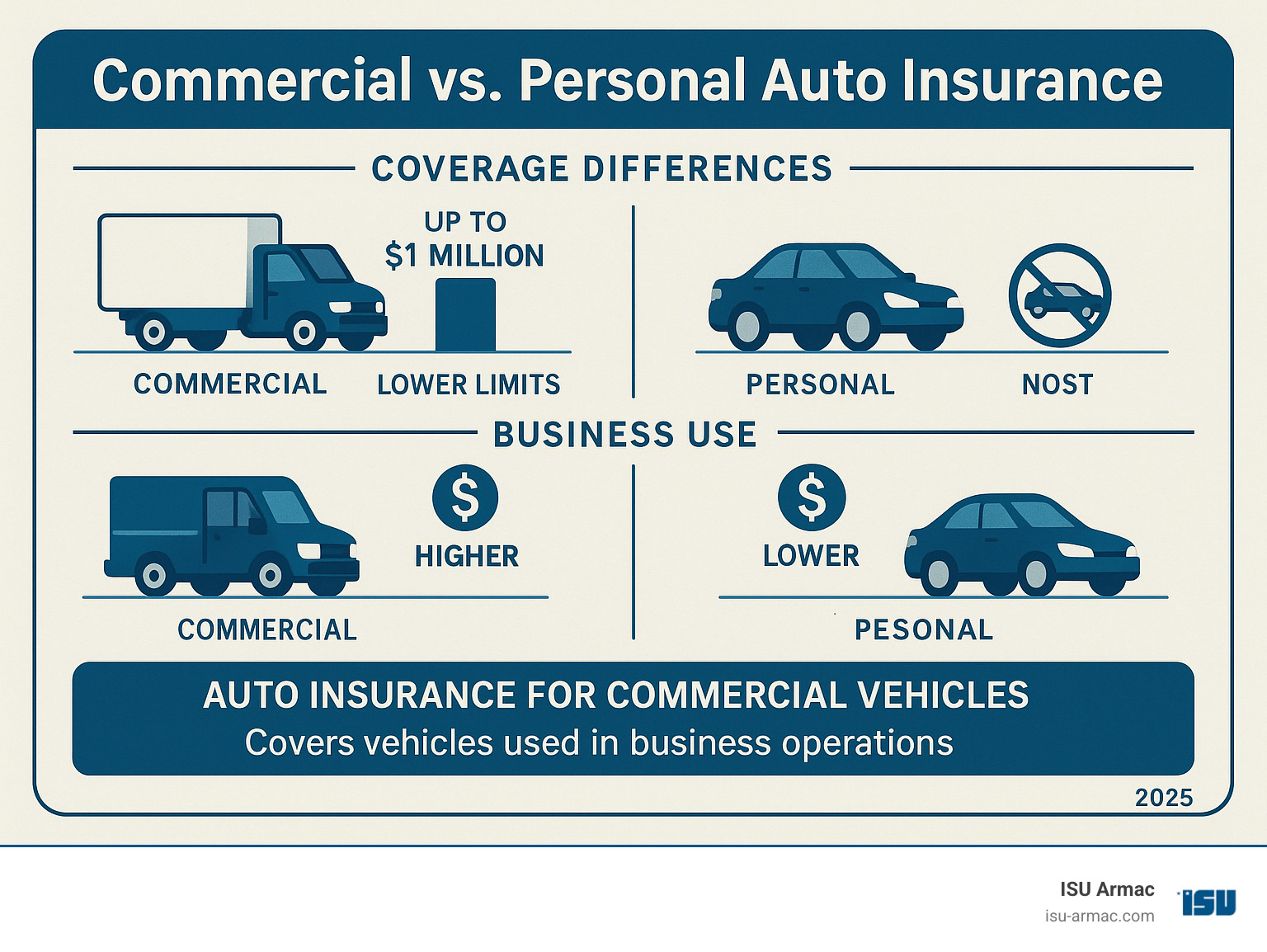
Operating a taxi service in Illinois involves navigating a complex web of state statutes and local municipal ordinances. Unlike personal auto insurance, which protects private individuals during daily commutes, commercial taxi insurance is designed for "common carriers"—entities that transport the public for a fee. Because taxi drivers are held to a higher "duty of care" under Illinois law, their insurance requirements are significantly more stringent and costly than standard commercial policies.
Whether you are an independent owner-operator or managing a small fleet, understanding the specific mandates for the 2026 calendar year is essential for maintaining your license and protecting your livelihood. This guide details the legal prerequisites, coverage types, and procedural steps necessary to secure compliant taxi insurance in the Land of Lincoln.
The Legal Foundation: Illinois Vehicle Code and Common Carrier Status
In Illinois, taxis are classified as public passenger vehicles. Under the Illinois Vehicle Code (625 ILCS 5/), any vehicle used for the transportation of passengers for hire must be covered by a motor vehicle liability policy or a bond filed with the Secretary of State.
The distinction of being a "common carrier" is legally significant. Illinois courts have long held that common carriers must exercise the highest degree of care consistent with the practical operation of their business to protect their passengers. This elevated legal status is the primary reason why taxi insurance premiums are higher than those for standard delivery or service vehicles. In 2026, the state continues to enforce strict financial responsibility laws to ensure that if an accident occurs, there are sufficient funds to cover medical expenses and property damage for passengers and third parties.
Minimum Liability Limits in Illinois
While the state sets a baseline, the actual amount of coverage you need often depends on where the vehicle is registered and where it picks up passengers. For general operations outside of major metropolitan jurisdictions, the state typically requires:
- $250,000 for bodily injury or death to any one person in any one accident.
- $500,000 for bodily injury or death to two or more persons in any one accident.
- $100,000 for damage to property of others in any one accident.
However, most specialized taxi insurers in 2026 prefer the Combined Single Limit (CSL) model. A CSL policy provides one lump sum of coverage (e.g., $350,000 or $500,000) that can be applied to any combination of bodily injury and property damage. This flexibility is often required by municipal regulators.
Geographic Nuances: The Chicago Requirement
The City of Chicago, governed by the Department of Business Affairs and Consumer Protection (BACP), maintains the strictest taxi insurance standards in the state. If you operate a taxi with a Chicago medallion, your insurance requirements are higher than the state minimums.
As of 2026, Chicago municipal code requires all public passenger vehicles to maintain a minimum of $350,000 Combined Single Limit coverage. This policy must specifically name the City of Chicago as an "additional insured" or "certificate holder" to ensure the city is notified if the policy lapses or is canceled.
The Role of the MPEA
For drivers operating at O'Hare or Midway International Airports, or those providing services under the Metropolitan Pier and Exposition Authority (MPEA) jurisdiction, additional certifications may be required. This often includes proof of insurance that specifically covers airport ground transportation activities, which carries a higher risk profile due to high traffic volume.

Essential Coverage Components for 2026
A compliant taxi policy in Illinois is not comprised of liability alone. To truly protect a business, several other components are either legally mandated or operationally necessary.
1. Uninsured and Underinsured Motorist Coverage (UM/UIM)
Illinois law requires that every auto insurance policy include Uninsured Motorist coverage. In the context of a taxi, this protects the driver and the passengers if they are hit by a driver who has no insurance or whose limits are too low to cover the damages. Given the high medical costs in 2026, many drivers opt for UM/UIM limits that match their primary liability limits.
2. Physical Damage Coverage
While the state does not mandate that you protect your own vehicle, most lenders and savvy owner-operators require it.
- Collision Coverage: Pays for repairs to your taxi if it is damaged in a crash, regardless of fault.
- Comprehensive Coverage: Protects against non-collision events such as theft, vandalism, fire, or hail. Given the unpredictable weather patterns in Northern Illinois, comprehensive coverage is often considered a non-negotiable business expense.
3. Medical Payments (MedPay)
MedPay covers immediate medical expenses for the driver and passengers following an accident, regardless of who was at fault. This is particularly useful for quickly addressing passenger injuries without waiting for a lengthy liability determination.
4. Workers' Compensation
If you own a taxi fleet and employ drivers, Illinois law generally requires you to carry Workers' Compensation insurance. This covers medical care and lost wages for drivers injured on the job. Even if you consider your drivers "independent contractors," the Illinois Workers' Compensation Commission often applies a strict test that may classify them as employees for insurance purposes.
| Feature | Rest of Illinois (Suburban/Downstate) | City of Chicago (BACP Regulated) |
|---|---|---|
| Primary Liability Limit | $250k/$500k/$100k (Split) | $350,000 (Combined Single Limit) |
| Uninsured Motorist | Required (State Minimum) | Required ($350k CSL typical) |
| Additional Insured | Generally not required by state | City of Chicago must be named |
| Proof of Insurance | Form E or Certificate of Insurance | BACP-specific Insurance Certificate |
| Regulatory Body | Secretary of State / IDOI | BACP / Secretary of State |
Documentation Required for a Quote
Securing commercial auto insurance in Illinois is a data-heavy process. Insurers in 2026 utilize advanced analytics to determine risk, and they require the following documentation to provide an accurate quote:
- Loss Runs: These are official reports from your previous insurance carriers documenting your claims history for the last three to five years. If you are a new venture, you may need to provide a personal driving record.
- Motor Vehicle Reports (MVRs): You must provide the driver's license numbers for all scheduled drivers. Insurers will check for moving violations, DUIs, and license suspensions. In Illinois, a clean record for the past 36 months is typically required for standard rates.
- Vehicle Information: This includes the Year, Make, Model, and Vehicle Identification Number (VIN) for all cabs. High-mileage vehicles (common in the taxi industry) may require a mechanical inspection report.
- Medallion or License Information: Proof of your municipal taxi license or Chicago Medallion number.
Factors Influencing Premiums in 2026
The cost of taxi insurance in Illinois remains among the highest for any vehicle class. Several factors dictate whether your premium will be manageable or a significant financial burden.
Territory and Garaging Location
A taxi garaged and operated in downtown Chicago (Cook County) will face significantly higher premiums than one operated in Springfield or Peoria. The higher density of traffic and increased frequency of accidents in the Chicago metro area drive these costs.
Driver Age and Experience
Insurers typically look for drivers who are at least 25 years old. Drivers under 25 or over 70 often face surcharges or may be excluded from coverage altogether due to statistical risk profiles.
Safety Technology and Telematics
By 2026, many Illinois taxi insurers offer discounts for vehicles equipped with active safety technology. This includes:
- Dual-facing dashcams: To provide evidence in "he-said, she-said" accident scenarios.
- Telematics devices: Which monitor braking, acceleration, and speed.
- Partitioning: Physical barriers between the driver and passengers can sometimes influence risk ratings regarding driver safety.
Common Pitfalls and Compliance Risks
Failure to maintain the correct insurance can lead to the immediate suspension of your taxi license and the impoundment of your vehicle.
- The "Personal Use" Trap: Many drivers mistakenly believe their personal auto policy will cover them if they use the car for a quick "off-clock" errand. However, if the vehicle is registered as a taxi, most personal policies have an absolute exclusion for "livery use," meaning you could be left with zero coverage even when not carrying a passenger.
- Inadequate Limits for Contracts: If you provide non-emergency medical transportation (NEMT) or school contracts, those organizations often require limits of $1,000,000 or higher, exceeding the basic city or state requirements.
- Lapses in Coverage: Even a one-day lapse in insurance is reported to the Illinois Secretary of State and the Chicago BACP. This can trigger an automatic suspension of your vehicle's registration.
How to Obtain and Verify Coverage
To ensure you are fully compliant with 2026 standards, follow these steps:
- Consult a Specialized Broker: Do not use a standard "direct-to-consumer" personal insurance site. Taxi insurance is a "surplus lines" or "specialty market" product. Work with a broker who has access to carriers like Progressive Commercial, Berkshire Hathaway Homestate, or local Illinois mutuals.
- Verify the Carrier's Rating: Ensure the insurance company has an A.M. Best rating of A- (Excellent) or better. The Illinois Department of Insurance provides resources to check the financial stability of licensed insurers.
- Review the Form E Filing: If required, ensure your insurer has filed a "Form E" with the Illinois Commerce Commission or the Secretary of State. This is the official notification that your liability insurance is in effect.
- Keep Digital and Physical Proof: Illinois law allows for digital proof of insurance, but taxi drivers are strongly encouraged to keep a hard copy of their Acord Certificate of Insurance in the glove box to avoid delays during police inspections or BACP audits.
Frequently Asked Questions
Does a ride-share policy (Uber/Lyft) count as taxi insurance in Illinois?
No. In 2026, Illinois continues to distinguish between Transportation Network Companies (TNCs) and traditional taxis. TNC drivers operate under a different set of regulations and different insurance structures. A taxi driver must have a specific commercial livery policy that mentions "taxicab" or "public passenger vehicle" use.
What is the average cost of taxi insurance in Illinois for 2026?
While costs vary wildly, a single taxi in Chicago can expect to pay between $5,000 and $12,000 per year for a compliant $350k CSL policy. Downstate drivers may see rates closer to $3,000 to $6,000, depending on their loss history and vehicle value.
Can I get insurance if I have a DUI on my record?
It is extremely difficult. Most commercial carriers in the Illinois market will not "schedule" a driver with a DUI conviction within the last five to seven years. If you are an owner-operator with a recent DUI, you may be forced into the high-risk "assigned risk" pool, where premiums are substantially higher.
Are passengers covered if the accident is not my fault?
If the other driver is at fault, their insurance is primary. However, if they are uninsured or hit-and-run, your taxi policy’s Uninsured Motorist (UM) coverage will pay for your passengers' injuries. This is a crucial protection that ensures you are not personally sued for a passenger's medical bills.
Do I need insurance for "Deadhead" time?
Yes. Commercial taxi insurance provides "full-time" coverage. This means you are protected while you have a passenger (Period 3), while you are dispatched to a pickup (Period 2), and while you are cruising or parked waiting for a fare (Period 1). There should be no "gaps" in your coverage throughout the day.
Final Recommendation for Illinois Drivers
For the 2026 fiscal year, the most proactive step an Illinois taxi driver can take is to audit their liability limits against current municipal requirements. If you operate within 50 miles of Chicago, it is highly recommended to carry a $1,000,000 Combined Single Limit policy. While this exceeds the $350,000 minimum, the relatively small increase in premium provides a massive buffer against the rising costs of litigation and medical care in Illinois. Additionally, installing a high-quality, cloud-synced dashcam is the single best way to protect your insurance rates from fraudulent claims and ensure your policy remains renewable year after year.
Image Gallery
Select an image to open it in a new tab.





Akira Tanaka
International Academic Trends Correspondent
