
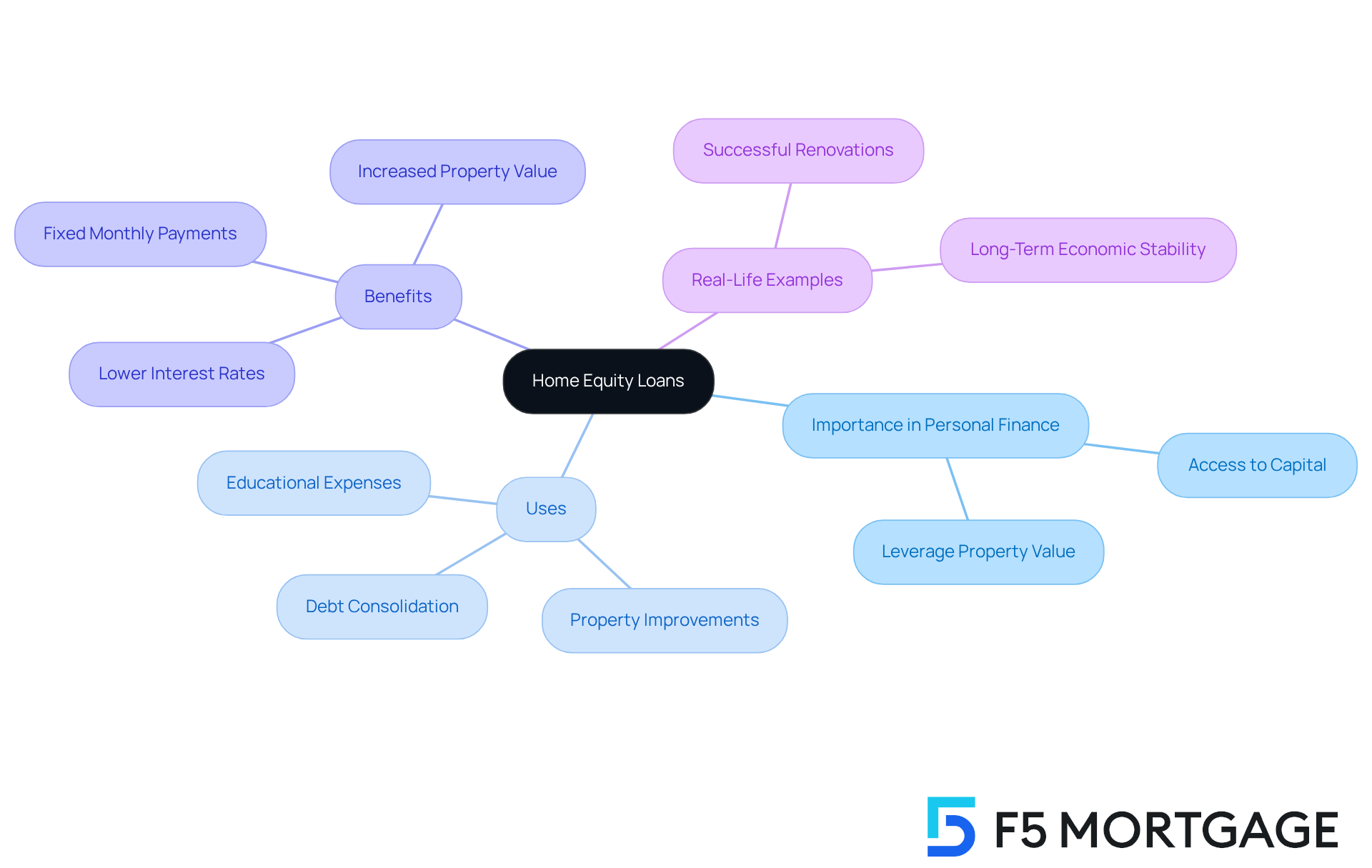
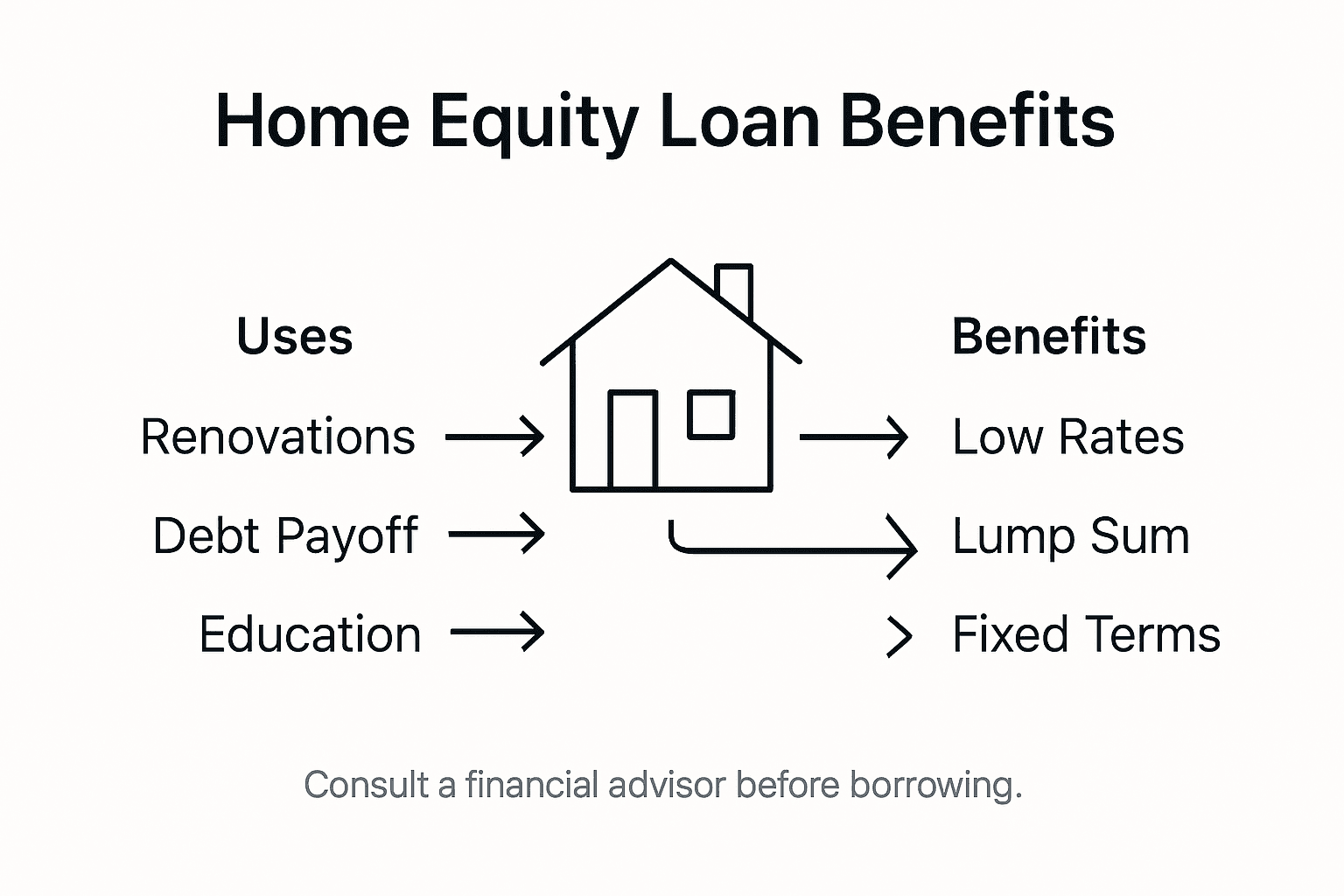
A personal home equity loan is a secured loan that allows homeowners to borrow a lump sum of money by leveraging the built-up equity in their residential property. Repaid over a fixed term with a fixed interest rate, it provides predictable monthly payments, making it a popular financing option for major expenses like renovations or debt consolidation.
What Is a Home Equity Loan and How Does It Work?
A personal home equity loan—often referred to as a second mortgage—is a financial product that converts the unencumbered value of your home into cash. When you purchase a house with a mortgage, your equity increases over time through two primary mechanisms: paying down the principal balance of your primary mortgage and the natural appreciation of the property's market value.
Unlike an open line of credit, a standard home equity loan operates as a closed-end credit agreement. Upon closing, the lender disburses the entire approved loan balance in a single lump-sum payment. You then repay this principal amount, along with fixed interest, over a predetermined timeframe ranging anywhere from 5 to 30 years.
Because your real estate serves as collateral, home equity loans generally carry lower interest rates than unsecured debt products like personal loans or credit cards. However, using your home as collateral also introduces risk: failing to meet your repayment obligations can lead to default and potential foreclosure by the lender.
How Lenders Calculate Available Equity
Lenders assess how much you can borrow using two primary metrics: Loan-to-Value (LTV) and Combined Loan-to-Value (CLTV) ratios. Most financial institutions permit homeowners to borrow up to a maximum CLTV of 80% to 85% of the property's appraised value, though select lenders may go higher for borrowers with exceptional credit profiles.
To determine your borrowing capacity, lenders perform a simple calculation:
- Establish Appraised Market Value: An independent appraiser evaluates your property.
- Apply the Maximum CLTV Limit: Multiply the appraised value by the lender's maximum allowable percentage (e.g., 80%).
- Subtract Existing Encumbrances: Subtract your current primary mortgage balance from that threshold. The remaining figure is your maximum estimated borrowing limit.
Maximum Loan Amount = (Appraised Home Value × Maximum Allowable CLTV) - Existing Mortgage Balance
Real-World Example
Suppose your home appraises at $400,000, and your existing primary mortgage balance is $220,000. If your lender sets an 80% maximum CLTV limit:
- Maximum Total Debt Allowed (80% of $400,000): $320,000
- Less Current Primary Mortgage Balance: -$220,000
- Maximum Eligible Home Equity Loan: $100,000
Key Differences: Home Equity Loan vs. HELOC vs. Cash-Out Refinance
Homeowners seeking to tap into their property equity typically consider three primary financial instruments: fixed home equity loans, Home Equity Lines of Credit (HELOCs), and cash-out refinances. Choosing the correct loan structure depends on your payout preferences, budget stability requirements, and overall mortgage goals.
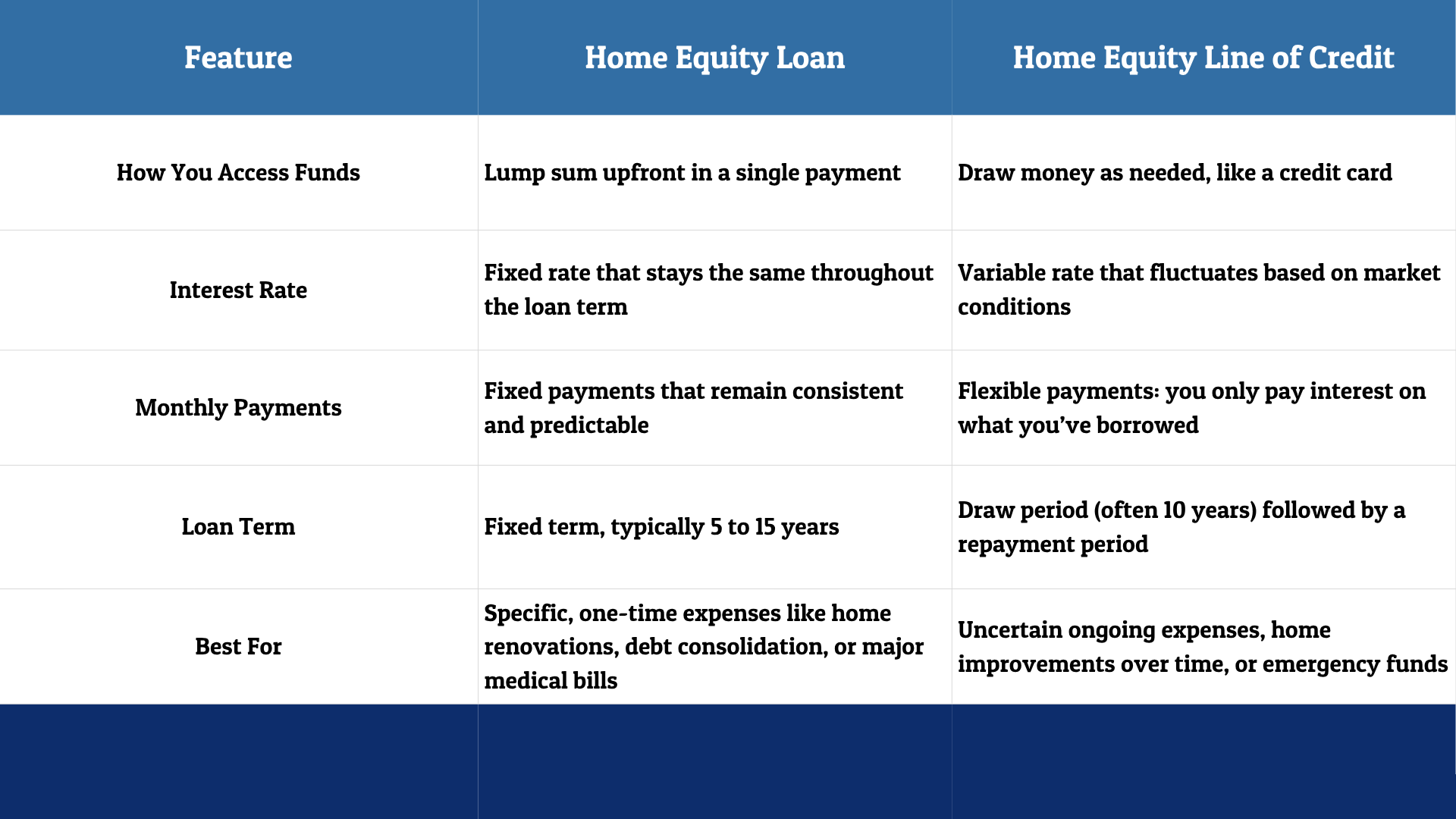
| Feature | Home Equity Loan | Home Equity Line of Credit (HELOC) | Cash-Out Refinance |
|---|---|---|---|
| Payout Structure | Single upfront lump sum | Revolving credit line | Single upfront lump sum |
| Interest Rate Type | Typically Fixed | Typically Variable | Typically Fixed |
| Repayment Term | 5 to 30 years | 10-year draw / up to 20-year repayment | 15 to 30 years (new main mortgage) |
| Number of Mortgages | Two (Primary + Second) | Two (Primary + Second) | One (Replaces primary mortgage) |
| Monthly Payment | Fixed, predictable payments | Variable; interest-only during draw phase | Fixed, consolidated monthly payment |
| Best For | Large, one-time planned costs | Ongoing or unpredictable expenses | Refinancing primary rate while tapping cash |
Home Equity Loan vs. HELOC
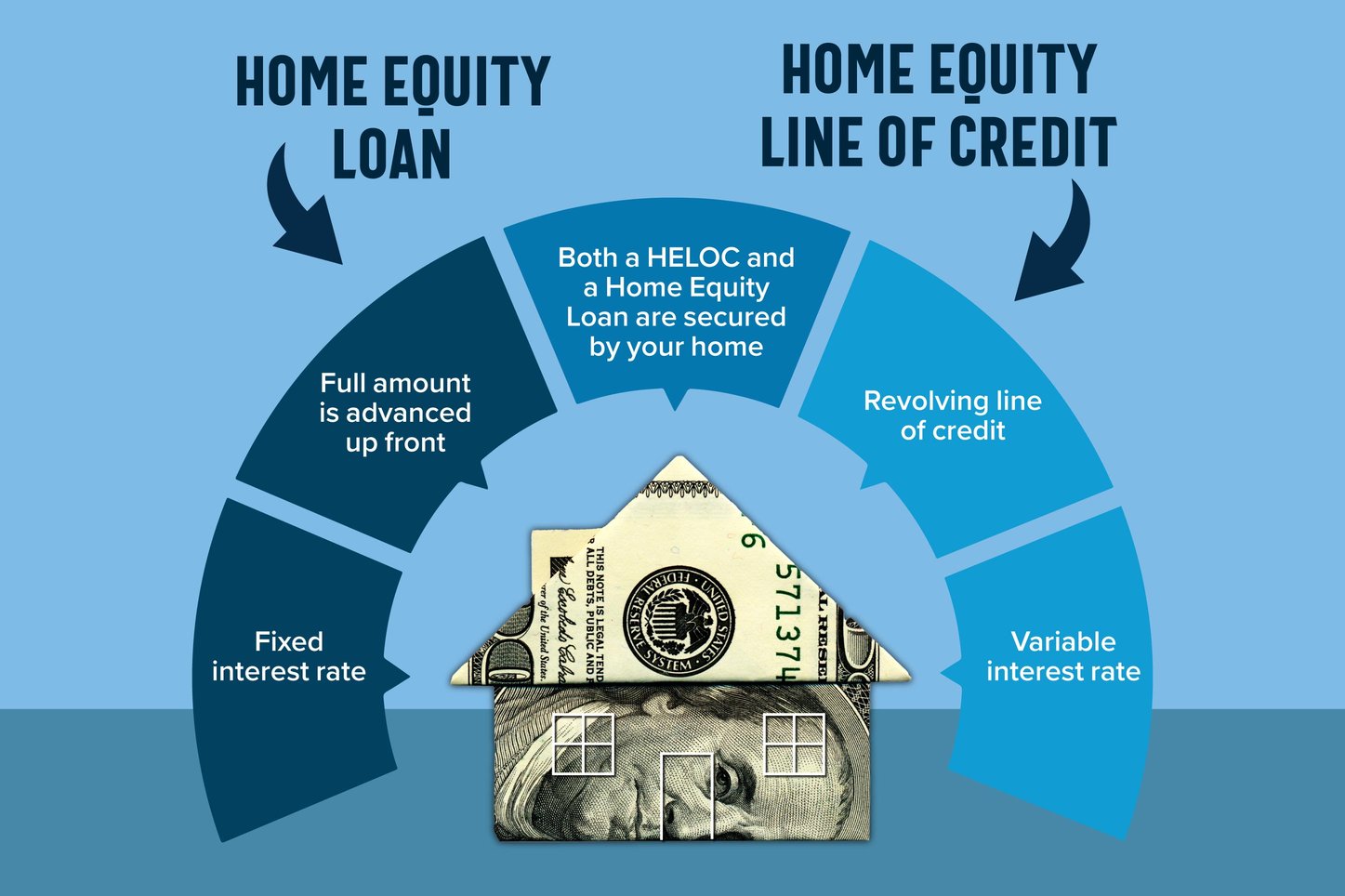
While both draw against your home's equity as second mortgages, a home equity loan delivers fixed-rate stability. A HELOC operates more like a credit card: you draw funds as needed up to a set limit during an initial draw period (typically 10 years). During this draw period, you may only be required to make interest payments, after which the loan converts to a full principal-and-interest repayment period. Because HELOCs usually feature variable interest rates, your monthly payment can fluctuate as benchmark market rates change.
Home Equity Loan vs. Cash-Out Refinance
A cash-out refinance replaces your existing primary mortgage entirely with a new, larger loan. The new loan pays off the remaining balance of the original loan, and the difference is disbursed to you in cash. If your existing primary mortgage already has a low interest rate, taking out a separate home equity loan allows you to keep that primary loan intact without altering its low interest rate.

Standard Eligibility Requirements for Borrowers
Qualifying for a personal home equity loan involves rigorous underwriting. Lenders evaluate your financial profile to confirm that you have sufficient equity and the ongoing cash flow needed to manage two monthly mortgage payments.
1. Equity and Combined Loan-to-Value (CLTV)
Lenders generally require you to retain at least 15% to 20% equity in your home after accounting for the new loan. This means your total combined debt secured by the property cannot exceed 80% to 85% of its appraised market value.
2. Credit Score Thresholds
While minimum credit score requirements vary by lender:
- 620 to 650: Typically the absolute minimum required score to qualify with most traditional lenders.
- 680 to 730: Unlocks more competitive interest rates and flexible terms.
- 740+: Secures the lowest available interest rates and highest borrowing caps.
3. Debt-to-Income (DTI) Ratio
Your DTI ratio compares your total monthly debt payments (including your primary mortgage, prospective home equity loan, auto loans, student debt, and credit card minimums) to your gross monthly income. Lenders generally prefer a DTI ratio below 43%, though some financial institutions may allow up to 45% or 50% for applicants with higher credit scores or substantial cash reserves.
4. Verified Income and Employment History
Borrowers must present documented proof of stable income. Lenders typically inspect:
- Recent pay stubs (covering the last 30 to 60 days)
- W-2 statements or 1099 forms from the past two years
- Complete personal tax returns for the past two tax years
- Bank statements verifying liquid assets and reserve funds
Costs, Interest Rates, and Tax Implications
Understanding the financial obligations associated with a home equity loan requires looking beyond the headline interest rate to account for closing costs and potential tax ramifications.
Total Borrowing Cost = Principal Amount + Lifetime Accrued Interest + Upfront Closing Costs
Interest Rate Dynamics
Home equity loan interest rates are tied to broader economic benchmark indicators, such as the U.S. Prime Rate and Treasury yields. Because second mortgages carry a higher risk for the lender than primary mortgages—in the event of default, the primary mortgage holder is paid first—interest rates on home equity loans are typically slightly higher than standard primary mortgage rates, but lower than unsecured personal loans.
Upfront Closing Costs
Closing costs for a home equity loan generally range between 2% and 5% of the total loan amount. These fees may include:
- Appraisal Fees ($350–$700): Paid to a licensed real estate appraiser to establish your property’s current market value.
- Origination and Processing Fees (0.5%–1.5%): Administrative charges levied by the lender to process and underwrite the loan application.
- Title Search and Title Insurance Fees ($200–$600): Ensures no competing liens, judgments, or legal disputes exist against your home title.
- Notary and Recording Fees ($100–$300): Legal filing fees charged by local municipal recording offices to register the second lien.
Tax Deductibility Considerations
Under IRS rules established by the Tax Cuts and Jobs Act (and applicable guidelines through 2026), interest paid on home equity loans is tax-deductible only if the loan proceeds are used specifically to "buy, build, or substantially improve" the home that secures the loan.
- Deductible Use Case: Using the loan funds to add a bedroom, replace a roof, or remodel a kitchen adds capital value to the home, making the interest potentially deductible if you itemize deductions.
- Non-Deductible Use Case: Using the funds for personal debt consolidation, tuition, wedding costs, or vacation expenses eliminates the tax deduction on that interest.
Disclaimer: Tax laws are complex and subject to individual circumstances. Consult a certified public accountant (CPA) or tax advisor to determine the specific tax treatment for your situation.
Pros and Cons of Securing a Home Equity Loan
Evaluating the benefits alongside the inherent risks helps clarify whether a home equity loan aligns with your long-term financial strategy.
Primary Advantages
- Fixed Interest Rates and Predictable Payments: The fixed rate ensures that your principal-and-interest monthly payment remains constant across the entire life of the loan, protecting your household budget from interest rate volatility.
- Lump-Sum Disbursal: Receiving the full loan balance at once provides immediate capital to fund large, precise expenditures with defined costs, such as contractor projects.
- Lower Interest Rates Than Unsecured Credit: Compared to personal loans or high-interest credit cards, home equity loans offer significantly lower interest rates, reducing long-term borrowing costs.
- Extended Repayment Windows: Terms up to 15 or 30 years lower your required monthly outlay compared to short-term personal loans.
Key Risks and Drawbacks
- Foreclosure Risk: Because your primary residence acts as security, any prolonged failure to make monthly payments can result in legal default and property foreclosure.
- Closing Fees and Friction: Upfront origination, appraisal, and title fees mean home equity loans can be inefficient for smaller borrowing amounts (e.g., under $10,000).
- Risk of "Overcollateralization": Borrowing heavily against your home reduces your net home equity. If local real estate values decline, you could end up owing more total debt than your property is worth (commonly known as being "underwater").
- Inflexibility: Once disbursed, you cannot re-borrow against the paid-down principal as you can with a revolving HELOC without executing a completely new loan application.
Step-by-Step Application Process
Securing a personal home equity loan generally takes anywhere from 2 to 6 weeks from initial submission to final funding. Following a structured approach helps speed up underwriting.
- Calculate Equity
- Shop Lenders
- Submit Application
- Property Appraisal
- Closing & Funds
Step 1: Evaluate Your Equity and Financial Health
Check your current primary mortgage balance and research recent comparable sales in your neighborhood to estimate your home's value. Request your credit reports to ensure there are no errors that could artificially depress your credit score.
Step 2: Compare Quotes Across Multiple Lenders
Obtain official Loan Estimates from multiple sources, including commercial banks, credit unions, and independent mortgage lenders. Compare borrowing parameters beyond the interest rate, paying attention to:
- Annual Percentage Rates (APR), which reflect both interest rates and mandatory fees
- Upfront closing costs and fee waivers
- Prepayment penalty clauses (if any)
Step 3: Organize Required Documentation
Prepare your financial paperwork in advance. Lenders routinely ask for:
- Proof of income (pay stubs, W-2s, or 1099s)
- Recent bank statements showing liquid assets
- Your most recent primary mortgage statement showing an up-to-date payment record
- Proof of homeownership and property hazard insurance declarations
Step 4: Complete the Application and Home Appraisal
Submit your formal loan application. The lender will order a professional, independent home appraisal to confirm the property's current value and calculate your precise CLTV ratio.
Step 5: Underwriting Review, Closing, and Disbursal
The lender's underwriting department reviews your complete file to verify your income, credit performance, and property valuation. Once approved, you will attend a formal closing to sign the legal loan agreement and mortgage disclosure documents.
The Three-Day Right of Rescission
Under the federal Truth in Lending Act (TILA), consumers securing a loan against their primary residence benefit from a mandatory three-day right of rescission. You have the legal right to cancel the loan agreement without penalty until midnight of the third business day after signing your closing documents. The lender cannot disburse funds until this cooling-off period expires.
Frequently Asked Questions
Can I get a home equity loan with bad credit?
While it is challenging, some specialized lenders offer home equity loans to borrowers with credit scores below 620. However, these bad-credit home equity loans come with higher interest rates, stricter maximum CLTV caps (often limited to 70% or 75%), and higher upfront fee structures to compensate for the lender's increased risk.
What happens to my home equity loan if I sell my house?
If you sell your property, the proceeds of the sale are used to satisfy all existing liens against the title at closing. The primary mortgage is paid off first, followed immediately by the home equity loan. Any remaining proceeds after both loans and real estate agent commissions are satisfied belong to you.
Is a home equity loan better than an unsecured personal loan?
A home equity loan typically offers lower interest rates and longer repayment windows than an unsecured personal loan because it is backed by collateral. However, if you default on an unsecured personal loan, your credit score takes a hit, but you do not face direct foreclosure on your home. For smaller loan amounts or short repayment windows, a personal loan may be preferable to avoid closing costs and property collateralization.
How long does it take to receive funds from a home equity loan?
The entire process—from initial application submission through property appraisal, underwriting, and closing—typically takes 15 to 45 days. Once closing documents are signed, federal law requires a mandatory three-business-day rescission period before funds can be wire-transferred or issued via check.
Can I use a home equity loan for debt consolidation?
Yes, using a fixed-rate home equity loan to consolidate high-interest credit cards or consumer debt is a common strategy. It replaces multiple variable-rate debts with a single, lower-interest fixed monthly payment. However, it converts unsecured consumer debt into debt secured by your home, meaning failure to repay could jeopardize your housing situation.
Next Steps: Is a Home Equity Loan Right for You?
A personal home equity loan is a practical tool for financing major, fixed expenses when you want the security of fixed monthly payments and lower interest rates. However, taking out a second mortgage requires careful consideration of your financial stability and the risks of using your primary residence as collateral.
Before applying:
- Define Your Need: Ensure the expenditure provides long-term value, such as property capital improvements or high-interest debt resolution.
- Review Your Budget: Verify that your household cash flow comfortably accommodates both your primary mortgage and the new fixed monthly loan payment.
- Shop Multiple Lenders: Request formal Loan Estimates from credit unions, regional banks, and online mortgage lenders to secure the lowest overall APR and closing fees.
Image Gallery
Select an image to open it in a new tab.




Vivian Cho
Executive IT and Emerging Technologies Reporter
