
Argentina is a federal presidential representative democratic republic. Under this system, the President of the Argentine Nation serves as both the head of state and the head of government. Power is divided among three independent branches—executive, legislative, and judicial—while the country’s 23 provinces and the Autonomous City of Buenos Aires maintain significant local autonomy under a federalist framework.
The Argentinian political system is defined by its complexity, historical evolution, and a strong emphasis on executive authority. To understand how Argentina is governed in 2026, one must look beyond simple definitions and explore the interplay between the central government in Buenos Aires and the diverse provinces, the constitutional safeguards established to prevent the return of authoritarianism, and the specific mechanisms that allow the state to function. This guide provides a deep analysis of the Argentinian government type, its institutional architecture, and the legal foundations that support its democracy.
The Constitutional Foundation: The 1853 Framework and 1994 Reforms
The bedrock of Argentina’s government is the Constitution of the Argentine Nation. Originally adopted in 1853, it was heavily inspired by the United States Constitution, aiming to balance the interests of the powerful port city of Buenos Aires with those of the interior provinces. However, the document has undergone several significant revisions, the most transformative being the 1994 Reform.
The 1853 Constitution established the federal structure and the division of powers. It sought to create a stable republic after decades of civil conflict between "Unitarians" (who favored a centralized state) and "Federalists" (who sought provincial autonomy). While the Federalists technically won the ideological battle, the resulting system created a "hyper-presidential" model that concentrated significant power in the executive branch.
The 1994 Constitutional Reform was a pivotal moment in modern Argentinian history. It introduced several key changes designed to modernize the state and provide more checks and balances. Key outcomes of this reform included:
- The creation of the Chief of the Cabinet of Ministers: A role intended to alleviate some of the President's administrative burdens and act as a link between the executive and legislative branches.
- Direct election of the President: Moving away from an electoral college system to a direct vote by the citizens.
- Reduction of the Presidential term: Shortened from six years to four years, with the possibility of one immediate reelection.
- The inclusion of "Third Senator": Ensuring that the first minority party in each province has representation in the Senate.
- The Autonomy of Buenos Aires: Granting the City of Buenos Aires its own autonomous government and legislature, distinct from the federal government.
The Executive Branch: The Center of Political Gravity
In Argentina, the executive branch is the most prominent of the three powers. As a presidential republic, the President holds the highest office and possesses wide-ranging authorities that often exceed those of presidents in other democratic systems.
Roles and Responsibilities of the President
The President is responsible for the general administration of the country, the enforcement of federal laws, and the command of the Armed Forces. Beyond these standard duties, the Argentinian President has the power to issue Decrees of Necessity and Urgency (DNU). These decrees allow the President to bypass the legislative process in exceptional circumstances, though they are subject to later review by Congress. The use of DNUs is a hallmark of Argentinian "presidencialismo," reflecting a political culture where the executive is expected to lead decisively during crises.
The Vice President and the Cabinet
The Vice President’s primary role is to preside over the Senate, where they hold a tie-breaking vote but otherwise do not participate in debates. In the event of the President's death, resignation, or removal, the Vice President assumes the presidency.
The President is assisted by a Cabinet of Ministers. Unlike the U.S. system, Argentina has a Chief of the Cabinet of Ministers, who is politically responsible to the National Congress and can be removed by a vote of censure. This position was created to transition the system toward a more semi-parliamentary feel, though in practice, the President retains ultimate control over the cabinet's direction.
The Legislative Branch: The National Congress
Argentina utilizes a bicameral legislature known as the National Congress (Congreso de la Nación). It consists of the Senate and the Chamber of Deputies. The Congress is responsible for enacting laws, approving the national budget, and overseeing the executive branch through various commissions and the power of impeachment.
The Senate (Senado)
The Senate represents the provincial states and the Autonomous City of Buenos Aires. There are 72 senators in total—three for each of the 23 provinces and three for the City of Buenos Aires.
- Representation: Two seats go to the party with the most votes, and the third seat goes to the party with the second-most votes.
- Term: Senators serve six-year terms, with one-third of the Senate being renewed every two years.
- Specific Powers: The Senate has the exclusive power to authorize the President to declare a state of siege and to try those impeached by the Chamber of Deputies.
The Chamber of Deputies (Cámara de Diputados)
The Chamber of Deputies represents the people of Argentina directly. The number of deputies for each district is proportional to its population, though no province can have fewer than five deputies.
- Total Seats: There are currently 257 seats.
- Term: Deputies serve four-year terms, with half of the chamber being renewed every two years.
- Specific Powers: All bills regarding taxes and the recruitment of troops must originate in the Chamber of Deputies.
The Judicial Branch: Guardian of the Constitution
The judiciary is the third pillar of the Argentinian government, designed to be independent of the political branches. It is headed by the Supreme Court of Justice of the Nation, which is supported by lower federal courts across the country.
The Supreme Court
The Supreme Court consists of five justices appointed by the President with the approval of two-thirds of the Senate. The court serves as the final arbiter of constitutional disputes and has the power of judicial review, meaning it can declare laws or executive acts unconstitutional.
The Council of the Magistracy
A key feature of the Argentinian judicial system, established in 1994, is the Council of the Magistracy. This body is responsible for selecting candidates for lower-court judgeships and managing the judicial budget. It was created to reduce the political influence over judicial appointments, though its composition remains a subject of intense political debate.
Federal vs. Provincial Jurisdiction
Argentina maintains a dual court system. Federal courts handle cases involving federal laws, the Constitution, treaties with foreign nations, and disputes between provinces. Meanwhile, provincial courts handle matters of local law, such as civil, commercial, and criminal cases that do not fall under federal jurisdiction.
Federalism and Provincial Autonomy
Understanding Argentina requires recognizing that it is a federal state. The 23 provinces are "pre-existing" entities that, according to the Constitution, retain all powers not expressly delegated to the federal government.
Provincial Governance
Each province has its own constitution, elects its own governor, and maintains its own legislature (some are unicameral, others bicameral). They also have their own judicial systems. Provinces have the authority to manage their natural resources, provide education, and maintain public health and safety.
The Challenge of Centralization
Despite the constitutional federalism, Argentina is often criticized for being highly centralized in practice. This is largely due to the Federal Tax Coparticipation system. The federal government collects the majority of taxes and then redistributes them to the provinces. This creates a financial dependency of the provinces on the central government, which can be used as political leverage by the President.
The Autonomous City of Buenos Aires (CABA)
The City of Buenos Aires holds a unique status. Since 1994, it has been an autonomous district with its own Chief of Government and its own legislature. It is not a province, but it functions much like one, sending representatives to both the Senate and the Chamber of Deputies.
Comparison of Argentinian Government Structure
To better visualize how Argentina’s system compares to other presidential models, the following table highlights key institutional features.
| Feature | Argentina | United States | Brazil |
|---|---|---|---|
| System Type | Federal Presidential Republic | Federal Presidential Republic | Federal Presidential Republic |
| Executive Head | President | President | President |
| Legislature | Bicameral Congress | Bicameral Congress | National Congress (Bicameral) |
| Presidential Term | 4 Years (1 Reelection) | 4 Years (1 Reelection) | 4 Years (1 Reelection) |
| Election Method | Direct (with Ballot) | Electoral College | Direct (with Ballot) |
| Cabinet Oversight | Chief of Cabinet (Censure) | No Chief of Cabinet | No Chief of Cabinet |
| Decree Powers | High (DNUs) | Limited (Exec. Orders) | High (Provisional Measures) |
| Subdivisions | 23 Provinces + 1 City | 50 States + 1 District | 26 States + 1 District |
The Electoral System and Political Parties
Argentina uses a mandatory voting system for all citizens between the ages of 18 and 70 (optional for 16-17 and those over 70). Elections are governed by the National Electoral Code and overseen by the National Electoral Chamber.
PASO Primaries
A unique feature of the Argentinian electoral process is the PASO (Primary, Open, Simultaneous, and Mandatory) elections. Before the general election, all political parties must participate in a national primary. Candidates must receive at least 1.5% of the total valid votes to proceed to the general election. This system serves to filter out smaller parties and consolidate the political landscape before the main vote.
The Two-Round System (Ballotage)
The President is elected using a modified two-round system. To win in the first round, a candidate must receive:
- More than 45% of the valid votes, OR
- At least 40% of the votes with a lead of more than 10 percentage points over the second-place candidate. If neither condition is met, a second round (ballotage) is held between the top two candidates.
Control Agencies and Oversight
Beyond the three main branches, the Argentinian government includes several "Control Agencies" that are constitutionally mandated to ensure transparency and accountability.
- The Auditor General’s Office (AGN): This body assists Congress in auditing the financial and legal aspects of public administration. The president of the AGN must be a member of the main opposition party, ensuring a level of independent oversight.
- The Public Ministry: An independent body consisting of the General Prosecutor’s Office and the General Ombudsman’s Office. It acts to defend the interests of the state and the rights of citizens.
- The Ombudsman (Defensor del Pueblo): Tasked with protecting the rights and interests of individuals against acts or omissions by the public administration.
Common Questions About Argentina's Government
Is Argentina's government a democracy or a republic?
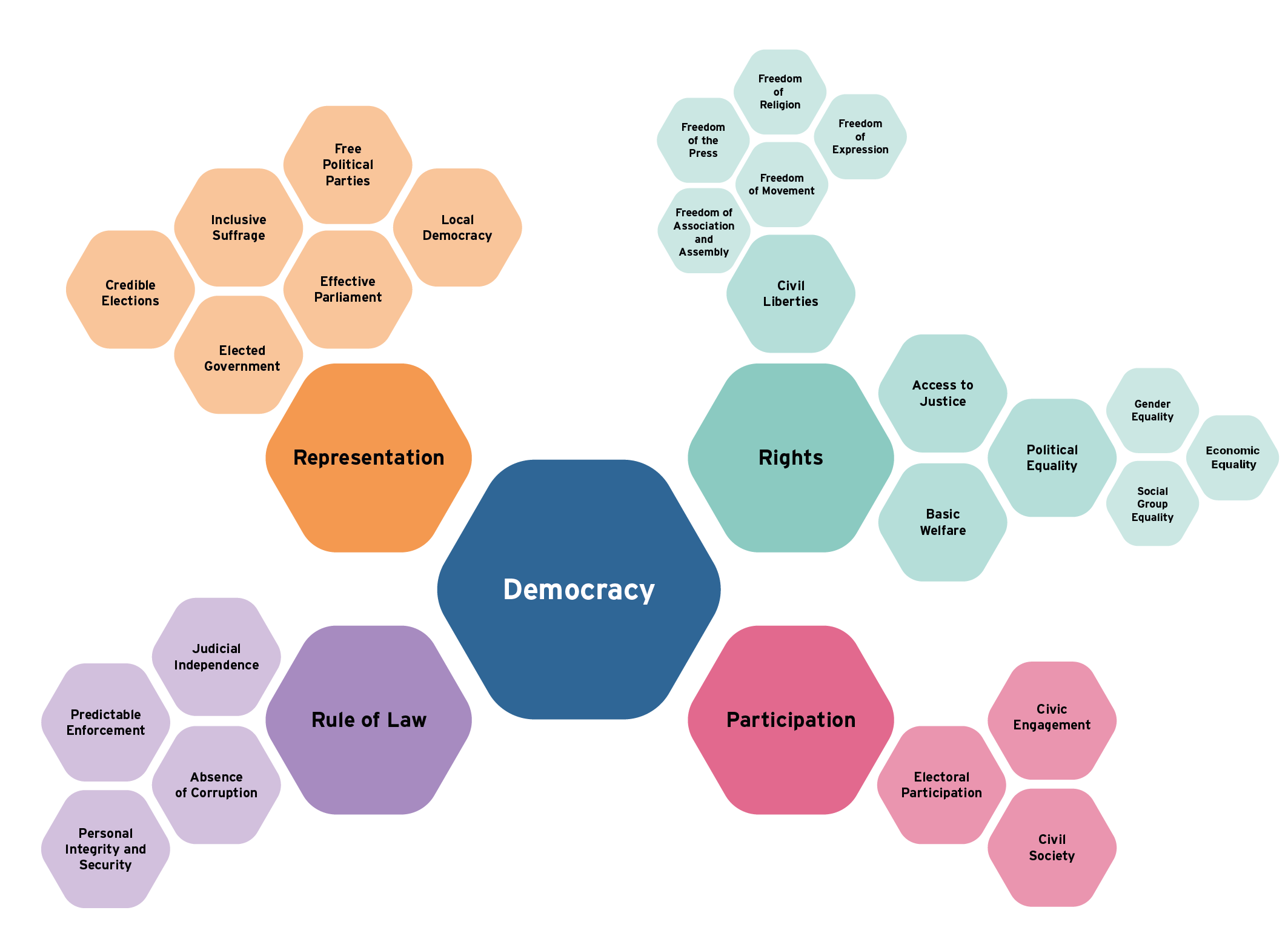
Argentina is both. It is a Representative Democratic Republic. It is a republic because it is governed by law and a constitution with a separation of powers. It is democratic because its leaders are elected by the citizens through free and fair elections.
How much power does the President of Argentina actually have?
The President of Argentina has substantial power, often referred to as "hyper-presidencialismo." This includes the ability to appoint supreme court justices (with Senate approval), command the military, and most notably, issue Decrees of Necessity and Urgency (DNU) which have the force of law unless overturned by both houses of Congress.
What is the role of the provinces in the Argentinian government?
Provinces are autonomous entities that manage their own internal affairs, including education, health, and local policing. They retain all powers not specifically given to the federal government. However, they are financially linked to the federal government through the tax-sharing "coparticipation" system.
How are laws passed in Argentina?
A bill can be introduced in either the Chamber of Deputies or the Senate (with some exceptions like tax laws). It must be approved by a majority in both houses. If the President signs the bill, it becomes law. If the President vetoes it, Congress can override the veto with a two-thirds majority in both houses.
What happened during the 1994 Constitutional Reform?
The 1994 reform modernized the 1853 Constitution. It shortened the presidential term, created the office of the Chief of Cabinet, established the Council of the Magistracy for judicial appointments, and gave the City of Buenos Aires autonomy. It also incorporated international human rights treaties directly into the constitutional text.
Next Actions for Researching Argentinian Governance
To gain a deeper understanding of the Argentinian government, citizens and researchers should consult the official text of the Constitution of the Argentine Nation, which provides the legal basis for all state actions. For real-time updates on legislative activities, the websites of the Honorable Senate of the Nation and the Chamber of Deputies offer access to current bills and session transcripts. Understanding the current political climate also requires monitoring the decisions of the Supreme Court of Justice, which continues to shape the interpretation of federalism and individual rights in 2026.
Image Gallery
Select an image to open it in a new tab.




Celine Dubois
Contemporary Living and Global Arts Columnist
