
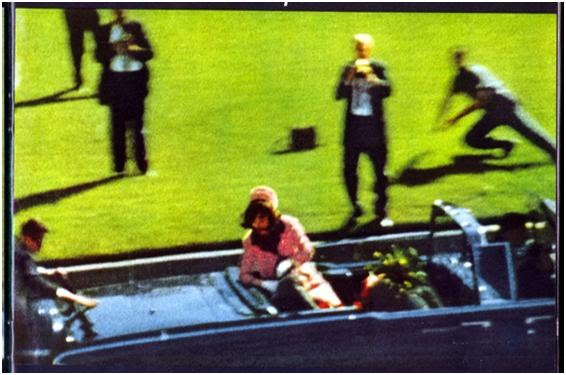
The truth regarding Jacqueline Kennedy’s pink suit is that the garment remains uncleaned, heavily stained with President John F. Kennedy's blood, and is currently stored in a climate-controlled vault at the National Archives in Maryland. It is legally restricted from public display until at least the year 2103.
For decades, the strawberry-pink suit worn by Jacqueline Kennedy on November 22, 1963, has remained one of the most haunting and misunderstood artifacts in American history. Shrouded in both mourning and mystery, the garment serves as a visceral connection to the assassination of President John F. Kennedy. As of 2026, the suit rests in total darkness, preserved not as a fashion statement, but as a forensic and historical witness to a national trauma.
Understanding the "truth" behind the suit requires dismantling several persistent myths: that it was a standard Chanel purchase, that it was eventually cleaned, or that it is currently tucked away in a corner of the Smithsonian. In reality, the history of the suit is a complex blend of Cold War politics, personal resolve, and strict archival protocols.
The Origin Myth: Chanel vs. Chez Ninon
One of the most frequent misconceptions is that the suit was a direct purchase from the French fashion house Chanel. While the design is an iconic Chanel silhouette, the reality of its manufacture was rooted in the political sensitivities of the 1960s.
During the Kennedy administration, the First Lady was often criticized for her preference for European—specifically French—fashion. To satisfy the "Buy American" sentiment while maintaining her signature style, Jackie Kennedy utilized a New York boutique called Chez Ninon. This establishment was authorized by Coco Chanel to produce "line-for-line" copies of her designs.
The pink suit was crafted in New York using fabric, buttons, and trim imported directly from Chanel in Paris. This arrangement allowed the First Lady to wear a world-class design that was technically "Made in the USA." The suit was a double-breasted, quilted wool bouclé in a shade often described as raspberry or strawberry pink, featuring a navy blue collar and matching pillbox hat. By the time of the Dallas trip, Jackie had worn the outfit at least six times previously, including during a 1962 visit to London and a trip to Algeria.
November 22, 1963: The Suit as a Political Statement
The suit’s transformation from a garment to a symbol occurred in the hours following the shots fired at Dealey Plaza. In the immediate aftermath, as the President was pronounced dead at Parkland Memorial Hospital and the transition of power began, Jackie Kennedy made a deliberate and harrowing choice.
When offered a change of clothes by her aides, who were horrified by the bloodstains covering her skirt and jacket, she famously refused. Her response—"No, let them see what they've done"—has become a cornerstone of the Kennedy legacy. She purposefully wore the blood-stained garment during the swearing-in of Lyndon B. Johnson aboard Air Force One and throughout the return flight to Washington, D.C.
This act was not one of shock-induced catatonia, but a calculated decision to force the world to confront the reality of the violence. The suit remained on her body until the early morning hours of November 23, when she finally removed it at the White House.

The Journey to the National Archives
Once removed, the suit was placed in a bag by her personal maid. For months, it remained in the Kennedy family's possession, eventually being moved to the National Archives and Records Administration (NARA) in College Park, Maryland.
It is important to clarify that the suit was not "donated" in the traditional sense immediately. It was sent to the Archives in a box, accompanied by a letter from Jackie’s mother, Janet Auchincloss, noting that it should be preserved but not displayed. It wasn't until 2003 that Caroline Kennedy, Jackie’s sole surviving heir, officially deeded the suit to the National Archives as a gift.
The deed of gift carries a very specific and legally binding restriction: the suit is not to be displayed to the public for 100 years from the date of the deed. This means that until 2103, the suit will remain in a secure, non-public area. The intent behind this restriction was to protect the family from the sensationalization of the tragedy and to ensure the garment was treated with the solemnity of a relic rather than a museum curiosity.
Preservation Status and Forensic Integrity
Contrary to myths suggesting the suit was laundered or that the blood has faded into insignificance, the garment remains in its original, "as-worn" condition. As of 2026, the National Archives maintains the suit under the strictest preservation standards known to modern archival science.
Environmental Controls
The suit is stored in a custom-made, acid-free container within a climate-controlled vault. The environment is monitored 24/7 to maintain a steady temperature of approximately 65 to 68 degrees Fahrenheit and a relative humidity of 40%. These conditions are designed to prevent the organic material (the blood) from further degrading the wool fibers.
The Stains
The bloodstains are extensive. They cover the right side of the jacket and a significant portion of the skirt. Because the suit has never been cleaned, it remains a primary forensic artifact of the assassination. Archival experts treat it with the same care as the Zapruder film or the physical evidence from the Warren Commission.
Accompanying Items
The suit at the Archives includes:
- The pink wool jacket.
- The matching skirt.
- The navy blue blouse worn underneath.
- Her stockings.
- The blue shoes she wore that day.
- The blue purse she carried.
The pillbox hat is notably missing. It was last seen in the hands of her personal secretary, Mary Gallagher, or potentially lost in the chaos of Parkland Hospital. Its current location remains one of the great mysteries of the Kennedy assassination.
Comparison of Artifact Status and Accessibility
The following table outlines the current status of the items associated with the pink suit as of 2026.
| Item | Manufacturer | Current Location | Access Status |
|---|---|---|---|
| Pink Jacket | Chez Ninon (Chanel Licensed) | National Archives (MD) | Sealed until 2103 |
| Pink Skirt | Chez Ninon (Chanel Licensed) | National Archives (MD) | Sealed until 2103 |
| Navy Blouse | Chez Ninon | National Archives (MD) | Sealed until 2103 |
| Pillbox Hat | Halston (for Chez Ninon) | Unknown / Missing | Lost in 1963 |
| Stockings/Shoes | Various | National Archives (MD) | Sealed until 2103 |
| The Suit Box | Archival Container | National Archives (MD) | Closed to public |
Debunking the Smithsonian Myth
A common search intent involves people looking for the pink suit at the Smithsonian Institution in Washington, D.C. This is a confusion stemming from the fact that the Smithsonian’s National Museum of American History houses an extensive collection of First Ladies' inaugural gowns.
While the Smithsonian does display garments belonging to Jacqueline Kennedy—including her 1961 inaugural gown—the pink suit has never been part of their collection. The distinction is vital: the Smithsonian handles items of cultural and fashion history, while the National Archives handles items of legal, forensic, and governmental record. The pink suit is categorized as the latter.
The 100-Year Rule: Why 2103?
The decision to keep the suit hidden for a century is often criticized by historians who wish to study it, but it was a decision rooted in the Kennedy family's desire for privacy. By the year 2103, no person who was alive during the Kennedy presidency will likely be alive. The 100-year window creates a "buffer of dignity," ensuring that the suit only becomes a visible public artifact once it has transitioned from a source of personal grief to a purely historical object.
This restriction is absolute. There are no "special permissions" granted to researchers or filmmakers to view or photograph the suit. Even when the 100-year mark is reached, the National Archives will have the discretion to determine if the suit is physically stable enough for display, as the presence of blood can cause the wool to become brittle over long periods.
The Psychological Impact and Cultural Legacy
The "myth" of the suit is largely sustained by its absence. Because we cannot see it, it occupies a larger-than-life space in the American psyche. It represents the sudden shift from the "Camelot" era to the dark realities of the 1960s.
Historians often note that the suit serves as a "shroud." For Jackie Kennedy, it was a uniform of defiance. For the public, it was the visual confirmation of a nightmare. By keeping it uncleaned, the National Archives preserves not just fabric, but the DNA of a moment that changed the trajectory of the 20th century.
Frequently Asked Questions
Was the suit actually made by Chanel in Paris?
No. While it used Chanel materials and a Chanel design, it was assembled in New York by Chez Ninon. This was a strategic move to support American labor while allowing the First Lady to wear French couture styles.
Why wasn't the suit cleaned after the assassination?
Jacqueline Kennedy specifically requested it not be cleaned. She wanted the bloodstains to remain as a testament to the violence of the assassination, famously stating she wanted the world to see what had been done to her husband.
Where is the pink pillbox hat today?
The hat's location is unknown. It was removed at the hospital and reportedly given to a secretary, but it never arrived at the National Archives with the rest of the suit components. It is considered one of the most famous "lost" artifacts in history.
Can I see the suit if I visit the National Archives?
No. The suit is kept in a restricted area of the National Archives facility in College Park, Maryland. It is not available for public viewing, and there are no photographs of it in its current stored state.
Is the suit deteriorating because of the blood?
The National Archives uses advanced climate control and acid-free storage to slow any deterioration. However, blood is an organic material that can react with textiles over time. The 100-year storage plan is designed, in part, to minimize any environmental stress on the fabric.
Will the suit ever be cleaned before 2103?
There are no plans to clean the suit. Doing so would destroy its historical and forensic value. It will remain in its "as-worn" condition indefinitely.
Recommendation for Researchers
If you are researching the Jackie Kennedy pink suit, avoid sources that claim to show "recent" photos of the garment in storage. Any photos circulating online of the blood-stained suit are either from the day of the assassination, stills from films (like the 2016 movie Jackie), or recreations.
For the most accurate historical data, consult the official records at the John F. Kennedy Presidential Library and Museum or the National Archives (NARA) website. While you cannot see the physical suit, these institutions provide the legal documentation and correspondence regarding its preservation and the 2103 restriction. Understanding the suit's journey from a New York boutique to a Maryland vault is essential for anyone seeking the truth behind this enduring American myth.
Image Gallery
Select an image to open it in a new tab.



Declan O'Connor
Higher Education and Campus Culture Reporter
