Who Owns Comcast Communications: Corporate Structure and Major Shareholders

Comcast Communications is not owned by a single individual; rather, it is a massive publicly traded American multinational telecommunications and media conglomerate. It operates as the primary operating subsidiary of Comcast Corporation, which is traded on the NASDAQ under the ticker symbol CMCSA and is collectively owned by thousands of institutional investors, mutual funds, corporate insiders, and individual retail shareholders.
The Corporate Hierarchy: Comcast Corporation vs. Comcast Communications
To understand who owns Comcast Communications, it is essential to first understand its position within the broader corporate hierarchy. Comcast Corporation functions as the ultimate parent holding company. It oversees a massive portfolio of media, entertainment, and telecommunications assets. Beneath this corporate umbrella sits Comcast Cable Communications, LLC (frequently referred to simply as Comcast Communications). This subsidiary houses the residential and business broadband, video, voice, and wireless services that millions of consumers interact with daily.
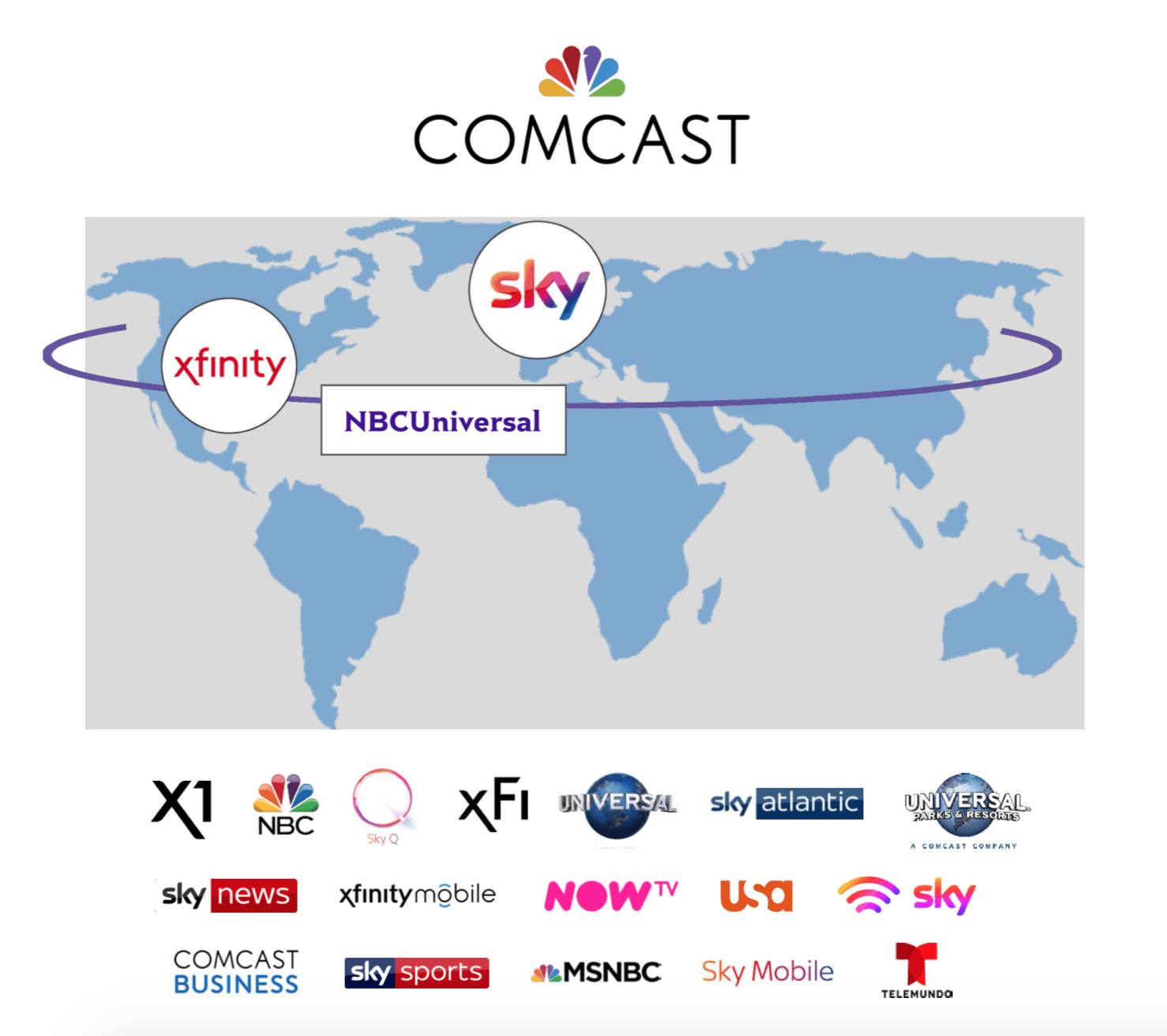
Because Comcast Communications is a wholly-owned subsidiary of Comcast Corporation, anyone who owns shares of Comcast Corporation effectively holds a fractional ownership stake in Comcast Communications. The parent corporation also wholly or partially owns other major entities, most notably NBCUniversal and Sky Group. Therefore, an investment in the public stock grants an ownership interest not just in cable and internet services, but also in theme parks, movie studios, and broadcast networks.
Publicly Traded Structure and Major Institutional Owners
Comcast Corporation is a publicly traded corporation, meaning its equity is divided into shares that are bought and sold on public stock exchanges. As a result, ultimate control and ownership are distributed across a vast network of institutional and individual investors.
Institutional investors—such as massive asset management firms, pension funds, and mutual fund providers—own the overwhelming majority of Comcast Corporation’s outstanding shares. These entities manage capital on behalf of millions of individual beneficiaries, including workers saving for retirement through 401(k) plans or index funds. The largest institutional stakeholders typically include global financial institutions such as The Vanguard Group, BlackRock, and State Street Global Advisors.
The following table outlines the structural relationship between the parent organization, its primary operating subsidiaries, and its ownership model:
| Entity Name | Corporate Level | Ownership Structure | Primary Assets & Operations |
|---|---|---|---|
| Comcast Corporation | Ultimate Parent Holding Company | Publicly Traded (NASDAQ: CMCSA) | Corporate governance, strategic capital allocation, overarching financial oversight. |
| Comcast Cable Communications | Operating Subsidiary | Wholly Owned by Comcast Corporation | Xfinity-branded broadband, video, voice, and mobile phone services. |
| NBCUniversal | Operating Subsidiary | Wholly Owned by Comcast Corporation | NBC broadcast network, Universal Pictures, cable networks, and theme parks. |
| Sky Group | Operating Subsidiary | Wholly Owned by Comcast Corporation | European telecommunications and media broadcasting operations. |

The Role of Insiders and Dual-Class Stock
While institutional investors hold the bulk of the economic interest in Comcast Corporation, actual voting control and corporate governance feature a unique structural dynamic. Comcast utilizes a dual-class common stock structure, which ensures that voting power remains concentrated despite public ownership.
Class A Common Stock
Class A common stock represents the standard shares traded publicly on the NASDAQ under the ticker CMCSA. These shares grant economic ownership to everyday investors and mutual funds. However, they carry limited voting rights relative to their economic value, meaning standard public shareholders have a restricted voice in direct corporate governance decisions.
Class B Common Stock and Executive Influence
Class B common stock is not publicly traded and is held almost exclusively by company insiders, most notably members of the Roberts family. Brian L. Roberts, who serves as the Chairman and Chief Executive Officer of Comcast Corporation, commands significant voting control through this special class of stock.
Established by his father, Ralph J. Roberts (who co-founded the company's predecessor, American Cable Systems, in 1963), the Roberts family controls a special voting block that typically accounts for one-third (33-1/3%) of the combined voting power of all Comcast Corporation voting shares. This dual-class structure protects the company from hostile takeovers and ensures long-term strategic stability, insulating executive leadership from short-term market pressures.
Key Figures in Comcast’s History and Leadership
Understanding who controls and directs Comcast Communications requires looking at the executive leadership team appointed by the Board of Directors.
- Ralph J. Roberts: Co-founded the business in Tupelo, Mississippi, in 1963 by purchasing American Cable Systems, which was later incorporated as Comcast Corporation in Pennsylvania in 1969. His vision shaped the cable television industry in the United States.
- Brian L. Roberts: Son of Ralph Roberts, Brian has led the company as CEO since 2002 and has been instrumental in transforming Comcast from a traditional cable provider into a global media and technology giant through high-profile acquisitions, including NBCUniversal in 2011 and Sky in 2018.
- Board of Directors: Independent directors appointed by the shareholders oversee corporate strategy, risk management, and executive compensation to ensure fiduciary alignment with both public investors and corporate stakeholders.
Frequently Asked Questions
Is Comcast owned by the government?
No. Comcast Corporation is a private, publicly traded American corporation. It is not owned, operated, or subsidized as a state utility, though its operations are heavily regulated by federal and local government agencies, such as the Federal Communications Commission (FCC).
Can an individual buy shares in Comcast Communications directly?
No. You cannot purchase shares of Comcast Communications as a standalone entity because it is a private subsidiary. However, you can buy shares of its parent company, Comcast Corporation, on the NASDAQ exchange under the ticker symbol CMCSA, which grants you a proportional ownership stake in the entire corporate family, including Comcast Communications.
Who is the single largest shareholder of Comcast?
While institutional investment firms like The Vanguard Group and BlackRock hold the largest aggregate number of economic shares on behalf of their clients, Brian L. Roberts and members of the Roberts family hold the greatest concentration of voting power through specialized Class B stock.
What is the relationship between Comcast and Xfinity?
Xfinity is not a separate company; it is the consumer-facing brand name used by Comcast Communications for its residential cable television, high-speed internet, telephone, and wireless services.
How does the Roberts family maintain control with only a fraction of the stock?
Through the dual-class stock structure, Class B shares possess a disproportionate voting weight. This mechanism ensures that the founding family retains substantial influence over corporate governance and board elections regardless of fluctuations in public share distribution.
Practical Next Steps for Investors and Consumers
For individual retail investors interested in acquiring a stake in Comcast Communications, financial advisors recommend researching brokerage accounts, reviewing quarterly earnings reports filed with the U.S. Securities and Exchange Commission (SEC), and evaluating the dividend yield and growth metrics of CMCSA stock.
For consumers experiencing service issues, billing inquiries, or technical support needs with Comcast Communications, interactions should be directed through the official Xfinity customer service portals, local retail service centers, or regulatory consumer protection boards if disputes remain unresolved.
Image Gallery
Select an image to open it in a new tab.



Zara El-Hashem
Sociocultural Dynamics and Academics Writer
