The Legal and Financial Consequences of Lying About a Beneficiary on a Life Insurance Application
Lying about a beneficiary on a life insurance application is considered material misrepresentation and can lead to the outright denial of death benefit claims, policy cancellation, or even criminal charges for insurance fraud. Because insurance contracts are based on the principle of "utmost good faith," providing false information undermines the validity of the entire agreement, regardless of whether the lie pertains to the beneficiary or the applicant’s health.
The Foundation of Utmost Good Faith
The life insurance industry operates on a legal doctrine known as uberrimae fidei, or "utmost good faith." This principle dictates that both the applicant and the insurer must act with complete honesty and transparency during the underwriting process. When you apply for a policy, the information you provide forms the basis upon which the insurer assesses risk and determines premiums.
By intentionally falsifying the identity, relationship, or eligibility of a beneficiary, you breach this contract from the very beginning. From an insurer's perspective, this is not merely a clerical error; it is a fundamental distortion of the facts they relied upon to issue the policy. Underwriters often perform rigorous background checks during the application phase and again at the time of a claim. If discrepancies are discovered, the insurer has the legal right to contest the policy.
Why Applicants Misrepresent Beneficiaries
People may be tempted to lie about a beneficiary for various reasons, most of which are rooted in a misunderstanding of how insurance law works or a desire to circumvent specific legal obligations.
- Avoiding Legal Obligations: Some individuals may attempt to name a friend or a distant relative instead of a spouse or child to shield funds from a divorce settlement or child support order.
- Lack of Insurable Interest: In some jurisdictions, naming a beneficiary who lacks an "insurable interest"—a relationship where the beneficiary would suffer a financial loss upon the death of the insured—can be complicated. Applicants might lie about their relationship to bypass this requirement.
- Hiding Illicit Relationships: Occasionally, applicants may misrepresent a beneficiary's identity to hide an affair or a relationship that they do not wish to be public record.
Regardless of the motivation, the act of misrepresentation creates a legal vulnerability that far outweighs the perceived short-term benefit.
The Mechanism of Policy Contestability
Most life insurance policies include a "contestability period," typically lasting two years from the date the policy is issued. During this timeframe, the insurer has the right to investigate the truthfulness of the information provided in the application.
If the insurer discovers that the applicant lied about the beneficiary—or any other material fact—they can void the policy. This means that even if premiums were paid faithfully for eighteen months, the company can return those premiums (minus costs) and cancel the coverage entirely. If the death of the insured occurs during this window, the insurer will conduct a "claims investigation." They will verify the identities and relationships of all parties listed. If a falsehood is found, the death benefit will likely be denied, leaving the intended or unintended beneficiary with nothing.
Comparing Risks of Misrepresentation
| Risk Factor | Impact of Honest Application | Impact of Material Misrepresentation |
|---|---|---|
| Claim Approval | High probability of timely payout | High probability of claim denial |
| Policy Status | In force; contract remains valid | Rescission (voidance) of the policy |
| Legal Standing | Protected by contract law | Potential charges for insurance fraud |
| Premium Refunds | Not applicable | Generally returned; coverage lost |
| Reputation | Neutral | Possible "blacklisting" in insurance databases |
The Role of Insurable Interest
A common legal hurdle involves the requirement of "insurable interest." Insurance is intended to provide protection against financial loss, not to serve as a gambling vehicle or a means of transferring wealth to unrelated parties. If you attempt to name a beneficiary who has no legal or financial connection to you, the insurer may reject that designation during the underwriting phase.
Lying to overcome this requirement—for example, claiming someone is a business partner when they are not—is a form of fraud. If a claim is filed and the insurer discovers the "business partner" was actually a casual acquaintance, they will use this as grounds to deny the death benefit entirely, even if the policy was held for many years.
Criminal Implications: Insurance Fraud
It is critical to distinguish between a civil contract dispute and a criminal act. While most cases involving incorrect beneficiary information are handled as civil matters—resulting in the denial of the claim—intentional deception can escalate into insurance fraud.
In many jurisdictions, knowingly providing false information on an insurance application is a crime. If the intent behind the lie is to defraud the insurance company, the applicant or the beneficiary involved in the scheme could face:
- Fines and penalties imposed by state regulators.
- Restitution requirements for the costs incurred by the insurer during the investigation.
- Potential criminal prosecution, which can result in a permanent criminal record.
Insurance companies have dedicated Special Investigation Units (SIUs) tasked specifically with detecting fraud. These units utilize advanced data analytics, cross-referencing public records, social media activity, and financial statements to verify the information provided at the time of application.
Practical Steps for Correcting Information
If you realize that you have provided incorrect or misleading information regarding a beneficiary on a life insurance application, the most effective course of action is to correct it immediately.
- Contact the Insurance Carrier: Reach out to the company’s customer service department or your licensed insurance agent as soon as the error is discovered.
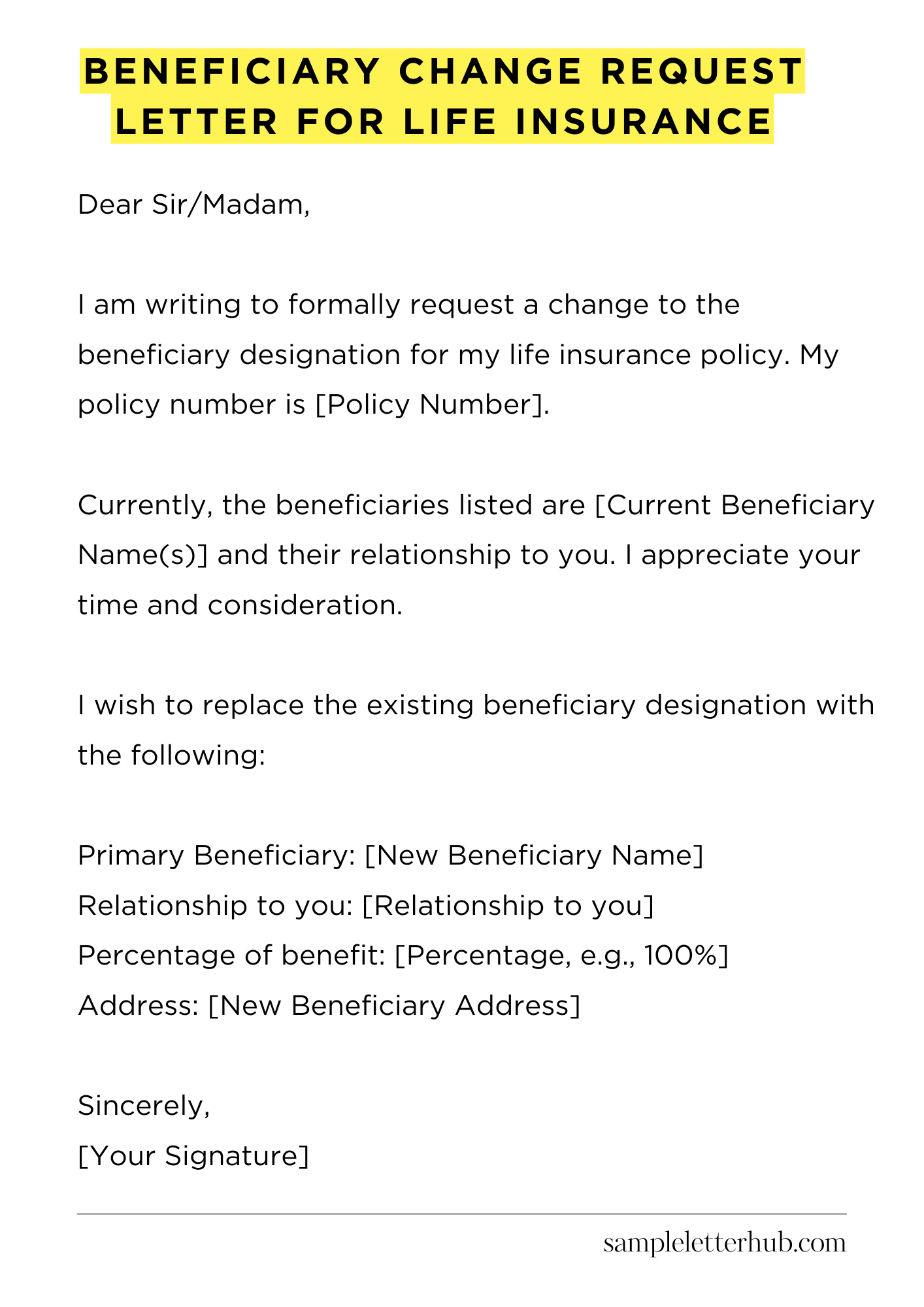
- Request a Beneficiary Change Form: Most insurers have a standard procedure for updating beneficiary information. Completing an official change form is the only way to legally alter the terms of the policy.
- Provide Honest Documentation: If the error involved a misrepresentation of a relationship, explain the situation clearly. If the policy has not yet been issued, it is much easier to rectify the mistake during the underwriting phase than after a claim has been filed.
- Consult a Legal Professional: If the situation is complex—such as one involving divorce decrees, court orders, or estate planning disputes—consult with an attorney who specializes in insurance law or estate planning. They can help you navigate the process without inadvertently creating a legal conflict.
The Danger of Naming "False" Beneficiaries in Estates
Even if an insurer pays a death benefit to the person you named on the application, that does not mean the beneficiary is legally entitled to keep the money. If you lied about a relationship or attempted to bypass probate or existing legal agreements (like a court-ordered settlement), the estate of the deceased or other rightful heirs can sue the named beneficiary.
Courts have the authority to impose a "constructive trust" on the life insurance proceeds. This means that even if the insurance company fulfilled the contract, the beneficiary may be legally compelled to turn the funds over to the individual who was rightfully entitled to them under state law or a previous court order. You cannot use a life insurance policy to circumvent the legal obligations established by a court of law.
FAQ: Understanding Beneficiary Laws
What happens if I make a mistake on the application by accident? An honest mistake, such as a misspelling or a minor clerical error, is generally not considered fraud. If you realize an error, notify the insurer immediately. They will usually provide an amendment form to correct the information in your file.
Can I change my beneficiary later? Yes, in most cases, you can change your beneficiary at any time, provided the policy is "revocable." If you originally named someone under pressure or due to an error, you can update your beneficiary designation form to reflect your true intentions.
Does a will override the beneficiary listed on my life insurance policy? Generally, no. Life insurance is a "non-probate" asset, meaning the death benefit is paid directly to the beneficiary listed on the policy, regardless of what your will states. This is why it is vital that the information on the policy is accurate and up to date.
What is the difference between a primary and contingent beneficiary? A primary beneficiary is the first person in line to receive the death benefit. A contingent (or secondary) beneficiary only receives the proceeds if the primary beneficiary passes away before the insured. It is essential to ensure that the information for both is correct.
Will the insurance company investigate my beneficiary after I die? If a claim is submitted, the insurance company will verify the identity and eligibility of the beneficiary as part of their standard due diligence. If they find evidence of fraud or material misrepresentation, they will launch a more intensive investigation.
Next Actions and Recommendations
If you are currently filling out an application or managing an existing policy, the best path forward is transparency. Before submitting any paperwork, double-check that every name, date of birth, and relationship status is factually accurate. If you are in a situation where your life circumstances have changed—such as a divorce or a new marriage—update your beneficiary designations immediately.
For complex financial situations, do not rely on your own understanding of insurance law. Work with a licensed financial advisor or estate attorney who can ensure that your life insurance policy is aligned with your legal obligations. If you suspect that a policy you are involved with contains false information, contact the insurance provider directly to resolve the discrepancy before a claim event makes the situation irreparable. Maintaining accuracy is the only way to ensure that your policy serves its intended purpose: providing financial security for your loved ones when they need it most.

Image Gallery
Select an image to open it in a new tab.



Zara El-Hashem
Sociocultural Dynamics and Academics Writer
