
To operate a motor vehicle dealership in Florida, you must obtain a surety bond—specifically a Florida auto dealer bond—to protect consumers and the state from financial loss due to fraudulent business practices or failure to comply with licensing statutes. This bond acts as a financial guarantee that your dealership will adhere to all regulations, providing a mechanism for claims if you fail to fulfill your contractual or legal obligations.
The Role and Purpose of Surety Bonds in Florida
A Florida auto dealer bond, often referred to as a motor vehicle dealer surety bond, is a mandatory requirement under Florida Statutes for anyone applying for a new or used vehicle dealer license. It is not an insurance policy that protects the dealer; rather, it is a risk management tool that protects the public.
When a dealership enters into an agreement with a customer or a government entity, there is a risk that the dealer may default on their obligations—such as failing to transfer a vehicle title, collecting sales tax without remitting it to the Department of Revenue, or misrepresenting the condition of a vehicle. If such a violation occurs, the injured party can file a claim against the bond. If the claim is validated, the surety company pays the damaged party up to the bond's full amount. The dealer is then legally required to reimburse the surety company for all losses and legal expenses incurred during the claim process.
Legal Prerequisites for Licensing
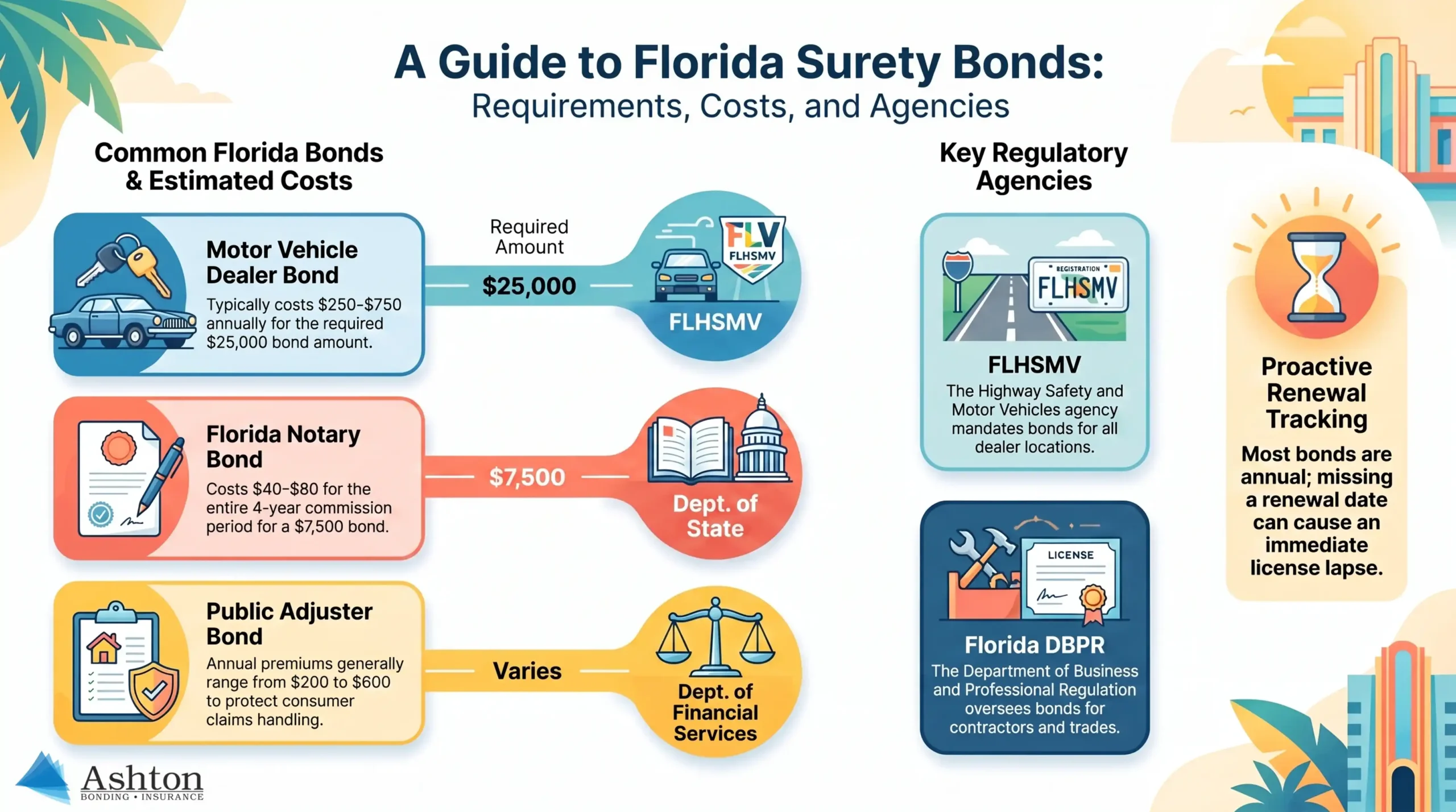
The Florida Department of Highway Safety and Motor Vehicles (FLHSMV) oversees the licensing process for auto dealers. You cannot obtain a license without providing proof of a valid surety bond. The specific bond amount required is $25,000 for a motor vehicle dealer license.
Before securing the bond, you must generally have completed several preliminary steps, including:
- Facility Requirements: Establishing a business location that meets zoning and physical space requirements set by the state.
- Dealer Training: Completing an approved pre-licensing dealer training course.
- Business Registration: Filing the necessary organizational documents with the Florida Department of State (Division of Corporations).
- Insurance: Securing garage liability insurance, which is distinct from the surety bond but equally necessary for licensing.
How Bond Costs Are Calculated
The bond amount is set at $25,000, but the price you pay to the surety company—the premium—is not necessarily the full $25,000. Premiums are determined based on your financial strength, personal credit history, and industry experience.
Typically, for applicants with excellent credit, the premium is a small percentage of the bond amount, often ranging from 1% to 3%. Those with lower credit scores may face higher rates, as the surety company perceives a greater risk of potential claims. Because the bond is a risk-based financial product, the "price" of the bond is essentially the cost of the surety company’s willingness to back your dealership's legal performance.
Comparison Table: Understanding Dealer Financial Obligations
The following table highlights the differences between common financial requirements for Florida auto dealers.
| Requirement | Purpose | Obligatory Entity | Financial Liability |
|---|---|---|---|
| Surety Bond | Protects public from fraud/non-compliance | FLHSMV | Full bond value if claim paid |
| Garage Liability Insurance | Covers bodily injury/property damage | Private Insurers | Varies by policy limits |
| Business License Fee | Administrative processing cost | FLHSMV | Fixed annual/biennial fee |
| Dealer Tag Fees | Enables test drives/demonstrations | FLHSMV | Based on usage/quantity |
The Mechanics of Filing a Claim
Understanding how a claim proceeds is crucial for any dealer. If a consumer believes a dealer has acted improperly, they may file a complaint through the FLHSMV or, in some cases, pursue legal action. If the claim is substantiated, the surety company investigates to verify the validity of the allegations.
If the surety determines that the dealer is indeed at fault and the dealer fails to settle the issue, the surety will pay the claim. It is important to note that a claim does not relieve the dealer of their responsibility. The indemnity agreement signed when purchasing the bond mandates that the dealer must repay the surety. Failure to repay a claim can lead to the revocation of the dealer's license and significant damage to the owner's credit standing, making it nearly impossible to secure future bonds.
Maintaining Your Bond and Licensing
A Florida auto dealer bond is not a one-time purchase. It must be kept active for as long as you hold your dealer license. Most bonds are issued for a term of one year, requiring annual renewal. During the renewal process, the surety company will often perform a brief review of your business's financial status and credit.
Staying compliant involves more than just paying the annual premium. You must ensure that your business name on the bond matches exactly with the legal name on your license application. Any change in the business structure, such as moving from a sole proprietorship to an LLC, usually necessitates a rider or a new bond to ensure that your legal protection remains uninterrupted.
Common Mistakes to Avoid
Many new dealers face delays in licensing due to avoidable administrative errors regarding their bonds. Some of the most common pitfalls include:
- Mismatching Documentation: The name on the surety bond must perfectly match the legal entity name filed with the Secretary of State. Even a minor discrepancy can result in the FLHSMV rejecting your application.
- Inadequate Coverage Terms: Some dealers attempt to use "blanket" bonds or other insurance types that do not meet the specific $25,000 requirement for Florida motor vehicle dealers.
- Ignoring Expiration Dates: Allowing a bond to lapse, even for a single day, puts your dealership in violation of state law, which can trigger an automatic suspension of your dealer license.
- Failing to Update Info: Moving your dealership location without notifying the surety provider can invalidate the bond, as the bond is tied to a specific physical address registered with the state.
Frequently Asked Questions
1. Is a Florida auto dealer bond the same as insurance? No. Insurance is designed to protect the policyholder (the dealer) from accidents, theft, or liability. A surety bond protects the public and the state from the dealer’s failure to comply with laws, such as failing to provide a title or collecting tax improperly.
2. Can I get a bond if I have bad credit? Yes, but you will likely pay a higher premium. Surety companies view credit history as a primary indicator of financial responsibility. While it may be more expensive, "bad credit" programs exist to help dealers get the bond necessary to start their businesses.
3. What happens if I move my dealership location? You must inform your surety provider immediately. A "rider" will be issued to update the bond with your new address. If you move without updating the bond, your license may no longer be valid at the new location, creating significant legal risks.
4. How long does it take to get a bond? For most applicants, obtaining a quote and receiving the bond document takes between 24 and 48 hours, provided that the necessary business and financial information is submitted accurately to the surety company.
5. Does the $25,000 bond cover all potential losses? The $25,000 is the penal sum, which is the maximum amount the surety will pay out for claims. If valid claims exceed this amount, the dealer remains personally liable for any remaining debt, and the state may pursue further disciplinary actions, including permanent license revocation.
Taking the Next Action
If you are preparing to apply for your license, your immediate next step is to compile your business registration documents and contact a licensed surety bond agency that specializes in Florida motor vehicle dealer bonds. Request a quote early in your planning process to understand the expected cost impact on your startup budget. Ensure that your agent is familiar with current FLHSMV requirements to avoid delays in your filing process. By securing the correct bond, you establish the foundation of legitimacy required to operate successfully and maintain a positive reputation in the Florida automotive market.

Image Gallery
Select an image to open it in a new tab.


Akira Tanaka
International Academic Trends Correspondent
