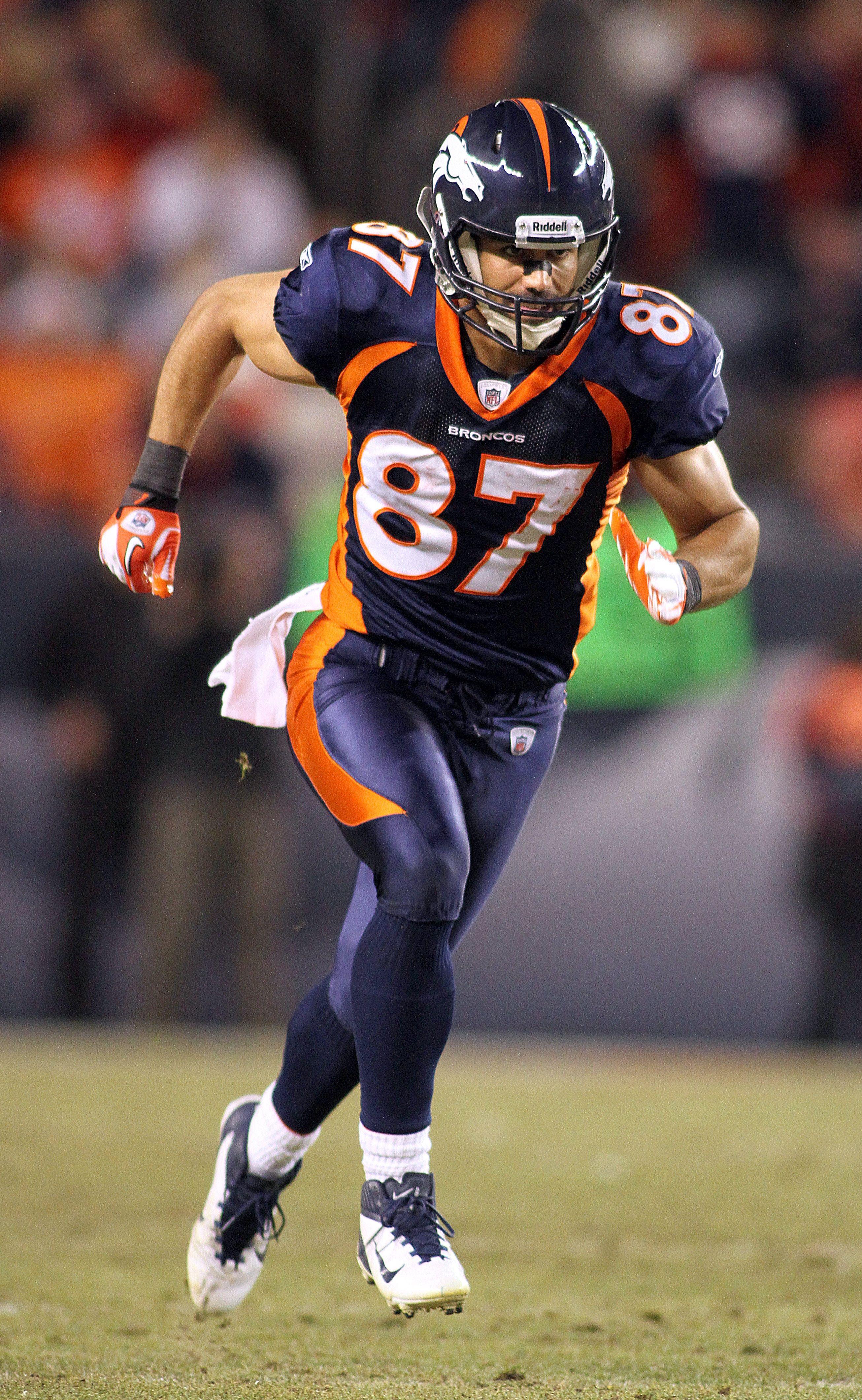
Eric Decker was a highly productive wide receiver who played eight seasons in the National Football League (NFL) between 2010 and 2017. Known for his size, precise route running, and exceptional red-zone efficiency, Decker accumulated 5,816 receiving yards and 53 touchdowns over 111 career games with the Denver Broncos, New York Jets, and Tennessee Titans.
The Collegiate Foundation at the University of Minnesota
Before Eric Decker became a household name in the NFL, he established himself as one of the greatest athletes in the history of the University of Minnesota. His time with the Golden Gophers (2006–2009) was marked by a rare display of dual-sport excellence, as he excelled in both football and baseball.
In football, Decker was a focal point of the Minnesota offense. His 2008 junior season was particularly noteworthy, where he recorded 84 receptions for 1,074 yards and seven touchdowns. These numbers were achieved despite often being the sole focus of opposing defenses. His ability to high-point the ball and use his 6'3" frame to shield defenders made him a prototypical "X" receiver. By the end of his collegiate career, he held several school records, finishing with 227 receptions for 3,119 yards and 24 touchdowns.
Decker's athletic profile was further enhanced by his baseball career. He was drafted twice by Major League Baseball teams—once by the Milwaukee Brewers in 2008 and again by the Minnesota Twins in 2009. While he ultimately chose the gridiron, his baseball background contributed to his exceptional hand-eye coordination and tracking ability, traits that would define his professional football career. His senior season was unfortunately cut short by a foot injury (a Lisfranc sprain), which impacted his draft stock but did not dampen the interest of NFL scouts who saw his potential as a high-volume possession receiver.
Entry into the NFL: The Denver Broncos Era (2010–2013)
The Denver Broncos selected Eric Decker in the third round (87th overall) of the 2010 NFL Draft. Entering a league where rookie receivers often face a steep learning curve, Decker's progression was deliberate and successful.
The Developmental Years and the Tebow Era
Decker's rookie season in 2010 was primarily spent on special teams and as a rotational depth piece, as he recovered fully from his college foot injury. However, 2011 marked his breakout. During a season famously defined by the "Tebowmania" phenomenon, Decker became the primary target for quarterback Tim Tebow. Despite the team's run-heavy, unorthodox offensive approach, Decker managed to haul in 44 passes for 612 yards and eight touchdowns. His ability to adjust to off-target throws and find openings in broken plays proved he could produce even in inefficient passing systems.
The Peyton Manning Transformation
The trajectory of Decker's career changed significantly in 2012 with the arrival of Hall of Fame quarterback Peyton Manning. Under Manning’s precision-based offense, Decker blossomed into an elite secondary option alongside fellow receiver Demaryius Thomas. In 2012, Decker recorded 85 catches for 1,064 yards and 13 touchdowns.
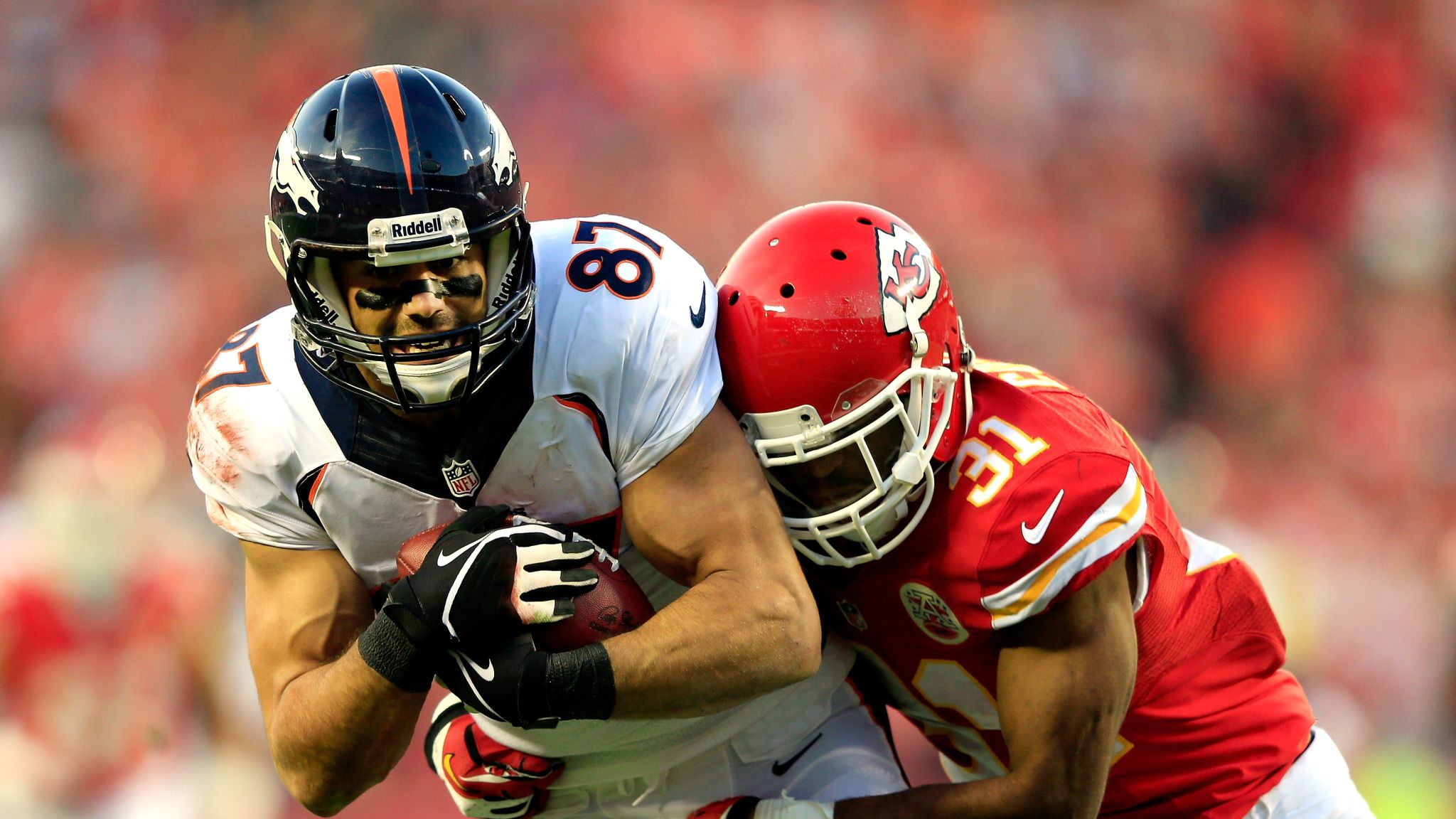
The 2013 season remains the pinnacle of Decker’s career and one of the greatest offensive seasons in NFL history. As part of a Denver offense that set the record for most points in a single season, Decker caught 87 passes for a career-high 1,288 yards and 11 touchdowns. His 2013 performance was highlighted by a four-touchdown game against the Kansas City Chiefs, cementing his reputation as one of the league’s premier red-zone threats. The season culminated in an appearance in Super Bowl XLVIII, though the Broncos ultimately fell to the Seattle Seahawks.

The New York Jets: Leading the Receiving Corps (2014–2016)
Following his highly successful stint in Denver, Decker entered free agency and signed a five-year, $36.25 million contract with the New York Jets in March 2014. This move transitioned him from a "number two" receiver role to the primary focal point of a passing attack.
Proving "Number One" Capability
Critics initially questioned whether Decker could produce without Peyton Manning. In his first year with the Jets (2014), despite inconsistent quarterback play from Geno Smith and Michael Vick, Decker proved his worth by leading the team with 74 receptions for 962 yards and five touchdowns.
The 2015 season was a resurgence for both Decker and the Jets. Paired with veteran receiver Brandon Marshall and quarterback Ryan Fitzpatrick, Decker formed one half of the most productive receiving duo in the league that year. He recorded 80 receptions for 1,027 yards and 12 touchdowns. Remarkably, Decker or Marshall caught a touchdown in almost every game that season, with Decker setting a modern NFL record for the most games in a single season with at least 80 yards and a touchdown.
Injury Struggles in 2016
The 2016 campaign was a turning point for Decker’s physical longevity. After a strong start, he suffered a severe shoulder injury (torn labrum) and a hip injury that required surgery. He was placed on injured reserve after only three games, ending his season prematurely. This period marked the beginning of the end for his time in New York, as the team moved toward a younger roster and a salary cap reset in the following offseason.
The Final Chapters: Tennessee Titans and Retirement
In June 2017, the Jets released Decker, and he quickly signed a one-year deal with the Tennessee Titans. The move was intended to provide young quarterback Marcus Mariota with a reliable veteran presence.
The 2017 Season with the Titans
Decker played all 16 games for the Titans in 2017, contributing 54 receptions for 563 yards. While his explosive yardage numbers had declined, his veteran savvy was evident in the postseason. During the AFC Wild Card game against the Kansas City Chiefs, Decker caught the game-winning touchdown pass from Mariota, helping the Titans secure their first playoff victory in 14 years.
Retirement in 2018
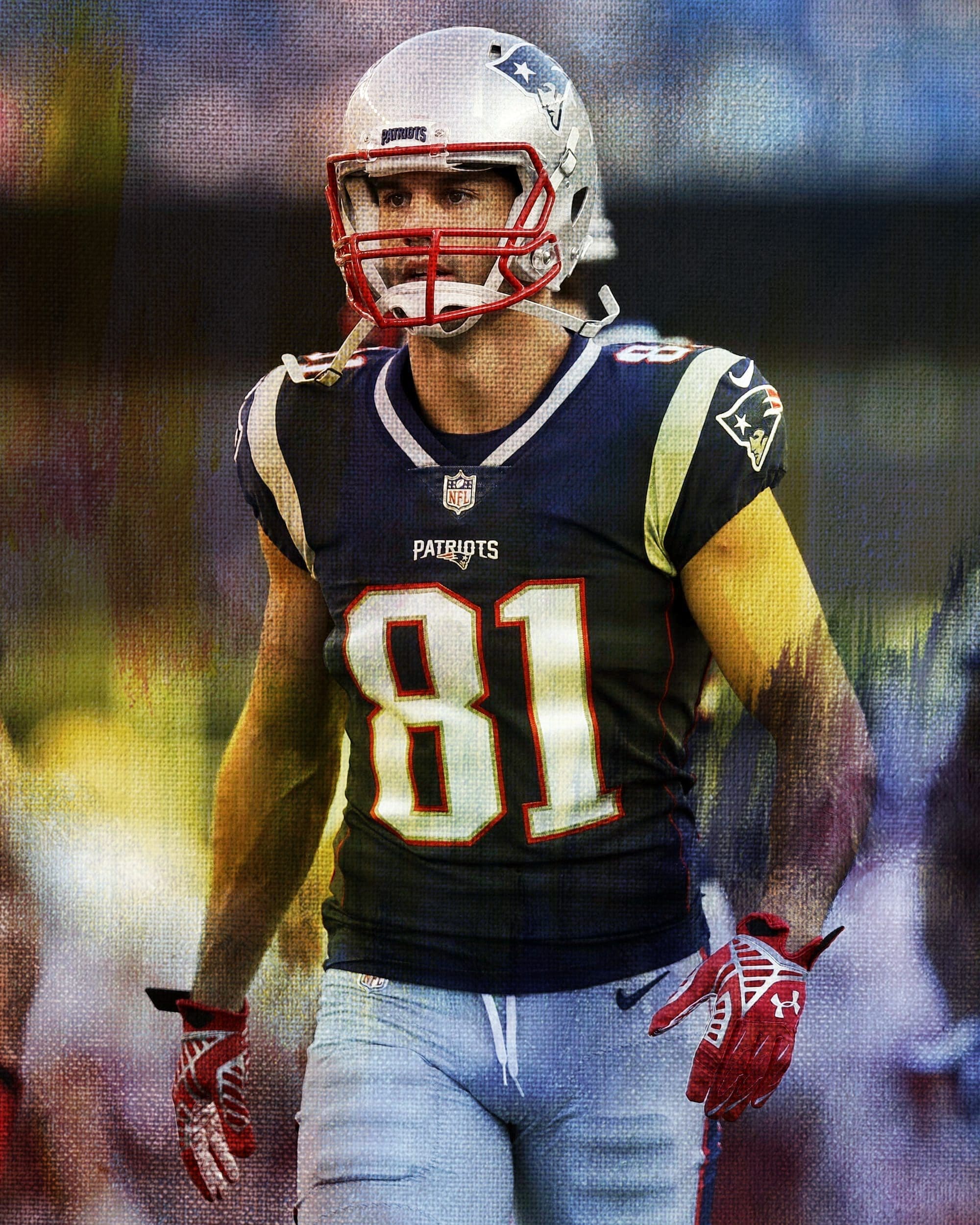
In the summer of 2018, Decker signed a one-year contract with the New England Patriots. However, after participating in training camp and assessing his physical state and the needs of his family, Decker announced his retirement from professional football in August 2018. He stepped away from the game at the age of 31, finishing a career that was defined by consistency and professional reliability.
Statistical Summary of Eric Decker's NFL Career
The following table provides a year-by-year breakdown of Eric Decker’s primary receiving statistics throughout his active seasons in the NFL.
| Year | Team | Games | Receptions | Receiving Yards | Touchdowns | Average Yards |
|---|---|---|---|---|---|---|
| 2010 | Denver Broncos | 14 | 6 | 106 | 1 | 17.7 |
| 2011 | Denver Broncos | 16 | 44 | 612 | 8 | 13.9 |
| 2012 | Denver Broncos | 16 | 85 | 1,064 | 13 | 12.5 |
| 2013 | Denver Broncos | 16 | 87 | 1,288 | 11 | 14.8 |
| 2014 | New York Jets | 15 | 74 | 962 | 5 | 13.0 |
| 2015 | New York Jets | 15 | 80 | 1,027 | 12 | 12.8 |
| 2016 | New York Jets | 3 | 9 | 194 | 2 | 21.6 |
| 2017 | Tennessee Titans | 16 | 54 | 563 | 1 | 10.4 |
| Total | -- | 111 | 439 | 5,816 | 53 | 13.2 |
Playing Style and Technical Impact
Eric Decker’s success in the NFL was not solely the result of raw speed, though he was faster than many gave him credit for (earning the locker room nickname "White Lightning" during his Denver days). His game was built on several technical pillars:
- Red-Zone Intelligence: Decker was arguably one of the best red-zone receivers of his era. He had an innate ability to find "soft spots" in zone coverage and possessed the frame to outmuscle cornerbacks in man-to-man situations.
- Route Precision: Unlike many receivers who relied on "go" routes, Decker was a master of the intermediate "dig" and "out" routes. His ability to sell a vertical threat before breaking off a route created the separation needed for Manning and Fitzpatrick to find him.
- Physicality at the Point of Attack: Decker was a willing and effective blocker in the run game, a trait highly valued by coaches like John Fox and Todd Bowles. This physicality translated to his receiving as well, where he was known for making "contested catches" in traffic.
- Reliability: For much of his career, Decker was a "chain mover." He was the player coaches looked to on 3rd-and-7 because of his sure hands and spatial awareness regarding the first-down marker.
Post-Career Legacy and Transition
Since retiring in 2018, Eric Decker has remained in the public eye, though largely outside the world of professional coaching or broadcasting. Even during his playing days, he gained significant fame through the E! reality show Eric & Jessie: Game On, which followed his life with his wife, country singer Jessie James Decker.
As of 2026, Decker’s legacy in the NFL is seen as that of a "consummate pro." He is often cited as the gold standard for third-round draft value. While he never reached the Hall of Fame, his peak years (2012–2015) saw him perform at a level comparable to the best receivers in the league. He has transitioned into various business ventures, including the lifestyle brand "Kittenish" with his wife, and remains active in charitable work, particularly through the Eric & Jessie Decker Foundation, which focuses on providing service dogs to veterans and children.
Frequently Asked Questions
What were Eric Decker's best career stats in a single season?
Eric Decker's most productive season came in 2013 with the Denver Broncos. During that historic campaign, he recorded 87 receptions for 1,288 yards and 11 touchdowns. He followed this with a very impressive 2015 season for the New York Jets, where he caught 12 touchdowns.
Did Eric Decker win a Super Bowl?
No, Eric Decker did not win a Super Bowl ring during his career. He played in Super Bowl XLVIII with the Denver Broncos following the 2013 season, but the Broncos were defeated by the Seattle Seahawks. He also reached the playoffs with the Tennessee Titans in 2017.
Why did Eric Decker retire so early?
Eric Decker retired at age 31 in August 2018. While he was still talented enough to make a roster, he cited a desire to spend more time with his family and a realization that his body was no longer performing at the elite level he expected. He chose to retire during the New England Patriots' training camp rather than pursue a final season with diminished impact.
How tall is Eric Decker and what was his playing weight?
Eric Decker stood at 6 feet 3 inches (1.91 meters) and had a playing weight of approximately 214 pounds (97 kg). His size was a significant factor in his ability to serve as a primary target in the red zone and effectively block in the run game.
Which college did Eric Decker attend?
Eric Decker attended the University of Minnesota, where he played both football and baseball for the Golden Gophers. He is considered one of the most decorated receivers in the history of the Big Ten conference.
Final Perspective on Decker’s Career
For fans and analysts looking back at the 2010s era of the NFL, Eric Decker represents the era's shift toward high-volume, precision passing. He was a versatile athlete who adapted his game to suit three very different quarterbacks and three different offensive philosophies. Whether he was catching touchdowns from a Hall of Famer or leading a struggling franchise as its primary veteran voice, Decker maintained a level of professionalism and production that remains a benchmark for wide receiver consistency.
Those studying wide receiver play can still find immense value in watching Decker’s "Denver tape," specifically his footwork at the line of scrimmage and his ability to navigate the congested areas of the end zone. He finished his career as a highly respected figure across the league, remembered for his reliability and his role in some of the most prolific offenses of the 21st century.
Image Gallery
Select an image to open it in a new tab.


Mateo Castillo
Decentralized Finance and E-Payments Strategist
