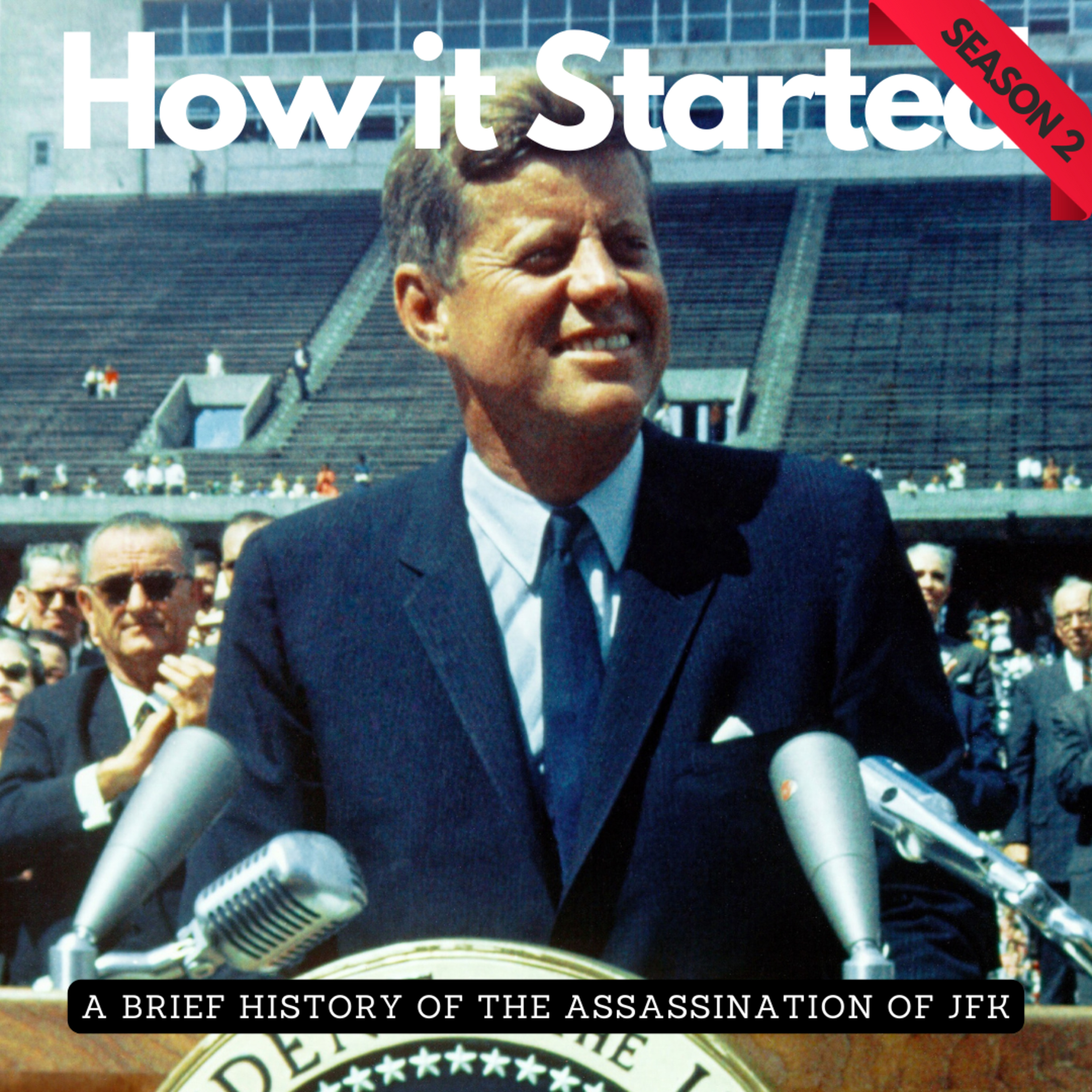
The assassination of President John F. Kennedy occurred on November 22, 1963, in Dallas, Texas. This pivotal event serves as a defining moment in 20th-century history, marking a sudden transition in the American presidency and sparking decades of intense scrutiny, governmental investigation, and cultural analysis regarding the circumstances of his death.
The Timeline of the Assassination in Dallas
On November 22, 1963, President John F. Kennedy arrived at Dallas Love Field airport shortly before noon. The President, accompanied by First Lady Jacqueline Kennedy, Vice President Lyndon B. Johnson, and Texas Governor John Connally, embarked on a motorcade through downtown Dallas to reach the Dallas Trade Mart for a scheduled luncheon speech.
The motorcade route was designed to provide the public with a close view of the President. As the vehicle turned from Houston Street onto Elm Street, passing the Texas School Book Depository, gunfire struck the President. The shots were fired at approximately 12:30 p.m. CST. Chaos immediately ensued as the Secret Service and local police responded to the emergency. The President was rushed to Parkland Memorial Hospital, located approximately four miles from Dealey Plaza.
At 1:00 p.m. CST, medical staff officially pronounced President Kennedy dead. Shortly thereafter, at 2:38 p.m. CST, Vice President Lyndon B. Johnson took the oath of office aboard Air Force One before it departed for Washington, D.C. The rapid succession of events—from the motorcade arrival to the presidential oath—compressed a massive geopolitical shift into a single afternoon, establishing the date as a permanent fixture in historical record.
Understanding the Historical Context
The assassination did not occur in a vacuum, and understanding the weight of November 22, 1963, requires an examination of the social and political atmosphere of the early 1960s. The Cold War was at a precarious stage, with tensions between the United States and the Soviet Union remaining high following the Cuban Missile Crisis just one year prior. Furthermore, the burgeoning Civil Rights Movement and debates regarding U.S. involvement in Southeast Asia created a volatile environment for the administration.
Historians often refer to the "Camelot" era to describe the idealism associated with the Kennedy presidency. The sudden violence of the assassination cut short this perceived promise, leading to a profound sense of national trauma. Because the event was broadcast and reported through the rapidly expanding medium of television, the news reached the American public—and the world—with unprecedented speed. This immediacy helped cement the date as a shared memory for an entire generation.
Official Investigations and Primary Records
Following the assassination, the government initiated several inquiries to determine the facts of the case. The most prominent of these was the President's Commission on the Assassination of President Kennedy, commonly known as the Warren Commission. Established by Executive Order 11130 by President Lyndon B. Johnson on November 29, 1963, the commission was chaired by Chief Justice Earl Warren.
The commission’s findings, released in September 1964, concluded that Lee Harvey Oswald, a former Marine who had defected to the Soviet Union and returned, acted alone in the assassination. The report also concluded that Jack Ruby, who killed Oswald two days later on November 24, 1963, also acted alone.
In the decades that followed, other investigations challenged or augmented these findings:
- The Rockefeller Commission (1975): Examined CIA activities within the United States, including questions related to the assassination.
- The Church Committee (1975–1976): A Senate committee that investigated intelligence community abuses, which touched upon the government's handling of information regarding the assassination.
- The House Select Committee on Assassinations (HSCA) (1976–1979): The HSCA concluded in its 1979 final report that while Oswald fired the shots that killed Kennedy, a high probability existed that two gunmen fired at the President, suggesting a "conspiracy" based on acoustic evidence. This finding has been the subject of extensive scientific debate and expert review in the years since.
The Role of Dealey Plaza as a Site of Record
Dealey Plaza, located in the West End district of downtown Dallas, serves as the physical site where the events of November 22, 1963, unfolded. Today, the area is maintained as a National Historic Landmark. The Texas School Book Depository, the building from which the shots were fired according to official investigations, now houses The Sixth Floor Museum.
The museum provides a comprehensive look at the life, death, and legacy of John F. Kennedy. It utilizes archival footage, original artifacts, and primary documents to educate visitors about the assassination. For researchers and historians, the site is significant not only for its forensic history but for its role as a permanent public record. The preservation of the site ensures that the date remains connected to the physical reality of the geography where the tragedy occurred.
Comparing Historical Interpretations
The study of the assassination involves reconciling various investigative reports. The table below summarizes the core focus of the primary government inquiries.
| Investigative Body | Year of Report | Primary Conclusion |
|---|---|---|
| Warren Commission | 1964 | Lee Harvey Oswald acted alone. |
| Rockefeller Commission | 1975 | Investigated CIA connections; no evidence of conspiracy found. |
| Church Committee | 1976 | Investigated intelligence failures and potential cover-ups. |
| HSCA | 1979 | Concluded a "probable conspiracy" based on acoustic analysis. |
These reports highlight the complexity of the event. While the Warren Commission remains the foundational document, the subsequent work of the HSCA introduced the concept of a "probable conspiracy," which continues to drive public debate. Navigating these documents requires distinguishing between the evidentiary basis of each report and the varied interpretations offered by independent researchers.
Archival Access and Verification
For those seeking to verify specific details regarding the date of the assassination, the U.S. National Archives and Records Administration (NARA) maintains the JFK Assassination Records Collection. This collection contains millions of pages of documents, photographs, sound recordings, and films.
The John F. Kennedy Assassination Records Collection Act of 1992 mandated that all records related to the assassination be housed at the National Archives and made available to the public. As of 2026, researchers can access much of this information through digitized databases provided by NARA, allowing for the verification of original witness statements, autopsy reports, and governmental communications. When conducting research into this date, it is recommended to utilize these primary sources rather than third-party summaries to ensure accuracy regarding the specific timelines and evidentiary findings.
Frequently Asked Questions
What time of day did the assassination occur? The shooting occurred at approximately 12:30 p.m. CST on November 22, 1963. This time was established through eyewitness testimony and the synchronization of logs from the Secret Service and the Dallas Police Department.
Where exactly in Dallas did the event take place? The event took place in Dealey Plaza, a city park in downtown Dallas. The presidential motorcade was passing the Texas School Book Depository building on Elm Street when the shots were fired.
Is there a difference between the date the President died and the date of the shooting? No. President Kennedy was shot at 12:30 p.m. and pronounced dead at 1:00 p.m. on the same day, November 22, 1963. There is no discrepancy in the date of the event itself.
Why is there ongoing debate regarding the events of this date? The debate stems primarily from differences in the conclusions reached by the Warren Commission and the House Select Committee on Assassinations. Additionally, the release of classified documents over the decades has kept public interest focused on the methodology and findings of the original investigations.
How can I view original documents regarding the assassination? The U.S. National Archives and Records Administration (NARA) maintains the official collection of assassination records. These are accessible via the NARA website, which provides digital scans and indices of millions of documents related to the event.
What is the significance of the Sixth Floor Museum? Located in the former Texas School Book Depository, the museum preserves the history of the assassination. It serves as a pedagogical resource that contextualizes the events of November 22, 1963, within the broader scope of American history.
Practical Next Steps for Researchers
If you are studying the assassination for academic or personal interest, prioritize the use of primary source material. Begin by reviewing the Warren Commission Report and the subsequent findings of the House Select Committee on Assassinations. Utilizing the National Archives online portal allows for the examination of declassified memos and investigative logs that form the bedrock of the historical record. By anchoring your research in these original documents, you can distinguish between verified historical facts and the broader layers of cultural analysis that have accumulated around the date of November 22, 1963.

Image Gallery
Select an image to open it in a new tab.

Mateo Castillo
Decentralized Finance and E-Payments Strategist
