
The U.S. Virgin Islands—comprising St. Thomas, St. Croix, and St. John—offer distinct experiences ranging from bustling luxury resorts and urban convenience to quiet eco-lodges and pristine national park landscapes. Choosing the right island and neighborhood is the most critical decision for your trip, as each location caters to specific travel styles, transit preferences, and desired levels of seclusion.
Understanding the Three Primary Islands
The U.S. Virgin Islands (USVI) do not function as a single monolithic destination. Because of the logistical reality of inter-island travel, your primary choice is between the distinct personalities of St. Thomas, St. John, and St. Croix.
St. Thomas: The Gateway and Hub
St. Thomas is the most developed of the three islands and serves as the primary point of entry for most travelers arriving via Cyril E. King Airport. It is ideal for those who prefer convenience, a high concentration of resorts, access to diverse dining, and proximity to cruise ship ports. If your priority is shopping, nightlife, and easy access to excursions, St. Thomas is your best fit.
St. John: The Natural Retreat
Roughly two-thirds of St. John is protected as the Virgin Islands National Park. If you are looking for a tranquil escape, world-class snorkeling, and hiking, this is your destination. There are no airports on St. John; travelers must fly into St. Thomas and take a ferry from Red Hook or Charlotte Amalie. Consequently, St. John appeals to those who prioritize nature over resort infrastructure.
St. Croix: The Cultural and Historical Epicenter
Located further south, St. Croix is the largest of the islands by landmass but feels the most spread out. It offers a blend of Danish colonial architecture, agricultural tours, and unique underwater experiences like the Buck Island Reef National Monument. St. Croix is ideal for travelers who want a slower pace and are comfortable renting a car to explore vast distances between attractions.
Lodging Options by Travel Style
Determining where to stay depends on the level of service and independence you require. The USVI market supports a spectrum of accommodations, each with specific trade-offs regarding accessibility and cost.
Luxury Resorts and All-Inclusive Experiences
St. Thomas hosts the highest concentration of full-service luxury resorts. These properties typically feature on-site concierges, multiple dining venues, and private beaches. When booking, verify whether the resort offers "all-inclusive" packages; while common in other Caribbean territories, the USVI model often favors "European plan" (room only) or breakfast-inclusive rates.
Vacation Rentals and Villas
Villas are a staple of the USVI accommodation market, particularly on St. John and the hillsides of St. Thomas. Renting a villa provides a kitchen, private pools, and complete privacy. However, be aware that many villas are situated on steep, winding mountain roads that may require a four-wheel-drive vehicle. Always confirm the location of your rental relative to grocery stores and ferry terminals.
Eco-Lodges and Glamping
For those who prefer a low-impact stay, St. John remains the primary hub for sustainable tourism. Eco-tents and low-density cottages offer a direct connection to the environment. These accommodations often prioritize natural ventilation over air conditioning and may require a more rugged approach to utility usage, such as water conservation.

Comparative Overview of USVI Accommodations
| Feature | St. Thomas | St. John | St. Croix |
|---|---|---|---|
| Primary Vibe | Active, Social, Urban | Quiet, Nature-focused | Historical, Spacious |
| Transit Need | Taxi/Rental Car | Rental Car/Safari Taxi | Rental Car Essential |
| Best For | Families, Shoppers | Couples, Hikers | History Buffs, Divers |
| Accessibility | High (Airport on-island) | Moderate (Ferry required) | Moderate (Own airport) |
Key Considerations Before You Book
Transportation Requirements
Infrastructure in the USVI is limited compared to mainland U.S. cities. Public transit is largely unavailable for tourists. Regardless of which island you choose, if you plan to move beyond your resort property, you will likely need to rent a vehicle or rely on private taxis. In the USVI, residents drive on the left side of the road, despite the vehicles being manufactured with left-hand steering wheels.
Seasonal Pricing and Availability
The peak tourism season in the USVI runs from mid-December through April. During this window, rates for accommodations are at their highest, and availability at popular villas or boutique hotels can be limited months in advance. The summer and autumn months (May–November) are considered the off-season. While prices drop significantly, this period aligns with the Atlantic hurricane season. Always check if your booking agency requires travel insurance that covers weather-related cancellations.
Utilities and Sustainability
Electricity and water management in the islands are sensitive. Desalination and power generation are significantly more expensive in the USVI than on the mainland. Many eco-conscious accommodations and even upscale villas rely on cisterns for water supply. Guests are often asked to be mindful of water usage; expect to see guidance regarding towel reuse and air conditioning settings.
Neighborhood Spotlights
Charlotte Amalie (St. Thomas)
Staying near the capital puts you in the heart of the action. It is the best location for those who want to be within walking distance of historical sites and duty-free shopping. Be prepared for high traffic volumes when cruise ships are in port.
Cruz Bay (St. John)
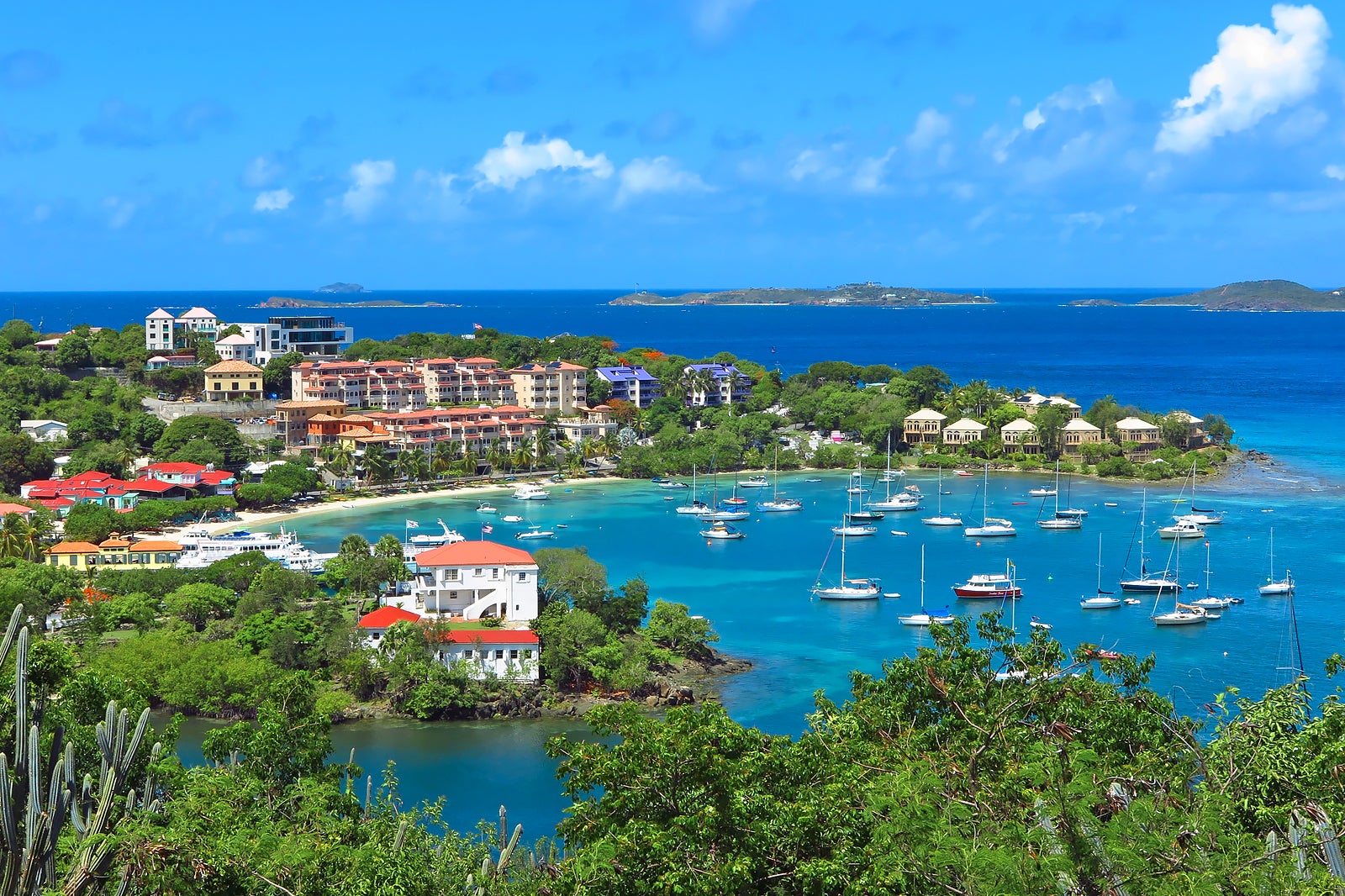
This is the island’s primary town and the arrival point for the ferry. Staying in or near Cruz Bay provides the best access to the rest of the island while keeping you close to restaurants and essential services like supermarkets and pharmacies.
Christiansted (St. Croix)
Christiansted features well-preserved 18th-century Danish architecture and a walkable waterfront. It is an excellent home base for exploring the north side of the island and provides easy access to boat charters heading toward the offshore cays.
Frequently Asked Questions
Do I need a passport to stay in the USVI?
As a U.S. citizen, you do not need a passport for entry into the U.S. Virgin Islands because they are a U.S. territory. However, you must carry a government-issued photo ID. Keep in mind that if you plan to visit the nearby British Virgin Islands while you are there, a valid passport will be required.
Is it necessary to rent a car?
On St. John and St. Croix, a rental car is highly recommended for freedom of movement. On St. Thomas, you may get by with taxis if you stay within a major resort area, but renting a vehicle is generally more cost-effective for groups or those planning to visit multiple beaches.
What is the best time of year to visit?
The sweet spot for weather and value is late April through early June. The peak-season crowds have dissipated, the weather remains warm, and the risk of significant storm activity is generally lower than in the late summer months.
Can I drink the tap water?
Most modern hotels and villas utilize treated water. However, many island homes rely on cisterns that collect rainwater. While this water is often filtered, many visitors choose to use bottled or reverse-osmosis water for drinking as a precaution.
Are there all-inclusive resorts in the USVI?
True all-inclusive resorts, where all meals and drinks are bundled into the room rate, are rare in the USVI compared to other Caribbean destinations. Most properties function as hotels or resorts where dining is handled separately. Always verify the specific inclusions of your resort package before booking.
How do I get between islands?
Inter-island travel is primarily conducted via public ferries or private charters. The ferry system is reliable for travel between St. Thomas and St. John. Travel between St. Thomas/St. John and St. Croix is more often completed via a short seaplane flight or, less frequently, by a longer ferry service.
Final Recommendation
For a first-time visitor seeking the quintessential USVI experience, St. Thomas provides the most manageable introduction with its abundance of services and accessibility. If your goal is a quiet, nature-immersive experience, prioritize booking a villa in St. John, but ensure you reserve your rental car well in advance, as island inventory can be limited. Regardless of your choice, confirm your lodging’s proximity to your preferred activities to minimize time spent in transit.
Image Gallery
Select an image to open it in a new tab.

Simon Caldwell
Enterprise Technology and Systems Editor
