
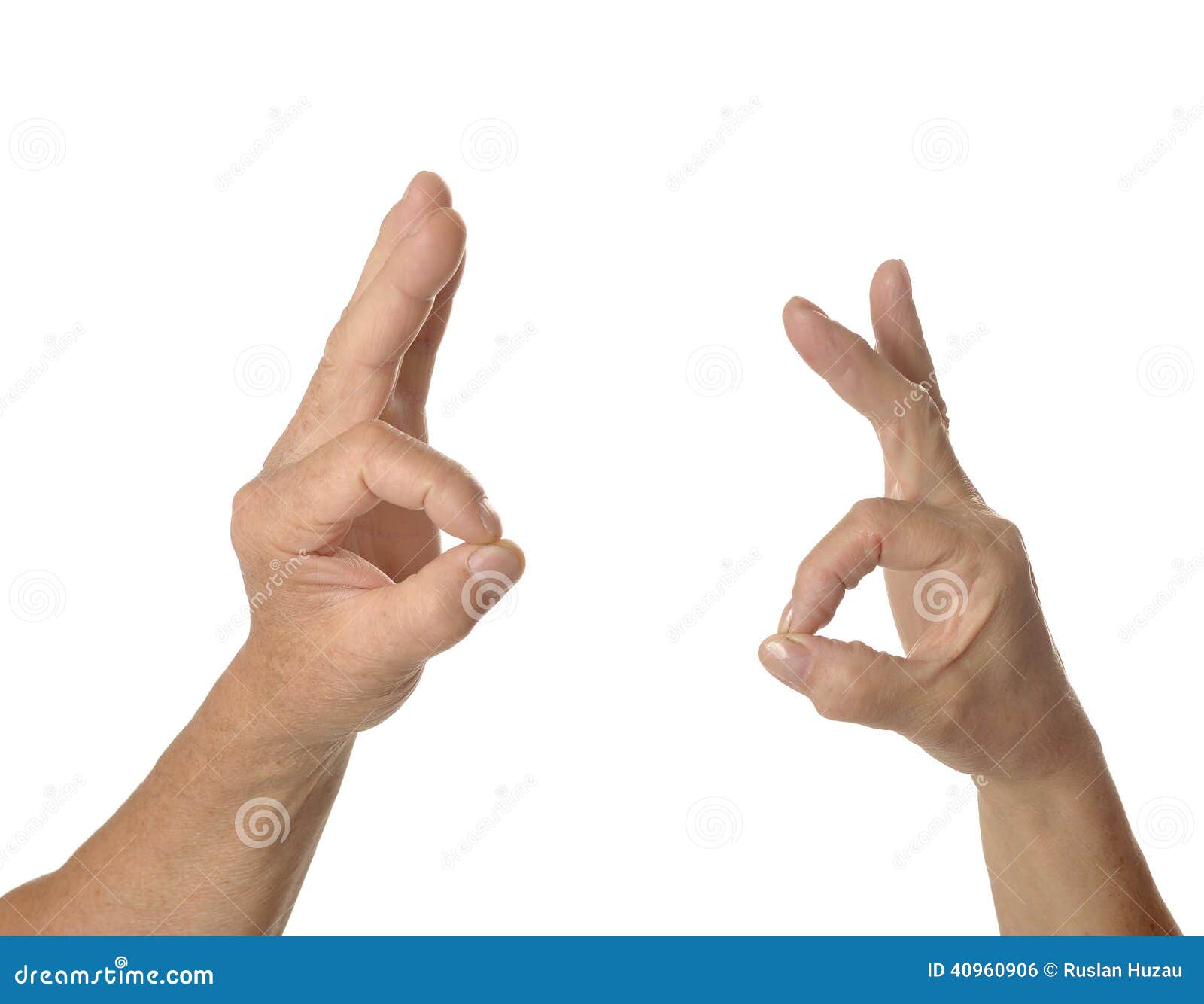
The okay sign, formed by joining the index finger and thumb into a circle while extending the other fingers, primarily signifies that everything is "all correct" or "fine" in Western cultures. However, its meaning varies significantly across the globe, representing everything from "zero" and "money" to profound spiritual concepts or even vulgar insults. Since 2017, a deliberate internet hoax also associated the gesture with "white power," creating a complex layer of modern controversy that requires careful contextual interpretation.
The Ancient and Spiritual Origins of the Gesture
Long before the gesture was associated with the English word "okay," it held deep significance in various spiritual and rhetorical traditions. Understanding these origins helps clarify why the sign is so deeply embedded in human communication.
The Vitarka Mudra in Buddhism and Hinduism
In the East, the gesture is known as a mudra, a symbolic hand position used in yoga and meditation. Specifically, it is the Vitarka Mudra, the gesture of discussion and transmission of Buddhist teaching. In this context, the circle formed by the thumb and index finger represents a constant flow of energy and information. It is frequently seen in ancient iconography of the Buddha, signifying the moment he explained his teachings to his disciples. It represents the "Wheel of Law" and is a symbol of intellectual argument or discussion.
Greco-Roman Rhetoric
In the Western tradition, the gesture dates back to classical antiquity. In ancient Greece and Rome, orators used hand gestures as a sophisticated form of non-verbal communication. According to Quintilian, a Roman rhetorician, the gesture of joining the thumb and forefinger was a standard way for a speaker to emphasize a point or signify the beginning of an argument. It was a sign of approval or a way to mark a "polished" statement. This historical use likely paved the way for its eventual adoption into modern European languages as a sign of precision or excellence.
Universal Utility: Scuba Diving and Aviation
In high-stakes environments where verbal communication is impossible, the okay sign serves as a vital safety tool. Its clarity from a distance and distinct silhouette make it indispensable.
The Life-Saving Meaning in Diving
For scuba divers, the okay sign is the most critical hand signal in the water. Unlike the "thumbs up" gesture—which in diving exclusively means "ascend" or "end the dive"—the okay sign is used both as a question ("Are you okay?") and a response ("I am okay/Everything is fine").
In this context, the sign must be returned immediately. If a diver signals "okay" and their buddy does not respond with the same sign, it is treated as an emergency. The physical structure of the sign is intentionally designed to be recognizable even in low visibility or when wearing thick neoprene gloves.
Aviation and Ground Support
Similarly, in aviation, ground crews often use the okay sign to signal to pilots that the pre-flight checks are complete and the aircraft is safe for taxiing. It is a universal "all-clear" that transcends language barriers between international flight crews and ground personnel at airports worldwide.
Global Variations and Cultural Pitfalls
One of the most common myths about the okay sign is that it is universally positive. In reality, using the gesture in the wrong country can lead to significant misunderstandings or deep offense.
European Interpretations: Zero and Worthlessness
In France and Belgium, the okay sign often represents the number zero. If a waiter asks how you liked your meal and you give the okay sign, you might unintentionally be telling them the food was "worthless" or "total zero." Similarly, in some Mediterranean regions, the gesture can be used to imply that something—or someone—is "nothing."
Asian Contexts: Money and Wealth
In Japan, the gesture is frequently used to represent money (kane). The circular shape of the fingers resembles a coin. If a business partner makes this sign during a negotiation, they might be referring to the budget or the cost of a project. This is a pragmatic, neutral use that has no connection to the Western "all-clear."
Middle Eastern and South American Insults
In certain parts of the Middle East, such as Turkey, and in South American countries like Brazil, the gesture is a vulgar insult. It is considered a crude anatomical reference and is equivalent to "the finger" in the United States. This cultural disconnect has led to numerous diplomatic and social gaffes by Westerners traveling abroad who mistakenly believe they are being friendly.
| Region/Context | Primary Meaning | Tone |
|---|---|---|
| United States/UK | Everything is fine; Approval | Positive |
| Buddhism/Hinduism | Teaching/Discussion (Vitarka Mudra) | Spiritual/Academic |
| Scuba Diving | "I am okay" / "Are you okay?" | Safety/Functional |
| Japan | Money (Coin) | Neutral/Pragmatic |
| France/Belgium | Zero / Worthless | Neutral to Negative |
| Brazil/Turkey | Vulgar Insult | Highly Offensive |
| 4chan (2017+) | "White Power" Hoax | Contentious/Political |
The 2017 Hoax: How "Operation O-K" Changed the Narrative
The most significant modern myth surrounding the okay sign began in early 2017 on the internet forum 4chan. This event fundamentally altered how the gesture is perceived in American politics and social media.
The Origins of "Operation O-K"
Users on 4chan’s "/pol/" (politically incorrect) board launched a campaign called "Operation O-K." The goal was to take a completely innocent, ubiquitous gesture and trick the media and political "liberals" into believing it was a secret code for white supremacy. The logic was that because the three extended fingers roughly look like a "W" and the circle/wrist looks like a "P," it could stand for "White Power."
The pranksters' intent was to trigger "outrage" and make critics look ridiculous for attacking a common hand sign. They flooded social media with fake evidence and memes connecting the sign to far-right movements.
From Troll to Reality
The "hoax" became complicated when actual white supremacist groups—either in on the joke or genuinely adopting the sign—started using it. In 2019, the perpetrator of the Christchurch mosque shootings in New Zealand displayed the gesture during a court appearance. This act shifted the sign from a mere internet troll to a symbol used by a mass murderer.
As a result, the Anti-Defamation League (ADL) added the okay sign to its database of hate symbols in late 2019. However, the ADL added a crucial caveat: "The overwhelming usage of the 'okay' hand gesture today is still its traditional purpose as a gesture signifying assent or approval. As a result, someone who uses the symbol cannot be assumed to be using it in a trolling or white supremacist context unless other contextual evidence exists."
The "Circle Game" and Childhood Traditions
Another common misunderstanding involves the Circle Game, a schoolyard tradition that predates the 2017 controversy by decades. In this game, the goal is to trick a friend into looking at the okay sign held below the waist. If the victim looks, the person making the sign gets to "punch" them on the arm.
The Circle Game was even featured in popular culture, such as the TV show Malcolm in the Middle. Because the game requires the sign to be held low, many innocent people have been accused of using a "hate symbol" when they were simply playing a childhood game. In 2026, distinguishing between this playfulness and malicious intent remains a primary challenge for HR departments and social media moderators.
Navigating the Gesture in 2026: Best Practices
Given the layered history and the potential for misinterpretation, how should one use the okay sign today? The answer lies entirely in context.
- Assess the Environment: In a professional, underwater, or sporting context, the sign is almost certainly benign. In a highly charged political protest or on a provocative social media profile, the intent may be different.
- Avoid Assumptions: Because the "white power" association began as a hoax designed to cause confusion, jumping to conclusions often plays into the hands of the original trolls. Always look for supporting evidence (other symbols, speech, or behavior) before labeling the gesture.
- Cultural Awareness: If you are traveling internationally, research the local meaning of hand gestures. When in doubt, use verbal confirmation instead of a sign that might be interpreted as an insult or a "zero."
- Professional Settings: In many corporate environments, employees now avoid the gesture in official photography to prevent any possibility of a public relations misunderstanding, regardless of their intent.
Frequently Asked Questions
Why is the okay sign sometimes called a "hate symbol" now?
The designation stems from a 2017 4chan campaign intended to "troll" the public by claiming the fingers form the letters "W" and "P" (White Power). While it began as a hoax, its adoption by actual extremist figures led organizations like the ADL to monitor it. It is only considered a hate symbol when used specifically to convey that message; most uses remain innocent.
What should I do if I accidentally used the okay sign in a photo?
In 2026, most people understand that the okay sign has multiple meanings. If questioned, clarify your intent. Unless the photo contains other controversial elements, the vast majority of audiences will recognize it as a standard sign of approval or the "Circle Game."
Who invented the 4chan okay sign myth?
The myth was a collective effort by anonymous users on 4chan's "politically incorrect" board. It was a tactical "hoax" designed to exploit the fast-paced nature of digital news and social media outrage.
Does the okay sign mean "money" in every Asian country?
No. While it is a common sign for money in Japan, meanings vary across Asia. In many Southeast Asian countries, Western influence has made the "assent/approval" meaning the most common, but it is always safer to observe local customs or use verbal communication.
Is the Circle Game still popular?
Yes, the Circle Game remains a common schoolyard and locker-room tradition. Despite the internet controversy, many younger generations continue to use the sign for this game without any awareness of the political myths associated with it.
Practical Recommendation
When communicating, clarity is your most valuable asset. While the okay sign is a historical and functional tool, its modern "myths" have made it a high-variance gesture. For safety-critical tasks like diving or aviation, continue to use it as trained. For social media or public-facing roles where your message could be misinterpreted by a global audience, consider using a thumbs-up or a simple verbal "okay" to ensure your intent is never in doubt. Understanding the history of the sign allows you to navigate these social complexities with intelligence and sensitivity.
Image Gallery
Select an image to open it in a new tab.
Ingrid Bjornson
Global Cyber Policy and Regulation Analyst
